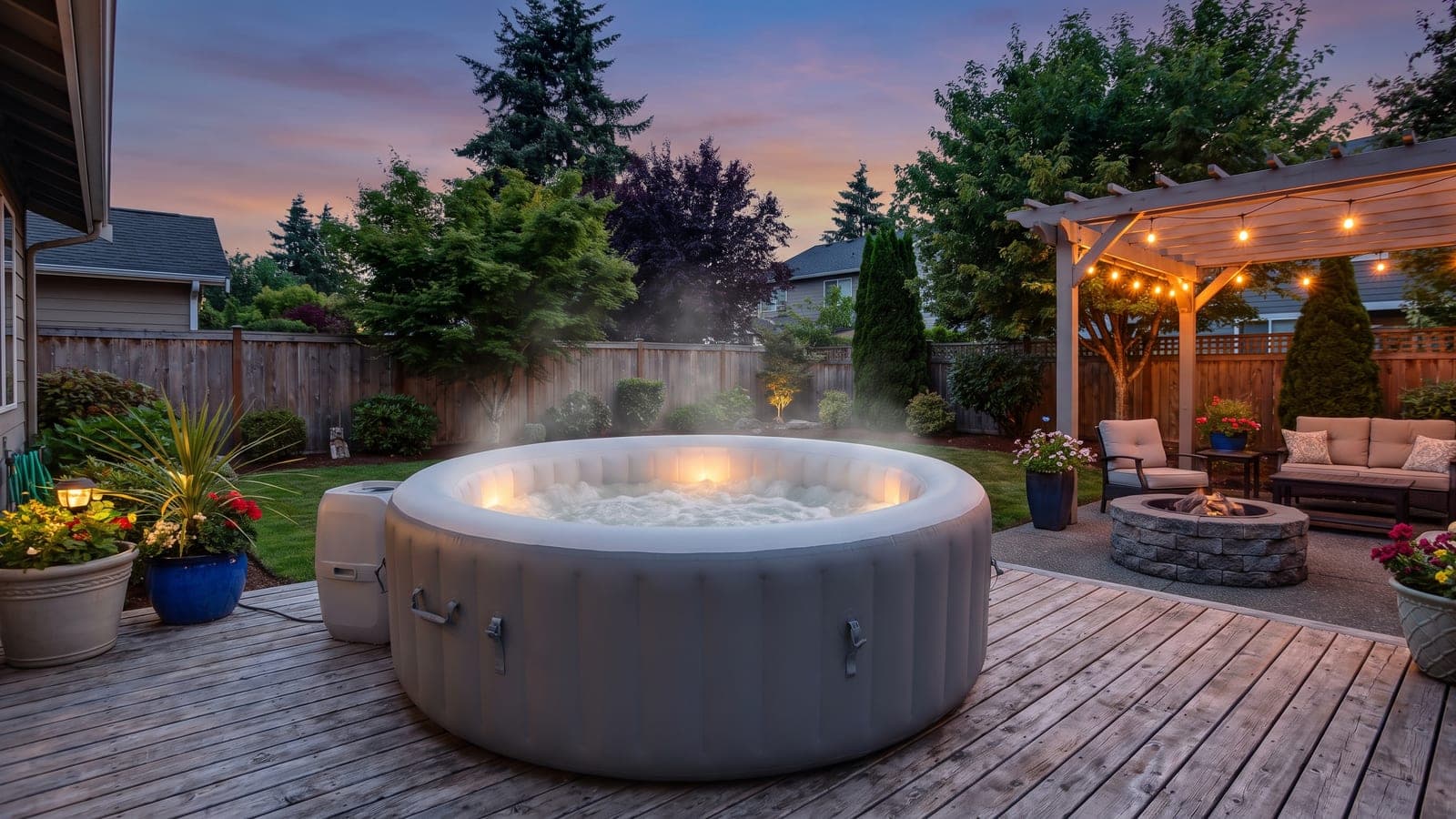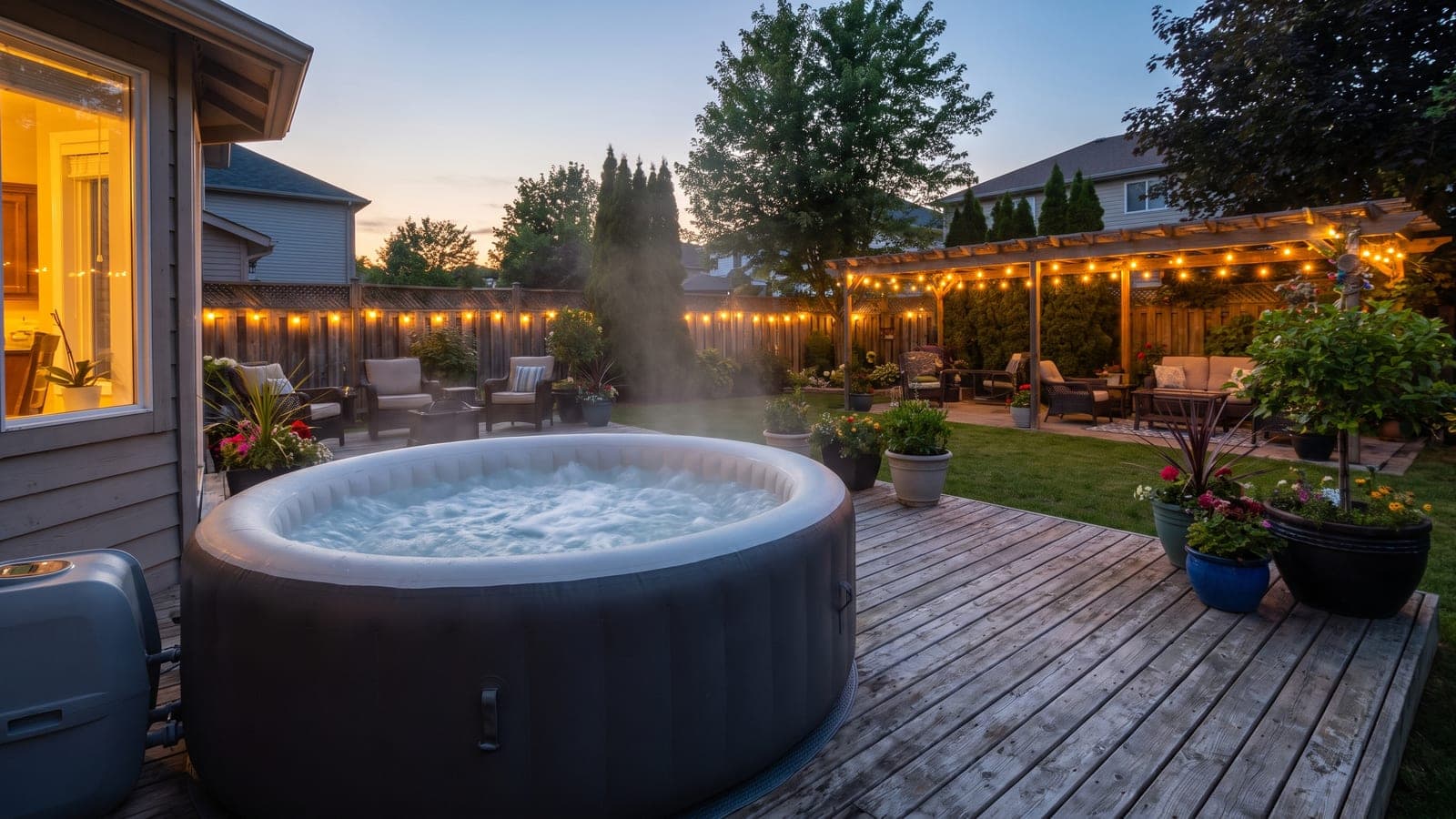
Inflatable hot tub maintenance comes down to five habits: test the water, keep the sanitizer and pH in range, rinse the filter, run the pump on a schedule, and change the water every week or two. Do those and your tub stays clear, safe, and ready to soak. Skip them and you get cloudy water, funky smells, and a filter that clogs in days.
The good news is that an inflatable tub holds far less water than an in-ground spa, usually 200 to 300 gallons depending on the model, so corrections happen fast and mistakes are cheap to fix. The bad news is that small volume also means the chemistry swings quickly. A little attention often beats a big rescue later.
If you want the deeper chemistry-and-hardware version of this routine, our hot tub maintenance for beginners without the chemical panic guide goes further. This article keeps it to the inflatable-specific basics.
What do I actually need to test?
Three things: sanitizer, pH, and total alkalinity. Sanitizer is the chlorine or bromine that kills bacteria. pH measures how acidic or basic the water is. Total alkalinity (TA) is a buffer that keeps pH from bouncing around.
Grab a bottle of spa test strips. Dip one, wait the seconds the label says, and match the colors. Aim for these general ranges, and defer to your sanitizer label if it differs:
- Free chlorine: 1 to 3 ppm (parts per million), or bromine 3 to 5 ppm
- pH: 7.2 to 7.8
- Total alkalinity: 80 to 120 ppm
The CDC's home pool and hot tub water testing guidance is a solid reference for why these numbers matter for keeping germs in check. Test two to three times a week, and always before you climb in.
If the chemistry side still feels like a foreign language, our pool chemistry basics without the lab coat guide explains pH, alkalinity, and sanitizer in plain terms. The same ideas apply to a hot tub, just in a much smaller bucket.
How do I balance the water?
Balance TA first, then pH, then sanitizer. That order saves you from chasing your own tail.
If alkalinity is low, add an alkalinity increaser (sodium bicarbonate). If pH is high, add a pH decreaser (usually sodium bisulfate). If pH is low, a pH increaser brings it up. Add small amounts, run the pump to circulate, wait a couple of hours, then retest. In 250 gallons, a little product moves the needle a lot.
Once pH and TA sit in range, set your sanitizer. A floating dispenser holds chlorine or bromine tablets and releases them slowly, which is the easiest way to keep a steady level in a small tub. Never mix chlorine and bromine in the same water, and never dump concentrated chemicals into an empty tub liner.
Hot water eats sanitizer faster than a cold pool, so expect to top up more often than you would a backyard pool. This is normal, not a sign anything is wrong.
How do I take care of the filter?
The filter cartridge is the cheapest, most-ignored part of the whole system, and it does most of the physical cleaning. Inflatable tubs use small pleated cartridges that clog quickly because the water is warm and often full of body oils and lotion.
Rinse the cartridge with a garden hose every two to three days, more if the tub sees heavy use. Spray between the pleats to flush out the gunk. A filter cleaner spray or an overnight soak in a cartridge cleaning solution pulls out oils that a plain rinse leaves behind.
Cartridges wear out. Once the pleats look gray and matted and a rinse no longer restores flow, replace it. Buy the size that matches your model and keep a spare on the shelf so a dirty filter never forces you to skip a cleaning. Rinsing one while a fresh one runs keeps the water clear year round.
When should the pump and heater run?
Depends on the season and your model. In cold weather, most inflatable tubs need the pump running much of the time, both to filter and to protect against freezing. Many models like the Coleman Palm Springs EnergySense Smart AirJet Plus Hot Tub (4–6 Person) include freeze protection and scheduling to help manage this, but you should confirm the behavior in your own manual.
In warm weather you can run shorter filter cycles and let the heater rest between soaks. Whatever you do, keep the insulated cover on when the tub is not in use. The cover holds heat, cuts your energy bill, and keeps leaves and bugs out of the water.
The bubble jets are fun, but running the air blower for long stretches actually cools the water and off-gasses sanitizer, so use it during soaks rather than as a constant setting.
How often do I change the water?
Every one to two weeks for most households. A quick way to estimate: multiply the number of daily bathers by 40 to get the days between changes. Two people a day lands you around 80, so roughly every ten to twelve days.
When it is time, turn off the power, drain through the valve, wipe the liner with a soft cloth and a little mild cleaner, then refill. Rebalance the fresh water before anyone soaks. Draining is also the moment to deep-clean or swap the filter.
A model like the Intex PureSpa Plus 4-Person Inflatable Hot Tub (140 Jets) makes this easy with a standard drain valve, but the routine is the same across brands. If you are shopping or comparing, our inflatable hot tubs roundup lays out the options.
A few safety notes worth the reminder
Keep sanitizer levels correct before anyone gets in, since warm water and germs are a bad mix. Never let small children use a hot tub unsupervised, and keep the cover latched when the tub sits idle. The CPSC's drowning prevention toolkit is a useful read for any household with kids or a water feature of any kind.
Store your chemicals separately, in a cool dry place, away from each other and out of reach. And if the water ever smells strong or looks off no matter what you add, the simplest fix is usually to drain and start fresh.
If you later move up to a permanent saltwater spa or pool, the habits carry over, though the equipment changes. Our saltwater pool maintenance for beginners guide covers that next step when you get there.
Frequently asked questions
How often do I need to test the water?
Test two to three times a week if you use the tub regularly, and every time before a soak. Warm water burns through sanitizer fast, so a tub that sat unused for a few days can still swing out of range. A quick strip dip takes 15 seconds.
How long can I go before changing the water?
Most owners drain and refill every one to two weeks, depending on how many people use it and how hard it is to keep balanced. A rough rule of thumb is the number of people who use it per day multiplied by 40, which gives you the days between changes. When the water starts fighting you no matter what you add, just drain it.
Do I really need to keep the pump running all the time?
In cold weather, yes, because inflatable tubs heat slowly and the water can freeze if power is lost. In warm weather you can run just the filter cycles the manual recommends. Check your specific model, since heater and freeze-protection behavior varies by brand.
Chlorine or bromine for an inflatable hot tub?
Both work. Chlorine is cheaper and acts fast, while bromine is more stable in hot water and gentler on some skin. Pick one and stick with it, and never mix the two in the same water.
Why does my water keep going cloudy?
Cloudy water usually means low or exhausted sanitizer, a dirty filter, or unbalanced pH. Start by testing, rinsing the cartridge, and correcting pH, then add sanitizer. If it is still cloudy after a day, the filter may be worn out and due for replacement.