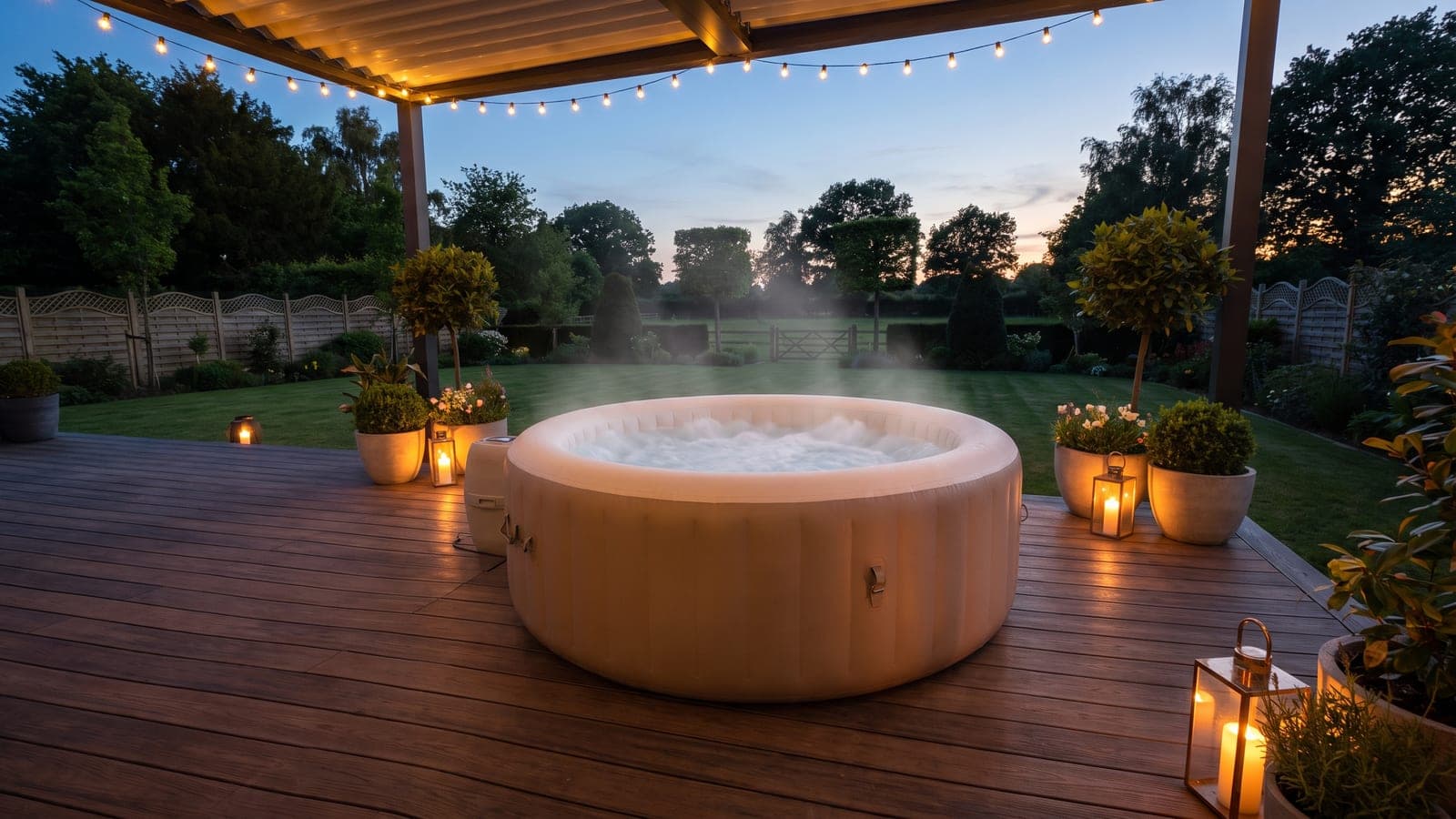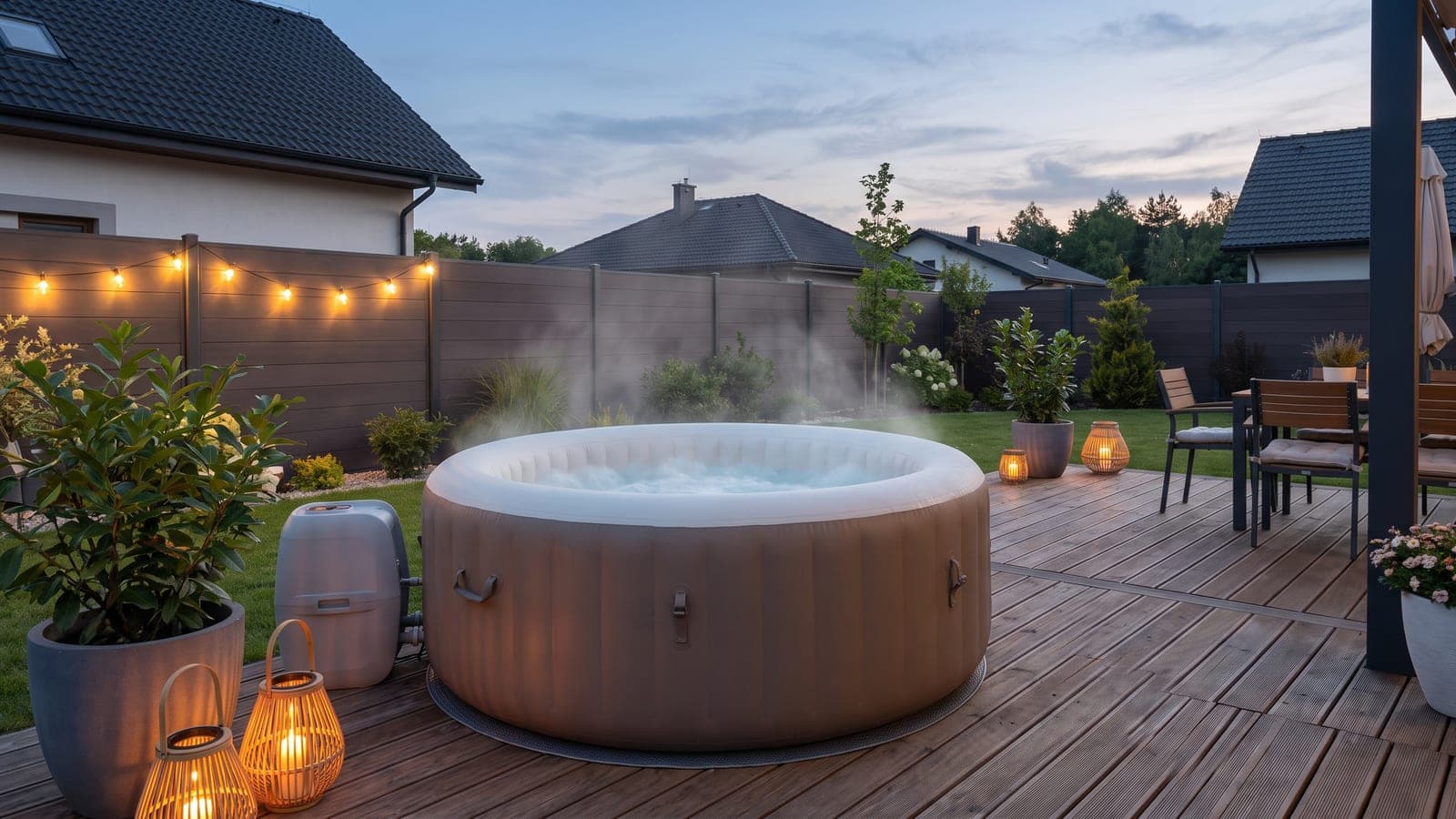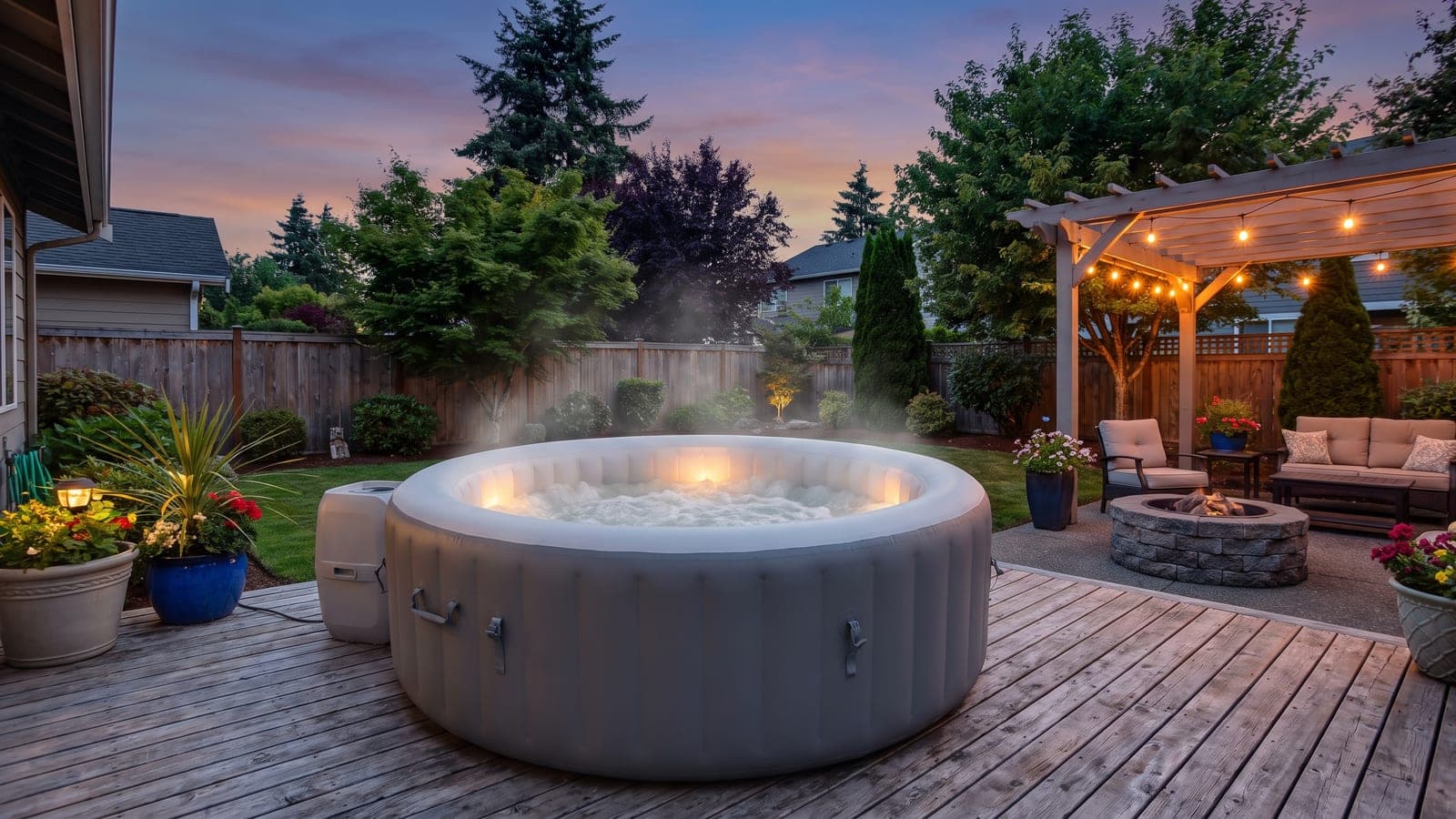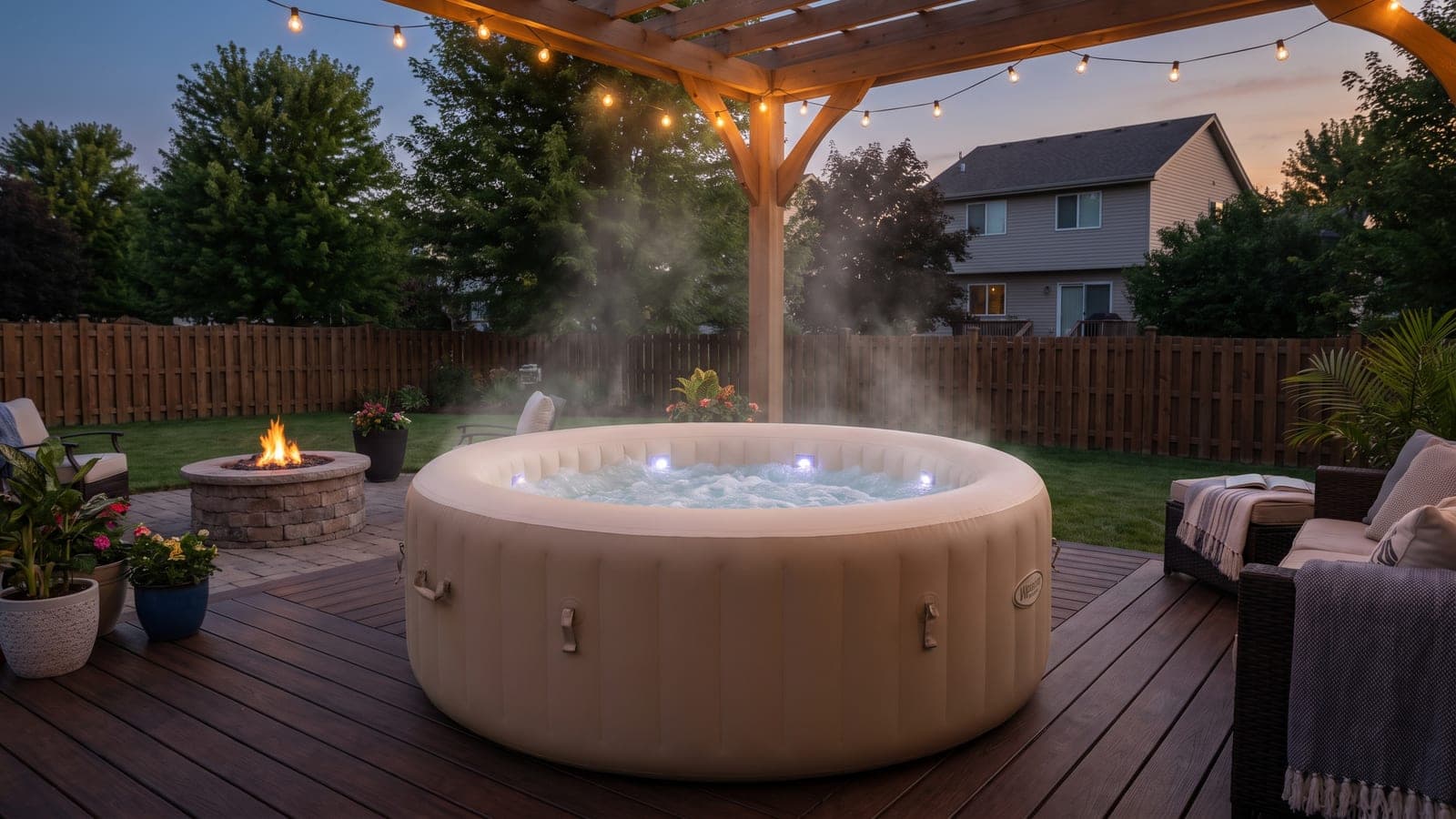
Buy an inflatable hot tub if you want soaking heat for a fraction of the price and the freedom to move or store it, and buy a hard-shell if you want strong jets, long life, and year-round use in cold weather. Almost everything else in this decision comes down to your yard, your budget, and how often you plan to actually get in the water.
Here is the plain version. Inflatable tubs win on price and flexibility. Hard-shell tubs win on power and durability. Let's match one to your situation.
What is the real price difference?
An inflatable hot tub usually costs a small fraction of a hard-shell spa. You are often comparing a few hundred dollars against several thousand, before you add delivery, an electrician, or a reinforced pad.
That gap is the whole appeal. An inflatable lets you try the hot-tub lifestyle without a big commitment. Models like the Intex PureSpa Plus 4-Person Inflatable Hot Tub (140 Jets) or the Coleman SaluSpa AirJet Inflatable Hot Tub (4–6 Person) plug into a standard household outlet and inflate in under half an hour.
Hard-shell spas cost more up front and often need a dedicated 240-volt circuit, which means hiring an electrician. Check the listing and your panel before you assume it will just plug in.
Which one holds up longer?
Hard-shell wins durability, and it is not close. A quality acrylic spa can last 15 to 20 years. A typical inflatable lasts closer to 3 to 7 years, since the vinyl walls take more abuse from sun, chemicals, and pets' claws.
That said, an inflatable is not disposable. Keep it out of harsh direct sun, stay on top of water chemistry, and store it properly in winter, and you can stretch its life toward the top of that range.
If you want a soak that outlives the family dog and then some, budget for a hard-shell. If you are testing the idea or renting your home, the inflatable's shorter lifespan matters less.
Do inflatable tubs have weaker jets?
Mostly, yes. Many inflatables use air jets, which blow bubbles up from the floor for a fizzy, all-over feeling rather than a pointed massage. A hard-shell spa uses pressurized water jets aimed at your back, neck, and legs.
Some inflatable models split the difference. The Bestway SaluSpa Hawaii HydroJet Pro Inflatable Hot Tub (4–6 Person) adds targeted hydro jets on top of the usual air bubbles, which gets closer to a real massage.
If sore-muscle relief is your top reason for buying, sit in a hard-shell before deciding. Bubbles are pleasant, but they are not the same as focused jet pressure.
Which fits a small or shared yard?
Inflatable, easily. It packs down into a box when you are done for the season, so a patio, a balcony, or a rental yard can host one and then reclaim the space. A hard-shell is a permanent fixture that needs a level, load-bearing pad.
Weight is the reason. A filled hot tub of any type is heavy, often well over a ton once you add water and people. An inflatable spreads that load on the ground, so it needs a firm, flat surface, but not the engineered footing a hard-shell demands. Always confirm your surface can carry a full tub before filling.
Renters and anyone who might move soon lean inflatable. Homeowners settling in for the long haul get more from a built-in hard-shell.
Is the upkeep any different?
The daily care is nearly identical. Both need balanced sanitizer, correct pH, and a rinsed filter. The CDC has a plain rundown of home hot-tub water treatment and testing worth reading before your first fill: https://www.cdc.gov/healthy-swimming/about/home-pool-and-hot-tub-water-treatment-and-testing.html
The main difference is volume. Inflatables hold less water, so chemistry swings faster and rewards more frequent testing. Our hot tub maintenance for beginners without the chemical panic guide walks through the routine, and if the science feels fuzzy, pool chemistry basics without the lab coat covers the same ideas. Considering a saltwater setup instead? Start with saltwater pool maintenance for beginners.
Whichever you pick, safety is the same. Never leave kids unsupervised near any tub, and keep it covered and locked when not in use. The CPSC drowning-prevention toolkit is a good reference: https://www.cpsc.gov/safety-education/neighborhood-safety-network/toolkits/drowning-prevention
So which should you buy?
Choose inflatable if you want low cost, easy setup, and the option to pack it away, and you are fine trading jet power and lifespan for that flexibility. Choose hard-shell if you want strong jets, cold-weather performance, and a spa that lasts a decade or two, and you have the budget, the pad, and the wiring to support it.
Most first-time buyers do well starting inflatable. It is a low-risk way to learn whether you actually use a hot tub before committing thousands to a permanent one.
Frequently asked questions
Can an inflatable hot tub really stay hot in winter?
It can, but it works harder and costs more to run in cold weather. Inflatable walls have less insulation than a hard-shell cabinet, so freezing temps mean longer heat-up times and higher bills. An insulated ground mat, a snug cover, and a wind-blocked spot help a lot, though very cold climates favor a hard-shell.
How long does an inflatable hot tub last compared to a hard-shell?
Most inflatable tubs last roughly 3 to 7 years with good care, while a quality hard-shell can run 15 to 20 years. Your actual mileage depends on sun exposure, water chemistry, and whether you drain and store it in winter. Keeping chlorine and pH in range is the single biggest factor for either type.
Do inflatable hot tubs have real jets or just bubbles?
Most budget inflatables use air jets, which push bubbles up from the floor rather than pressurized water at your back. Some newer models add a small number of hydro jets for a more targeted massage. If deep-tissue jet pressure is your main reason for buying, a hard-shell will disappoint you less.
How much electricity does an inflatable hot tub use?
It depends on your climate, target temperature, and how often you use it, so treat any single number with suspicion. Cold weather, a thin or missing cover, and frequent reheating all push the cost up. Check the wattage on the listing and your local electricity rate to estimate, and add a cover to cut waste.
Is the water care different between the two?
The core routine is the same for both: test the water, keep sanitizer and pH balanced, and rinse the filter. Smaller inflatable tubs hold less water, so chemistry swings faster and needs more frequent checks. Follow your unit's manual for dose amounts, since volume varies by model.