Pick a heat pump if you want warm water on demand regardless of the weather, and pick solar if you have sun, space, and patience and want the lowest running cost. That is the short version. The longer version depends on your climate, your pool size, and how many months a year you actually want to swim.
Both systems raise water temperature, but they get their heat from completely different places. A heat pump runs on electricity and works like an air conditioner in reverse, pulling warmth out of the outside air and moving it into your water. Solar heating pumps your pool water through panels (usually on a roof) where the sun warms it before it flows back in. Use the calculator above to size either option to your pool's gallons and your target temperature.
How does a pool heat pump actually work?
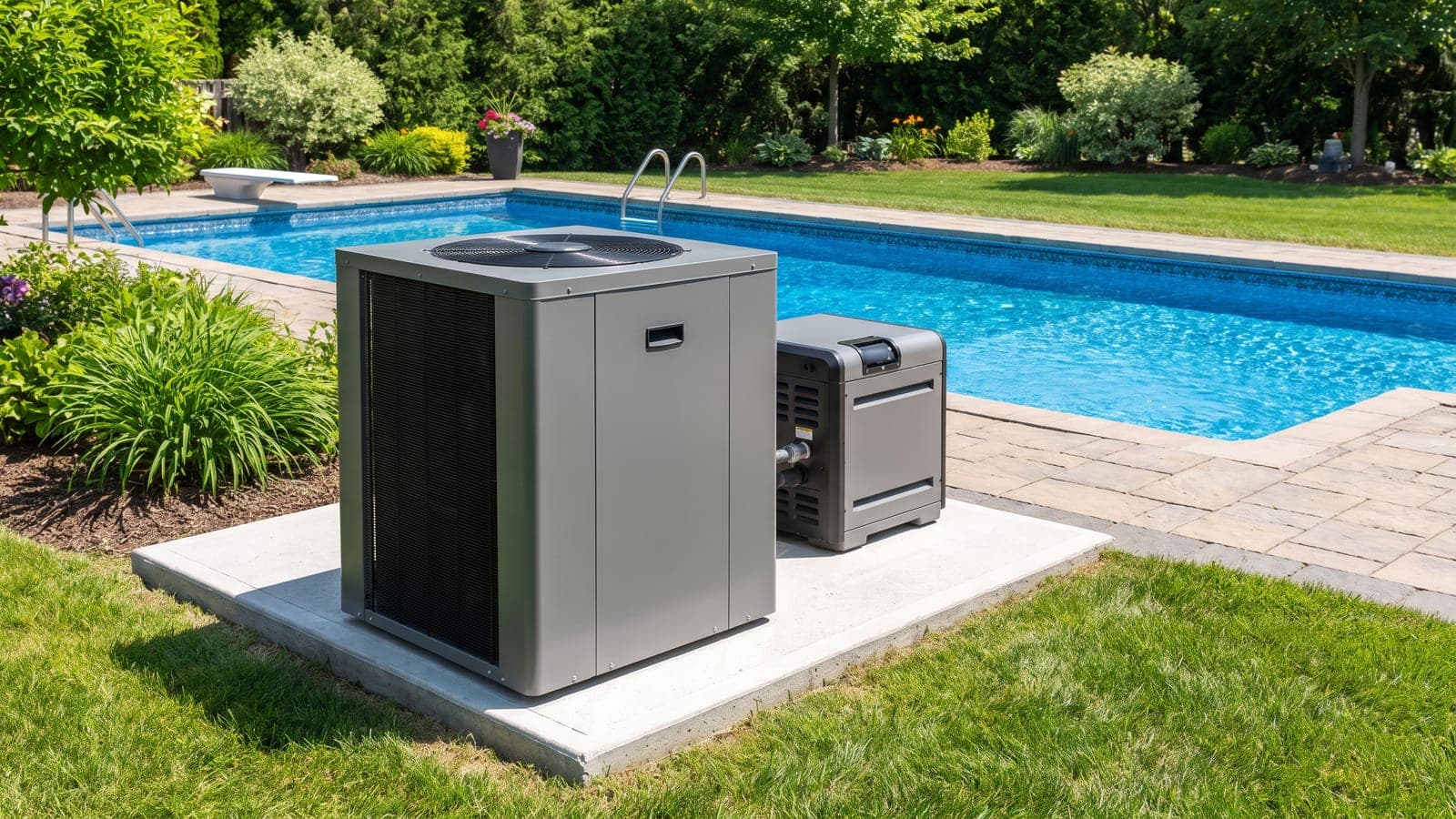
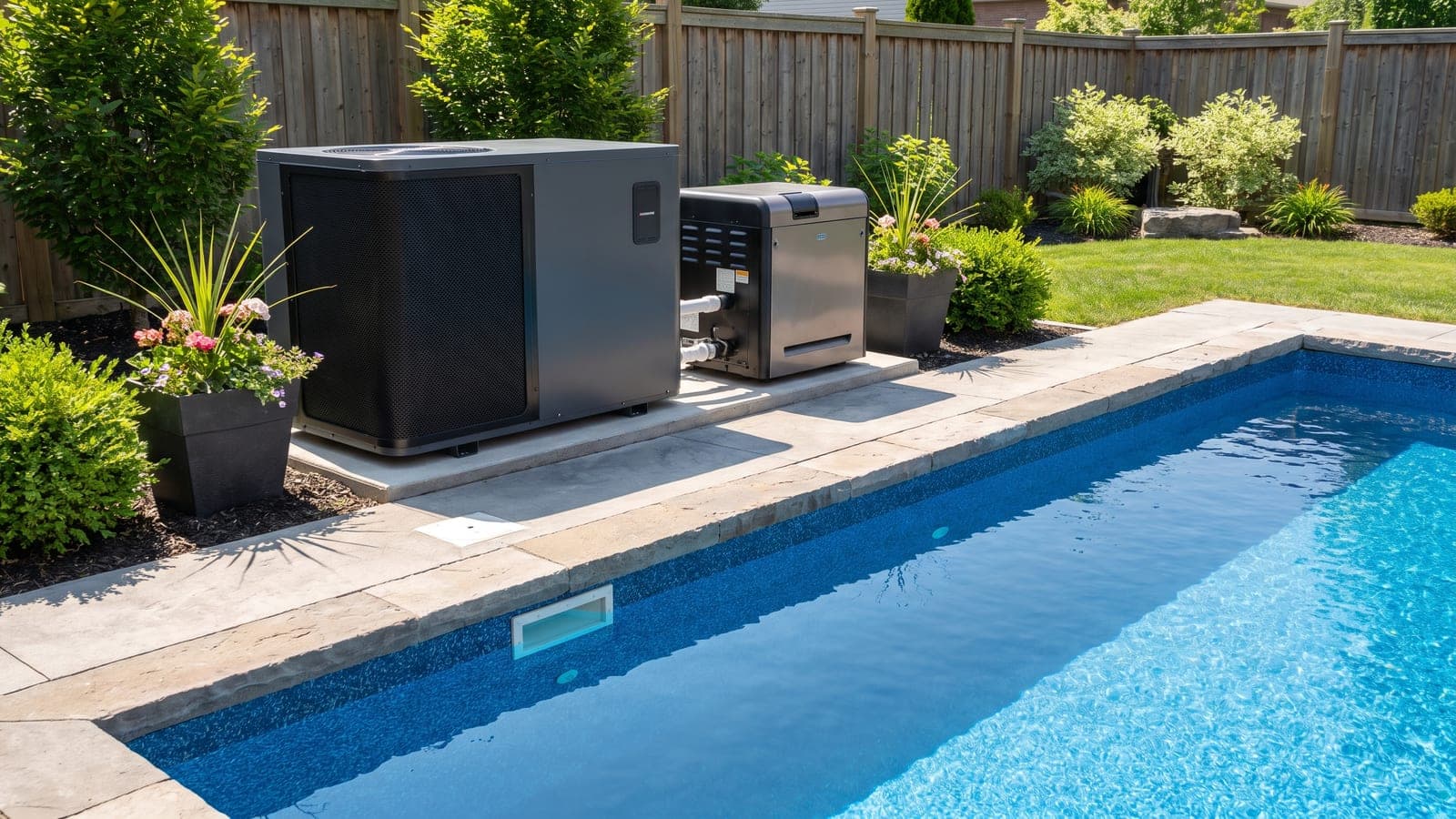
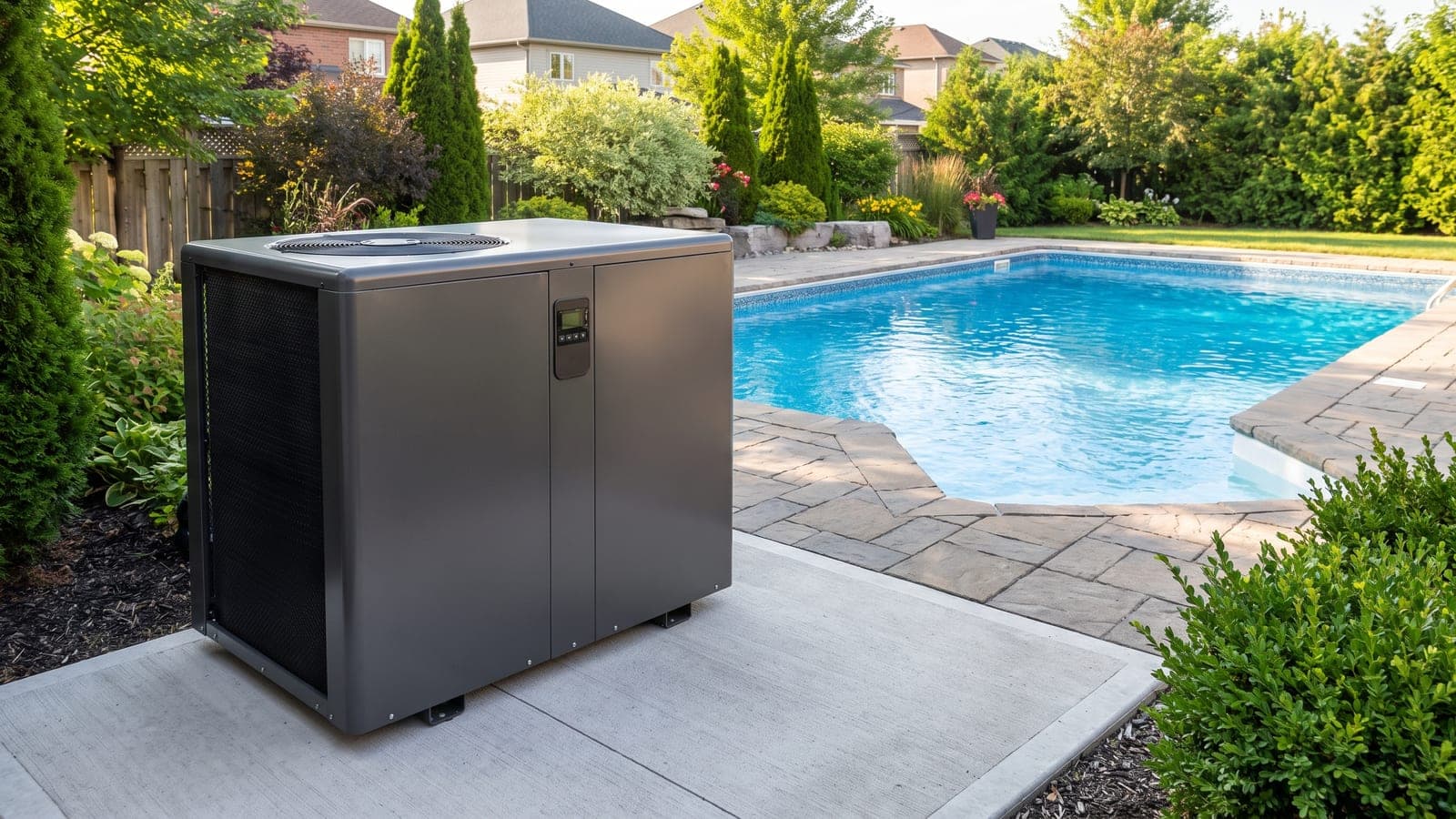
A heat pump does not make heat by burning fuel. It uses a compressor and refrigerant to capture warmth from the surrounding air and transfer it into the water passing through it, which is why it can deliver several units of heat energy for every unit of electricity it draws. That efficiency is the whole selling point.
The tradeoff is that heat pumps lean on air temperature. As the outside air drops toward the mid-40s Fahrenheit, output falls and run times get longer. In warm and mild climates that is rarely a problem. In a place with real winters, a heat pump handles spring through fall nicely but struggles to extend the season into cold months.
Sizing is measured in BTUs, and bigger pools or cooler climates need more of them. Smaller above-ground and compact inground pools might pair with something like the FibroPool FH255 55,000 BTU Heat Pump, while a full-size inground pool in a cooler region often calls for a larger unit such as the Hayward HeatPro 140,000 BTU Heat Pump. Inverter models like the FibroPool FH285-i Inverter Heat Pump (62,000 BTU) ramp the compressor up and down instead of cycling on and off, which can trim electricity use and noise. Do not guess at the size; run your numbers through the calculator and check the product listing for the model's rated output.
How does solar pool heating work?
Solar heating is beautifully simple. Your existing pump pushes pool water up through dark collector panels, the sun heats that water as it flows, and it returns to the pool a few degrees warmer each pass. Over a sunny day those small gains add up.
The appeal is the running cost, which is close to nothing beyond the small amount of pumping you were doing anyway. The U.S. Department of Energy notes that solar pool heating is often among the most cost-competitive uses of solar energy in many climates. There is no fuel bill and no compressor drawing power all afternoon.
The catch is that solar only works when the sun is out. Cloudy stretches, short winter days, and shady lots all cut into performance, and you cannot flip a switch to warm the pool tonight for tomorrow's party. Solar also needs real estate. The Department of Energy suggests collector area equal to roughly 50 to 100 percent of your pool's surface, so a big pool needs a big sunny roof or open ground to match.
Which one is cheaper over time?
Solar usually costs more to install and far less to run. A heat pump is generally cheaper to buy and install but adds to your electric bill every month you use it. Where the two lines cross depends on your power rates and how long your swim season is.
If you swim eight or more months a year in a sunny climate, solar's near-zero running cost tends to pay back the higher install price over several seasons. If you only heat the pool for a few weeks around big weekends, the heat pump's lower upfront cost and on-demand convenience often make more sense. There is no universal winner here, which is exactly why the answer is "it depends on your pool and your climate."
One thing helps both systems equally: a cover. The Department of Energy calls a pool cover the single most effective way to cut heating costs, because most heat loss is evaporation off the surface. Whichever heater you pick, a cover shortens run times and stretches every dollar and every sunny hour further.
Can you run a heat pump and solar together?
Yes, and it is one of the smarter setups if your budget and space allow. Solar does the heavy lifting on sunny days for almost no cost, and the heat pump backs it up at night, in cloudy weeks, and at the cool ends of the season. You get low running cost most of the time and reliable warmth when the sun does not cooperate.
If you go this route, size the heat pump to comfortably heat the pool on its own, since there will be days the solar contributes little. The solar side then becomes a running-cost discount rather than your only source of heat. You can browse both categories and compare rated outputs on our pool heaters page before committing.
So which should you buy?
Choose a heat pump if you value warm water on demand, have a mild-to-warm climate, or lack the roof and sun for panels. Compact and mid-size pools are well served by units like the FibroPool FH135 35,000 BTU Heat Pump on the small end, scaling up to larger Hayward and Pentair models for full-size inground pools. Choose solar if you have strong sun, open collector space, a long swim season, and you want the lowest ongoing cost.
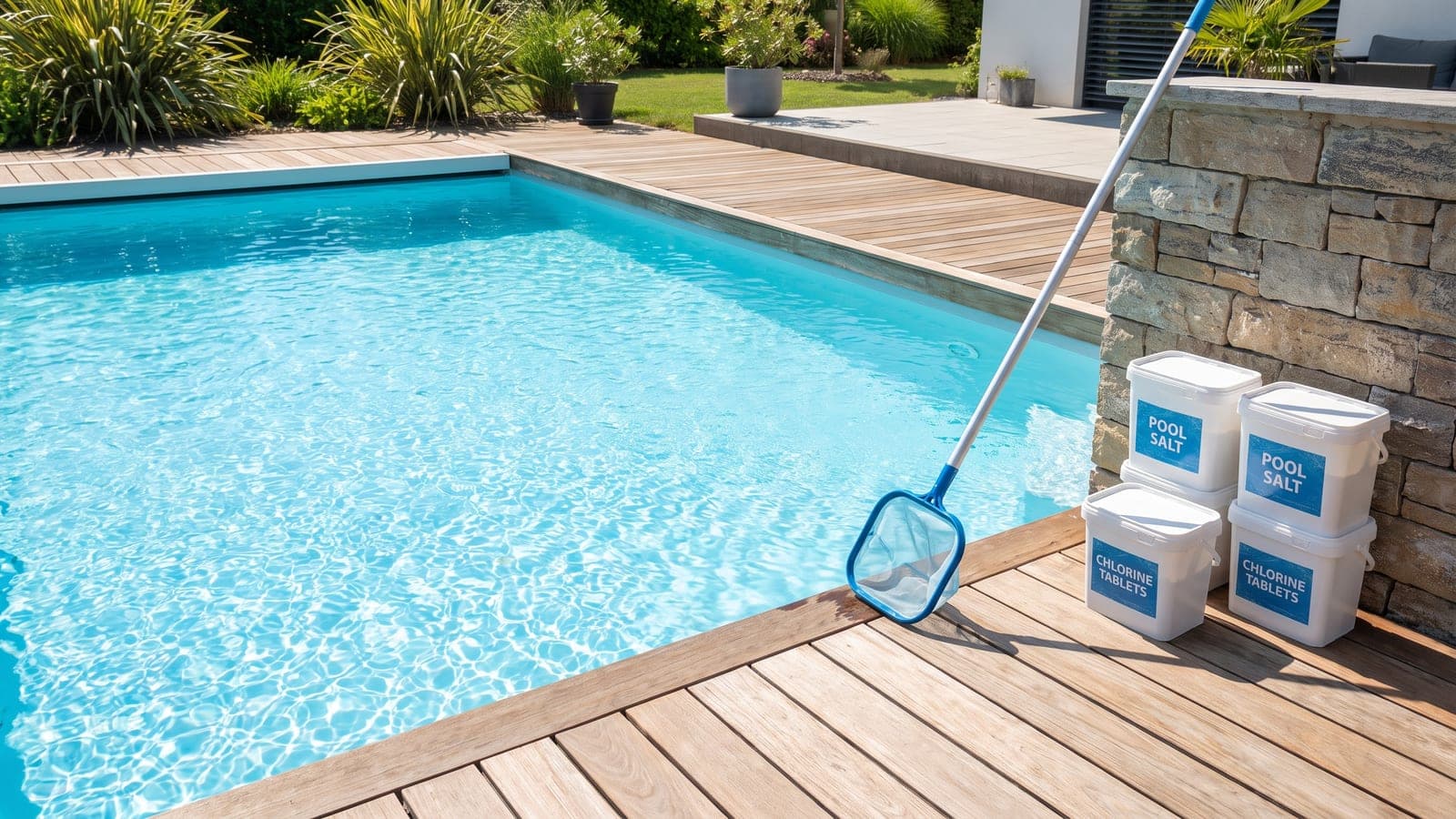
Before you spend, get two things right: the size and the water chemistry. An undersized heater runs constantly and never quite catches up, so run your gallons through the sizing calculator and read the model's manual for its rated BTUs. And warm water is only pleasant water if the chemistry is balanced, so our guide on pool chemistry basics is worth a read, along with the saltwater pool maintenance guide if you run a salt system. If you are also warming a spa, the hot tub maintenance guide covers the chemistry quirks that come with hotter water.
Frequently asked questions
Which is cheaper to run, a heat pump or solar?
Solar wins on running cost because sunlight is free; a heat pump uses electricity every hour it runs. Solar has the higher upfront install cost, though, so the payback math depends on how many months a year you swim and your local power rates.
Can I use both a heat pump and solar on the same pool?
Yes, and plenty of owners do exactly that. Solar carries the load on sunny days, and the heat pump fills the gaps at night, in shoulder season, or during a cloudy week so the water stays usable.
How much roof or ground space do solar panels need?
A common rule of thumb is solar collector area equal to 50 to 100 percent of your pool's surface area, per the U.S. Department of Energy. The exact number depends on your climate and how warm you want the water, so treat it as a planning range and confirm with an installer.
Does a heat pump work in cold weather?
Heat pumps pull warmth from the outside air, so their output drops as the air gets colder, usually below the 45 to 50 degree range. In a true winter climate they slow down right when you need them most, which is why gas heaters still exist for cold snaps.
Do I still need a pool cover if I have a heater?
Yes, and it may be the best money you spend. A cover cuts evaporation, which is where most pool heat escapes, so it lowers the run time and cost of either system. The Department of Energy calls covers the single most effective way to reduce heating cost.