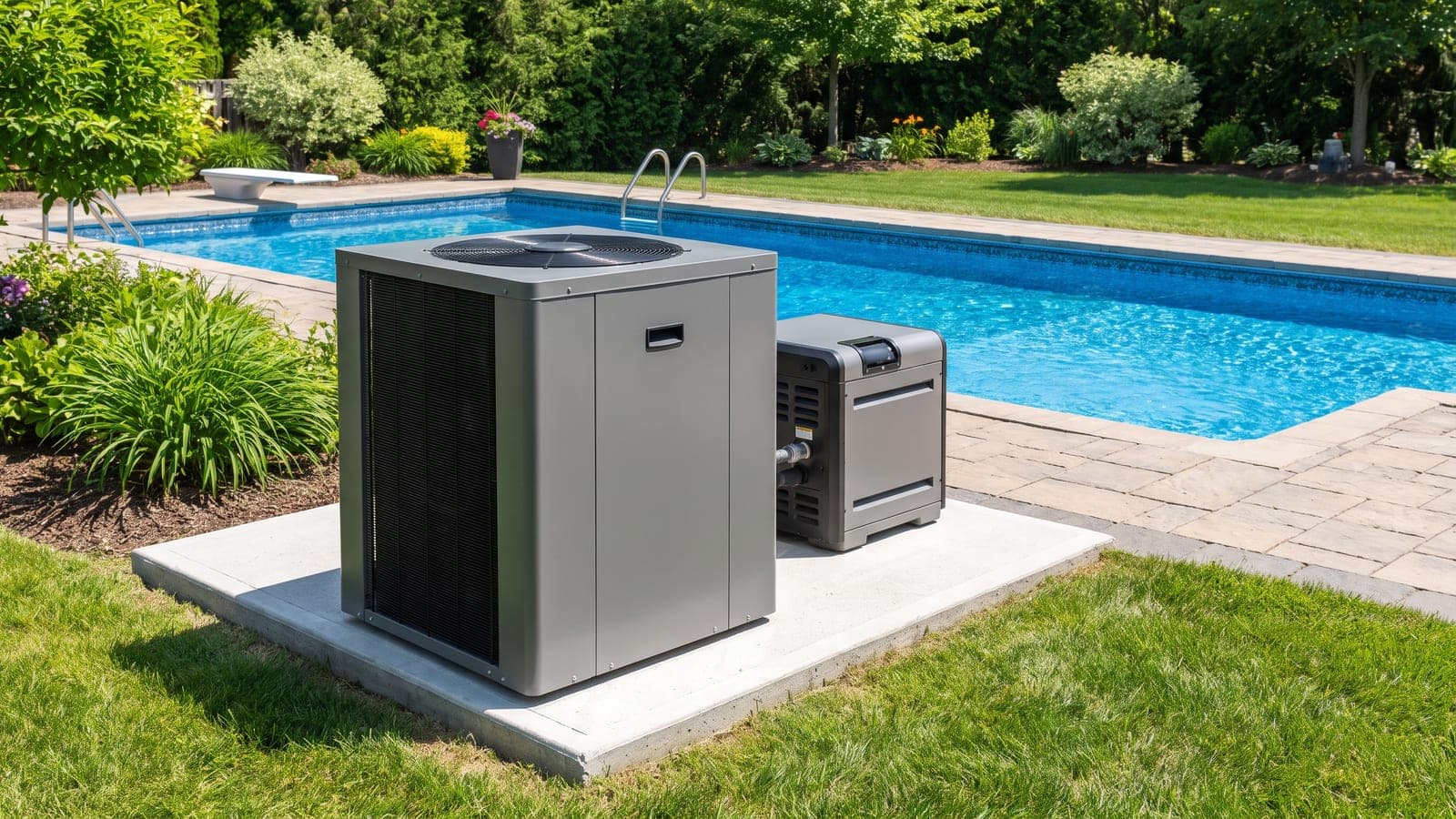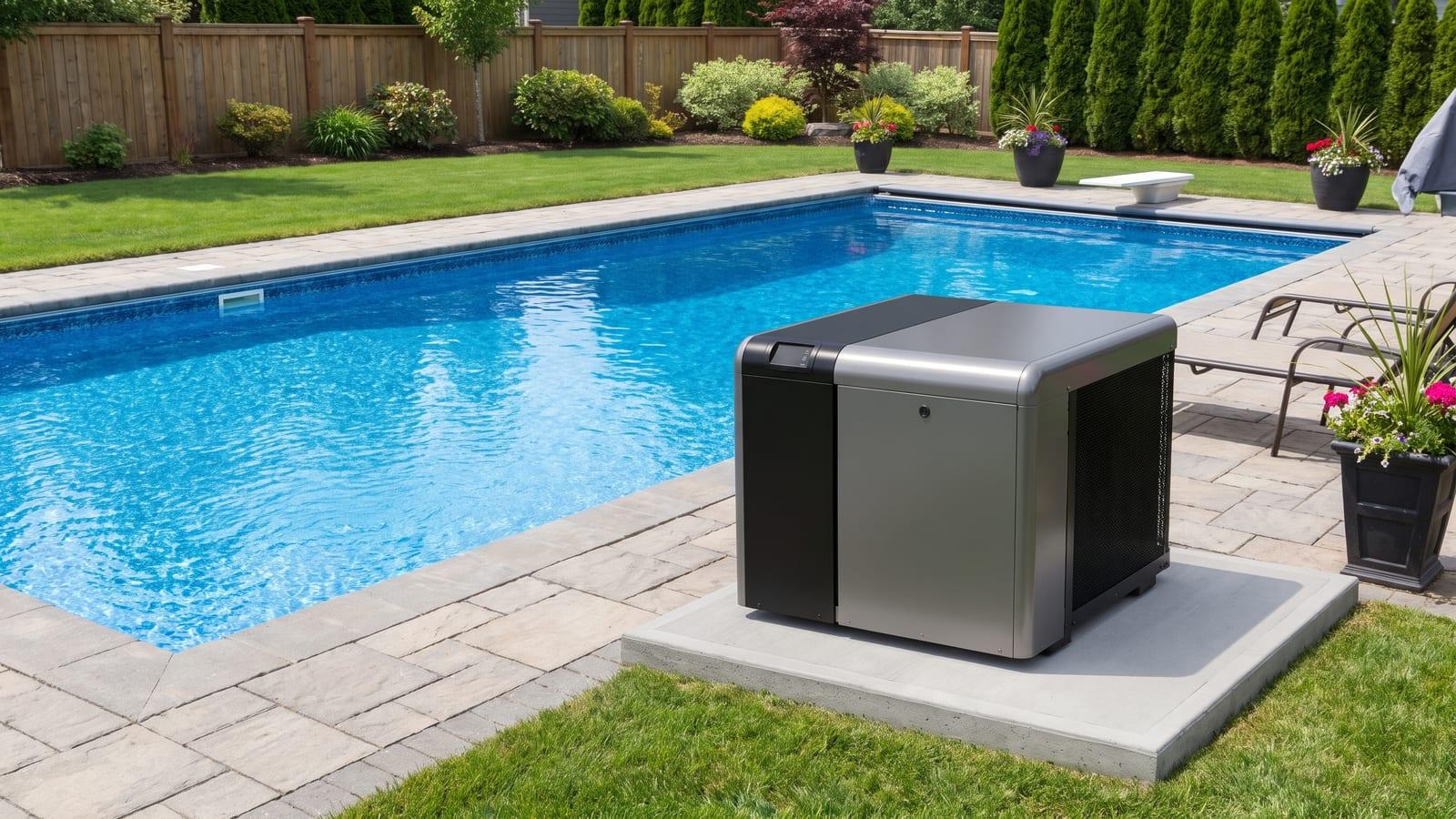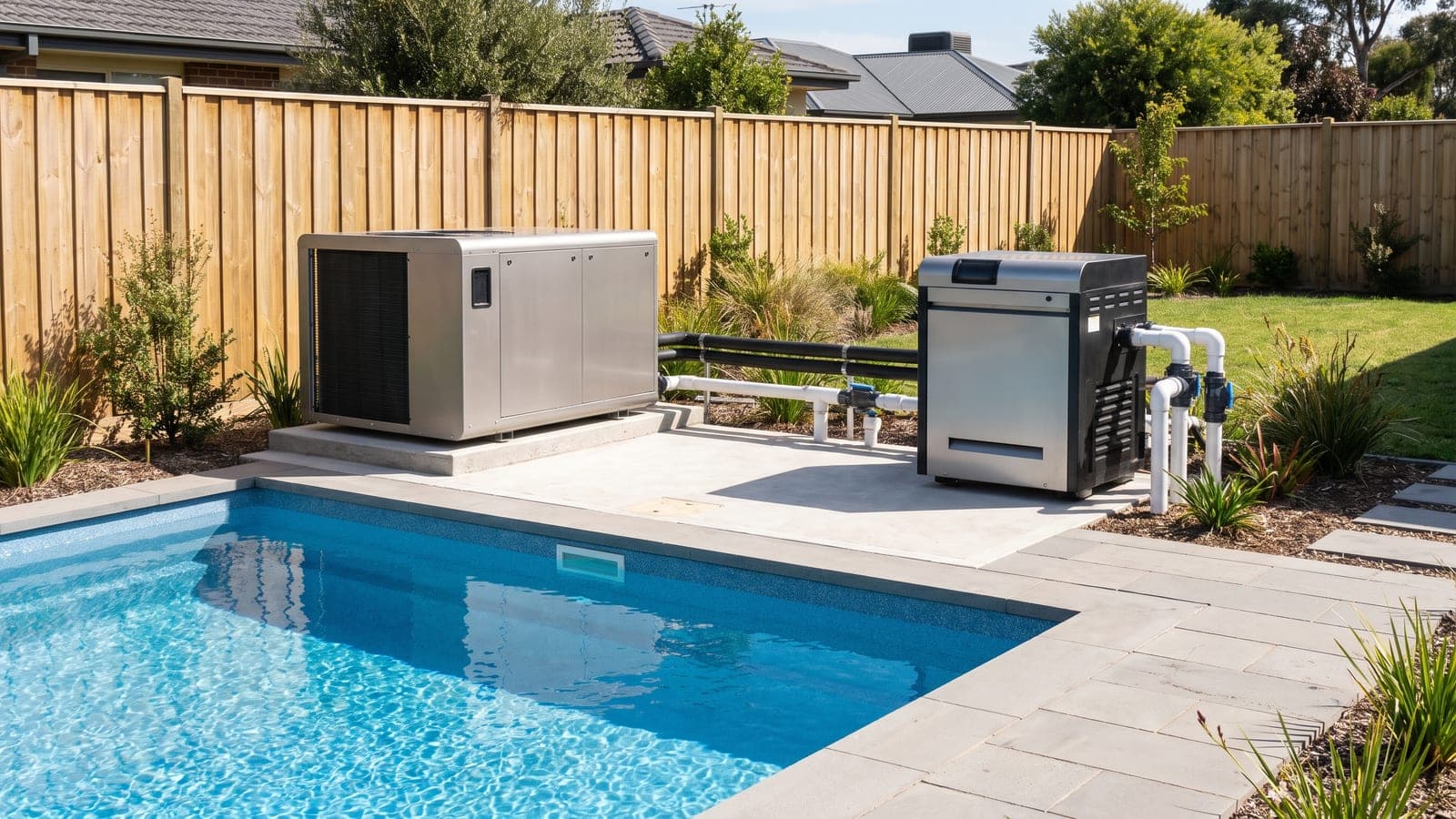
Inverter pool heat pumps are worth the extra money if you heat your pool a lot, want lower running costs, and care about noise. If you only warm the pool a few weekends a year, a standard on/off unit is usually the smarter buy. The upfront premium is real, and it only pays back through run time.
Here is the plain-English version of what you are actually paying for, and how to tell which side of the line your pool falls on.
What is an inverter heat pump anyway
A pool heat pump does not make heat the way a gas heater does. It moves heat from the outside air into your water, like an air conditioner running in reverse. That is why heat pumps are cheap to run but slow to heat, and why they struggle once the air gets cold.
A standard heat pump runs one way: full blast or off. An inverter model can vary its compressor and fan speed. It ramps up hard to reach your target temperature, then throttles way down to hold it. Think cruise control instead of stomping the gas and slamming the brakes.
That variable-speed trick is where the savings, the quiet, and the extra sticker price all come from.
Do inverter heat pumps really save money
They can, but the saving lives in the running cost, not the price tag. Once your water hits temperature, an inverter unit sips power to maintain it instead of cycling full-power on and off all day. Over a long season, that adds up.
The catch is that the savings only show up if you run the thing. A pool you keep heated from spring through fall gives an inverter plenty of hours to earn back its premium. A pool you fire up for the occasional pool party does not.
The U.S. Department of Energy's pool heating overview is a good primer on how heat pumps stack up against gas and solar for running cost. Efficiency is rated as COP (coefficient of performance), and higher is better. Compare COP numbers on the spec sheets, not marketing lines.
How much quieter are they
Noticeably, and this is the underrated reason people upgrade. A standard heat pump kicks on at full fan speed, which is a steady whir near your equipment pad. An inverter unit spends most of its time loafing along at low speed, which is much softer.
If your heater sits under a bedroom window, next to a patio, or close to a neighbor's fence, the quiet is worth something real. Exact decibel ratings vary by model, so check the listing.
When a standard heat pump is the better buy
Sometimes the cheaper unit is genuinely the right call. Go standard if:
- You only heat the pool a few weekends a year.
- Your equipment pad is far from where anyone sits or sleeps.
- You want the lowest possible upfront cost and will take the higher running cost.
For lighter-duty setups, a straightforward on/off unit like the Hayward HeatPro 90,000 BTU Heat Pump or the FibroPool FH255 55,000 BTU Heat Pump gets the water warm without the inverter premium. Size the BTU rating to your pool volume, not to what is on sale. Undersized heaters run forever and never quite catch up.
When the inverter is worth it
Lean inverter if you heat all season, run a heat pump as your main heater, or have the equipment near living space. The FibroPool FH285-i Inverter Heat Pump (62,000 BTU) and the Pentair UltraTemp 140K Heat Pump are examples of the variable-speed style, with the Pentair sized for larger pools. Match the output to your gallons and your climate.
One honest caveat: heat pumps of any kind lose output as the air cools, so if you want reliable heat in a genuinely cold snap, a gas heater is faster. Many owners in cold climates keep gas for quick heat-ups and lean on a heat pump for everyday maintenance.
You can compare inverter and standard models side by side on our pool heaters page.
The upgrade that beats both
Before you spend a dime on a fancier heater, buy a cover. A solar or thermal cover cuts evaporation, which is where most pool heat escapes. The Department of Energy notes that pool covers can dramatically reduce heating energy, and they help any heater work less.
Pair the cover with an efficient, right-sized circulation setup. If you are shopping pumps too, ENERGY STAR's pool pump guidance explains why variable-speed pumps save so much. A cover plus a good pump often does more for your bill than the inverter upgrade alone.
The bottom line
Buy the inverter if you are a heavy, season-long heater and want lower running costs and less noise. Save your money with a standard unit if you heat occasionally and the pad is out of earshot. Either way, add a cover first, and keep your water balanced so the heater is not fighting cloudy, corrosive water. Our pool chemistry basics guide covers that, and if you also run a spa or a salt system, the hot tub maintenance guide and the saltwater pool guide will keep the rest of the setup happy.
Frequently asked questions
How much more does an inverter heat pump cost than a standard one?
Inverter models usually run a few hundred dollars more than a comparable on/off unit, though the gap varies by brand and BTU size. Check the current listing, because pricing shifts with season and rebates. The running-cost savings are what close that gap over time.
Will an inverter heat pump actually lower my electric bill?
It can, because it slows down and sips power once your pool hits temperature instead of cycling full-blast on and off. The size of the saving depends on your run time, climate, and whether you use a cover. A pool you keep heated all season sees more benefit than one you fire up a few weekends a year.
Are inverter heat pumps quieter than regular ones?
Yes, most run noticeably quieter at low speed because the compressor and fan throttle down instead of slamming on at full power. If your equipment pad sits near a patio or a neighbor's window, that matters. Exact decibel figures are on each unit's spec sheet.
Do inverter heat pumps heat a cold pool faster?
At startup many can ramp to full output like a standard unit, so initial heat-up time is similar for the same BTU rating. The efficiency edge shows up during maintenance, holding temperature with less energy. It depends on the model, so compare BTU output and COP on the spec sheet.
Is an inverter heat pump worth it for a pool I only use in summer?
Maybe not. If you only run the heater a handful of weekends, a standard on/off unit is cheaper upfront and you will not run it long enough to recover the price difference. Heavy, season-long users get the most from inverter efficiency.