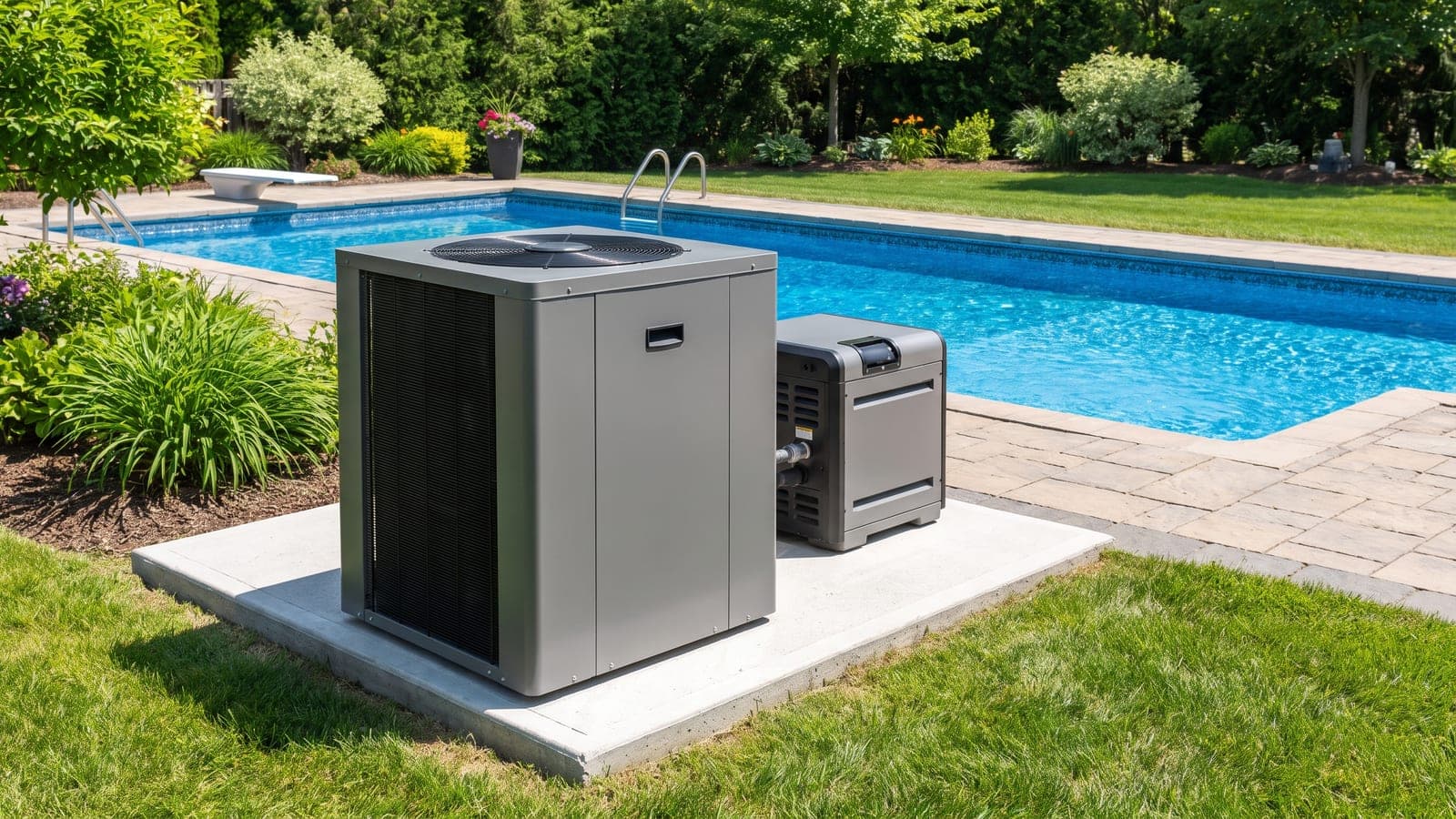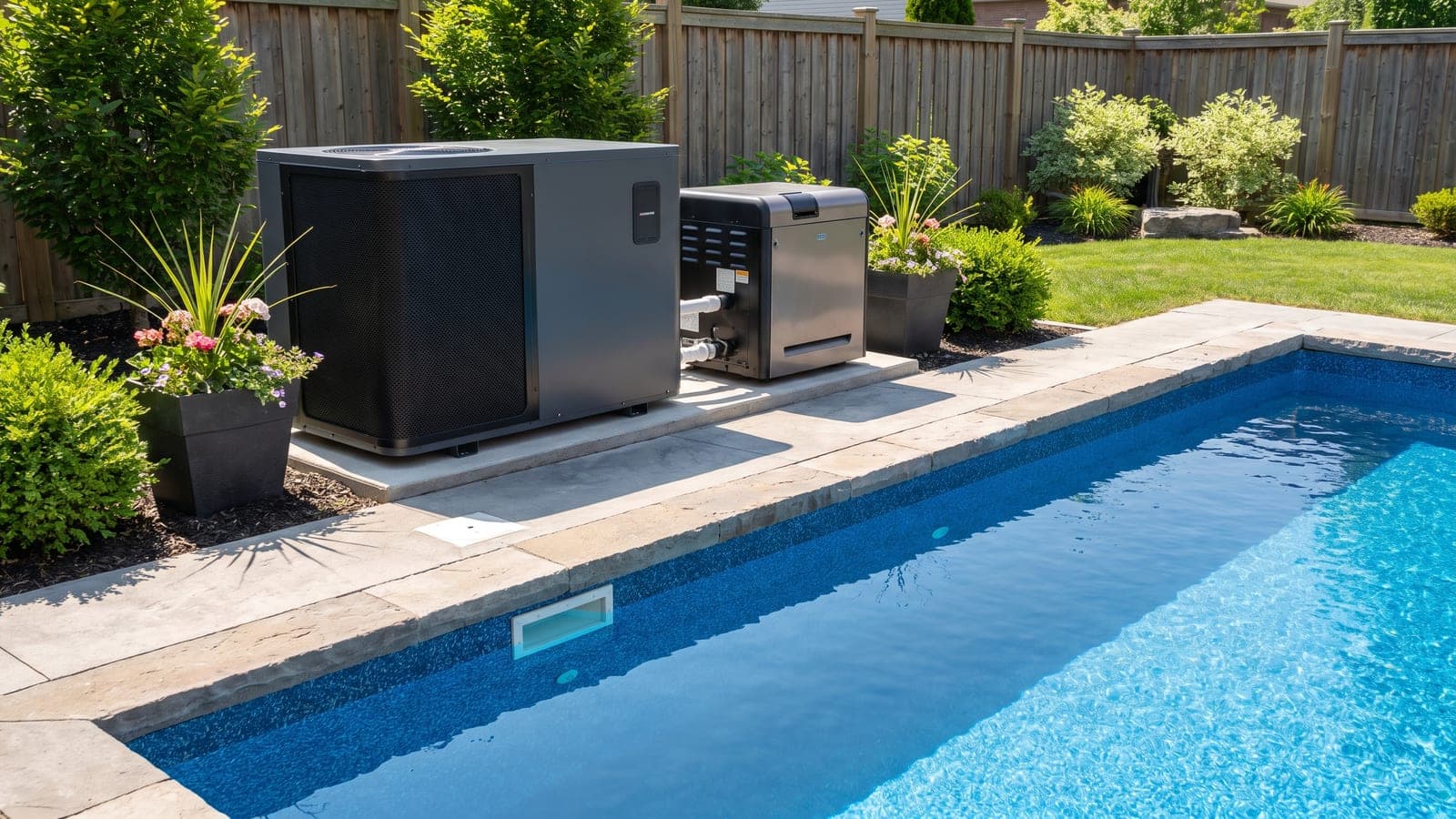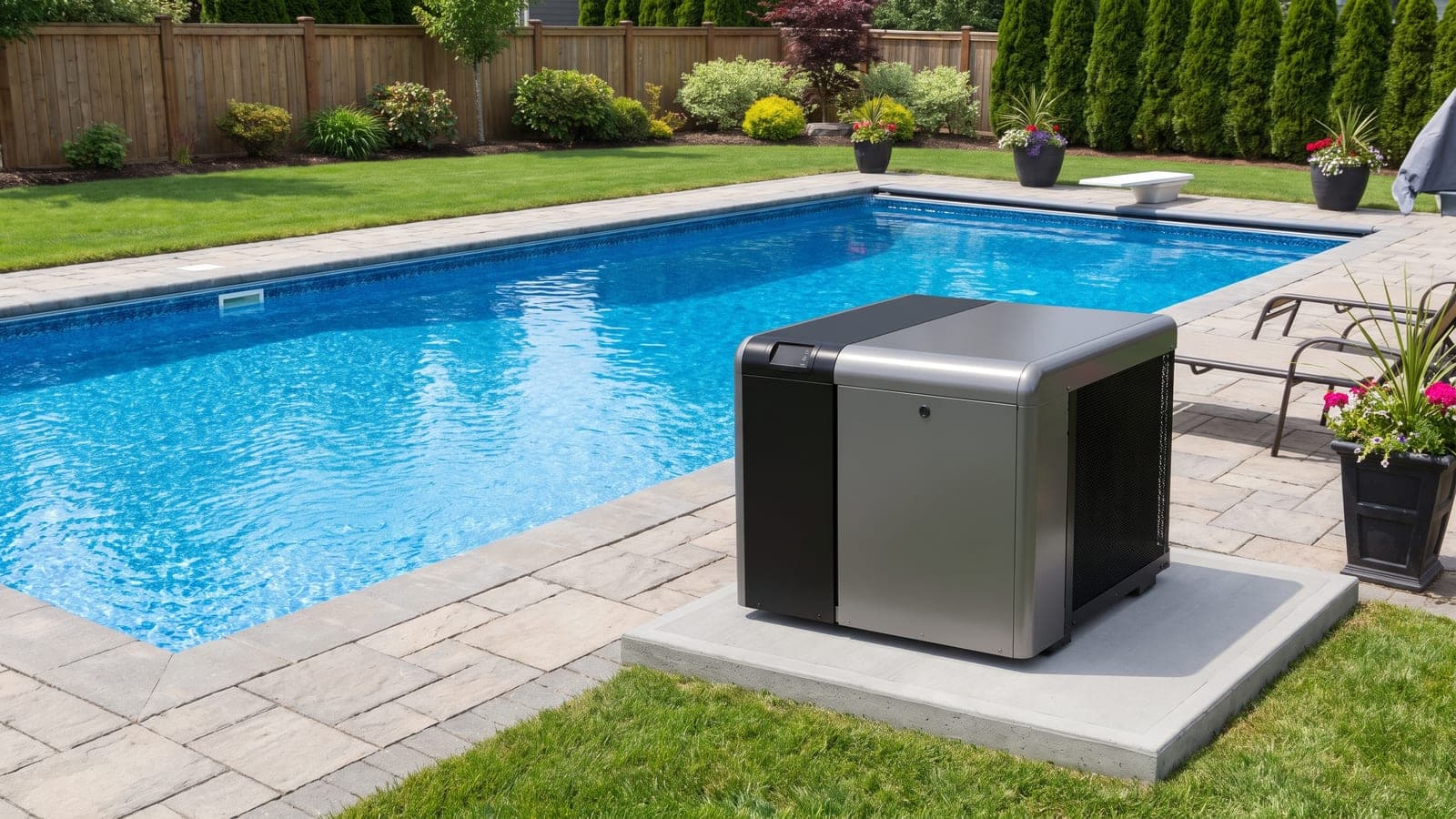
Most pool heaters last 5 to 15 years, and the spread comes down to type: gas heaters typically run 5 to 10 years, while heat pumps often reach 10 to 15 with steady care. A heater is a device that warms your pool water as it passes through, either by burning gas or by pulling heat from the air. Knowing where yours sits in its lifespan tells you whether to nurse it along or start shopping.
Why do some heaters die young and others last?
The single biggest factor is water chemistry. When pH (a measure of how acidic or basic your water is) drops below 7.2, the water turns acidic and slowly eats the copper heat exchanger, which is the part that transfers heat into your pool. Balanced water in the 7.4 to 7.6 range is the cheapest life extension you can give a heater.
Run hours matter too. A heater in Minnesota that works six months a year will outlive a Florida unit running nearly year-round. Salt air near the coast corrodes external parts faster, and hard water leaves scale inside the exchanger that blocks flow and heat.
If you keep your chemistry loose or skip testing, the same neglect that shortens a heater also stresses everything else. Our pool chemistry basics without the lab coat guide covers the handful of numbers worth checking weekly.
How long does a gas heater last versus a heat pump?
Gas heaters heat fast and work in any weather, which is why cold-climate owners love them. The tradeoff is that open-flame burners and copper exchangers wear out sooner, so 5 to 10 years is a realistic window. Units like the Pentair MasterTemp 125K Natural Gas Heater or the Raypak 266,000 BTU Digital Natural Gas Heater can go longer with clean water and yearly service, but the burner assembly is always the weak point.
Heat pumps pull warmth from the surrounding air instead of burning fuel, so they run cooler and gentler on their parts. Many owners get 10 to 15 years from models like the Hayward HeatPro 140,000 BTU Heat Pump or the Pentair UltraTemp 140K Heat Pump. The catch is they heat slowly and struggle once air temperatures drop below the mid-50s Fahrenheit.
Inverter models such as the FibroPool FH285-i Inverter Heat Pump (62,000 BTU) throttle their output up and down instead of cycling hard on and off, which can ease wear over time. You can compare types on our pool heaters page.
What are the signs it is time to replace your heater?
Watch for these red flags stacking up:
- Water leaking from inside the unit. This often points to a cracked or corroded heat exchanger, one of the priciest parts to fix.
- Rising gas or electric bills with no change in how you use the pool, which signals lost efficiency.
- Short cycling, where the heater fires up then shuts off within a minute or two, again and again.
- Rust-colored water or visible corrosion on internal components.
- Repeated repairs in a single season, especially on a unit past 8 years.
One of these alone might be a simple fix. Three or four together on an aging heater is your sign to replace rather than pour money into it.
Should you repair or replace?
Run the math on age and cost. A good rule is that if the repair costs more than half of a new heater and the unit is past 7 years, replacement usually wins. New heaters are more efficient, so you often recover part of the cost in lower operating bills. The Department of Energy's swimming pool heating overview walks through sizing and efficiency if you are weighing a switch between gas and heat pump.
Repairs make sense when the heater is younger and the failed part is minor, like an igniter, pressure switch, thermostat, or flame sensor. Those are common, affordable, and do not signal the whole unit is done.
Always get a diagnosis from a licensed tech before deciding. A heat exchanger can be pressure-tested to confirm whether it is truly cracked or just needs a gasket.
How do you make a heater last longer?
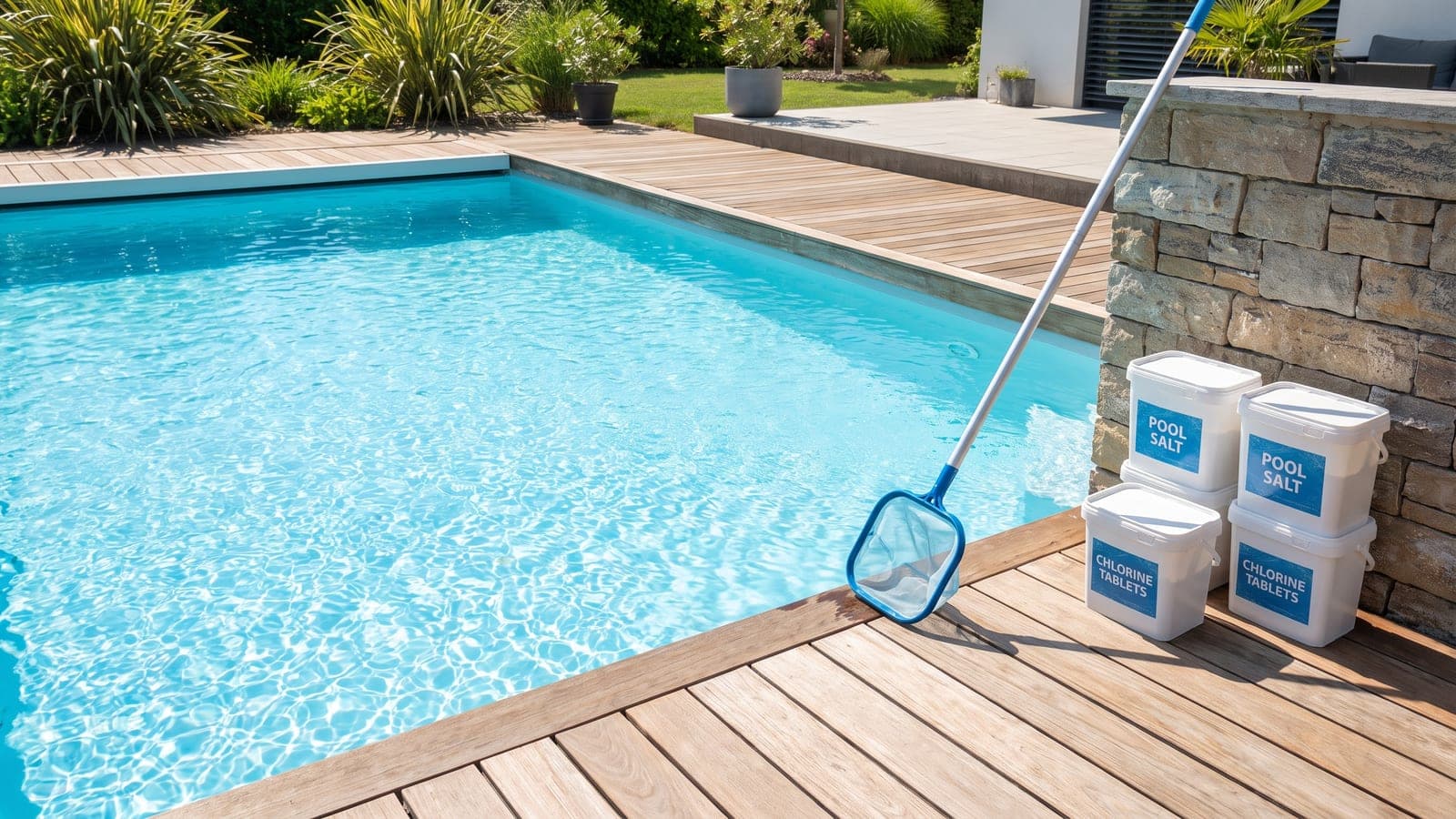
Balanced water is job one, so test weekly and keep pH and alkalinity in range. Keep your filter clean and your pump moving enough water, since low flow makes a heater overwork and overheat.
Use a pool cover to cut how hard the heater has to run in the first place. The Department of Energy notes that pool covers can dramatically reduce heat loss, which means fewer run hours on your equipment. Pairing a heater with an efficient pump also helps, and Energy Star pool pumps lists certified variable-speed options.
Winterize properly if you close your pool, since trapped water that freezes inside a heat exchanger will crack it in one hard night. If you run a spa or attached hot tub, the same care applies, and our hot tub maintenance for beginners without the chemical panic guide keeps that side simple. Salt pool owners should also check the saltwater pool maintenance for beginners guide, since salt systems add their own wear considerations.
Treat the heater like the expensive appliance it is, and most of them will give you the long end of their lifespan instead of the short one.
Frequently asked questions
How many years should a pool heater last?
Gas heaters usually run 5 to 10 years, and heat pumps often reach 10 to 15 years with good care. Your real number depends on run hours, water chemistry, and whether the unit sits through freezing winters. Coastal salt air and unbalanced water shorten those ranges.
Is it worth repairing an old pool heater?
A repair makes sense when the heater is under about 7 years old and the fix is a sensor, igniter, or gas valve. Once the heat exchanger corrodes or the unit is past 10 years with multiple failures, replacement is usually the smarter spend. Get a quote before deciding.
What kills a pool heater fastest?
Low pH is the top killer because acidic water eats the copper heat exchanger from the inside. Poor water flow, skipped winterizing, and scale buildup follow close behind. Balanced chemistry and a clean filter add years to almost any unit.
Does a heat pump last longer than a gas heater?
Usually yes. Heat pumps have fewer high-heat parts and no open flame, so many owners get 10 to 15 years. Gas heaters heat faster but their heat exchangers and burners wear sooner, landing most in the 5 to 10 year range.
How do I know if my heat exchanger is bad?
Watch for pool water leaking from the heater, rust-colored water, or a heater that trips out shortly after firing. A cracked or corroded heat exchanger often cannot be repaired affordably. A pro can pressure-test it to confirm before you commit to a new unit.