A heat pump almost always costs less to run than a gas pool heater, often by a wide margin, but gas still wins in cold weather and when you need heat fast. That is the short answer. The longer answer depends on your climate, your pool size, your local energy prices, and how you actually use the pool.
Use the calculator above to size this to your pool and estimate a real monthly cost, because the honest truth is that the "cheaper" option changes from backyard to backyard.
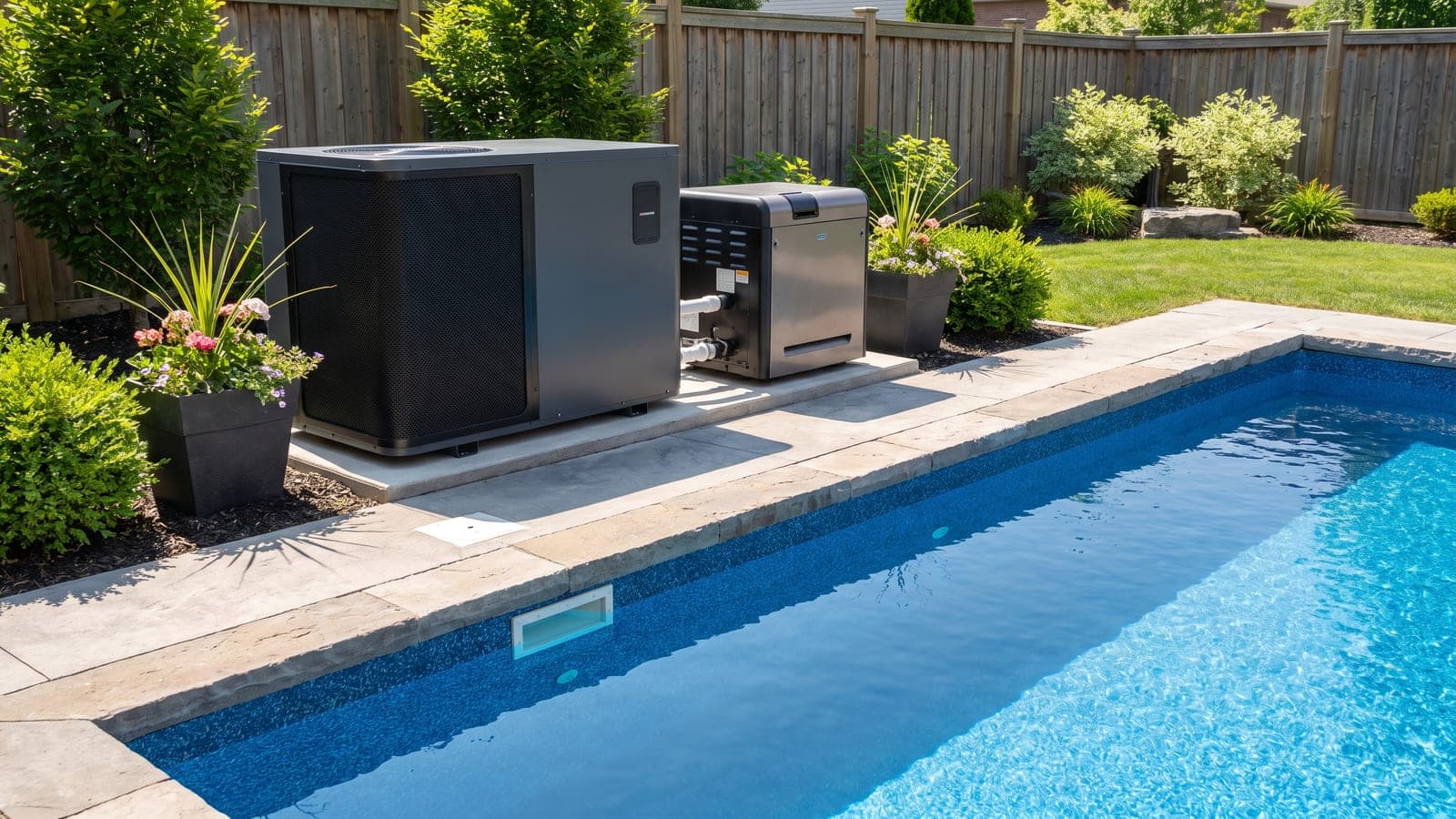
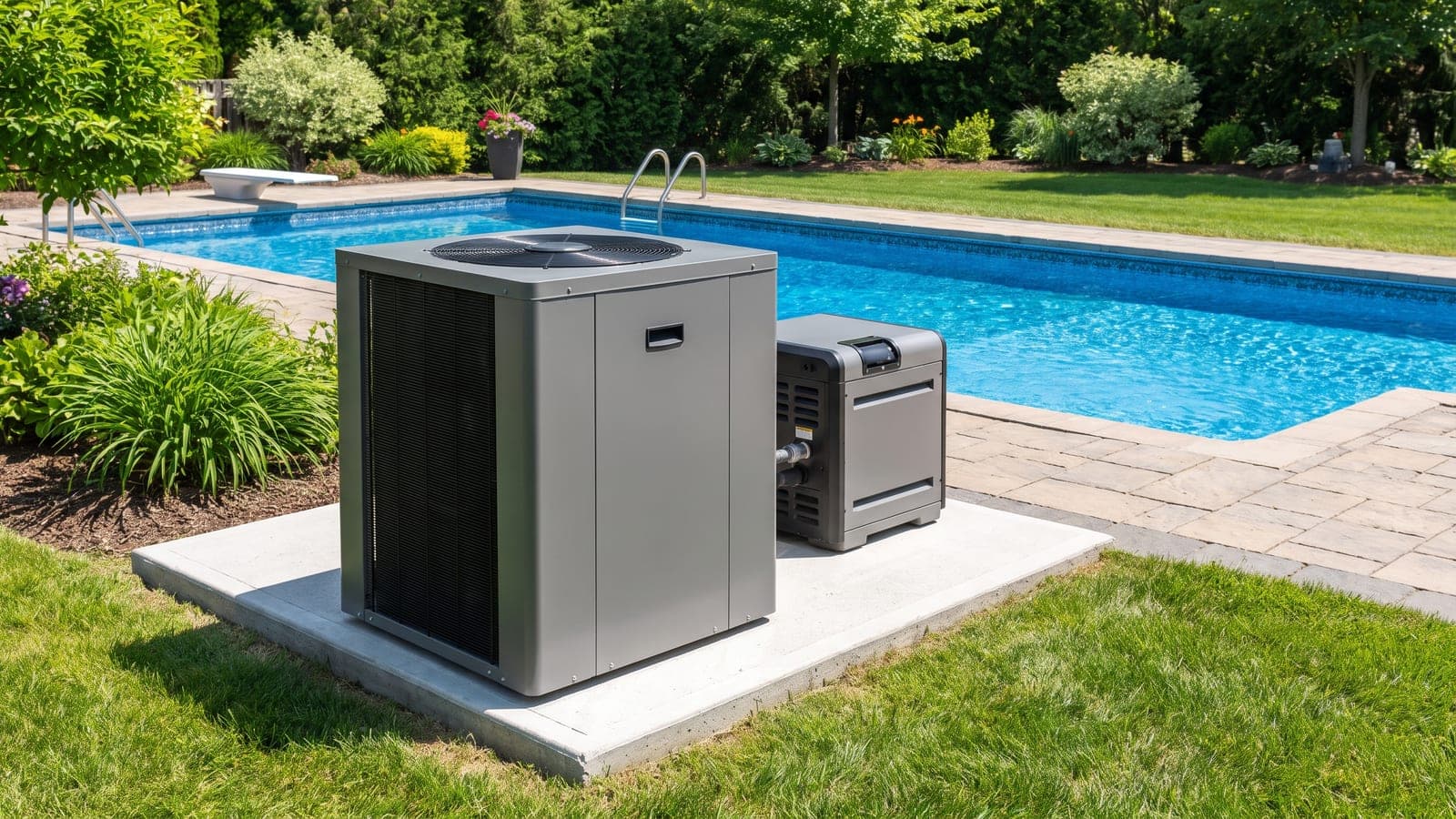
Let me define the two players first. A gas pool heater burns natural gas or propane to heat water passing through it. A heat pump uses electricity to move warmth out of the surrounding air and into your pool, more like an air conditioner running in reverse. That difference in how they make heat is the whole reason their running costs are so far apart.
Why does a heat pump usually cost less to run?
Efficiency, and it is not close. A gas heater is measured by a percentage, often somewhere in the low-to-mid 80s, meaning most of the fuel you buy becomes heat and the rest goes up the flue. That is a solid number for a burner, but it caps you at less than one unit of heat per unit of fuel.
A heat pump is measured by COP (coefficient of performance), which is how many units of heat it delivers per unit of electricity it consumes. Typical values land around 4 to 6 in warm conditions. In plain terms, the heat pump can produce four to six times more heat energy than the electricity it draws, because it is moving existing warmth rather than creating it from fuel.
So even when electricity costs more per unit than gas, the heat pump's multiplier usually more than makes up for it. The U.S. Department of Energy's guidance on swimming pool heating walks through this same tradeoff if you want the official version.
When does gas actually win on cost?
Cold air. A heat pump pulls heat from the air, so as the air gets colder there is less heat to grab, and the unit works harder for less output. Down around the low 50s Fahrenheit performance starts sliding, and by the mid-40s many standard heat pumps become slow and inefficient.
Gas does not care about air temperature. A Pentair MasterTemp 125K Natural Gas Heater or a Raypak 266,000 BTU Digital Natural Gas Heater will pump out the same BTUs on a 40-degree morning as on an 80-degree afternoon. (A BTU, British thermal unit, is just a measure of heat energy.)
Gas also wins when you heat on demand. If you only want the pool warm for a weekend party and it sits cold the rest of the time, a gas heater's fast recovery is cheaper in practice than running a slow heat pump for days. Heat pumps reward owners who hold a steady temperature all season.
How fast does each one heat the pool?
Gas is the sprinter. Because a gas unit can deliver a huge number of BTUs at once (big residential units run well past 200,000 BTU), it can raise a pool's temperature in hours. That is why spas and quick-warm setups almost always use gas.
A heat pump is the marathon runner. A FibroPool FH255 55,000 BTU Heat Pump or a Hayward HeatPro 140,000 BTU Heat Pump heats gently and can take most of a day, sometimes longer, to bring a cool pool up several degrees. Once the water is at temperature, though, it sips power to hold it there.
If you keep an attached spa, this matters. Many owners run gas for the quick spa heat and a heat pump for the everyday pool. For hot-tub-specific care, the hot tub maintenance for beginners guide covers the water side of that setup.
What does it actually cost per month?
This is where I have to be honest: it depends, and anyone quoting you one number without knowing your pool is guessing. The real cost drivers are pool volume in gallons, your target temperature, the outdoor air temperature, wind exposure, and whether you use a cover.
As a rough frame, gas owners in cool weather commonly report higher monthly bills than heat pump owners in mild weather, but propane, high gas rates, or cold snaps can flip that. The single biggest variable is not even the heater. It is evaporation.
Plug your numbers into the pool heater size calculator to compare gas, electric, and heat pump for your specific volume and local rates. Match that against your actual utility prices, since a cheap-to-run heat pump in one state can be middling in another.
What cuts heating costs no matter which one you buy?
A cover. Most of a pool's heat escapes through evaporation at the surface, and a solar or thermal cover slows that down dramatically. The Department of Energy's page on swimming pool covers calls them one of the most effective ways to reduce heating costs, and that holds true whether you burn gas or run a heat pump.
A few other things help. Keep your pump and filter healthy so water actually flows through the heater at the right rate (check the manual for the minimum and maximum flow your unit wants). A well-sized variable-speed pump, the kind ENERGY STAR certifies, keeps circulation efficient without wasting power. And do not overheat: every degree above what you actually need costs real money, so pick a target temperature and leave it.
Balanced water protects the investment too. Scale and corrosion from off-target chemistry can damage a heater's internals over time. The pool chemistry basics guide covers the numbers to keep an eye on, and if you run salt, the saltwater pool maintenance guide explains why heater material choice matters even more in a salt system.
So which should you buy?
Buy a heat pump if you live somewhere with mild-to-warm swim seasons, you want the lowest running cost, and you are happy holding a steady temperature all season. A FibroPool FH285-i Inverter Heat Pump (62,000 BTU) or a Hayward unit fits most warm-climate pools, and the inverter style holds up a bit better on cooler days.
Buy gas if you swim in genuinely cold weather, you heat on demand rather than all season, or you have a spa you want hot in twenty minutes. The faster recovery is worth the higher fuel bill for that use.
Plenty of owners in mixed climates run both. Whichever way you lean, size it correctly first, because an undersized heater of either type runs constantly and never quite gets there. Browse the current pool heaters to compare BTU ratings and match one to the size your calculator result points to, then confirm the flow and clearance specs in that model's manual before you commit.
Frequently asked questions
Is a heat pump really cheaper to run than a gas heater?
In most climates, yes. A heat pump moves heat from the air instead of burning fuel, so it delivers several units of heat for every unit of electricity it uses, while gas burns fuel at a fixed efficiency. The exception is cold weather, where heat pumps slow down and gas keeps its output.
How much does it cost to heat a pool per month?
It depends heavily on pool size, water temperature target, air temperature, and whether you use a cover. Owners often report anywhere from under 100 dollars to several hundred dollars a month. Use the calculator above and check your local gas and electric rates to get a real number for your pool.
Do heat pumps work in cold weather?
They work well down to roughly the low 50s Fahrenheit, then lose output as the air gets colder. Below about 45 to 50 degrees, many standard units struggle and gas becomes the practical choice. Inverter models hold performance a little better in the cold.
Which heats a pool faster, gas or heat pump?
Gas heats faster because it can push far more BTUs at once, often warming a pool in hours instead of a day or more. Heat pumps heat slowly and steadily, which suits owners who keep the pool at a set temperature all season rather than heating on demand.
Does a pool cover reduce heating costs?
Yes, and it is the single biggest thing you can do. Most heat loss happens through evaporation at the surface, so a cover can cut heating costs substantially regardless of which heater you own. The Department of Energy considers covers one of the most effective ways to save.