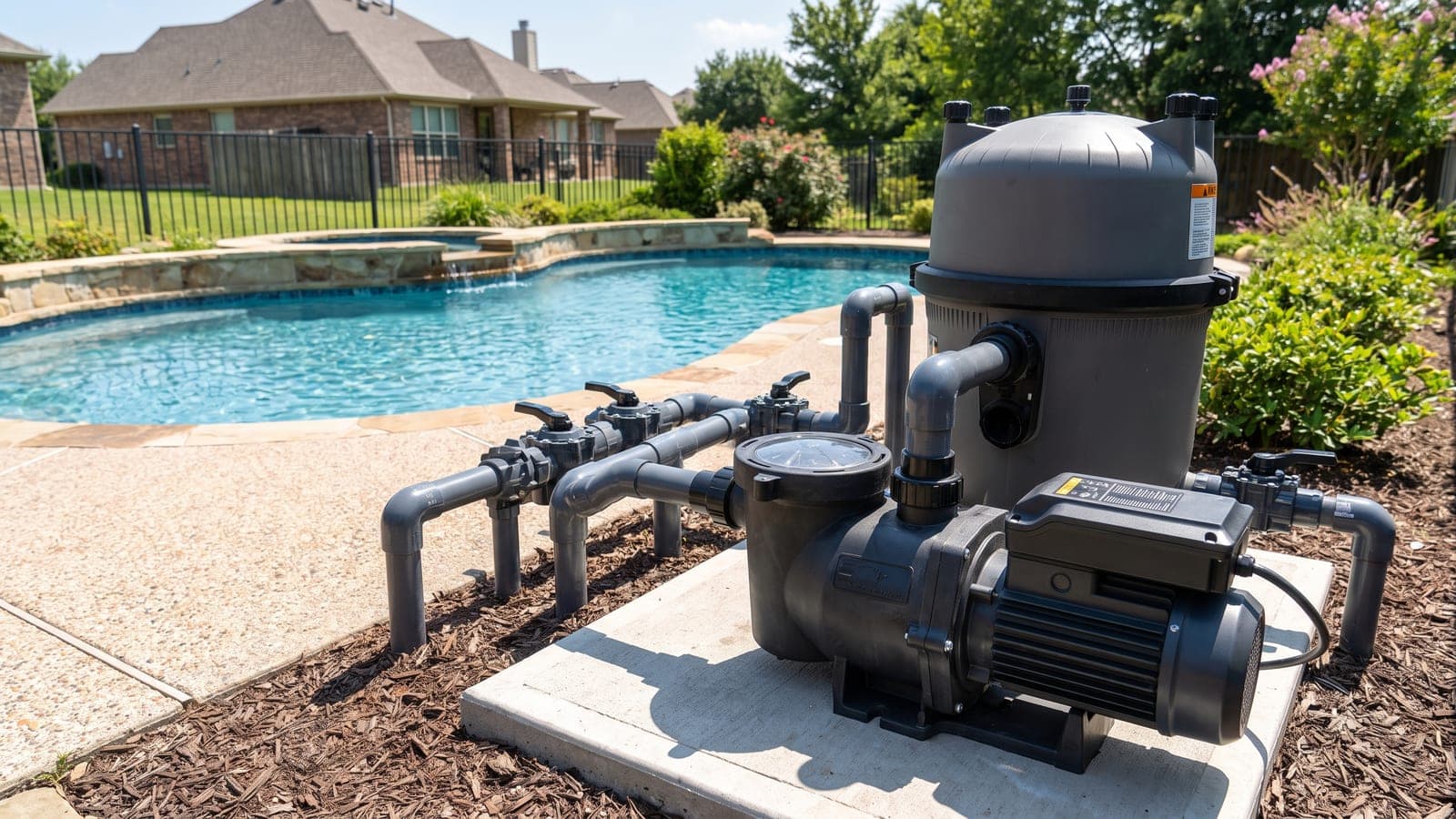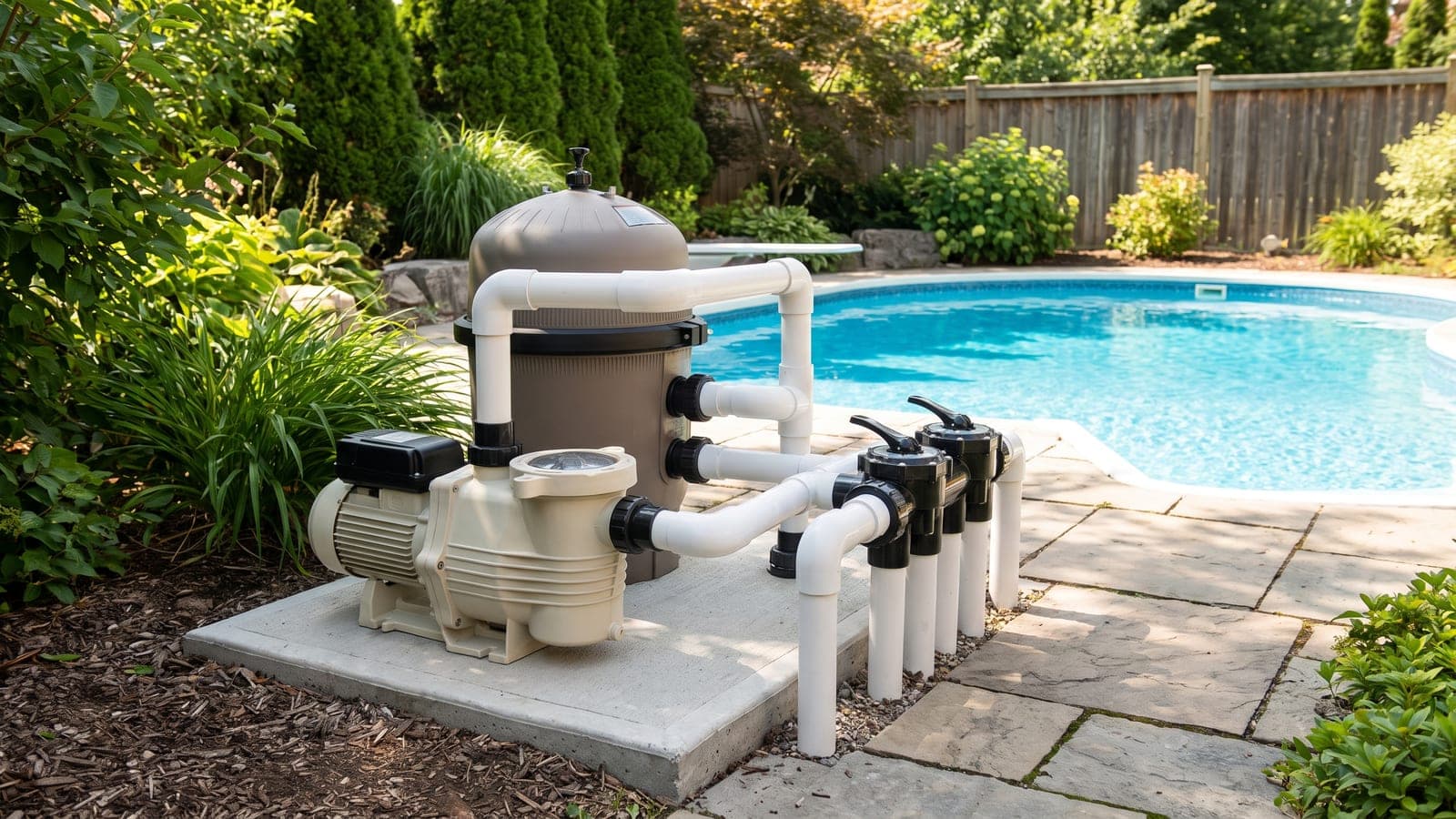
The right variable-speed pump for most residential pools is one rated around 1.5 to 3 total horsepower, sized so it can turn over your pool's full volume in about 8 to 10 hours at a comfortable low speed. That range covers the large majority of backyard pools. The exact pick depends on your gallons, your plumbing size, and whether you run a heater or spa.
A variable-speed pump (often shortened to VS pump) is a pool pump whose motor can run at different speeds instead of one fixed high speed. Slower speeds move water more efficiently and use far less electricity, which is why the U.S. Department of Energy and ENERGY STAR both point owners toward them.
Use the calculator above to size this to your pool. Punch in your gallons and it will estimate the flow you need. The sections below explain the reasoning so the numbers make sense.
How do I figure out my pool's volume?
Everything starts with gallons, so get that number first. For a rectangular pool, multiply length times width times average depth times 7.5. For a round pool, use diameter times diameter times average depth times 5.9. Average depth means the shallow end plus the deep end divided by two.
A typical 16 by 32 foot inground pool at around 5 feet average depth holds roughly 19,000 gallons. A smaller 15 foot round above-ground pool might hold 5,000 gallons. Write your number down, because turnover math depends on it.
What is turnover and why does it decide the size?
Turnover is the time it takes your pump to push your entire pool volume through the filter once. Most pool pros aim for one turnover in 8 to 10 hours, which keeps water clear and chemicals mixed without running the pump around the clock.
Here is the simple version. Take your gallons and divide by the hours you want a turnover to take, then divide by 60 to get gallons per minute (GPM). A 20,000 gallon pool over 10 hours needs about 33 GPM. That flow figure, not horsepower, is the honest way to size a pump.
The good news with variable speed is that you do not have to nail one perfect speed. You pick a pump that can reach your target flow comfortably, then dial the RPM up or down. Balanced water also helps everything downstream run smoothly, and our pool chemistry basics without the lab coat guide covers keeping that side in check.
Does my plumbing limit the pump size?
Yes, and this is where a lot of oversizing goes wrong. Your pipe diameter caps how much water can move without excessive friction and noise. As a rough rule, 1.5 inch pipe handles up to about 45 to 50 GPM and 2 inch pipe handles up to roughly 75 GPM before flow gets loud and inefficient.
If your plumbing is 1.5 inch, buying a huge pump does not buy you huge flow. The water simply cannot get through fast without straining. This is why matching the horsepower of an old, oversized single-speed pump is a trap. Size to your gallons and your pipe, not to the sticker on the old motor.
What horsepower should I actually buy?
For most inground pools in the 10,000 to 25,000 gallon range with standard plumbing, a mid-range variable-speed pump in the 1.5 to 2.5 horsepower class is plenty. The Pentair SuperFlo VS Variable-Speed Pump and the Hayward MaxFlo VS Variable-Speed Pump sit in this middle zone and suit typical backyard pools without a spa.
Larger pools, long pipe runs, water features, or an attached spa push you higher. A Pentair IntelliFlo3 VSF Pump or a Hayward TriStar VS Pump gives more high-speed muscle for a spa jet or a demanding heater. If your pool is small or above ground, a compact unit like the Black+Decker Variable-Speed Pool Pump can cover the job at lower cost.
Whatever brand you lean toward, check the pump's flow curve in the listing or manual against the GPM your pool needs. That single comparison matters more than the horsepower label.
Do I need extra flow for a heater, spa, or salt system?
Sometimes, and it is worth checking before you buy. Gas and heat-pump heaters list a minimum flow rate to fire safely, often in the 25 to 40 GPM range depending on model. A spa with strong jets wants a solid high-speed burst. A salt cell needs a minimum flow to generate chlorine.
If you run any of these, size for the highest-demand device, not just turnover. A salt system in particular has a flow floor, and our saltwater pool maintenance for beginners guide walks through what the cell expects. The same flow-first thinking applies to a spa, which our hot tub maintenance for beginners without the chemical panic guide covers on the care side.
When should I call a pro instead of guessing?
Call a pro if your plumbing size is unclear, if you have long underground runs, or if you are adding a heater or spa at the same time. A tech can read the total dynamic head of your system, which is the real resistance the pump fights against, and match a pump curve to it precisely.
For a straightforward pool with visible, standard plumbing, the calculator and the volume math here get you a confident answer. Grab your gallons, target an 8 to 10 hour turnover, respect your pipe size, and you will land on the right variable-speed pump. A basic flow check and a few pump accessories from our pool accessories page round out the setup.
Frequently asked questions
Can a variable-speed pump be too big for my pool?
Not really, and that is the nice part. A variable-speed pump just runs at a lower speed for a smaller pool, so a slightly oversized unit still saves energy. The bigger risk is buying too small and never getting enough flow for a heater or spa.
Do I match the new pump to the horsepower of my old single-speed?
Not directly. Old single-speed pumps were often oversized for the plumbing, so matching that number can lead you astray. Size to your pool volume and turnover instead, and check the pump curve against your filter and pipe size.
What speed should I run a variable-speed pump most of the day?
Most owners run a low speed for many hours to hit turnover quietly and cheaply, then bump to high speed only for cleaning, heating, or running a spa. The exact RPM depends on your plumbing and equipment, so watch your flow and adjust.
Will a variable-speed pump work with my existing filter and salt system?
Usually yes, as long as the filter is sized for your flow and the salt cell gets the minimum flow it needs to generate chlorine. Very old or undersized filters may need attention. Check each device's minimum and maximum flow in its manual.
How long should a variable-speed pump last?
Many owners report long service lives because the motor runs cooler at low speeds, but actual lifespan depends on water chemistry, run hours, and installation. Keep the pump basket clean and your chemistry balanced to get the most out of it.