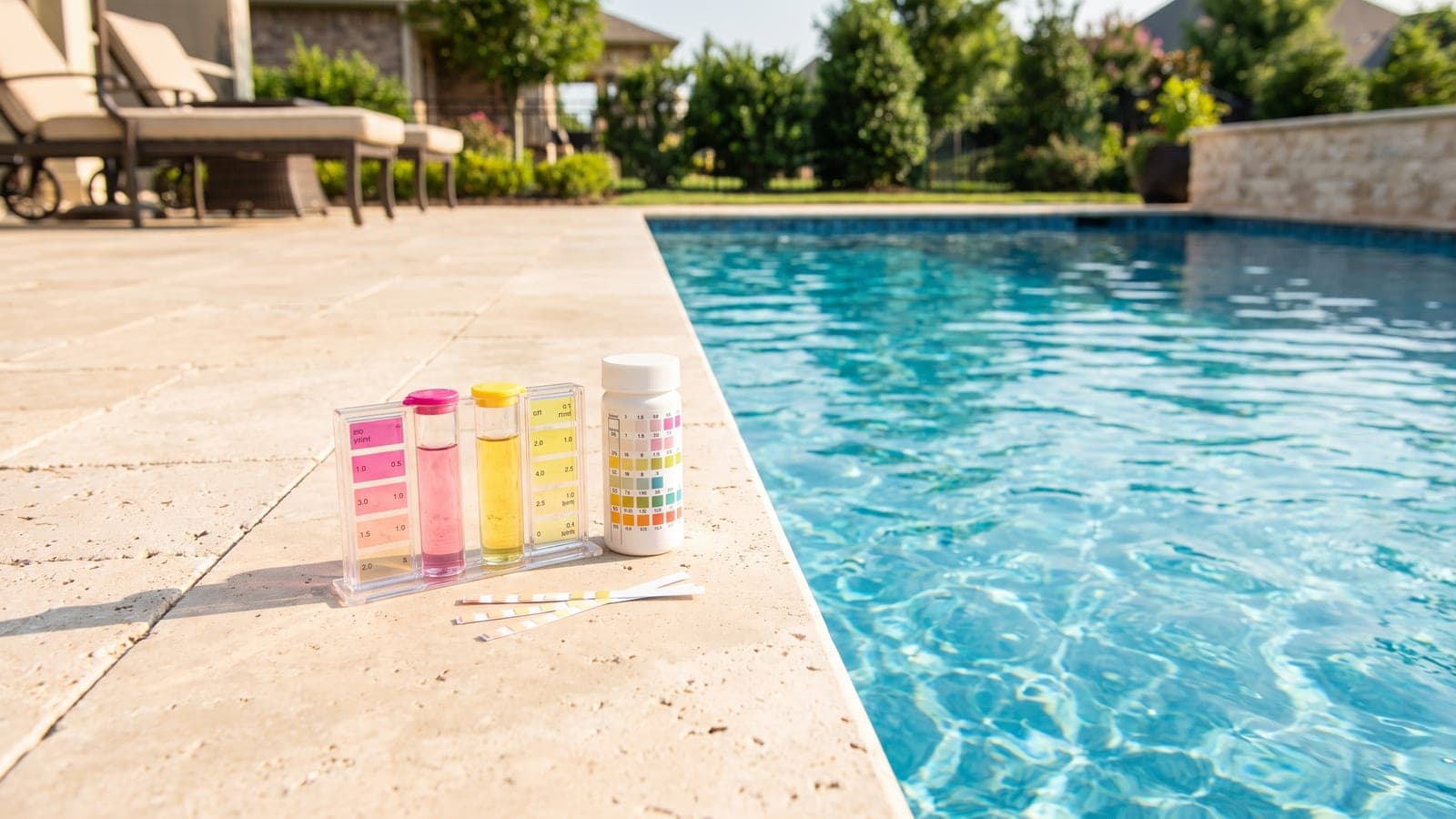
The best pool test kit for most people is the Taylor K-2006 Complete Test Kit (FAS-DPD), because it reads free chlorine, pH, alkalinity, and cyanuric acid accurately enough to dose with confidence. If you want speed over precision, a strip pack works for daily glances. If you hate matching colors and want your phone to nag you, a smart monitor fills that gap. This guide sorts the picks by what you actually want out of testing.
Accurate readings matter because chlorine keeps swimmers safe from germs, and the CDC recommends checking free chlorine and pH regularly, especially when the pool is busy (see the CDC pool water treatment and testing page). A few quick definitions first. Free chlorine is the active sanitizer still available to kill germs. pH is how acidic or basic the water is, ideally 7.2 to 7.8. Cyanuric acid, or CYA, is chlorine's sunscreen that slows how fast UV burns it off. A good kit reads all of these clearly.
Comparison table
| Pick | Best for | Watch out for |
|---|---|---|
| Taylor K-2006 Complete Test Kit (FAS-DPD) | Accurate chlorine readings before dosing | More steps and reagents than a strip |
| AquaChek Select 7-Way Test Strips | Fast daily checks | Color matching is approximate |
| LaMotte ColorQ 2X Pro 7 Digital Tester | Removing color-matching guesswork | Costs more, needs clean vials and light |
| Sutro Smart Pool Monitor | Automatic trend tracking | Subscription and cartridge upkeep |
| WaterGuru Sense S2 Smart Monitor | Skimmer-based hands-off monitoring | Pods to replace, confirm before dosing |
| Taylor Reagent Refill Set | Refilling an existing Taylor kit | Only useful if you already own the kit |
Best overall: Taylor K-2006 Complete Test Kit (FAS-DPD)
Mid-range
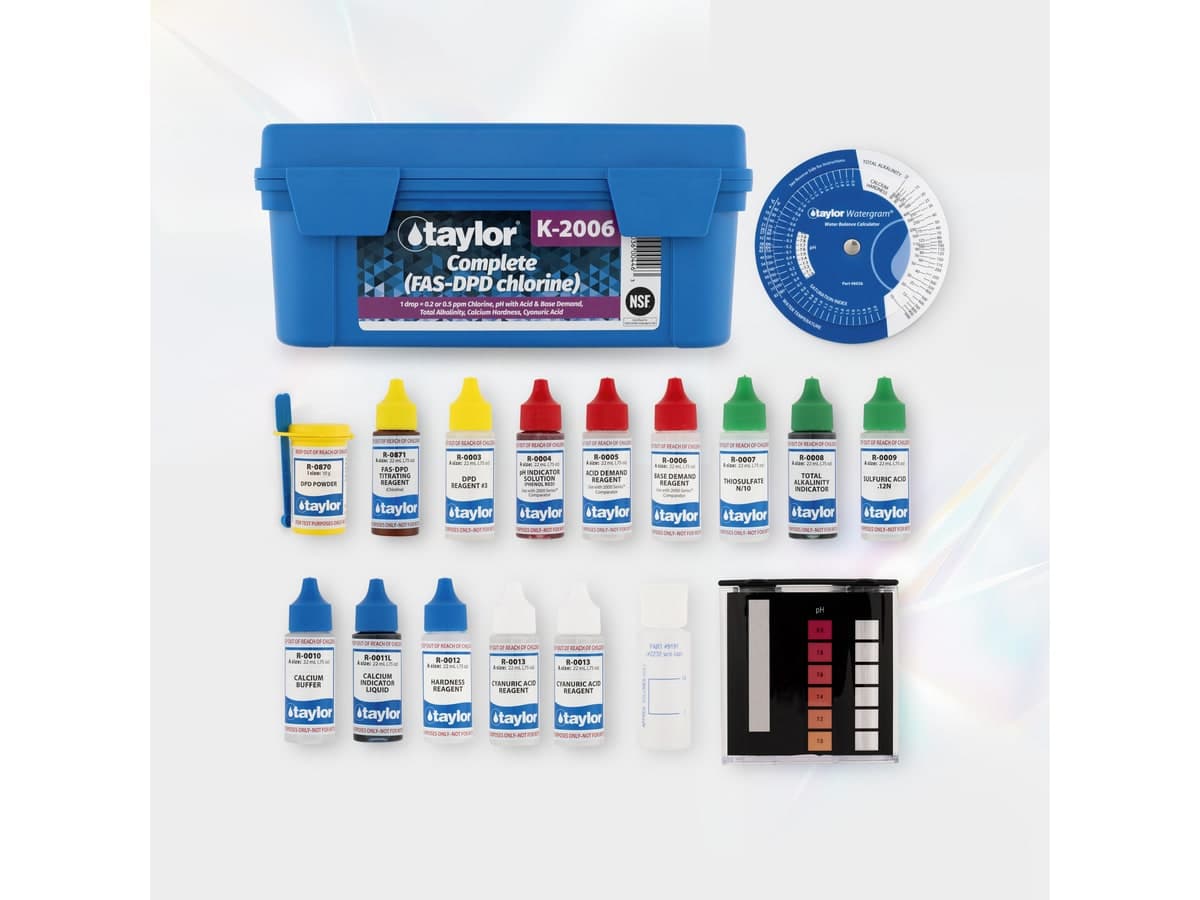
This kit fits owners who want to know their real free chlorine number before they add anything. It uses FAS-DPD titration, where you add drops until the pink sample turns clear, and each drop equals a set amount of chlorine. That gives you a countable reading instead of a shade to guess at, which is why it stays reliable even when chlorine runs high.
The tradeoff is effort. The K-2006 has more bottles, more steps, and a small learning curve compared to dunking a strip. Reagents also age, so plan to replace them roughly yearly. For anyone serious about balanced water, that extra minute per test is a fair price for numbers you can trust.
Best budget accuracy: Taylor K-2005 Complete Test Kit (DPD)
Mid-range
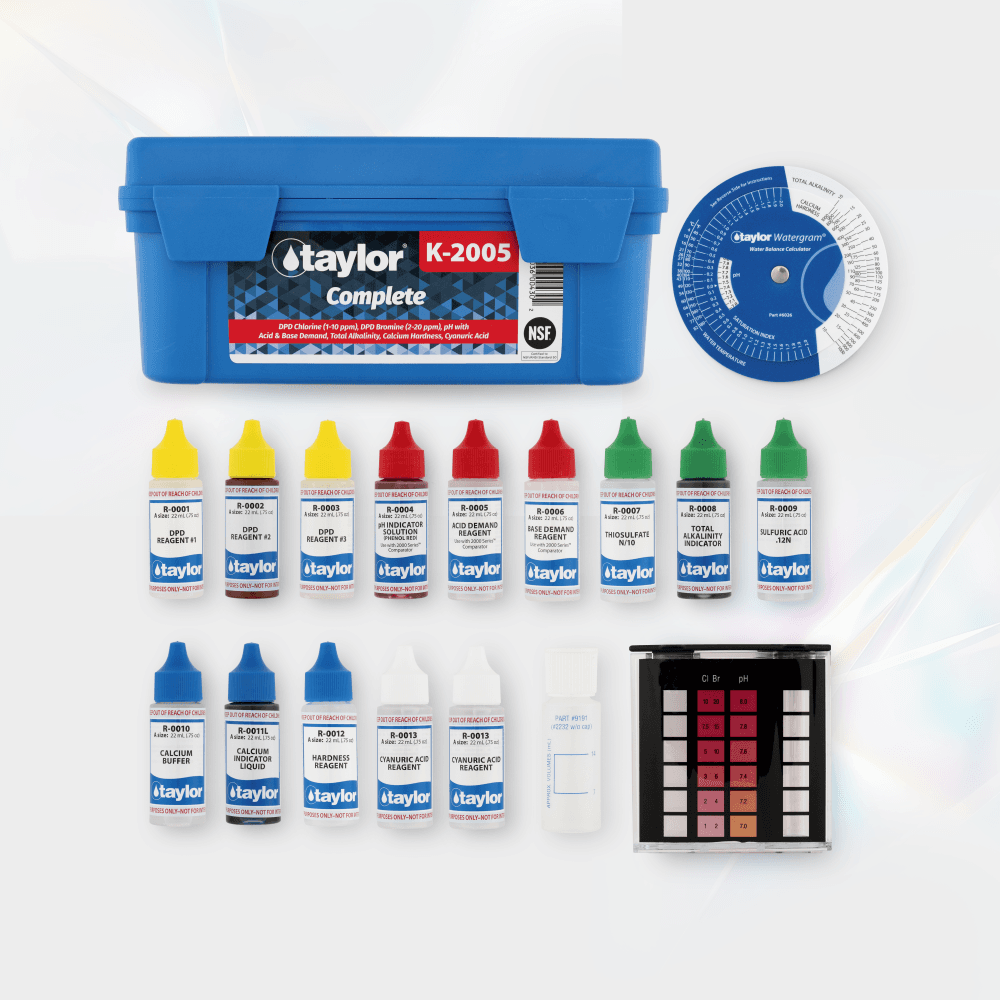
The K-2005 suits owners who want Taylor-grade testing at a lower entry price than the FAS-DPD version. It covers the same core group of free chlorine, pH, alkalinity, and cyanuric acid, using a DPD color-match method where you compare the sample against a printed scale. For routine backyard pools kept in a normal chlorine range, that is plenty.
The catch is at high chlorine levels. DPD color matching can bleach out and read low when chlorine is very high, which is exactly where the FAS-DPD K-2006 pulls ahead. If your pool rarely spikes and you mostly want a solid, affordable liquid kit, the K-2005 is a sensible pick.
Best for fast daily checks: AquaChek Select 7-Way Test Strips
Budget
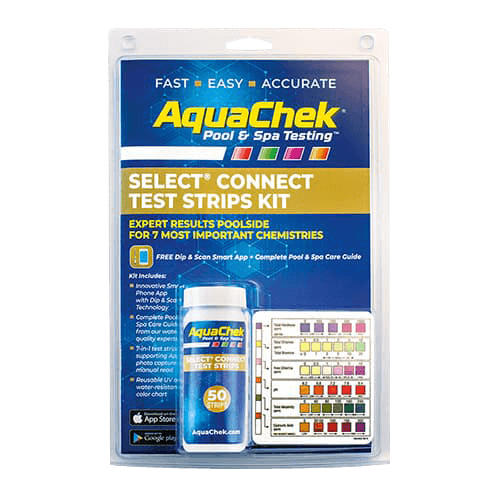
Strips are for the owner who tests often and wants an answer in under a minute. You dip the AquaChek Select 7-Way Test Strips, wait a moment, and read several pads at once for chlorine, pH, alkalinity, and more. That speed makes it easy to test daily, which the CDC encourages during heavy use, instead of skipping because the drop kit feels like a chore.
The honest tradeoff is precision. Strips give you a range, not a sharp number, and results depend on how you dip, how long you wait, and the lighting. Use them for quick monitoring and early warnings, then reach for a drop kit when you need exact figures before a big chemical adjustment.
Best digital reader: LaMotte ColorQ 2X Pro 7 Digital Tester
Premium
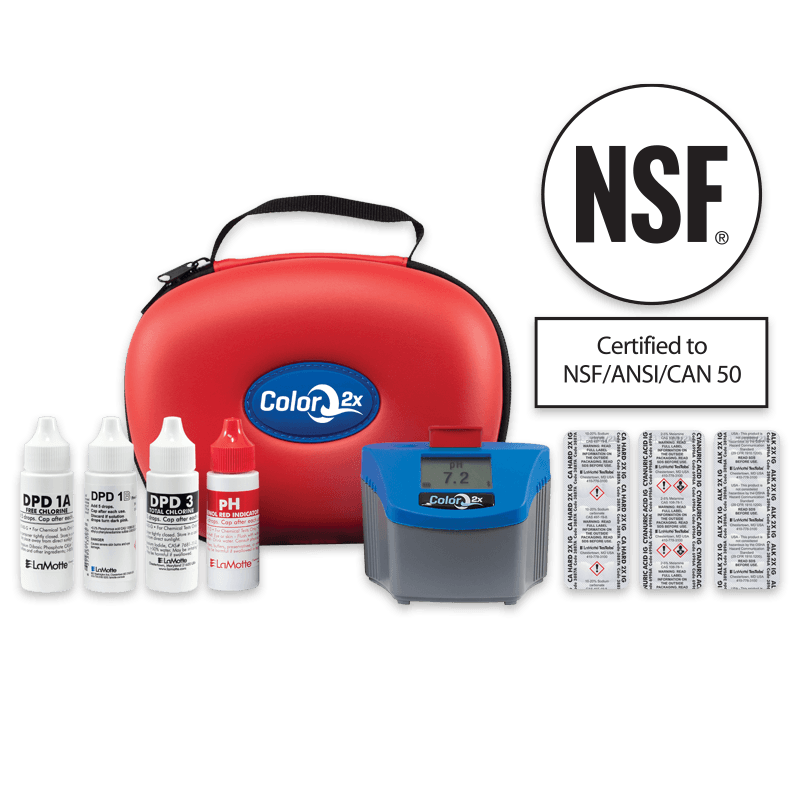
This one fits owners who trust liquid reagents but hate matching colors by eye. You add the reagents, insert the vial, and the ColorQ reads the sample with a built-in photometer, then shows a number on a screen. For anyone who is color-blind or just tired of squinting at a comparator block, that digital readout removes a real source of error.
The tradeoffs are cost and care. It runs on batteries, wants clean vials and good technique, and like any meter its accuracy depends on fresh reagents and a clean optical path. If you want liquid-test accuracy without the judgment call at the end, it earns its higher price.
Best hands-off monitoring: Sutro Smart Pool Monitor
Premium
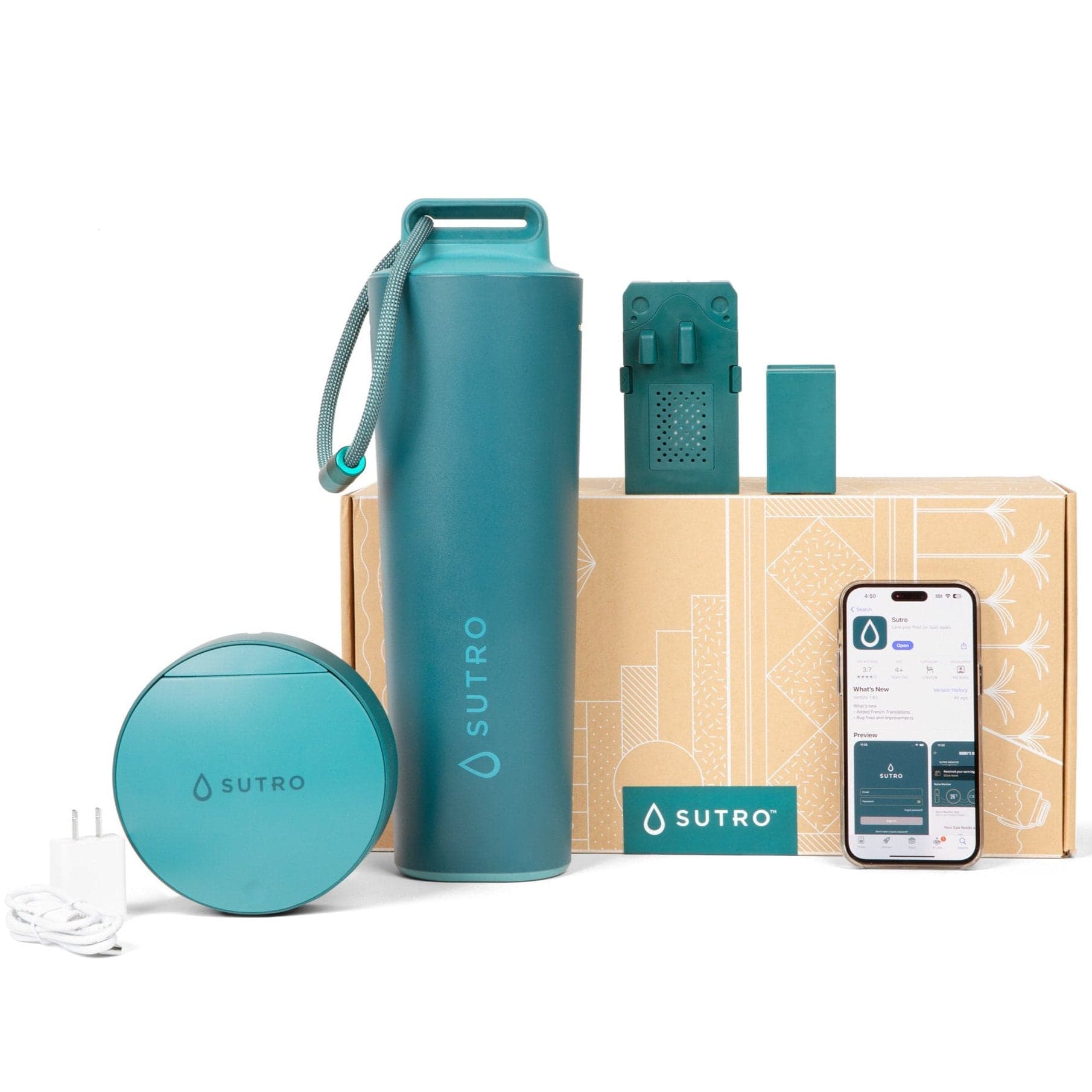
The Sutro Smart Pool Monitor is for owners who want testing to happen without them. It floats in the pool, runs automated chemistry checks on a schedule, and sends free chlorine, pH, and alkalinity trends to an app. That steady stream is genuinely useful for catching drift before it becomes cloudy water or an algae bloom.
Two tradeoffs to weigh. It relies on cartridges and reagent that need replacing, often with an ongoing cost, and floating sensors can drift over time. Treat it as an early-warning system, not the final word. Confirm anything surprising with a manual kit before you dose, since the CDC's pool chemical safety guidance is a good reminder that adding chemicals off a bad reading causes its own problems.
Best skimmer-based monitor: WaterGuru Sense S2 Smart Monitor
Premium
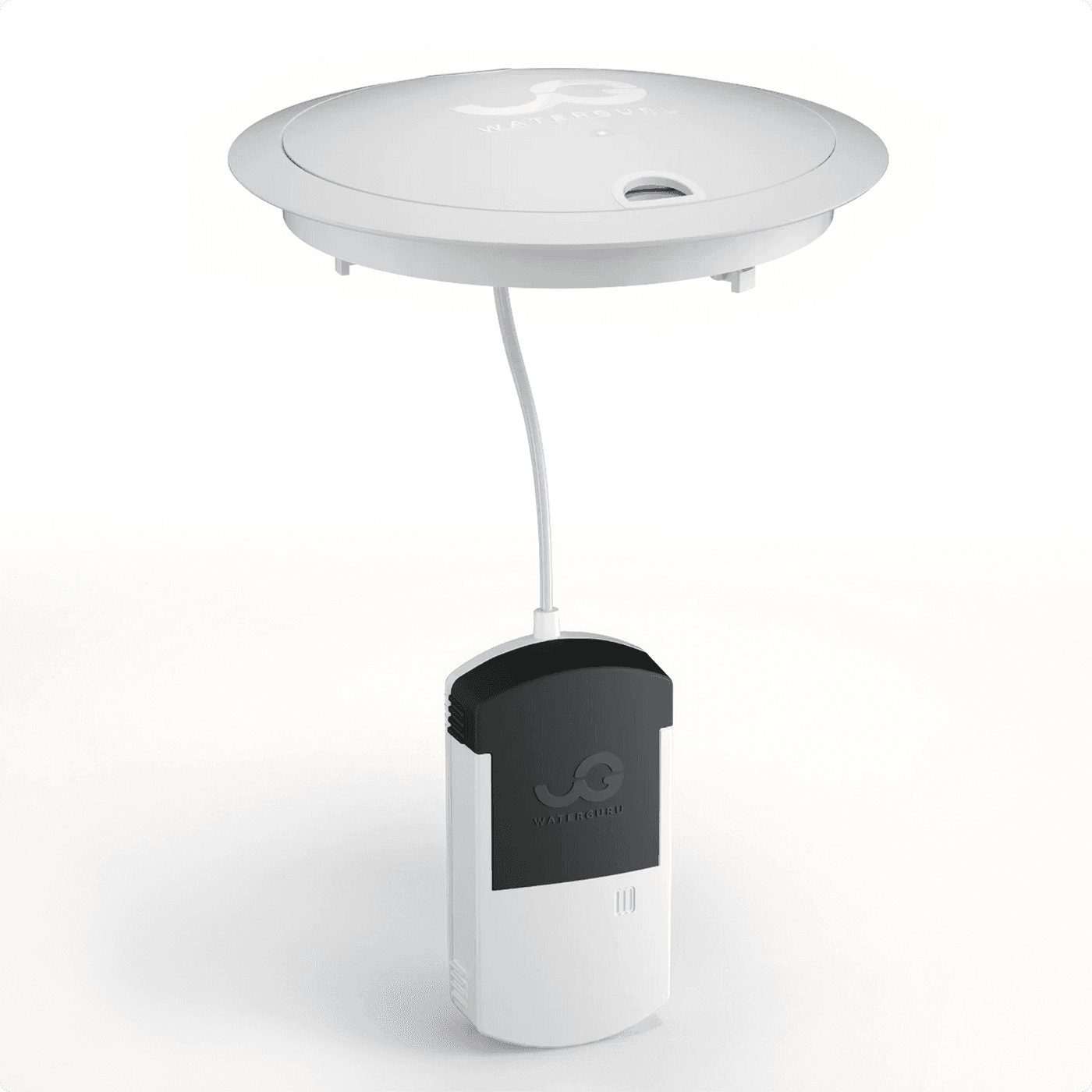
The WaterGuru Sense S2 Smart Monitor suits owners who would rather mount a device in the skimmer than float one in the pool. It draws water across a test pod, measures free chlorine and pH, and pushes readings plus dosing tips to your phone. For a hands-off owner who wants reminders and trends, it keeps testing from slipping through the cracks.
The recurring item here is the test pod, which you replace periodically, so factor that into the running cost. As with any smart monitor, sensors can drift and readings should be sanity-checked against a manual kit before you add chemicals. It shines as a convenience layer on top of a real kit, not a full replacement for one.
Best refill: Taylor Reagent Refill Set
Budget
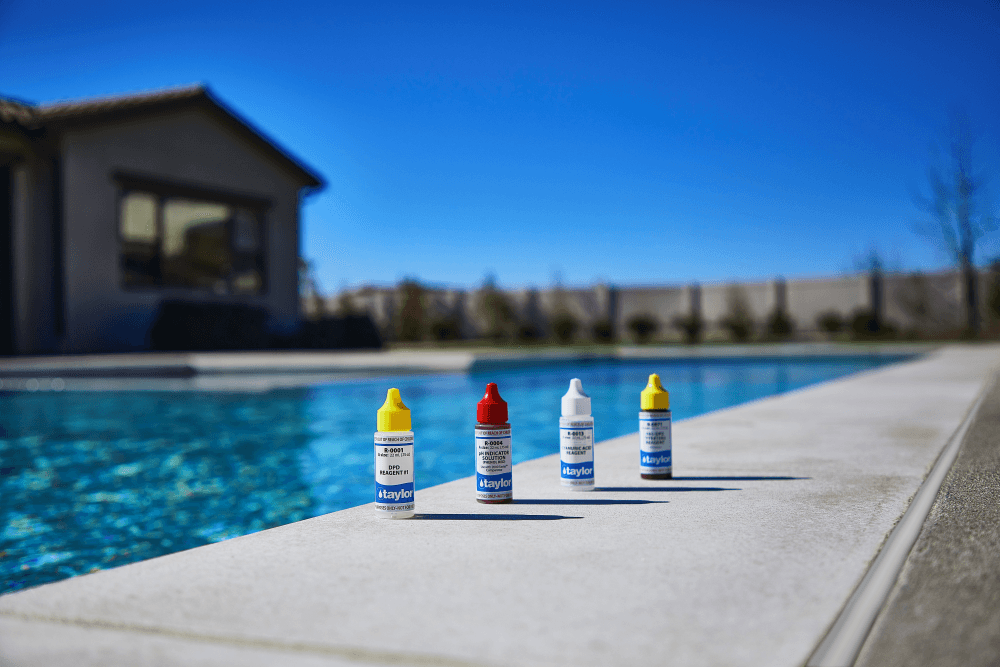
This is the pick nobody thinks about until their bottles run dry. The Taylor Reagent Refill Set restocks the reagents in an existing Taylor kit so you are not buying the whole case, comparator, and vials again. If you own a K-2005 or K-2006, keeping a refill on the shelf means you never skip a test because a bottle ran out mid-season.
The only real caveat is that it is useless on its own. It assumes you already have the kit and the hardware. Match the refill to your specific kit so the reagents line up with your tests, and store them cool and capped so they last their full shelf life.
How to pick the right test kit for your pool
Start with how you like to work. If you want exact numbers and do not mind a few extra steps, go liquid with the Taylor K-2006 (or the K-2005 to save money). If you test constantly and want speed, keep strips like the AquaChek Select 7-Way Test Strips within reach. Most careful owners end up using both, and that combination is hard to beat.
If your problem is forgetting to test at all, a smart monitor earns its keep by watching the trend for you, as long as you confirm before dosing. Whatever you choose, get comfortable with what the numbers mean first. Our pool chemistry basics guide walks through the readings in plain English, the saltwater maintenance guide covers the extra salt check, and if you also run a spa, the hot tub maintenance guide applies the same habits at smaller volume. You can pair any kit with the rest of your maintenance supplies so testing and treating live in one spot.
Frequently asked questions
How often should I test my pool water?
The CDC suggests checking free chlorine and pH at least twice a day when a pool is in heavy use, and most owners test at least a couple of times a week during swim season. If your pool is busy, hot, or just got a rainstorm, test more often. A smart monitor can bridge the gaps, but confirm anything odd with a manual kit before you add chemicals.
Are test strips accurate enough, or do I need a drop kit?
Strips are close enough for a quick daily glance and for spotting a problem fast. For dialing in exact free chlorine, pH, and cyanuric acid before you dose, a liquid drop kit like the Taylor K-2006 reads tighter. Many owners keep both: strips for speed, drops for the numbers that matter.
What is FAS-DPD and why do people prefer it?
FAS-DPD is a titration test where you add drops until the sample changes color, and each drop counts as a set amount of chlorine. It reads free chlorine in clear increments instead of matching a pink shade to a chart, so it stays readable even at high chlorine levels. That is why the Taylor K-2006 is a favorite for accuracy.
Do smart pool monitors replace a regular test kit?
Not entirely. Monitors like the Sutro Smart Pool Monitor or WaterGuru Sense S2 are great for trend tracking and catching drift early, but their sensors and pods need upkeep and can drift over time. Keep a manual kit on hand to confirm readings before you add anything to the water.
How long do test kit reagents last?
Most liquid reagents are good for about a year after opening, and DPD powders can fade faster if they get warm or damp. Store them cool, dark, and tightly capped, and replace anything that looks off-color. A Taylor Reagent Refill Set is cheaper than buying a whole new kit when your bottles run low.
Which test kit is best for a saltwater pool?
A saltwater pool still needs the same free chlorine, pH, and cyanuric acid checks as any chlorine pool, so a Taylor K-2006 covers the core numbers. You also need to track salt level, which most standard kits do not include, so add a dedicated salt test or use a monitor that reports it. See our saltwater maintenance guide for the full routine.