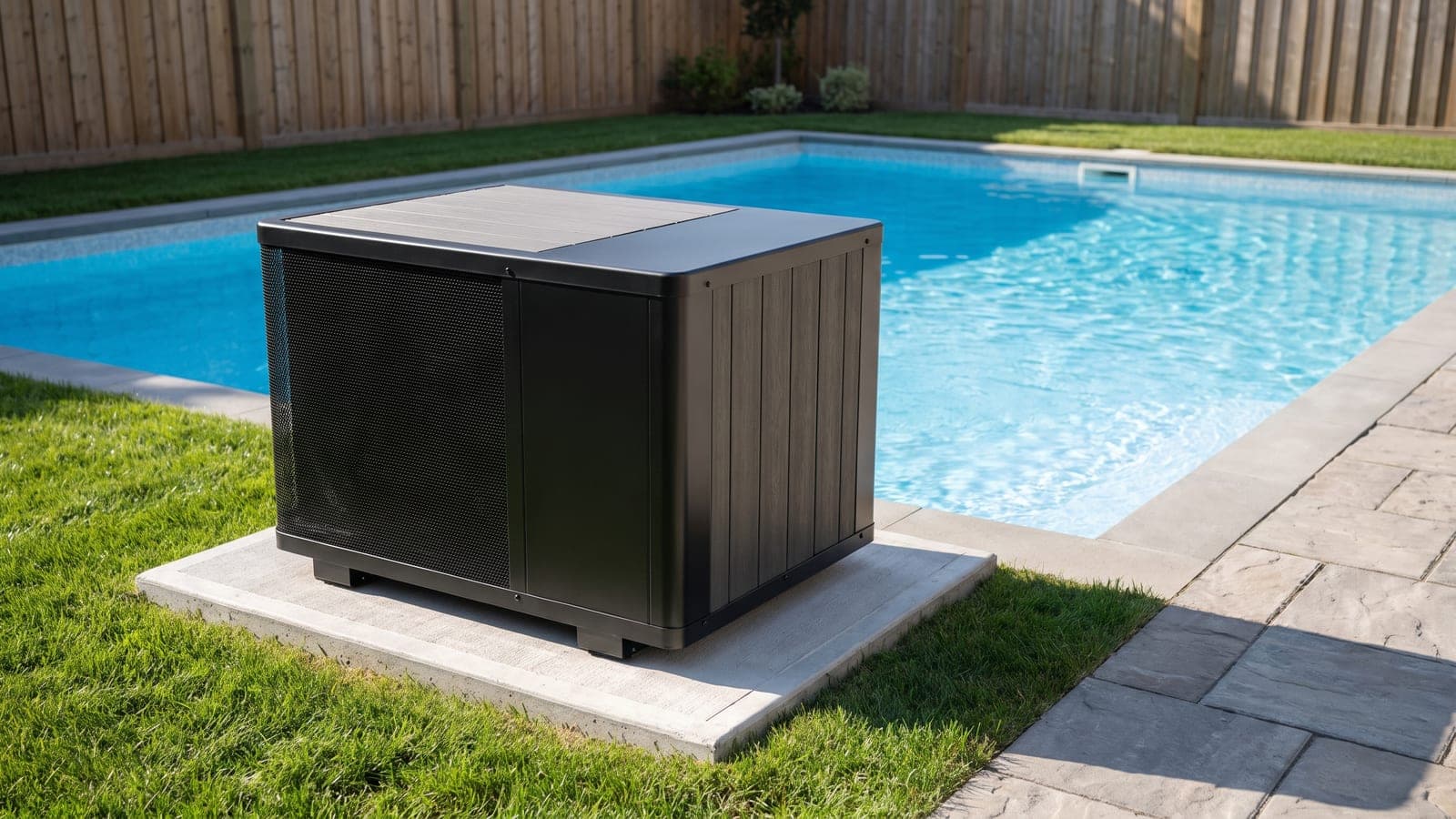
Most people should get the Sutro Smart Pool Monitor if they want true hands-off automation, or the Aiper HydroComm 5-in-1 Smart Pool Monitor if they want a lower upfront cost with no reagent subscription. A smart pool monitor is a floating or in-line device that reads your water (usually pH, chlorine, and temperature) and sends the numbers to your phone. Whether it is worth it comes down to pool size, how often you already test, and how much you hate surprises.
| Pick | Best for | Watch out for |
|---|---|---|
| Sutro Smart Pool Monitor | Full automation | Reagent cartridge refills |
| Aiper HydroComm 5-in-1 Smart Pool Monitor | Value, no subscription | Fewer measured parameters |
| WaterGuru Sense S2 Smart Monitor | Skimmer-based sensing | Needs a skimmer, refill pods |
| Aiper HydroComm Pro 5-in-1 Smart Pool Monitor | Larger pools | Higher price than base model |
| Crystal Water Monitor | Simple daily readings | Trend data, not full chemistry |
| Aiper HydroComm Pure Smart Pool Monitor (2026) | Newest features | New model, limited track record |
What does a smart pool monitor actually do
A smart monitor measures your water on a schedule and pushes readings to an app, so you can spot a problem before the water turns cloudy. Most track free chlorine (the sanitizer that kills germs), pH (how acidic or basic the water is), and temperature. Some add ORP, salinity, or total dissolved solids.
The honest limit: a monitor tells you the numbers, it does not add the chemicals. You still dose the pool yourself. The CDC recommends testing free chlorine and pH at least twice a day when a pool is in heavy use, and a monitor makes that easy to keep up with. For the plain-English version of what those numbers mean, start with our pool chemistry basics guide.
Best overall: Sutro Smart Pool Monitor

Premium
The Sutro Smart Pool Monitor is the closest thing to a set-and-forget option because it uses actual liquid reagents inside a floating device to run a real chemistry test, not just a sensor reading. That reagent-based method is why many owners trust its free chlorine and pH numbers more than cheaper probe-only floats. It reports to the app several times a day and flags when levels drift.
The tradeoff is cost over time. Those reagent cartridges are a recurring purchase, so the monitor is never truly free to run. If you have a mid-to-large pool and testing by hand feels like a chore, the ongoing cost can be worth it. On a small pool, the math tilts back toward a manual kit.
Best value: Aiper HydroComm 5-in-1 Smart Pool Monitor
Mid-range
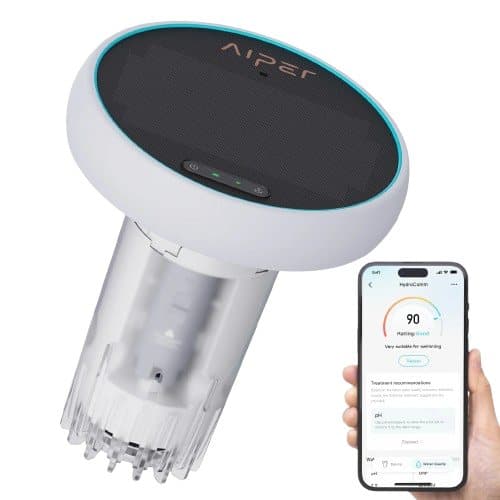
The Aiper HydroComm 5-in-1 Smart Pool Monitor fits owners who want app-based readings without a reagent subscription hanging over them. It uses electronic sensors to read several parameters at once and syncs to your phone, which keeps the yearly cost lower than cartridge models.
The tradeoff is precision and maintenance. Sensor-based monitors can drift and need occasional cleaning or calibration per the manual, and they may not match a liquid test on a tricky day. For most residential pools, that is a fair trade for the lower running cost.
Best for larger pools: Aiper HydroComm Pro 5-in-1 Smart Pool Monitor
Premium
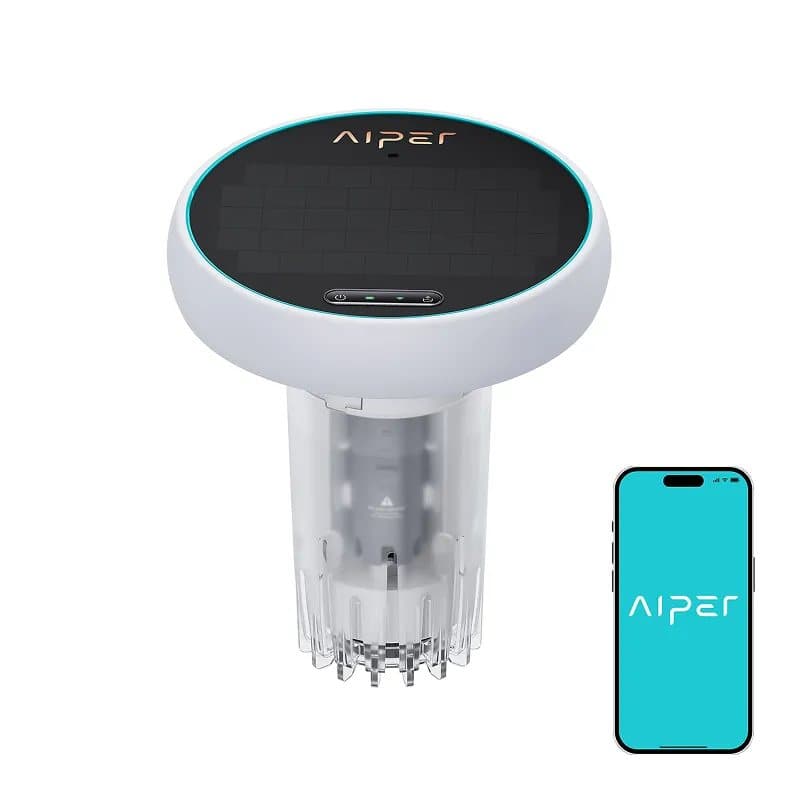
The Aiper HydroComm Pro 5-in-1 Smart Pool Monitor steps up from the base HydroComm for owners with more water to watch or who want longer connectivity range. The "Pro" positioning generally means added parameters or better wireless reach, though you should confirm the spec sheet on the listing since features change by revision.
The tradeoff is price. You pay more than the standard model for capabilities you may not use on a small pool. If you run a large in-ground pool or a pool plus spa, the extra headroom can justify it.
Best skimmer-based option: WaterGuru Sense S2 Smart Monitor
Premium
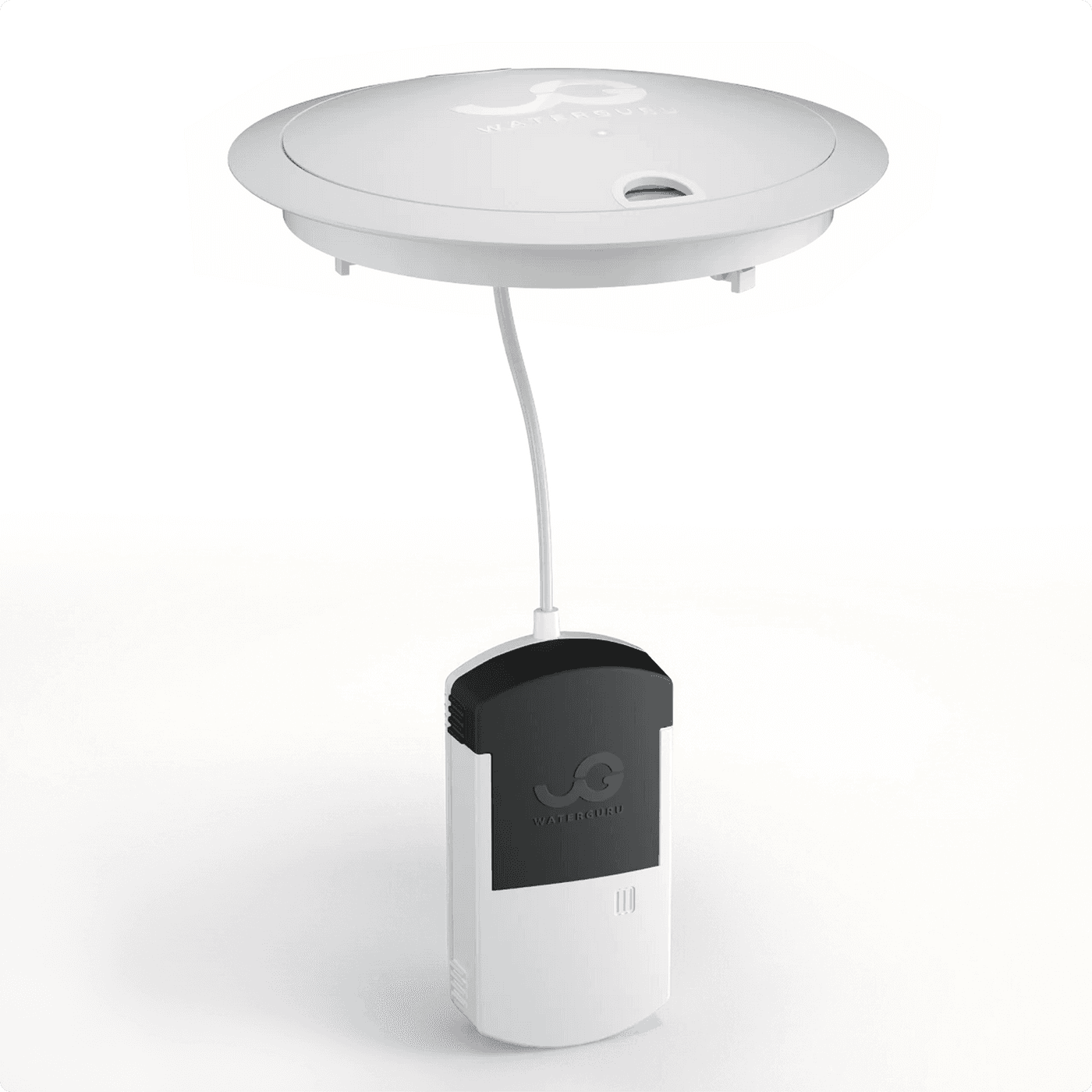
The WaterGuru Sense S2 Smart Monitor sits in your skimmer instead of floating, which means it samples water that is actively moving through your system. It uses replaceable test pods to read chlorine and pH and sends results to the app, plus it can nudge you with a flow indicator.
The tradeoff is that it needs a working skimmer and a running pump to sample properly, plus the pods are a recurring cost. For owners who already run their pump on a daily schedule, it is a tidy way to get frequent readings.
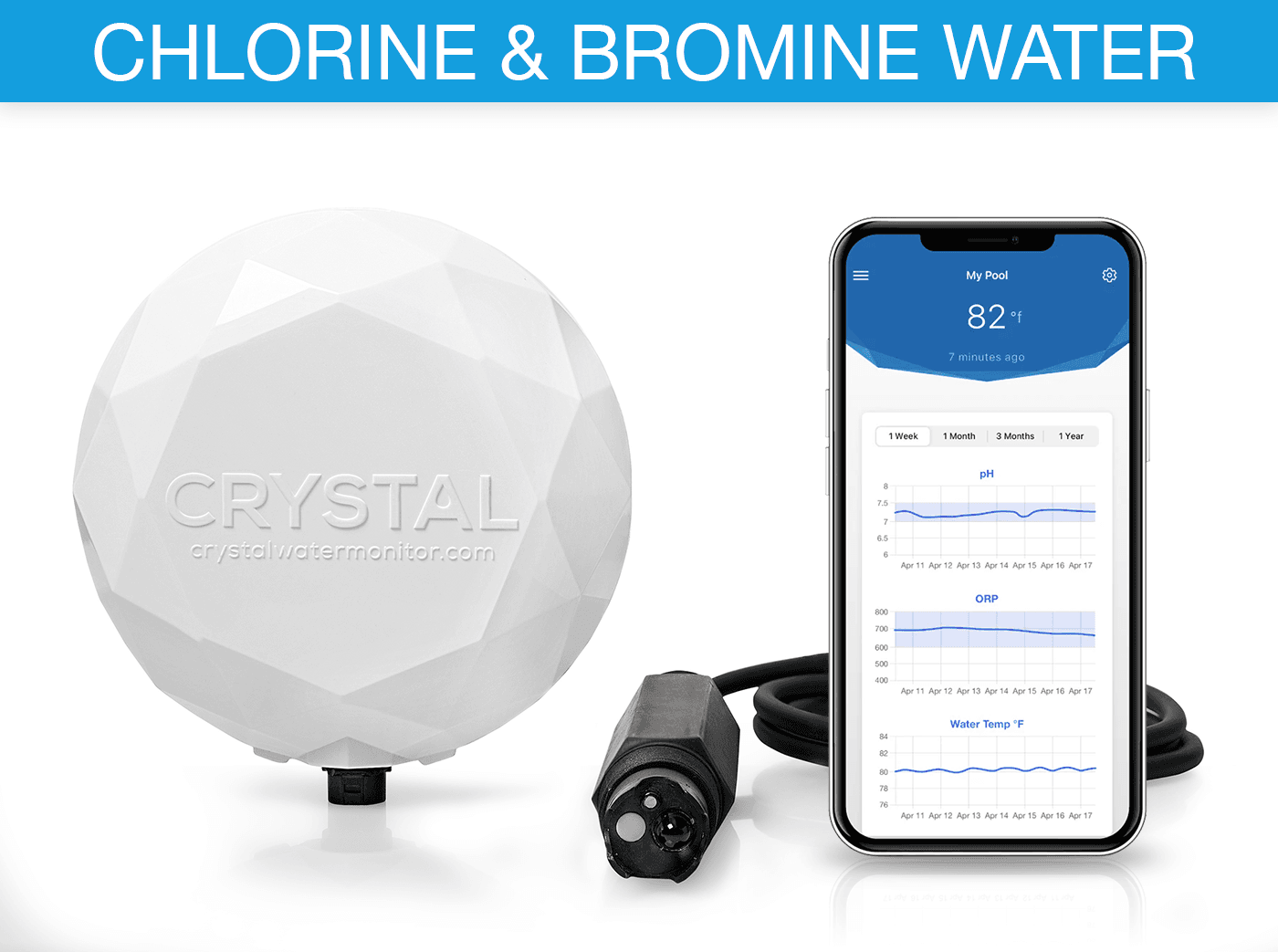
Best simple daily check: Crystal Water Monitor
Mid-range
The Crystal Water Monitor suits owners who want a quick daily pulse on their water without a complicated app or subscription. It focuses on straightforward readings and trend tracking so you can see whether things are stable or slipping.
The tradeoff is depth. A simpler monitor gives you fewer detailed chemistry values than a reagent-based unit, so you will still lean on a manual kit for full numbers. As an early-warning tool that lives in the pool, it does its job.
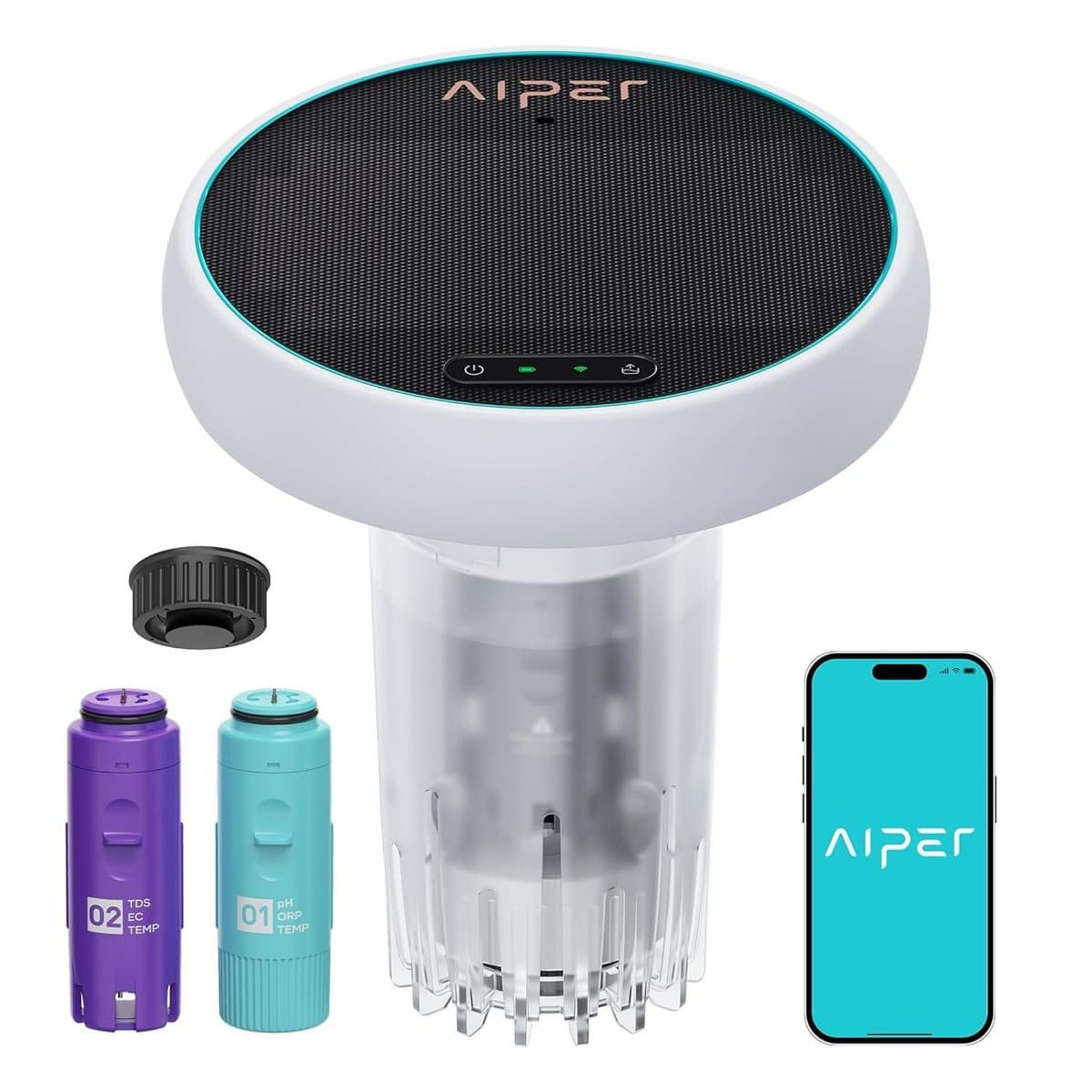
Best newest release: Aiper HydroComm Pure Smart Pool Monitor (2026)
Premium
The Aiper HydroComm Pure Smart Pool Monitor (2026) is the latest in the HydroComm line, aimed at owners who want the newest sensor and app features. Newer hardware often brings better battery life or app polish, so check the current listing for what is actually included.
The tradeoff is track record. A 2026 model has less long-term owner feedback than an established unit, so there is more unknown about how the sensors hold up after a year or two.
So are smart pool monitors worth it
For large pools, heated spas, vacation homes, or anyone who forgets to test, yes, a monitor usually earns its keep by catching problems early. For a small above-ground pool you can test in two minutes, probably not. A pack of AquaChek Select 7-Way Test Strips or a liquid kit like the Taylor K-2006 Complete Test Kit (FAS-DPD) will do the job for less.
A smart way to split the difference: use a monitor for daily awareness and keep a manual kit to confirm the numbers before you dose. The CDC's pool chemical safety guidance is worth a read first, since chemical handling is where most home pool injuries happen. For salt pools, pair a monitor with a salt test and our saltwater maintenance guide; for spas, our hot tub maintenance guide covers the smaller-volume quirks. Whatever you choose, stock the maintenance supplies you will need to act on the readings.
Frequently asked questions
Do smart pool monitors replace a regular test kit?
Not entirely. A monitor is great for catching drift between manual tests, but most pros still keep a liquid kit for verifying important numbers. Think of the monitor as a daily heads-up and the kit as the source of truth.
How accurate are smart pool monitors?
It depends on the sensor type and how fresh the reagents or cartridges are. Owner reports suggest they track trends well but can drift a few tenths on pH or chlorine over time. Calibrate or replace consumables on the schedule in the manual.
Are ongoing costs a factor with these monitors?
Yes, and it is easy to miss. Cartridge-based models like the WaterGuru Sense S2 Smart Monitor and Sutro Smart Pool Monitor use replaceable reagents that add to the yearly total. Check the listing for the refill interval before you buy.
Will a smart monitor work with a saltwater pool?
Most read pH, temperature, and free chlorine, which salt pools still have. They do not test salt level or cell condition, so you still need a salt strip or kit. See our saltwater maintenance guide for the full routine.
Are smart pool monitors worth it for a small above-ground pool?
Often not, honestly. A small pool is quick to test by hand, so a strip pack or basic kit usually makes more sense. Monitors pay off most on larger pools, heated spas, or when you are away a lot.