Robotic pool skimmers are worth it if your pool sits under trees or collects heavy pollen and you are tired of chasing floating leaves with a net every day. They are not worth it if your main problem is dirt on the pool floor, cloudy water, or fine debris, because a surface skimmer only cleans the top inch or two of water. So the honest answer is: it depends on what is actually landing in your pool.
Let me walk through what these things do, what they skip, and who should spend the money.
What does a robotic pool skimmer actually do
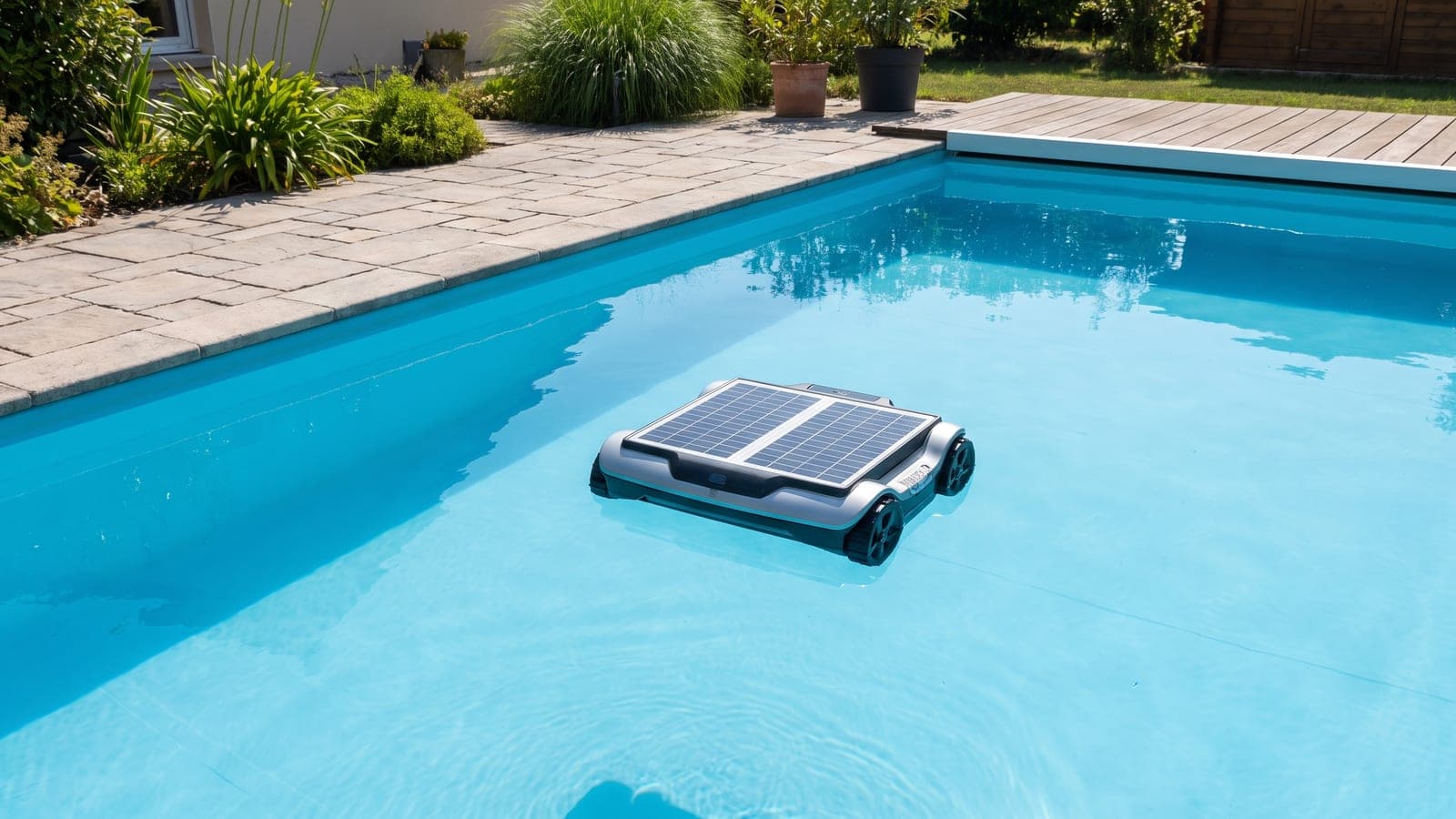
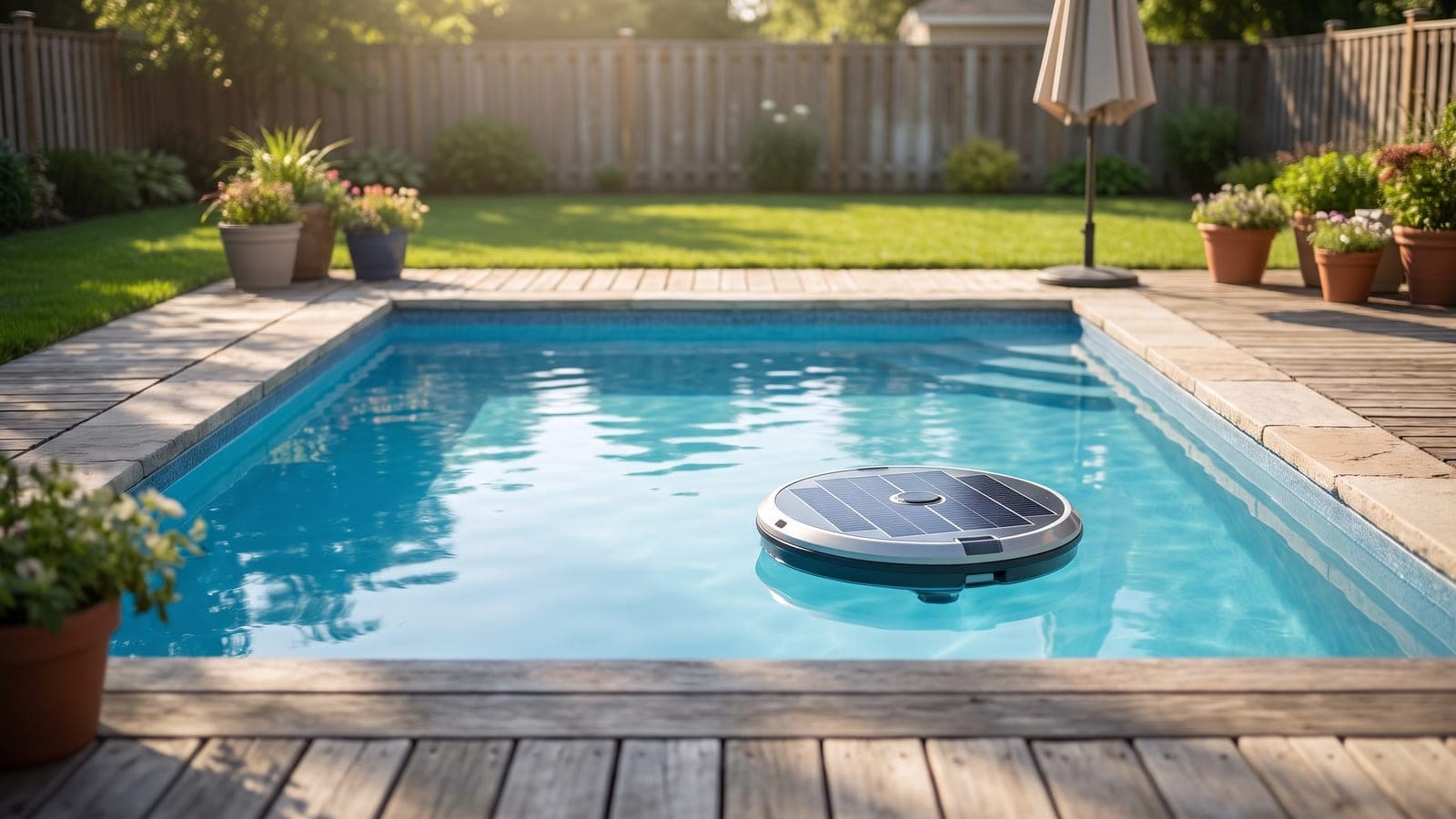
A robotic pool skimmer is a floating, self-powered device that roams the surface of your water and traps whatever is sitting on top. Leaves, bugs, pollen, seed pods, sunscreen film, and the occasional unlucky beetle get pulled into an onboard basket or filter screen. Most run on solar power with a small rechargeable battery, so there is no cord and no plug.
The key word is surface. These robots skim the waterline, the same job your built-in wall skimmer does, except they move around instead of waiting for the pump to pull debris toward them. That mobility is the whole point. Debris floats for a while before it waterlogs and sinks, and a roaming skimmer grabs it during that window.
It does not vacuum the floor. It does not scrub walls. It does not filter fine dirt or clear cloudy water. If someone sells you one as an all-in-one cleaner, they are overselling it.
When is a robotic skimmer worth the money
The math is really about your tree situation and your patience. Here is where these shine.
You have trees, palms, or heavy pollen nearby. If you net your pool daily in spring and fall, a skimmer that works while you are at your job earns its keep fast. Catching leaves before they sink means less sinks to the bottom, which means less vacuuming later.
You want to protect your filter and pump. Floating debris that gets skimmed off never has a chance to break down, clog your wall skimmer basket, or foul your water chemistry. Less organic gunk in the water also means chlorine has less to burn through, which ties into keeping your sanitizer stable. If chlorine and pH still feel like a mystery, our pool chemistry basics without the lab coat guide breaks it down.
You have a calm, in-ground or larger above-ground pool. These robots drift with water flow and light wind, so they cover open water well. Popular solar models like the Betta SE Solar Robotic Pool Skimmer and the WYBOT F1 Solar Robotic Pool Skimmer are built for this kind of steady surface patrol.
When you should probably skip it
A robotic skimmer is the wrong tool if your real complaint is anything below the surface. Sunk leaves, sand, algae dust, and cloudy water all need a vacuum, a brush, and good filtration, not a surface skimmer.
Small or oddly shaped pools can frustrate these units. They bump around, get stuck in tight corners, and sometimes park themselves against a wall or a ladder and stay there. A very windy yard pushes them to one end of the pool where they idle uselessly.
Spool-sized water or a hot tub is usually too small to bother. For those, a handheld net is faster, and hot tubs have their own routine anyway, covered in our hot tub maintenance for beginners without the chemical panic guide.
How much do they cost to own
Prices vary a lot by size and features, so check the current listing rather than trusting any number you saw last season. Beyond the sticker price, budget for the parts that wear: debris baskets, filter screens, brushes, and impellers all get used hard and need occasional replacement. Some models make swapping these easy, others less so, so read owner reviews on serviceability before you buy.
Running cost is close to nothing since most are solar. The tradeoff is that solar units slow down or stop in long overcast stretches and after dark, and their real-world runtime depends on the specific battery and panel. Read the spec sheet for the model you are eyeing.
You can compare current options and features on our robotic skimmers page.
Do they replace your regular cleaning routine
No, and this is the part people get wrong. A robotic skimmer is one member of your cleaning crew, not the whole crew.
You still run your pump and filter. You still brush walls and steps to keep algae from taking hold. You still vacuum or run a robotic vacuum for whatever sinks. And you still test and balance your water, because no robot touches chemistry. Salt-pool owners in particular should keep an eye on their cell and stabilizer, which our saltwater pool maintenance for beginners guide covers.
What a good skimmer buys you is time and a cleaner surface between deep cleans. That is genuinely valuable if leaves are your daily headache. It is close to worthless if your water is green.
A quick safety note
These devices are low-risk since they float slowly with no exposed blades, but they are not toys and they do not watch the water for you. Keep to the same supervision rules you always would around a pool, and follow the general water-safety guidance from PoolSafely.gov. If the robot is in the way during active swimming, just lift it out and drop it back in when everyone is done.
The bottom line
Buy a robotic pool skimmer if you fight floating leaves and pollen on a calm, decent-sized pool and want that chore handled while you are busy. Skip it if your problems live on the floor or in the water clarity, because a surface skimmer will not fix those. Match the tool to the mess, and it is an easy call.
Frequently asked questions
Do robotic pool skimmers work on the floor of the pool too?
No. Surface skimmers only patrol the waterline, so leaves and dirt that sink still need a robotic vacuum or manual brushing. Think of a skimmer as a leaf-and-pollen tool, not a full cleaner.
Will a solar skimmer run on a cloudy day?
Most solar models store some charge in an onboard battery, so they keep going for a while when clouds roll in. Runtime after dark or during long overcast stretches depends on the specific model and battery, so check the manual.
Do I still need my built-in wall skimmer if I buy a robotic one?
Yes, keep running it. The wall skimmer pulls water through your filter and helps circulate chemicals, while the robot just grabs floating debris before it sinks. They work as a team, not a swap.
Are robotic skimmers safe to leave in the pool with kids and pets around?
They float slowly and have no exposed blades, but no pool device replaces supervision. Follow the maker's guidance and general water-safety rules from PoolSafely.gov, and pull the unit out during active swim time if it gets in the way.
How much maintenance does a robotic skimmer itself need?
Plan to empty the debris basket every day or two in heavy leaf season, rinse the filter screen, and keep the solar panel clean. Impellers and brushes wear over time, so budget for occasional replacement parts.