A swim spa is a compact, self-contained pool that generates a steady current you swim against, so you can swim continuously in a unit that is often 12 to 20 feet long. Think of it as a swimmer's treadmill crossed with a hot tub. Whether it is worth it depends on your yard size, your budget for running it, and whether you actually want to swim laps or just soak.
Below is how a swim spa works, what it costs to own, and the honest tradeoffs before you spend the money.
How does a swim spa actually work?
A swim spa uses jets to push water toward you at one end while you swim in place. There are two common current systems. Propeller-driven units move a large volume of water smoothly and tend to feel more like open-water swimming. Jet-driven units use pumps to blast water through nozzles, which can feel choppier but often costs less.
The water is heated and filtered like a hot tub, and most units hold roughly 1,500 to 3,000 gallons. That small volume is the whole personality of a swim spa. It heats fast, but the chemistry also shifts fast, so small mistakes show up sooner than they would in a 20,000-gallon pool.
Some models split the shell into a swim section and a separate hot-tub section with its own temperature. If you have looked at products like the iGarden Swim Jet P Series or the iGarden Swim Jet X Series, those are examples of dedicated swim-current systems rather than full spa shells, and they show how much the current hardware alone can vary.
What does it cost to own and run?
Purchase price covers a wide range depending on size, current type, and features, so treat any single number you see online with suspicion and get real quotes. The bigger ongoing question is running cost.
Heating is the largest recurring expense. A swim spa kept warm year round in a cold climate uses real energy, while the same unit in a mild region with a good cover costs much less. A well-fitted, thick cover is not optional if you care about your power bill, since most heat escapes off the surface.
Then there is water care. You will buy sanitizer (chlorine, bromine, or a salt system), test strips or a test kit, and occasional filter replacements. The upside is that small volume means you use smaller amounts of chemicals per dose. The downside is you dose more often and test more often.
Is a swim spa hard to maintain?
It is closer to hot-tub maintenance than pool maintenance, which is mostly good news. You test the water, balance pH and sanitizer, and clean or swap the cartridge filter on a schedule. Our hot tub maintenance for beginners without the chemical panic guide covers the rhythm, and the fundamentals in pool chemistry basics without the lab coat apply here too.
pH is the value that measures how acidic or basic the water is, and sanitizer is the chemical (usually chlorine) that kills bacteria and algae. In a small heated volume, both drift quickly, especially after heavy use. Warm water also speeds up chemical demand, so a swim spa run at spa temperatures needs closer attention than a cool pool.
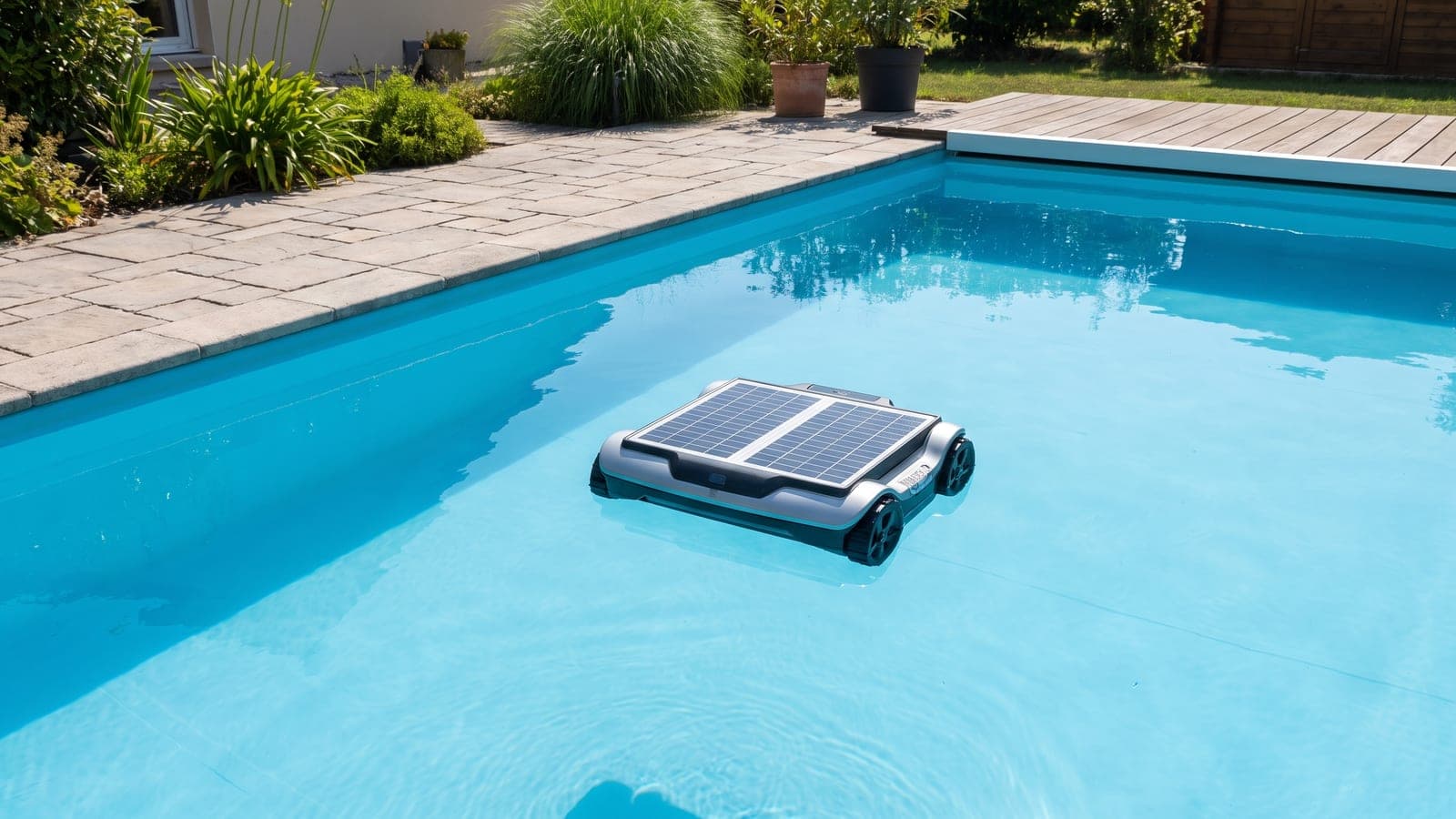
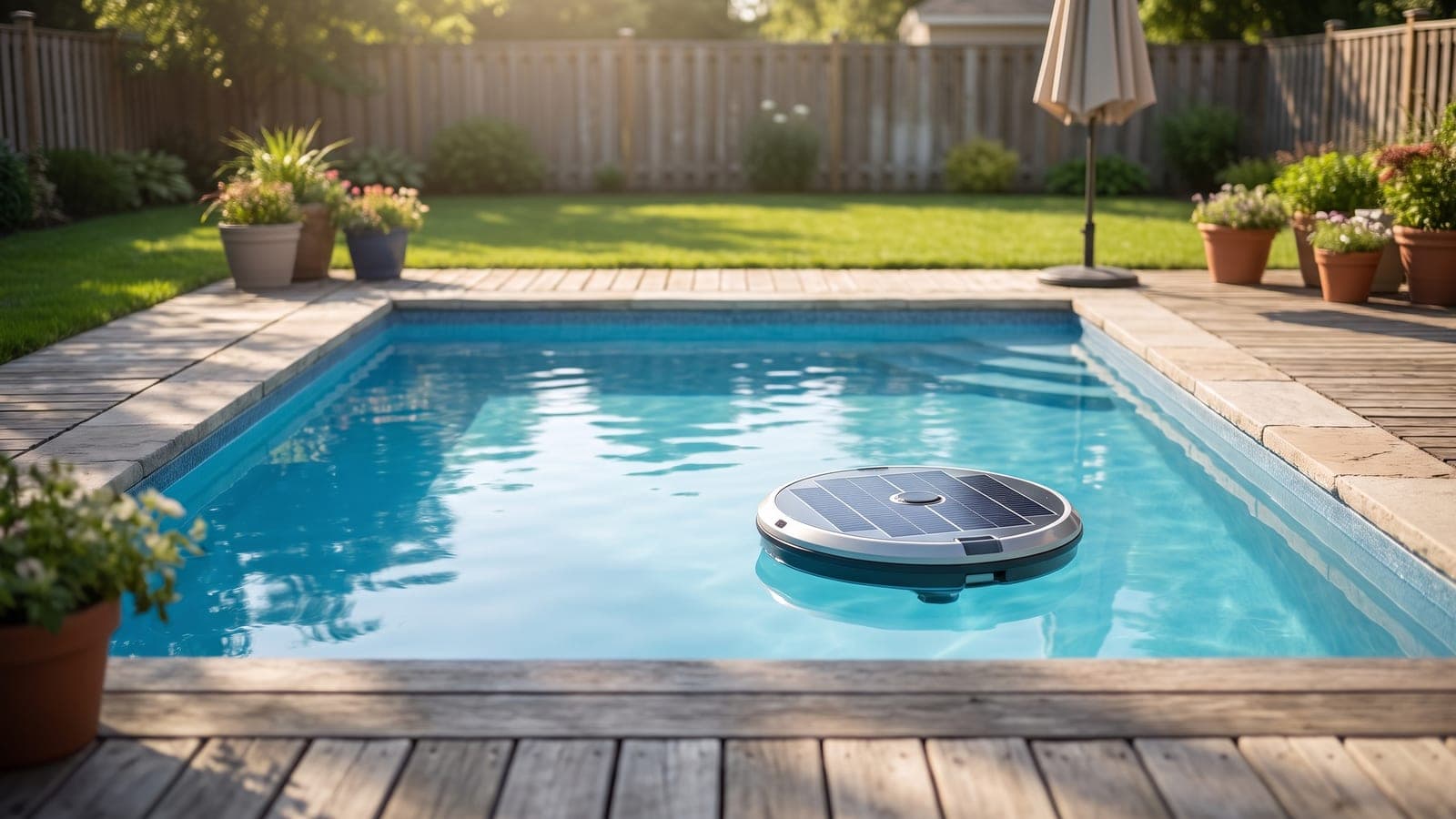
If you hate scooping leaves and bugs off the surface, a floating solar skimmer can help keep the water cleaner between cleanings. Compact units like the Betta SE Solar Robotic Pool Skimmer or the Aiper Surfer S2 are designed to roam the surface on their own, and you can compare surface cleaners on our robotic skimmers page. A skimmer will not balance your chemistry, but less debris means less strain on the filter.
Many owners also run a salt system to make sanitizer more hands-off. That is its own topic with its own tradeoffs, and our saltwater pool maintenance for beginners guide explains how salt chlorination works before you assume it is maintenance-free.
Who is a swim spa actually worth it for?
A swim spa earns its keep in a few specific situations. It suits small yards where a full pool will not fit but you still want to swim. It suits people who want low-impact exercise, since swimming against a current is easy on joints. And it suits anyone who wants warm water year round without committing to a large pool build.
It is a weaker fit if you mainly want a place for kids to splash, a spot to host a crowd, or open swimming with actual distance. A swim spa fits one or two swimmers at a time, and the current takes practice to swim against smoothly. Some people also find the constant flow tiring or awkward compared with lap swimming in a real pool.
Be honest about your climate too. In a warm region, a swim spa can run most of the year at a reasonable cost. In a cold region, you are paying to keep a hot tub of water warm through winter, and that adds up.
What should I check before buying one?
Ask about the current system first, because it defines the whole experience. Request a wet test, meaning an in-person swim in the model you want, so you can feel whether the current is smooth and strong enough for you. A current that is too weak feels like wading, and one that is too turbulent is hard to hold form against.
Then confirm the practical details. Ask for the filled weight and the required foundation, since a filled swim spa is heavy and usually needs a reinforced, level pad. Check the cover quality, the heater size, and whether the warranty covers the shell, the current pump, and the equipment separately.
Finally, plan for safety. A swim spa is deep enough to matter around children, so review barrier, cover, and supervision guidance from a trusted source like Pool Safely before it goes in. A locking, load-rated cover is worth the money for both energy and safety.
If you want a compact way to swim and soak in a small yard, and you go in clear-eyed about heating costs and frequent water testing, a swim spa can be worth it. If you want a big social pool or cheap year-round swimming in a cold climate, your money is probably better spent elsewhere.
Frequently asked questions
Can you actually swim in a swim spa, or is it more of a novelty?
Yes, you swim in place against a current, similar to a treadmill for swimming. Whether it feels like real swimming depends on the jet system, the current strength, and how smooth the water flow is, which varies a lot between models.
How much does a swim spa cost to run each month?
It depends on your climate, target temperature, and how well the cover insulates. Heating is the biggest cost, so a well-insulated unit in a mild region costs far less to run than a large one kept hot through a cold winter.
Is a swim spa easier to maintain than a regular pool?
Usually a little easier because the water volume is smaller, but small volume also means chemistry swings faster. You still test water regularly and manage sanitizer, so plan on maintenance being closer to a hot tub than to a full backyard pool.
Do I need a concrete pad or special foundation for a swim spa?
Most swim spas are heavy when filled and need a level, load-rated base like a reinforced concrete pad. Check the specific model manual for the filled weight and required support, since requirements differ by size and brand.
Swim spa or a small pool, which is the better buy?
It depends on your goals and space. A swim spa fits tight yards, offers a current for exercise, and can run warm year round, while a small pool suits open swimming and larger gatherings but usually costs more to build.