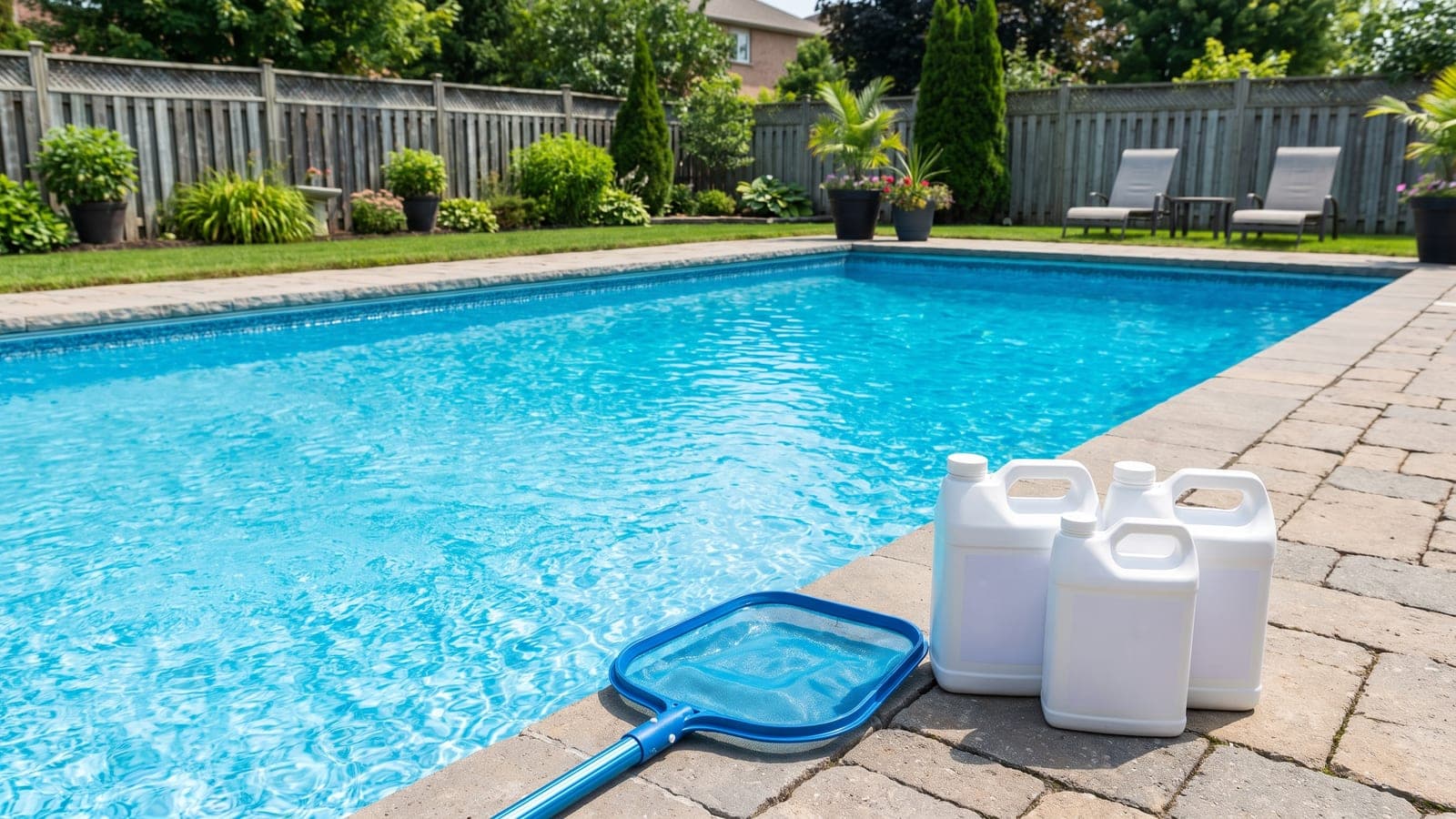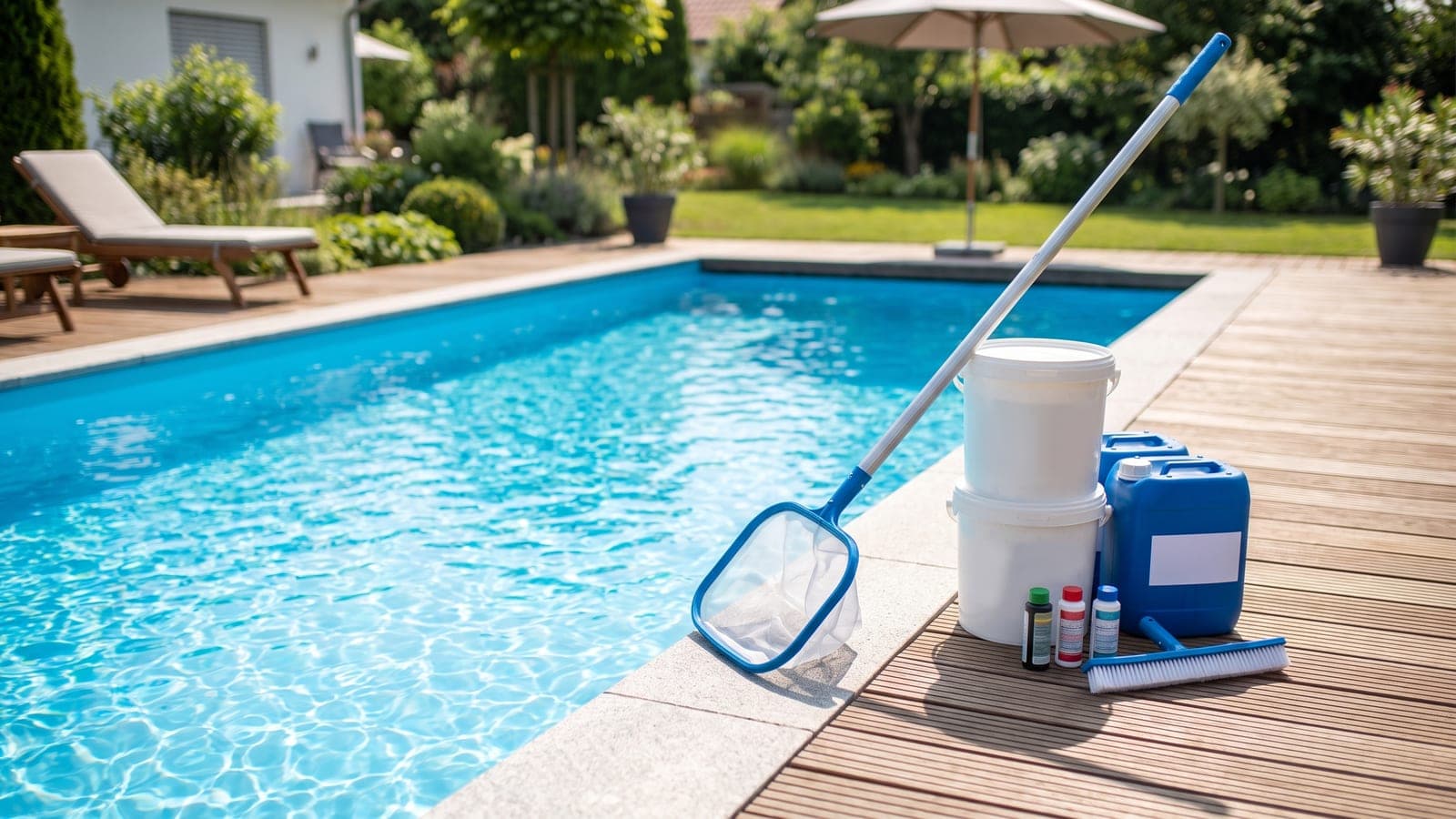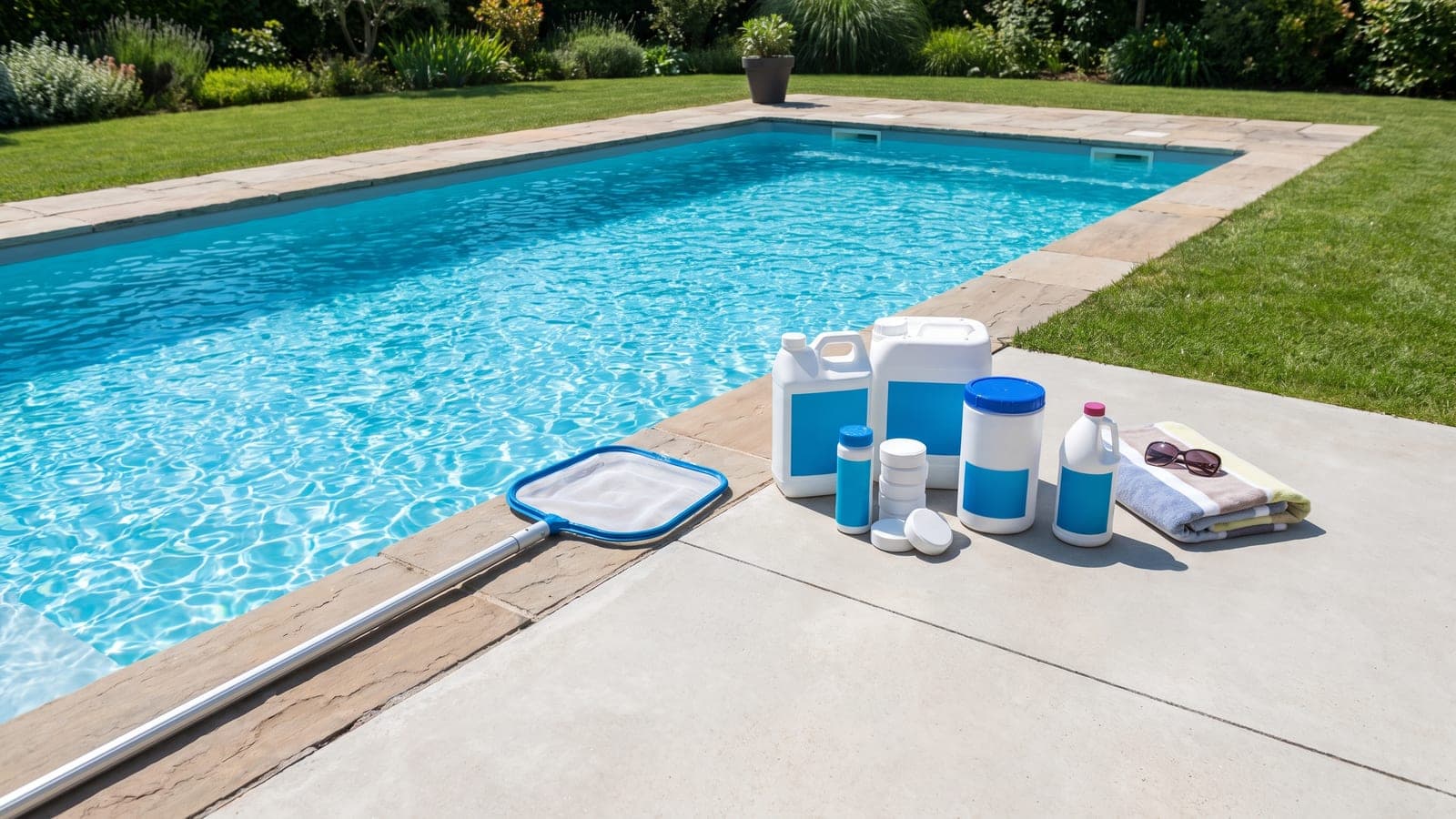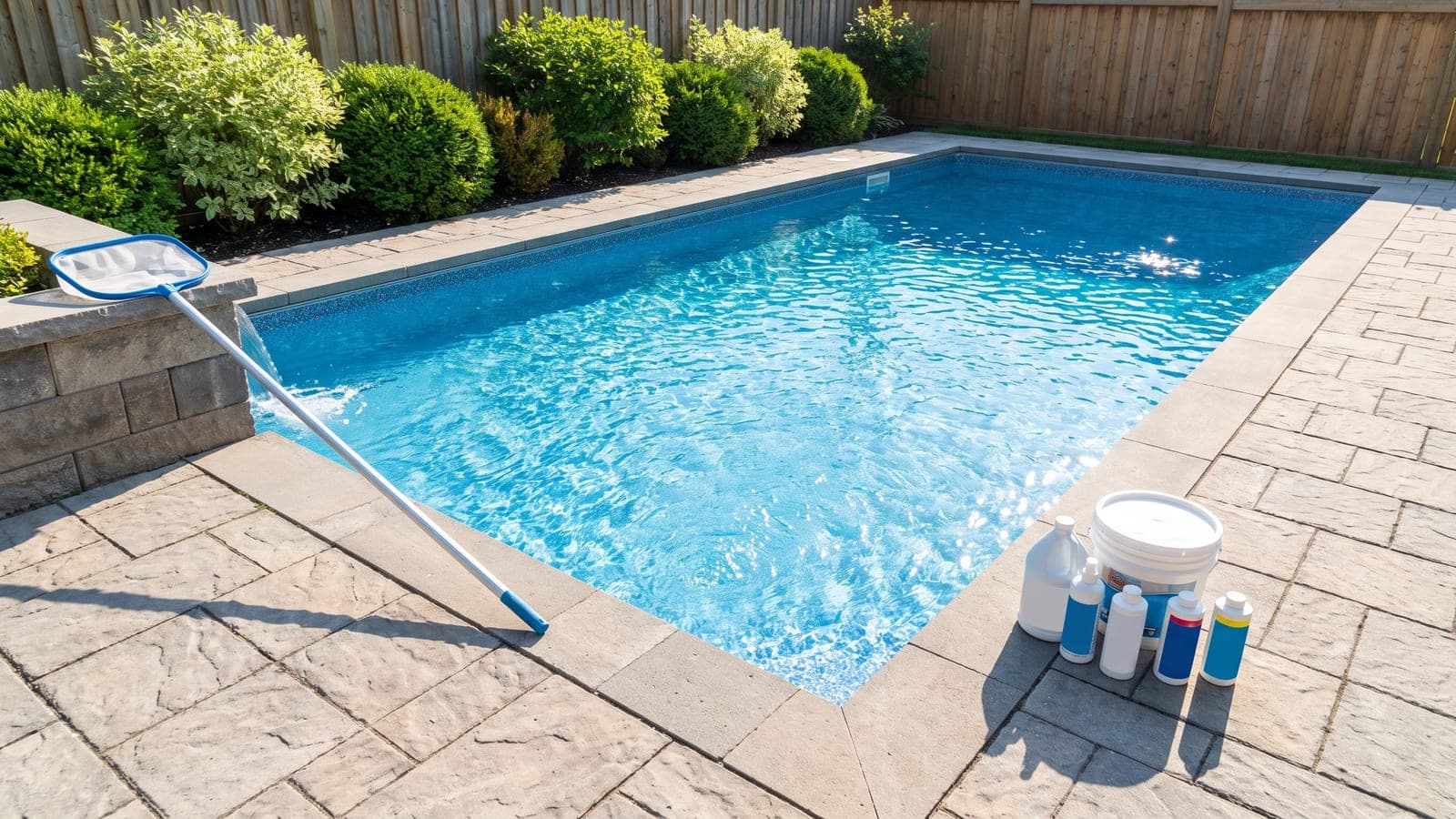
Use chlorine tablets for hands-off, everyday sanitizing, and use liquid chlorine when you need to shock the pool fast or correct a problem. Most backyard pools end up using both, just for different jobs. Tablets are the slow, steady drip that keeps chlorine present day to day, and liquid chlorine is the quick, strong dose you pour in when the water needs help right now.
Chlorine is the sanitizer that keeps your water safe to swim in by killing bacteria and controlling algae. Free chlorine (the portion still available to sanitize) is what you want to keep in a healthy range, usually around 1 to 3 ppm for a home pool, per CDC guidance. The two products below both deliver chlorine, they just do it at very different speeds and with different side effects.
If you are shocking the pool, use the calculator above to size the dose to your pool's gallons before you pour anything in.
What are chlorine tablets and how do they work?
Chlorine tablets are compressed pucks, usually 3 inches wide, that dissolve slowly in a floater, an automatic feeder, or your skimmer. As water passes over them, they release chlorine at a steady trickle. That slow release is the whole appeal. You load a floater once and it keeps feeding chlorine for days, which is why tablets are the default for people who do not want a daily chore.
Most tablets are stabilized, meaning they contain cyanuric acid (CYA) built right in. CYA is a sunscreen for chlorine, it slows how fast the sun burns your chlorine off. That sounds great, and in moderation it is. The catch is that every tablet adds a little more CYA, and CYA does not leave the water on its own. Over a long season, tablet-fed pools can creep up to high CYA levels that actually make chlorine sluggish and weak. When that happens, the fix is usually diluting with fresh water.
Tablets are also acidic. They slowly pull pH and total alkalinity down, so tablet-heavy pools often need a pH adjuster to climb back up. A quality stabilized tablet like the In The Swim 3-Inch Stabilized Chlorine Tablets is a reasonable pick for the steady-feed role. Never toss tablets directly onto the pool floor or into a vinyl liner pool loose, they can bleach and damage the surface.
What is liquid chlorine and when should I use it?
Liquid chlorine is sodium hypochlorite in a jug, close cousin to household bleach but usually stronger, often 10 to 12 percent. It goes to work almost immediately, which makes it the tool for fast jobs: shocking after heavy use, clearing cloudy water, knocking back early algae, or recovering the pool after a storm.
The big difference from tablets is that liquid chlorine is unstabilized. It adds no CYA at all. That is a feature, not a flaw, because it lets you raise chlorine hard and fast without permanently loading your water with stabilizer. Pools that rely on liquid chlorine keep more control over their CYA over the season.
Liquid chlorine does nudge pH up slightly, and it loses strength as it sits. A jug that has baked in a hot garage for two months may be noticeably weaker than a fresh one, so buy it closer to when you will use it. It is heavier to haul and easier to splash, so handle it carefully and follow the safe-handling advice from EPA and NPIC. Store it away from acids and other chemicals, never in the same spot where a spill could mix them.
Tablets vs liquid chlorine: which is right for my pool?
Here is the short version. Reach for tablets when you want low-effort, consistent daily sanitizing and your CYA has room to grow. Reach for liquid chlorine when you need speed, a big dose, or you are trying to keep CYA from climbing.
Consider tablets your main feed if:
- You travel or do not want to dose every day
- Your pool gets moderate, predictable use
- Your CYA is currently low (roughly under 30 to 50 ppm)
Lean on liquid chlorine if:
- You need to shock after a party, storm, or algae bloom
- Your CYA is already high and you cannot add more
- You want tight control over water balance all season
A common and honestly smart setup is both: tablets in a feeder for the daily baseline, plus liquid chlorine or a cal-hypo shock like HTH Super Shock Treatment (Cal-Hypo, 1 lb bags) on hand for when the water needs a fast, strong correction. Cal-hypo is a granular shock that adds calcium instead of CYA, another way to shock without pushing stabilizer up. Whichever route you pick, the honest answer depends on your pool's volume, sun exposure, use, and current chemistry, so test before you dose.
How do these choices affect the rest of my water balance?
Chlorine does not live in a vacuum. Every product you add moves something else, and that is where owners get tripped up.
Tablets push CYA up and pH down over time. If you feed tablets all summer and never test CYA, you can end up with chlorine that reads fine on paper but works poorly, because the CYA has climbed too high. Liquid chlorine dodges the CYA problem but nudges pH up, so you may find yourself adding a pH reducer like In The Swim pH Reducer (Sodium Bisulfate, 30 lb) more often on a liquid-fed pool.
The takeaway is to test regularly, not just react. A basic test that covers free chlorine, pH, and CYA tells you which product your pool actually needs this week. If chemistry still feels like guesswork, our guide to pool chemistry basics without the lab coat walks through what each number means in plain English. Salt pools have their own twist, since the salt cell generates chlorine on its own, and the saltwater pool maintenance for beginners guide covers how tablets and liquid still fit in as backups.
What should I keep on hand?
For most pools, a practical kit is tablets for daily feeding, a jug of liquid chlorine or a bag of cal-hypo shock for fast fixes, and a reliable test kit so you are dosing on data instead of hope. Keep stabilizer separate, and only add more CYA deliberately, not by accident through overusing tablets.
You can see the sanitizer and balancer options together on our maintenance supplies page, which is a decent starting point for building a season's worth of chemicals. If you also run a hot tub, the same tablet-versus-liquid logic mostly applies, though spas run hotter and smaller, so the hot tub maintenance for beginners guide is worth a read before you treat one like a tiny pool.
Bottom line: tablets for steady, hands-off chlorine, liquid for speed and control. Test your water, respect your CYA, follow the storage and handling guidance from CDC, EPA, and NPIC, and let the numbers decide which jug you reach for.
Frequently asked questions
Can I use both chlorine tablets and liquid chlorine in the same pool?
Yes, and a lot of owners do exactly that. Tablets in a floater or feeder handle the steady daily sanitizing, and you keep liquid chlorine on hand for shocking after a party, a storm, or an algae bloom. Just watch your cyanuric acid so the tablets do not overstabilize the water over the season.
Why does my chlorine keep disappearing even though I add tablets?
Usually it is either high cyanuric acid locking up your chlorine or a low free chlorine reading because demand is outpacing the tablets. Test CYA and free chlorine first. If CYA is above roughly 50 to 80 ppm, tablets may be part of the problem, and switching some feeding over to unstabilized liquid chlorine helps.
Is liquid chlorine the same as household bleach?
They are chemically similar (both sodium hypochlorite), but pool-grade liquid chlorine is usually stronger, around 10 to 12 percent versus roughly 6 to 8 percent for bleach. Pool liquid chlorine also skips the scents and additives some bleaches carry. Check the label for the percentage and never mix either product with other pool chemicals.
Do chlorine tablets raise or lower my pH?
Stabilized 3-inch tablets (trichlor) are acidic and slowly push pH and total alkalinity down over time. Liquid chlorine is the opposite, it nudges pH up slightly. Which one you lean on affects how often you reach for a pH adjuster, so test pH weekly either way.
How should I store leftover tablets and liquid chlorine over winter?
Keep them separate, dry, cool, and out of sunlight, and never stack them where a leak could let them mix. Liquid chlorine degrades faster and loses strength within a few months, so buy it closer to when you need it. Tablets keep much longer if the container stays sealed and dry. Follow the storage guidance from EPA and the product label.