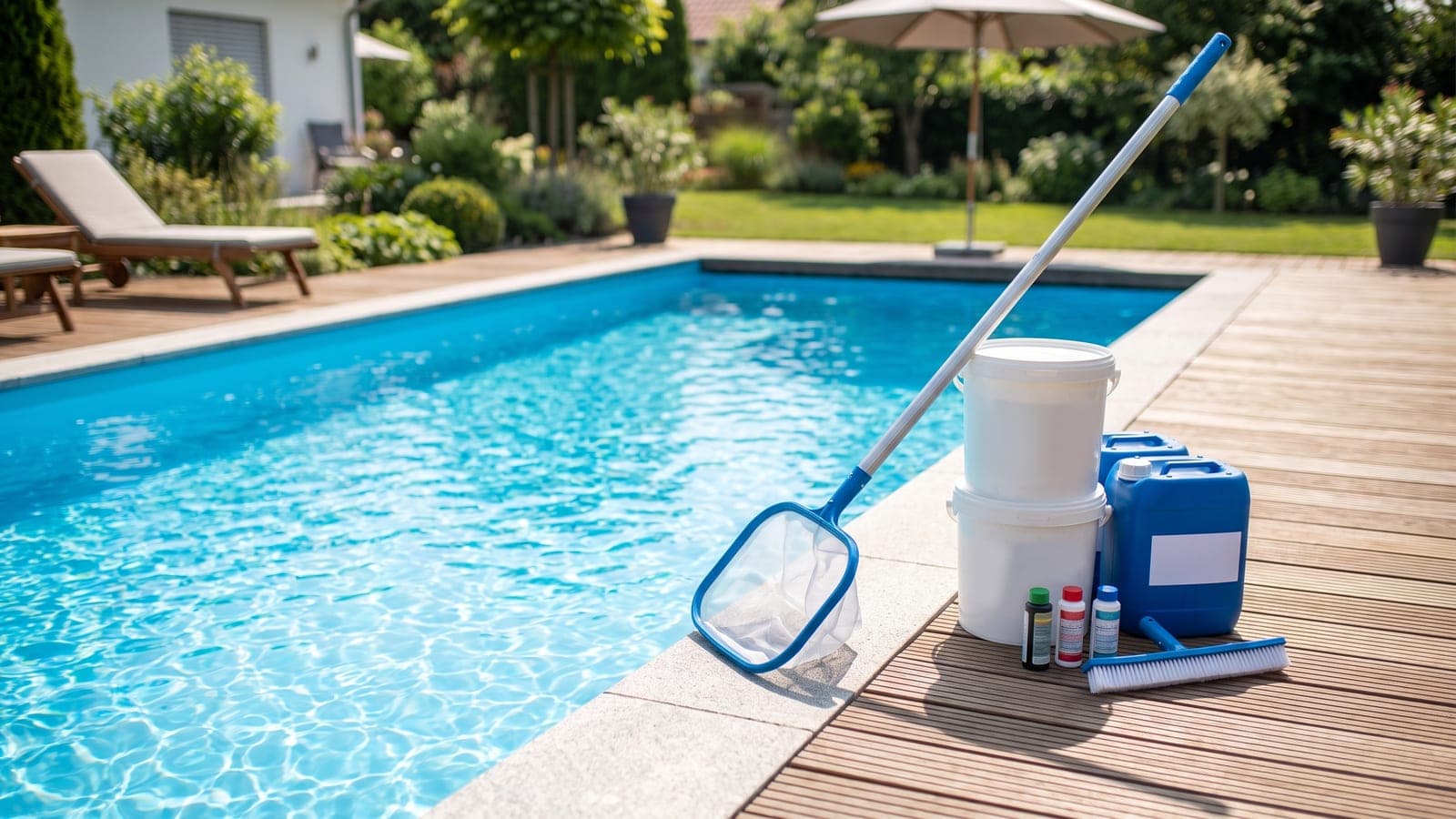
If your cyanuric acid is too high, the only dependable way to lower it is to drain part of the pool and refill with fresh water. Cyanuric acid, often called CYA or stabilizer, is the chemical that protects chlorine from being burned off by sunlight. There is no cheap bottle you can pour in to make it disappear, so dilution is the real answer.
That sounds blunt, but it saves you from chasing products that promise more than they deliver. Below is how to confirm the problem, how much water to swap, and how to keep CYA from climbing back up.
What is cyanuric acid and why does it get too high?
Cyanuric acid acts like sunscreen for your chlorine. Without it, a sunny afternoon can strip most of your free chlorine in a couple of hours. With the right amount, chlorine sticks around long enough to sanitize.
The trouble is that CYA does not leave the water on its own in any meaningful hurry. Every time you use stabilized chlorine tablets or stabilized shock, you add a little more. Over a season it builds, and eventually you have plenty of stabilizer and lazy chlorine.
Most stabilized tablets, like In The Swim 3-Inch Stabilized Chlorine Tablets, contain CYA by design. That is not a knock on them, they are convenient and popular. It just means that if you use them all summer, your CYA number tends to drift upward whether you planned for it or not.
How high is too high?
For a traditional chlorine pool, many sources point to a CYA range of about 30 to 50 ppm (parts per million). Saltwater pools often run a bit higher, frequently 60 to 80 ppm, because the salt cell produces chlorine continuously and benefits from extra sun protection. Your salt system manual is the tiebreaker here.
Once CYA climbs past roughly 100 ppm, chlorine starts acting weak even when your test says you have enough. Some health departments treat 100 ppm as the point where you must lower it. The CDC notes that proper chemical balance is what keeps pool water safe to swim in, and over-stabilized water quietly works against that.
If you are new to these numbers, our pool chemistry basics without the lab coat guide walks through how CYA, chlorine, and pH all lean on each other.
How do I test CYA accurately?
Before you drain a drop, confirm the number. A cheap test strip can tell you CYA is high, but it is not precise at the top of the scale. A liquid turbidity test (the kind where the black dot disappears) gives you a better read, and many pool stores test CYA for free if you bring a water sample.
Test on a normal day, not right after a big rain or a fresh dose of stabilizer. You want your real baseline. If the reading is 90 and climbing, you can plan a partial drain rather than guessing.
How much water do I drain to lower cyanuric acid?
CYA lowers in direct proportion to how much water you replace. Swap out half the water and you cut CYA roughly in half. Swap a quarter and you drop it by about a quarter.
Here is the simple version. If your pool holds 20,000 gallons at 100 ppm CYA and you want to reach about 50 ppm, you replace close to half the volume with fresh water. Your fill water usually has little or no CYA, so it dilutes what is already there.
A few practical notes. Do the drain in stages if you can, drop the level, refill, retest, then repeat if needed. That protects your surfaces and lets you sneak up on your target instead of overshooting. Rain and splash-out will have already removed some stabilized water, so your starting point may be a touch lower than last month.
Can I drain the pool safely?
Partial draining is low risk for most pools. Draining completely is where trouble starts. An empty vinyl or fiberglass pool can float or shift if the water table under it is high, and plaster can crack under direct sun.
Never fully drain a pool in hot weather or after heavy rain without knowing your local water table. If you think you need a full drain, that is a fair reason to call a pool pro who can use a hydrostatic relief valve and time it right. The EPA also stresses careful handling and storage of pool chemicals during any big maintenance job, so keep your acids and shock secured and separated while you work.
How do I keep cyanuric acid from climbing again?
The best fix is prevention, because you would rather not drain water twice a summer. Switch some of your chlorination to an unstabilized product so you stop feeding CYA. HTH Super Shock Treatment (Cal-Hypo, 1 lb bags) is a calcium hypochlorite shock that adds no stabilizer, which makes it a good choice for weekly boosts when your CYA is already where you want it.
Only add stabilizer on purpose. If a startup or a big water swap leaves you low, a measured dose of In The Swim Pool Stabilizer (Cyanuric Acid, 10 lb) brings you back into range, and then you stop. The goal is to hit your target once, not to top it up every week by accident.
Keep testing monthly through swim season. Small corrections beat big drains. You can find test kits and balancing chemicals in our maintenance supplies selection if you need to restock.
The short version
High cyanuric acid means diluting, not dosing. Confirm the number with a good test, replace enough water to hit your target range, and lean on unstabilized chlorine going forward so it stays put. If a full drain looks necessary, especially with a high water table, treat that as a call-a-pro moment rather than a weekend gamble.
Salt pool owners can dig deeper in our saltwater pool maintenance for beginners guide, and if you also run a spa, the same stabilizer logic shows up in hot tub maintenance for beginners without the chemical panic. For chemical safety questions while you work, the NPIC pool chemicals fact sheet is a solid plain-language reference.
Frequently asked questions
Is there a chemical that lowers cyanuric acid?
There is no common, reliable additive that removes cyanuric acid the way pH reducer lowers pH. Some enzyme-based CYA reducers exist, but results are inconsistent and slow. For most owners, draining and refilling with fresh water is the dependable fix.
How much water do I need to drain to cut CYA in half?
Roughly speaking, replacing half your water lowers CYA by about half, since dilution is proportional. If your CYA is 100 ppm and you want 50 ppm, plan on swapping close to half the volume. Retest after refilling because your fill water and rounding will move the final number.
What is a safe cyanuric acid level for a pool?
Most guidance points to roughly 30 to 50 ppm for chlorine pools and often 60 to 80 ppm for saltwater pools, though your equipment manual and local health code have the final say. Above about 100 ppm, chlorine gets sluggish and some health departments require action. Test with a reliable kit before deciding.
Does cyanuric acid go down on its own over time?
It drops slowly through splash-out, backwashing, and rain overflow, since those all remove stabilized water. It does not evaporate with water the way some chemicals seem to, so it can creep up over a season if you keep adding stabilized products. Owners who rely only on natural loss usually find it too slow.
Will draining my pool damage it?
It can, if you empty it fully at the wrong time. A drained fiberglass or vinyl pool can float or shift, and plaster can crack in heat, so most owners only do partial drains. If you think you need a full drain, especially with a high water table, that is a good moment to call a pro.