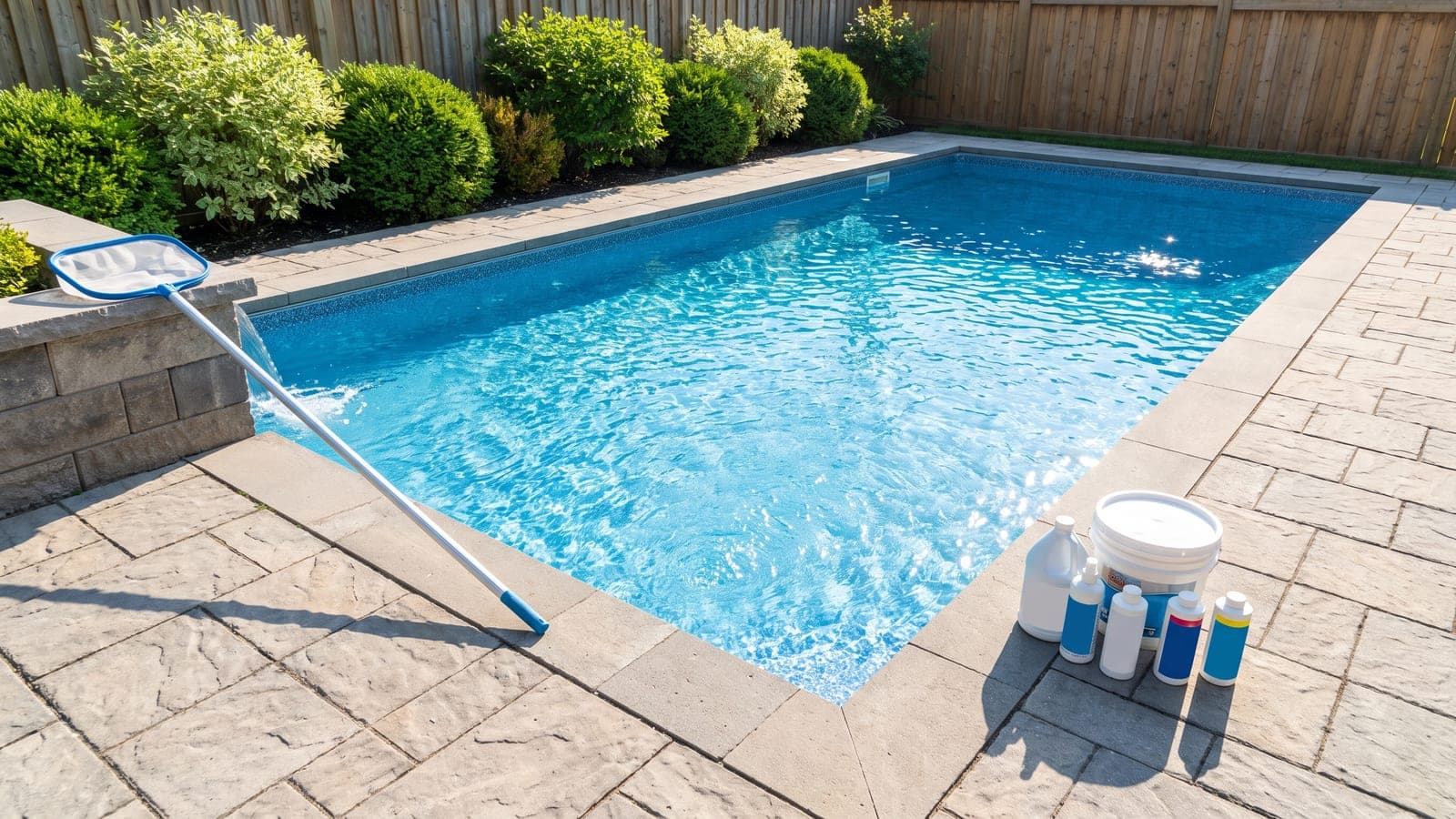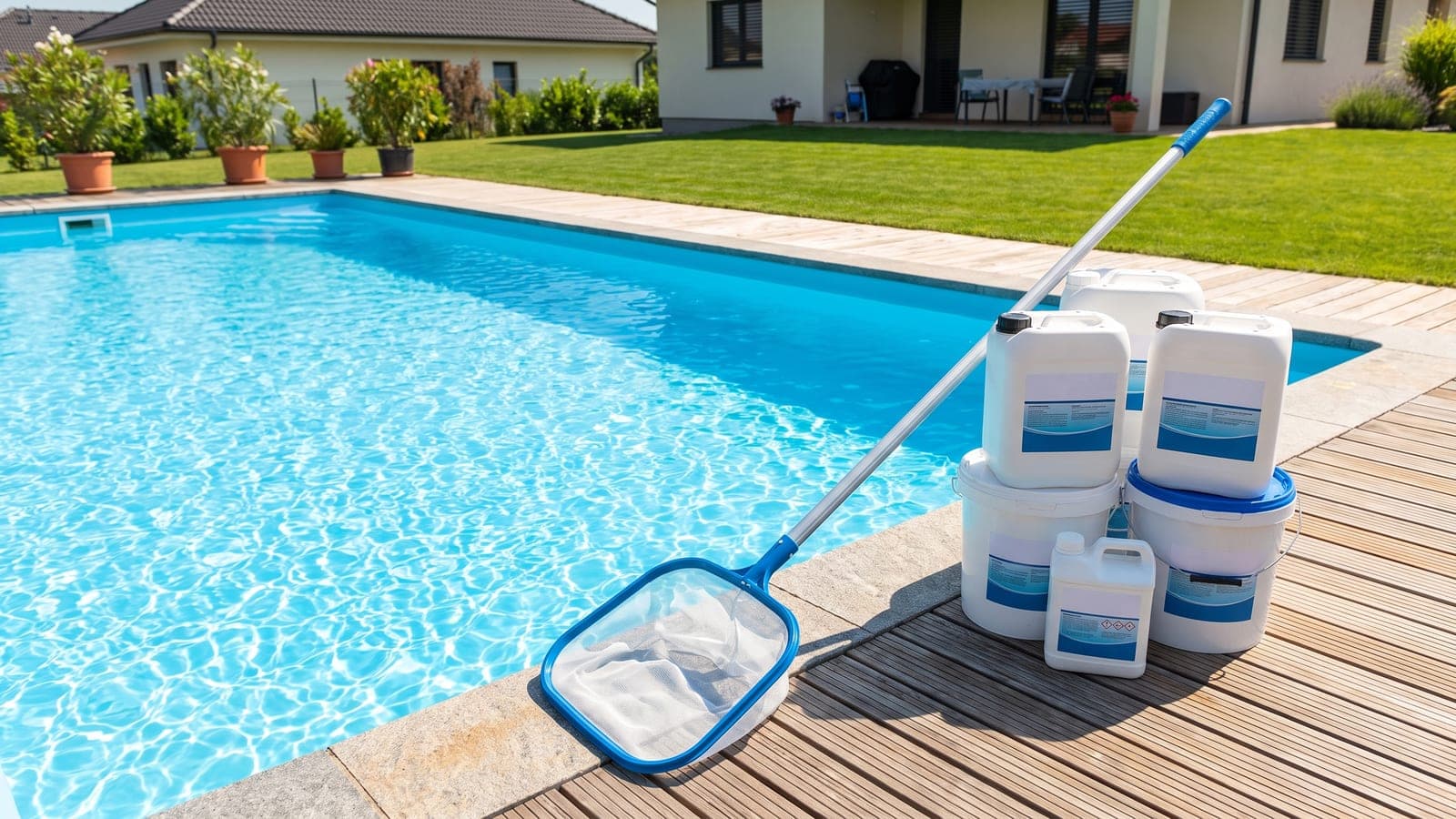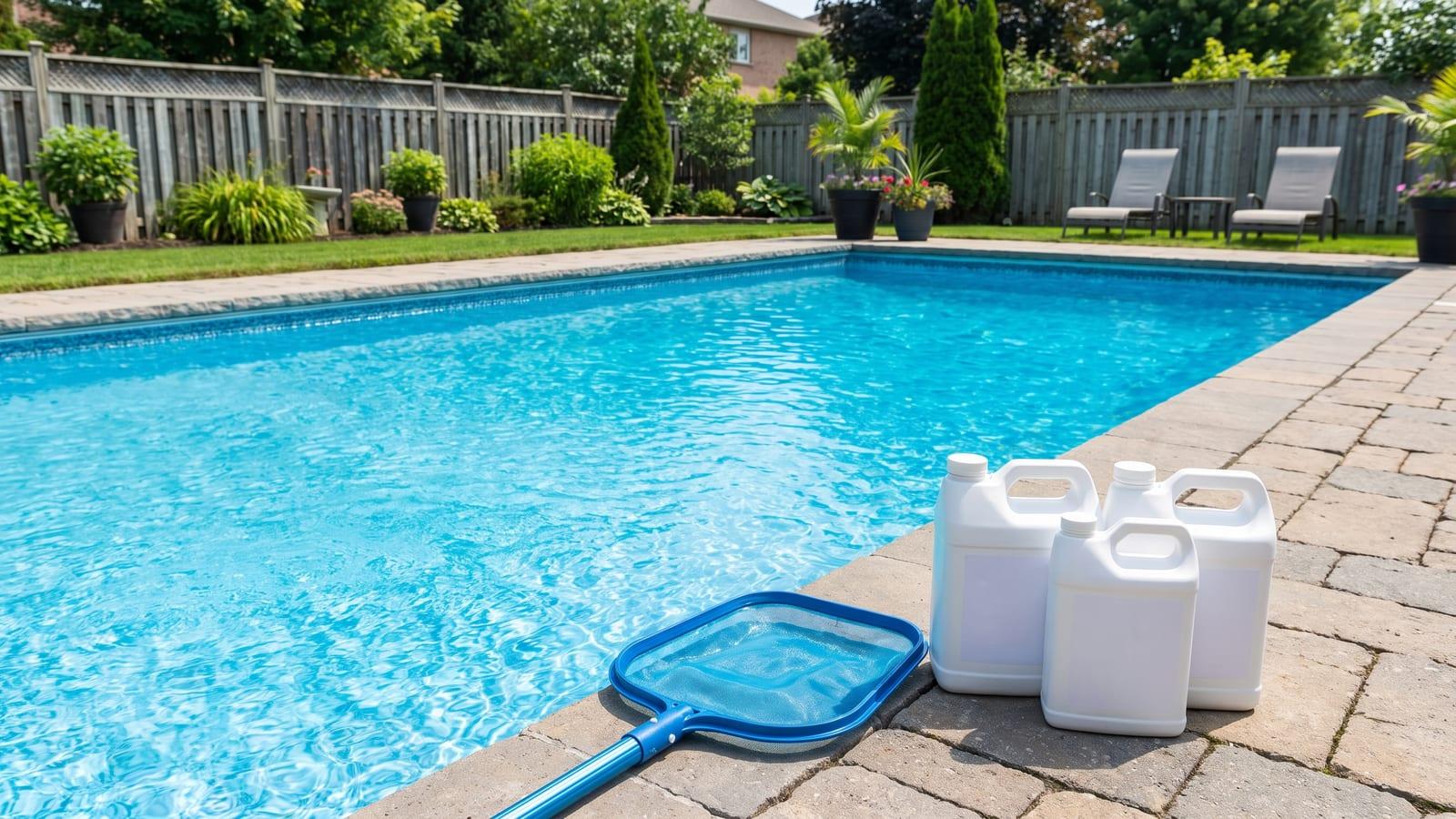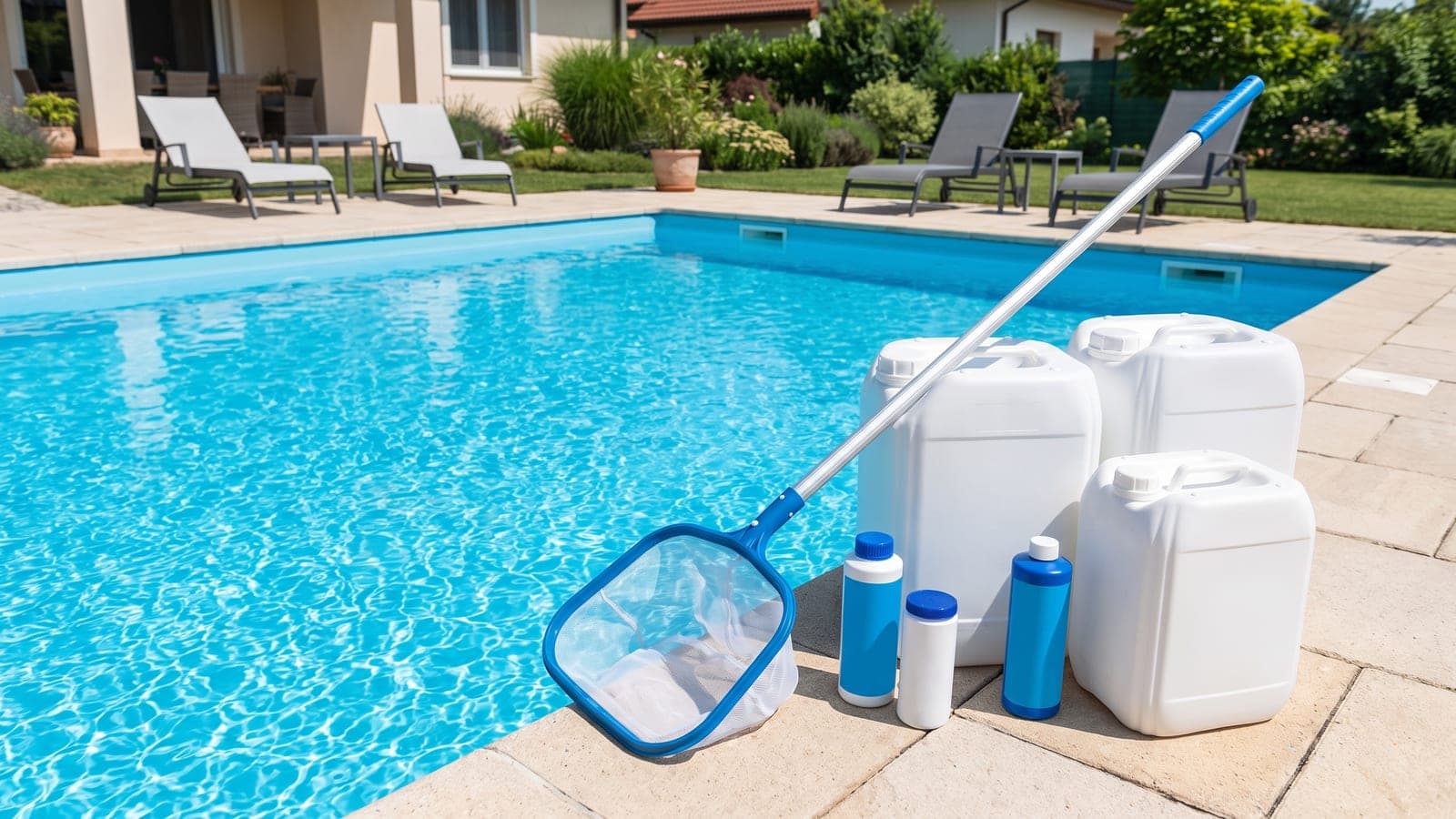
High calcium hardness in a pool has one reliable fix: dilute the water by draining some out and refilling with fresh, lower-calcium water. There is no common chemical that pulls calcium back out of the water, so anyone selling you a "calcium reducer" is usually selling a scale control, which is a different job. This guide walks through how to confirm the problem, drain and refill safely, and keep hardness from creeping back up.
Calcium hardness is simply how much dissolved calcium (and a little magnesium) is in your water, measured in parts per million, or ppm. It matters because too much calcium turns your water cloudy and leaves crusty white scale on tile, cell plates, and heater parts. Too little makes water hungry and corrosive, so it pulls calcium out of plaster and grout instead.
What counts as "too high" for calcium hardness?
Most pool sources point to a range of about 200 to 400 ppm, with 250 to 350 ppm a common sweet spot. Above roughly 400 ppm you start risking cloudy water and scale, especially if your pH and alkalinity also run high.
Your surface changes the math. Plaster and pebble pools actually want calcium on the higher side to protect the finish, while vinyl-liner and fiberglass pools do fine lower. Your equipment manual or builder spec is the final word here, so check it before you decide 380 ppm is a crisis.
Before you drain anything, confirm the reading. Strips are convenient but rough on hardness. A drop-based (titration) test kit or a trip to the pool store gives a number you can trust. If you want a good home kit and a scale-control product in one order, the maintenance-supplies section at our maintenance supplies page is a reasonable place to start.
Why can't I just add a chemical to lower it?
Because lowering calcium is not like lowering pH. When you add In The Swim pH Reducer (Sodium Bisulfate, 30 lb), acid reacts with the water and the pH drops. There is no cheap, pool-safe reaction that grabs dissolved calcium and makes it disappear on demand.
Products labeled for scale or "stain and metal" control, like In The Swim Super Stain Away (Stain & Metal Control, 1 Quart), do something useful but different. They are sequestrants, meaning they wrap up calcium and metals so they stay dissolved instead of clouding the water or crusting on surfaces. That buys you time and keeps the pool looking clear, but your hardness number on the test kit does not actually go down.
So sequestrants are a bandage, not a cure. Use them to manage a pool you cannot drain right now, then plan the real fix.
How do I lower calcium hardness by draining and refilling?
Dilution is the fix, and it is proportional. If your fill water is lower in calcium than your pool, replacing a third of the water lowers hardness by roughly a third. Here is the basic process.
First, test your fill-water hardness. Fill a clean bucket from the same tap or hose you will use and test it. Hard tap or well water limits how much a partial drain can help, and very hard fill water may need a pre-filter.
Second, do the math on volume. Estimate your pool gallons, then decide what fraction to swap. Going from 550 ppm down toward 350 ppm with 100 ppm fill water is roughly a 35 to 40 percent water exchange.
Third, drain partially and refill. Lower the water with your pump's waste setting or a submersible pump, then refill. Never fully drain a pool without understanding hydrostatic pressure, since an empty plaster or fiberglass pool can pop out of the ground or crack. If in doubt, do it in stages or call a pro.
Fourth, rebalance everything. Fresh water resets more than calcium. Recheck pH, alkalinity, chlorine, and stabilizer. You will likely need to restore stabilizer with something like In The Swim Pool Stabilizer (Cyanuric Acid, 10 lb) and adjust alkalinity and pH back into range.
If your area has notoriously hard water, a partial drain gets you only so far. Some owners refill through a garden-hose sediment or reverse-osmosis filter, and a few hire mobile RO services that treat the water without draining. That is the pricey option, but it beats fighting scale all season.
How do I keep calcium hardness from climbing again?
Calcium creeps up mostly through evaporation and top-offs. Every time water evaporates, the calcium stays behind and concentrates, and every hard-water top-off adds a little more.
Watch your pH and alkalinity, since high pH is what tips dissolved calcium into visible scale. Keeping pH in the roughly 7.2 to 7.8 range that the CDC recommends does more to prevent scale than any additive. Salt pools especially drift high on pH, so they need closer attention. Our saltwater pool maintenance guide covers that routine, and Morton Pool Salt (40 lb) does not add calcium if you are topping off a salt system.
A few sensible habits help. Use a cover to slow evaporation, avoid overusing calcium-based shock like cal-hypo if your hardness is already high, and skip calcium hardness increaser unless a test says you truly need it. If you want the chemistry logic behind all of this without the jargon, our pool chemistry basics guide lays it out.
Handle whatever chemicals you do add safely. Store them in a cool, dry, separated spot, never mix products, and follow the label, as the EPA and NPIC both stress for pool chemicals. And if you are wrestling with a hot tub instead, the small water volume changes the approach, so see our hot tub maintenance guide.
When should I just call a pro?
Call for help if your fill water is very hard and a partial drain barely moves the number, if you have heavy scale already crusted on tile or a salt cell, or if you are nervous about draining a plaster or fiberglass pool. Mobile RO treatment and professional acid washing exist for exactly these situations. Otherwise, a careful partial drain, a rebalance, and steady pH control will bring high calcium back into a safe range.
Frequently asked questions
Is there a chemical that lowers calcium hardness in a pool?
Not really. No common pool chemical removes calcium from the water the way pH reducer lowers pH. Products sold as scale controls only keep existing calcium dissolved so it does not cloud the water or crust on surfaces. The only dependable way to lower the actual hardness number is to dilute with fresh, low-calcium water.
What is a safe calcium hardness range for a pool?
Most sources put the comfortable range at roughly 200 to 400 ppm, with 250 to 350 ppm a common target. It depends on your surface, though. Plaster and tile pools like the higher end, while vinyl and fiberglass pools tolerate lower numbers. Check your builder or equipment manual before chasing a specific target.
Will draining part of my pool really fix high hardness?
Yes, as long as your fill water is lower in calcium than your pool water. Because dilution is proportional, swapping out a third of the water lowers hardness by roughly a third. If your tap or well water is already very hard, a partial drain helps less and you may need a filtered fill source.
Does a saltwater pool make calcium hardness worse?
The salt itself does not add calcium, but salt pools tend to run at a higher pH, which makes existing calcium more likely to scale on the cell and surfaces. Keeping pH and alkalinity in range matters more on a salt system. See our saltwater beginner guide for the routine.
How often should I test calcium hardness?
Once a month is plenty for most pools, since hardness moves slowly compared to pH or chlorine. Test more often if you top off frequently with hard water, run a salt system, or are recovering from a scale problem. A drop-based test kit reads hardness more reliably than most strips.