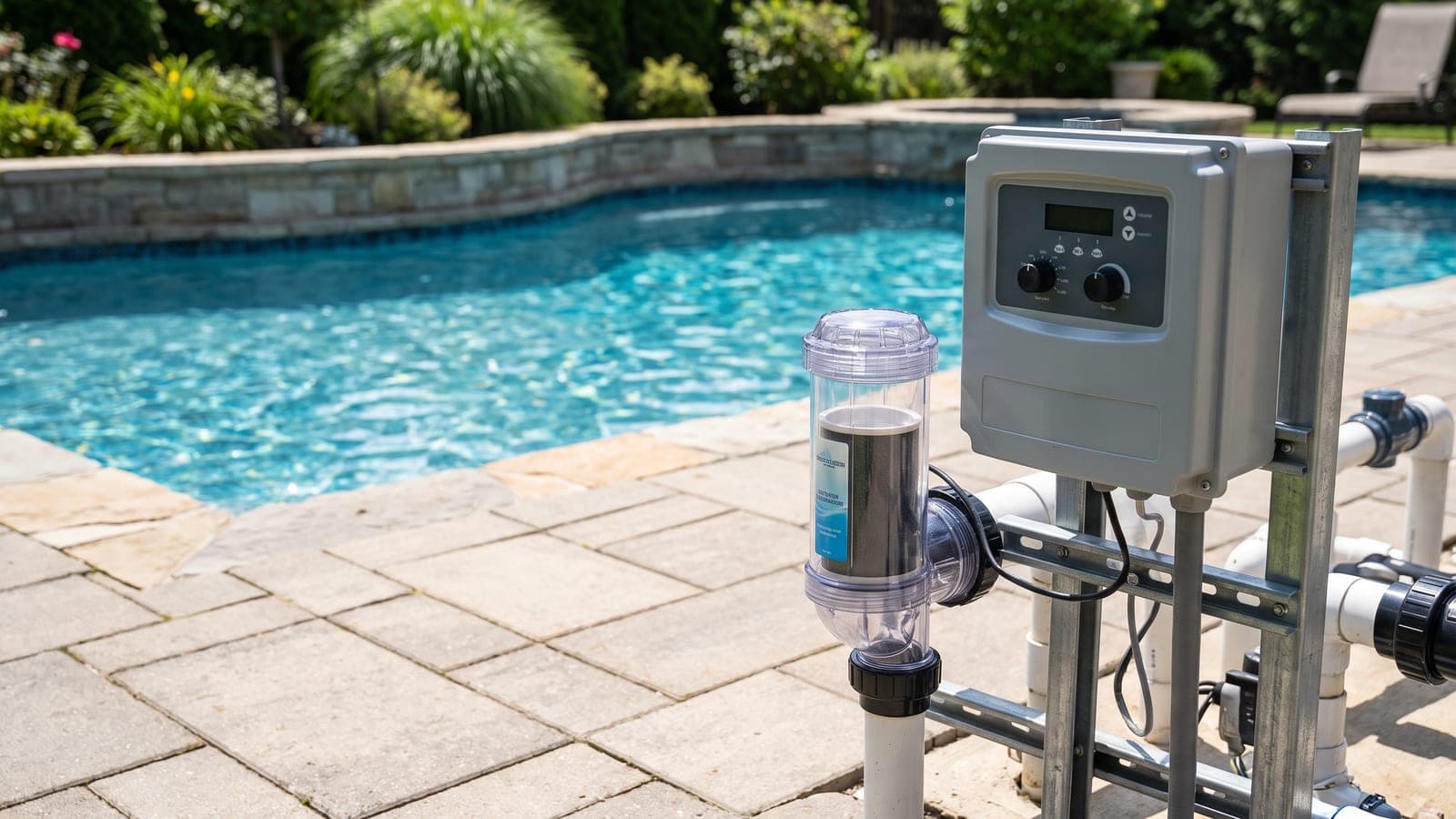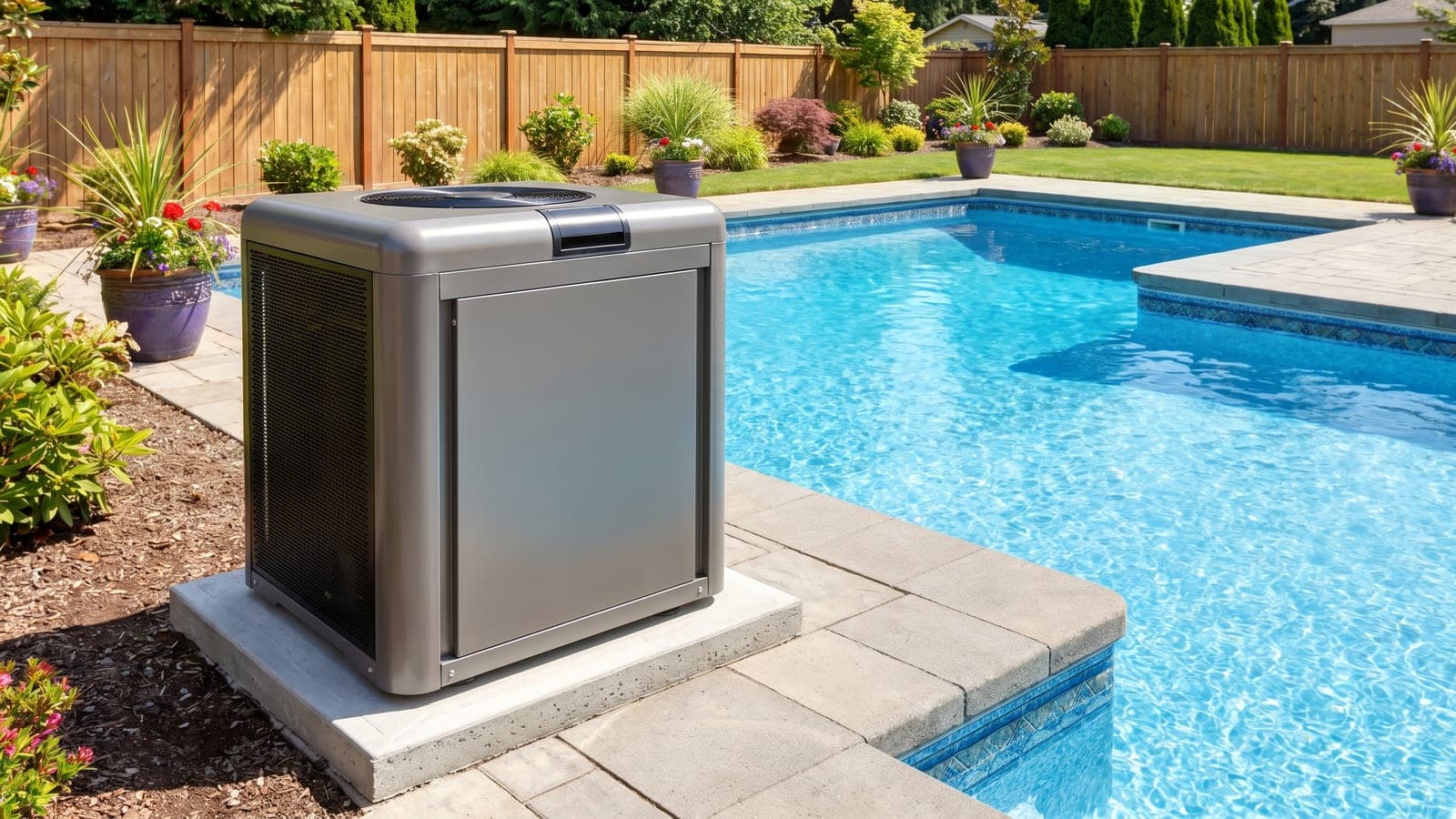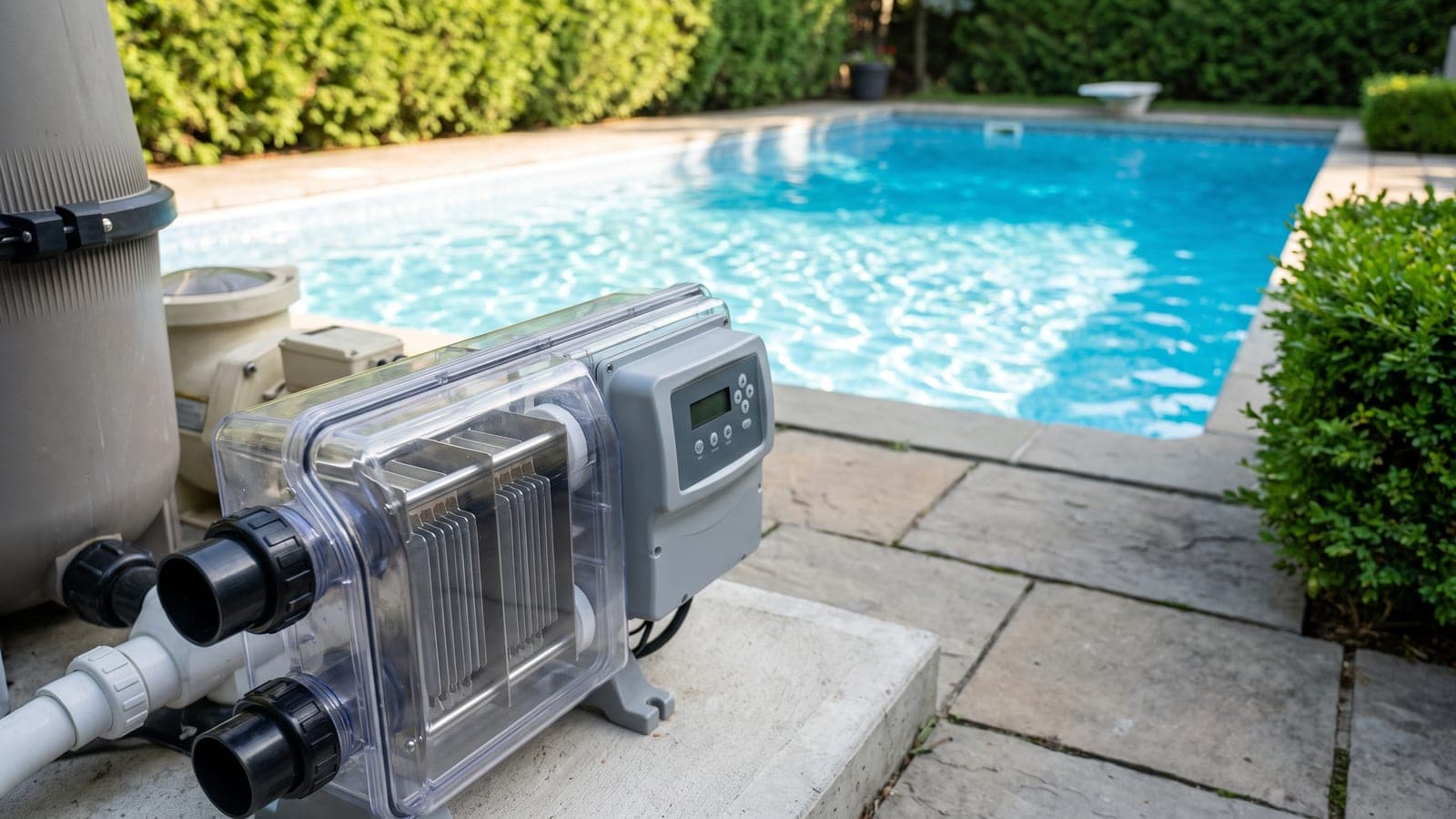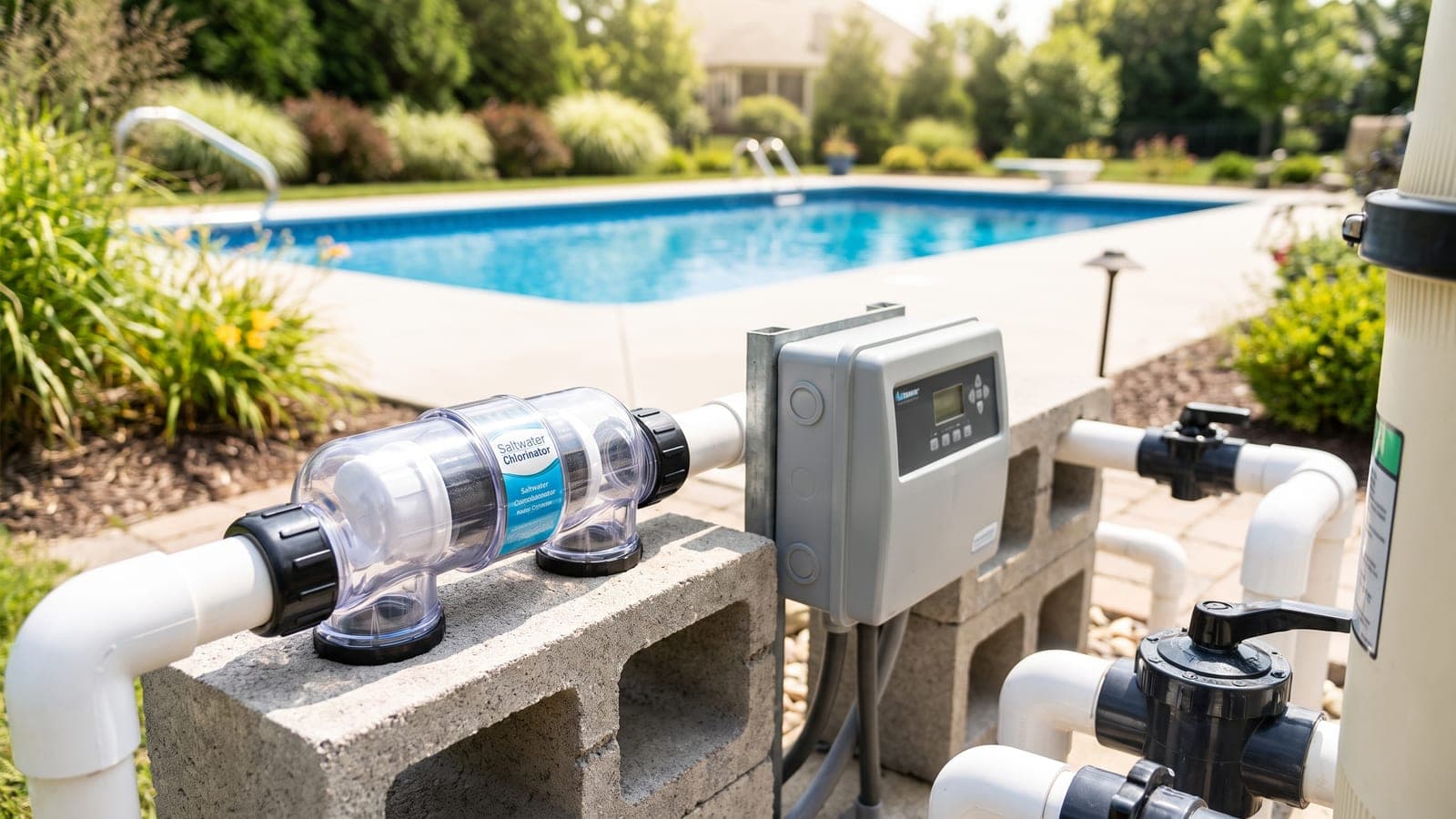
The short answer: Pentair and Hayward are the premium, automation-friendly names you buy when you want everything on one app and one warranty, while CircuPool is the value play that gives you similar chlorine output and cheaper replacement cells for less money up front. A salt system (also called a salt chlorine generator, because it makes chlorine from dissolved salt instead of you pouring it in) is a long-term purchase, so the right pick is less about brand loyalty and more about your pool size, your existing equipment, and how much you care about app control.
Here is how the three stack up in plain terms.
What does a salt system actually do?
It turns salt into chlorine. You add pool-grade salt to the water (the CDC still counts salt pools as chlorine pools, since chlorine is what sanitizes the water), and the cell uses a low-voltage electrical charge to convert that salt into chlorine as water flows through it. For a refresher on how sanitizer, pH, and stabilizer fit together, see our pool chemistry basics without the lab coat guide.
The salt does not get used up quickly, so you mostly top it off after heavy rain or big splash-out. Hayward's own guidance walks through how much salt to add to hit the target range, which is usually around 3,000 to 3,400 ppm depending on the system.
Is Hayward or Pentair better for a full equipment pad?
If your pool already runs one of these brands, matching it usually pays off. Both companies build the salt cell to plug into their automation, so you can control chlorine output, pump speed, heater, and lights from a single app.
The Hayward AquaRite Salt System is the workhorse most people mean when they say "Hayward salt." It handles pools up to about 40,000 gallons, and its display shows salt level, cell condition, and output percentage so you can spot trouble early. For above-ground pools, the Hayward AquaTrol Above-Ground Salt System is the simpler, self-contained cousin.
On the Pentair side, the Pentair IntelliChlor IC40 Salt System is the direct competitor, sized for larger in-ground pools and built to tie into Pentair's IntelliCenter automation. Pentair publishes the cell rating and sizing details on its own product page, which is worth reading before you buy so you match the cell to your gallons. Smaller pool? Pentair also makes lower-capacity cells in the same family for pools in the 15,000-gallon range.
Both brands are reliable and both have wide dealer and parts networks. The tradeoff is price. You pay a premium for the ecosystem, and their replacement cells are among the more expensive on the market.
Where does CircuPool fit in?
CircuPool aims squarely at owners who want strong output without the premium badge. The CircuPool Universal40 Salt System is sized for large pools like the big-brand 40,000-gallon units, and the CircuPool RJ45+ Salt System is a popular mid-tier option. The company tends to advertise longer cell-hour ratings and noticeably cheaper replacement cells, which is the number that quietly decides your 10-year cost.
The catch is automation. CircuPool is mostly a standalone generator, so if you want everything on one app with your pump and heater, a matching Hayward or Pentair system is the cleaner path. If you just want dependable chlorine and a lower total bill, CircuPool is a strong value.
What should decide your pick?
Start with three questions. What brand is already on your pad, how big is your pool in gallons, and how much do you want app control.
- Already running Hayward or Pentair automation? Match it. The integration is worth more than small price differences.
- Building fresh or replacing a dead generic unit and want the lowest 10-year cost? CircuPool deserves a serious look, mostly because of cheaper cells.
- Above-ground or small pool? Size down. An oversized cell is wasted money, and an undersized one runs constantly and wears out faster.
You can compare current models and capacities on our salt systems page. Whatever you choose, get the cell rated for at least your pool's gallons, ideally a size up, so it is not running at 100 percent every day.
What about long-term cost and upkeep?
The sticker price is only part of the story. Over a decade you will likely replace the cell once or twice, so a cheaper cell can make a "more expensive" system the better deal, and a pricey cell can erase the savings on a bargain unit.
Upkeep is similar across all three. You keep salt in range, keep pH and stabilizer (cyanuric acid) balanced, and inspect the cell every few months for scale, cleaning it only when you see white crusty buildup. Overcleaning shortens cell life, so do not scrub it on a schedule for no reason. New to running salt day to day? Our saltwater pool maintenance for beginners guide covers the routine, and if you run a spa on salt too, the hot tub maintenance for beginners without the chemical panic guide is a gentler companion.
The bottom line
There is no single winner, only the right fit. Buy Hayward or Pentair when automation and a single-brand pad matter to you, and lean CircuPool when you want comparable chlorine output at a lower total cost of ownership. Match the cell to your gallons, read the manual for exact salt targets and part numbers, and call a licensed pro for the electrical side if the wiring is out of your comfort zone.
Frequently asked questions
Are Hayward, Pentair, and CircuPool salt cells interchangeable?
No. Each brand uses its own cell shape, plug, and control board, so a Hayward cell will not fit a Pentair or CircuPool unit and vice versa. Buy the replacement cell that matches your exact model, and check the manual for the part number before ordering.
Which brand has the cheapest replacement cell?
It depends on the model and where you buy, but CircuPool generally advertises lower replacement-cell prices than Pentair or Hayward. Cell cost matters a lot over 10 years because you will replace it once or twice, so factor it into the total, not just the sticker price.
Do any of these work with my existing automation?
Hayward and Pentair salt systems talk to their own automation platforms (OmniLogic and IntelliCenter), which is a real plus if you already run that brand. CircuPool is mostly a standalone generator, so if you want app control and equipment scheduling, a matching-brand system is usually simpler.
How long do salt cells actually last?
Most cells are rated somewhere around 10,000 hours of run time, which often works out to roughly 3 to 5 seasons depending on how hard you run the pool. Water balance, run time, and how often you clean the cell all change that number, so treat the rating as a ballpark, not a promise.
Can I install a salt system myself?
Plumbing the cell into the return line is doable for a handy owner, but the power connection should follow local electrical code and the unit's manual. If you are not comfortable with the wiring or your panel, hire a licensed electrician or pool pro rather than guessing.