A saltwater chlorinator makes its own chlorine by running electricity through salty water, so you stop buying and pouring chlorine and let the system produce it on demand instead. That is the whole trick. Your pool is still a chlorine pool. The chlorine just gets manufactured inside a device on your equipment pad rather than coming out of a bucket of tablets.
If you are new to the idea that a "salt pool" is chlorinated, you are not alone, and the confusion is worth clearing up before we get into the hardware.
So a salt pool still uses chlorine?
Yes. This is the single most misunderstood thing about salt systems. Salt does not sanitize your water. Chlorine does. The salt is just the raw ingredient the machine uses to make chlorine.
Here is the chemistry in plain English. Pool salt is sodium chloride, the same stuff as table salt. When you dissolve it in water, it splits into sodium and chloride ions floating around. Your chlorinator grabs those chloride ions and converts them into chlorine.
So the CDC's advice on maintaining proper chlorine and pH levels applies to your salt pool exactly like any other. You still test, you still balance, you still care about free chlorine. You just are not lugging jugs to do it.
What does the salt cell actually do?
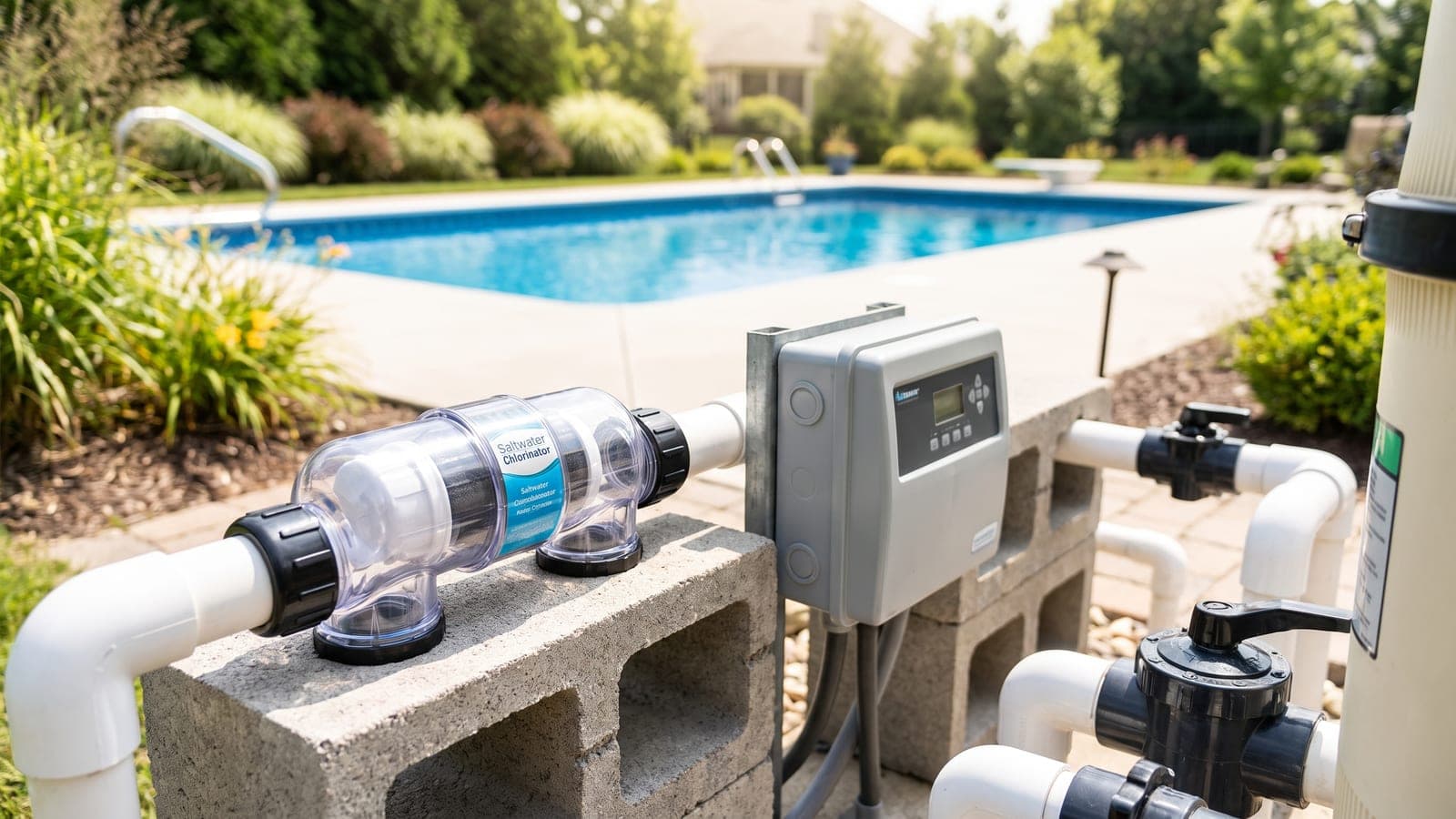
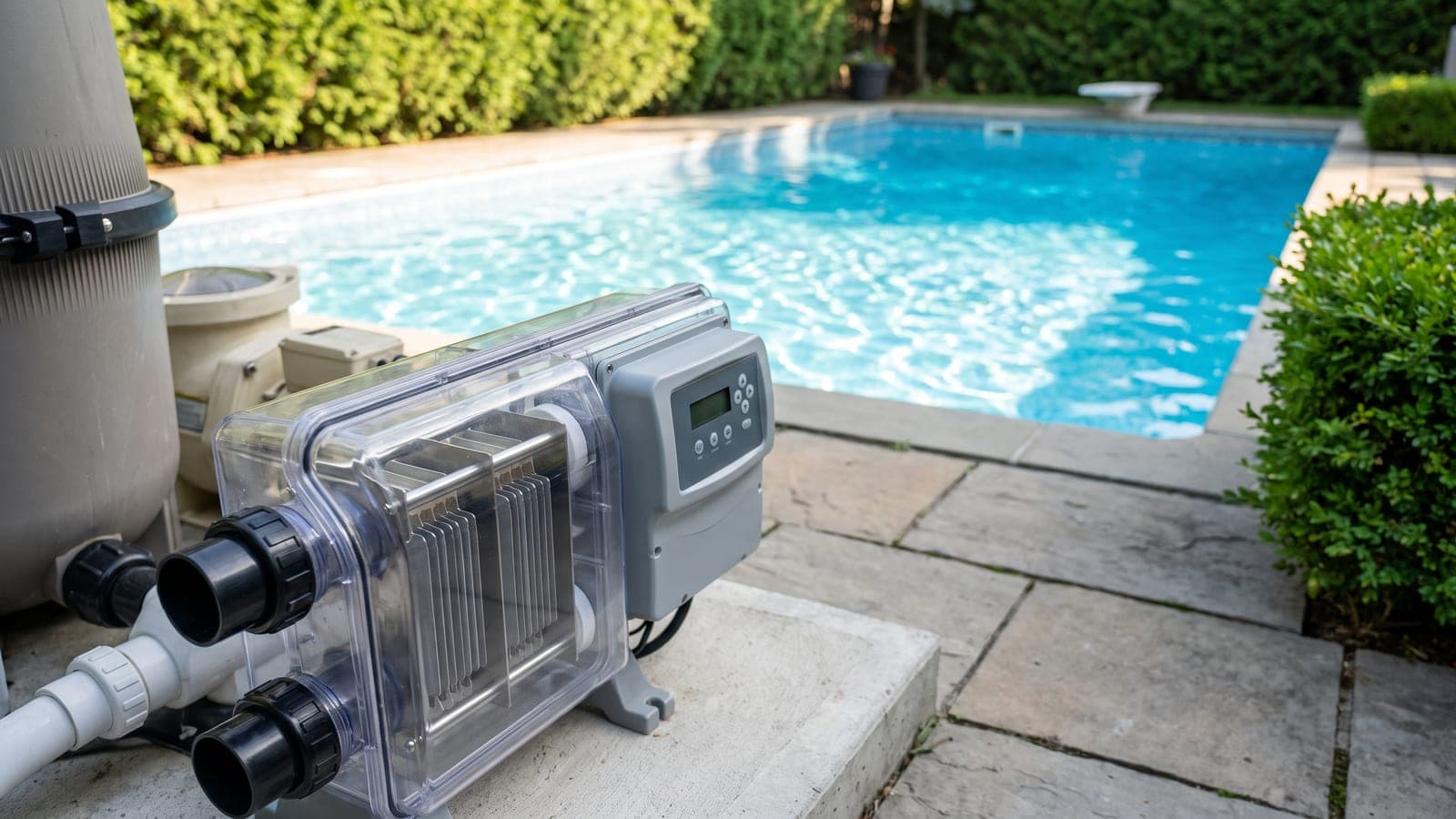
The salt cell is the heart of the system. It is a clear or opaque housing plumbed into your return line, with a stack of coated metal plates inside. Water flows through it every time the pump runs.
The process is called electrolysis. The control box sends a low-voltage electrical current across those plates. As salty water passes between them, the current splits the chloride ions and produces chlorine gas right there in the pipe. That chlorine dissolves instantly into the passing water and heads out to your pool.
By the time the water reaches your returns, it is carrying fresh chlorine. No storage, no measuring, no chlorine smell in the garage. The system makes exactly as much as it is told to and no more.
One nice side effect: the chlorine a cell produces is unstabilized, which is a fancy way of saying it does not add cyanuric acid (CYA) on its own. CYA is the sunscreen for chlorine. You add a little separately, and then your salt-made chlorine lasts longer in sunlight.
Where does the salt come from, and does it get used up?
You add the salt once, in bags, when you start the system or refill the pool. A typical target is around 3,000 to 3,500 ppm, but every unit is different, so read your manual for the exact number.
Salt is not consumed the way chlorine tablets are. When the cell makes chlorine and that chlorine does its sanitizing job, it eventually reverts back toward chloride. The salt essentially recycles. You mainly lose salt to splash-out, backwashing, rain overflow, and the occasional partial drain.
That means you top off salt a couple of times a season, not every week. Hayward's salt guidance walks through how bag count maps to your pool volume and current reading, which is handy when your test strip says you are low.
What are the parts, and what do I control?
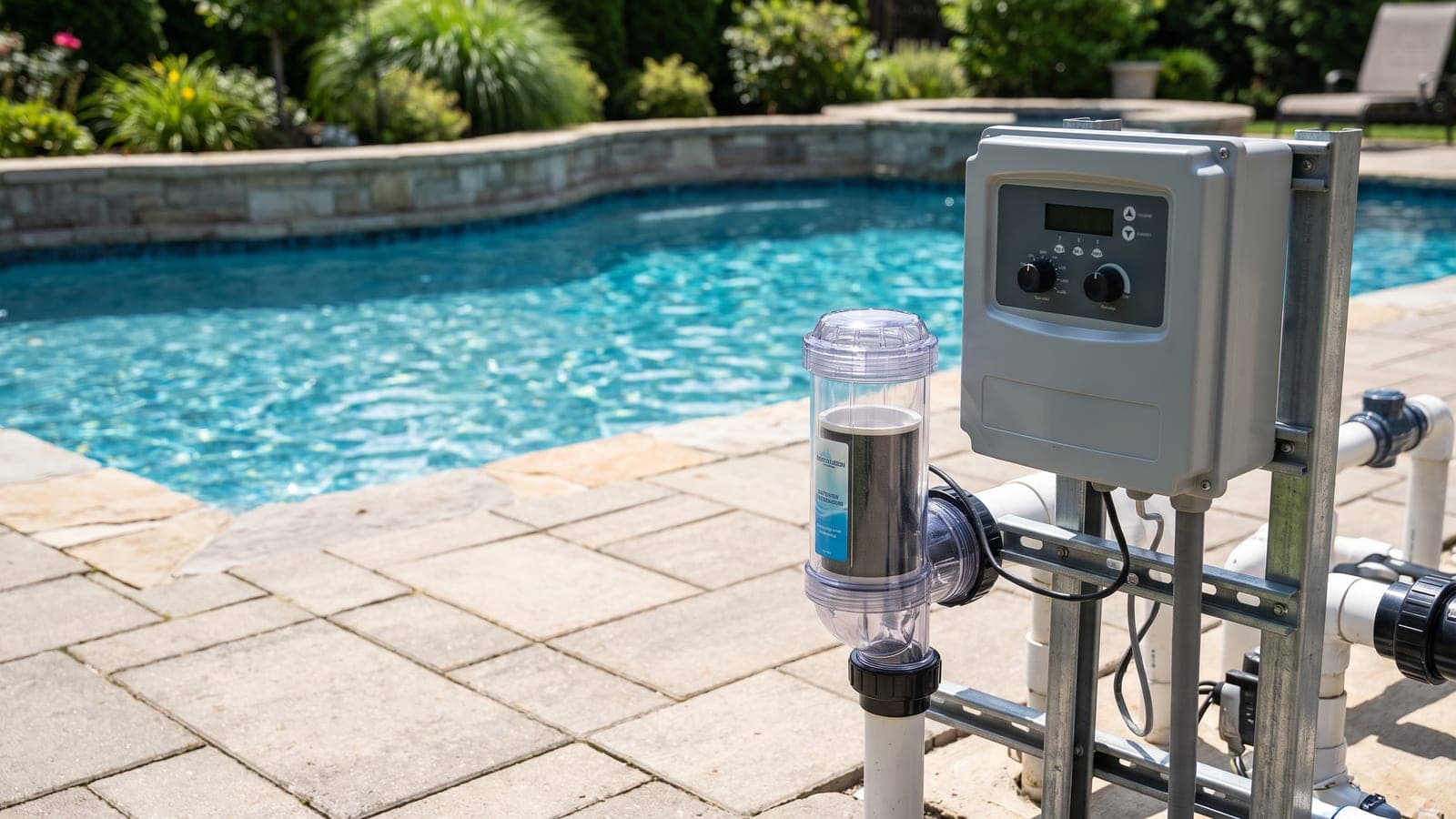
Two main pieces sit on your pad. The salt cell does the chemistry. The control box is the brain that powers the cell and lets you set output.
On most control boxes you set a chlorine output percentage. That percentage is really how much of your pump's runtime the cell spends generating. Set it to 50 percent and the cell makes chlorine for roughly half the time the pump runs. More sun, more swimmers, or a heat wave usually means turning it up.
Systems are sized by pool gallons, and matching that matters. The Pentair IntelliChlor IC40 Salt System and the Hayward AquaRite Salt System (40,000 gal) are built for larger pools, while a smaller above-ground pool might use the Hayward AquaTrol Above-Ground Salt System. An undersized cell runs at 100 percent constantly and wears out fast, so buy for your actual volume with headroom. You can compare units on our salt systems page at /products/salt-systems.
Does the cell need maintenance?
It does, and skipping it is the number one reason people think their system "died." As the cell runs, calcium and other minerals crust onto the plates as white scale. Scale blocks the current and output drops.
Most modern cells are self-cleaning, meaning they reverse polarity periodically to knock off buildup. That helps, but in hard water you will still need to inspect the plates every few months and clean them by hand when you see heavy scale.
Cleaning is a mild acid rinse or a soak, following your manual's dilution. Keep your water balanced, especially pH and calcium hardness, and the cell scales less and lasts longer. Pentair's IntelliChlor documentation is a good reference for how output and cell life relate on their units.
Cells are consumable. Plan on replacing yours every 3 to 7 years depending on runtime and water chemistry. When output stays low even after a good cleaning, the coating is spent and it is cell-replacement time.
Is it worth it for my pool?
For a lot of owners, yes, mostly because of the softer water feel and not handling chlorine. The tradeoff is upfront cost, plus the cell replacement down the road. Salt is also mildly corrosive over years, so check your heater, ladders, and light housings.
If you are just getting comfortable with pool chemistry, start with our guide at /guides/pool-chemistry-basics-without-the-lab-coat, then move on to salt-specific care at /guides/saltwater-pool-maintenance-for-beginners. Salt-chlorinated spas follow the same logic, and our /guides/hot-tub-maintenance-for-beginners-without-the-chemical-panic covers the smaller-volume version.
The short version: add salt, let electrolysis turn it into chlorine, set your output, clean the cell, and test your water like you always would. The machine handles the pouring so you do not have to.
Frequently asked questions
Does a saltwater pool have chlorine in it?
Yes, and this surprises a lot of new owners. A salt system makes chlorine from salt continuously, so the water you swim in is chlorinated just like a traditional pool. The difference is where the chlorine comes from, not whether it is there.
How much salt do I actually add?
Most residential systems want roughly 3,000 to 3,500 ppm, but the exact target depends on your unit, so check the manual. Hayward's guidance and your test reading together tell you how many bags to add. Adding too much is a hassle to fix because the only real cure is draining and diluting.
How long does a salt cell last?
Most cells last somewhere in the range of 3 to 7 years depending on runtime, water balance, and how well you clean them. High calcium and low pH both shorten cell life. When output drops even after cleaning, the cell is usually near the end.
Can I run the chlorinator all the time?
You only make chlorine when the pump is running, and output is set as a percentage of pump runtime. Running it at 100 percent constantly usually means the cell is undersized or the pump hours are too short. It depends on your pool volume, bather load, and sun exposure.
Is a salt pool cheaper than a chlorine pool?
Day to day you buy salt instead of chlorine tabs, which many owners find cheaper and easier. The catch is the upfront system cost and the cell replacement every few years. Whether it saves money overall depends on your local salt and cell prices.