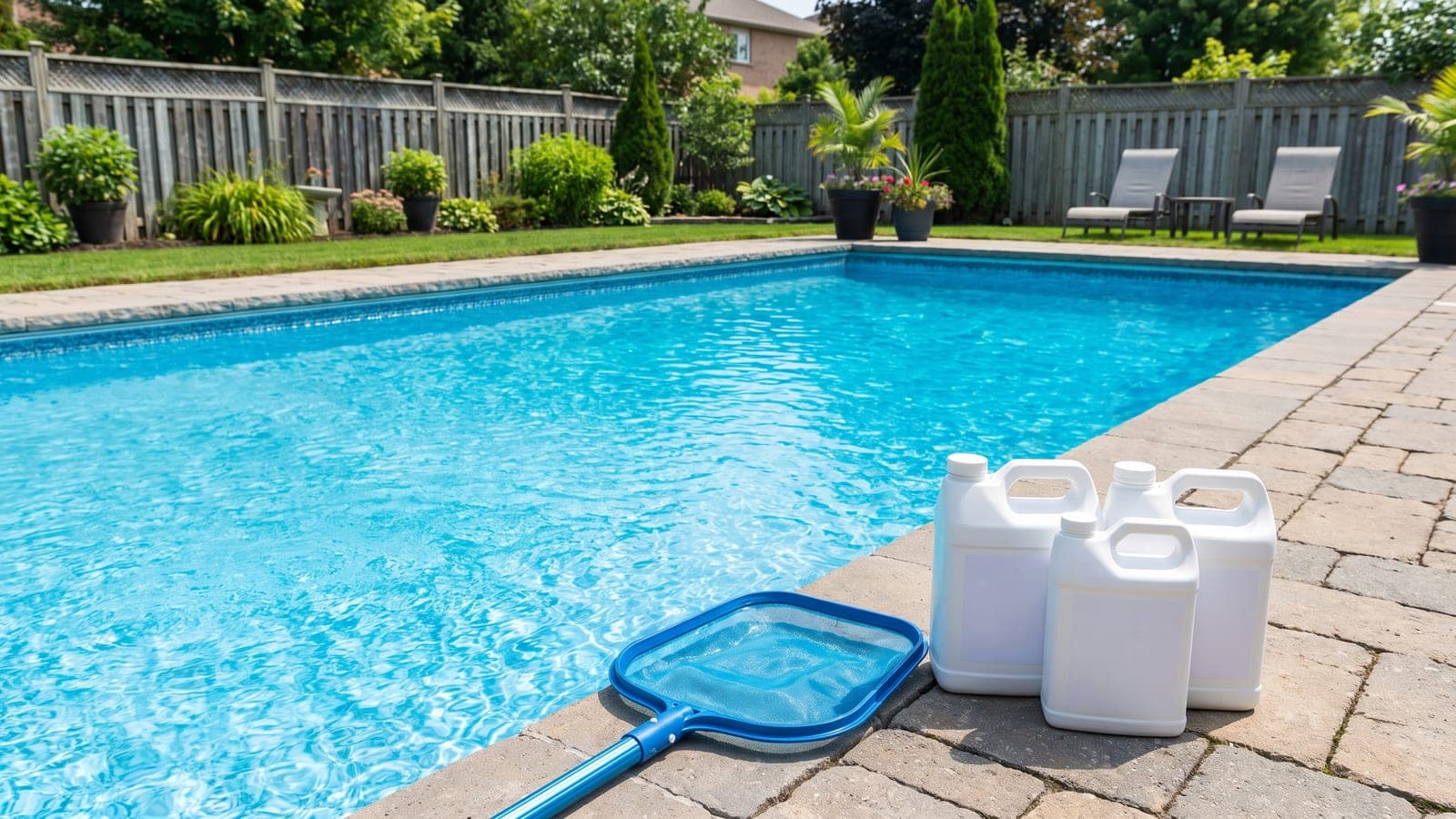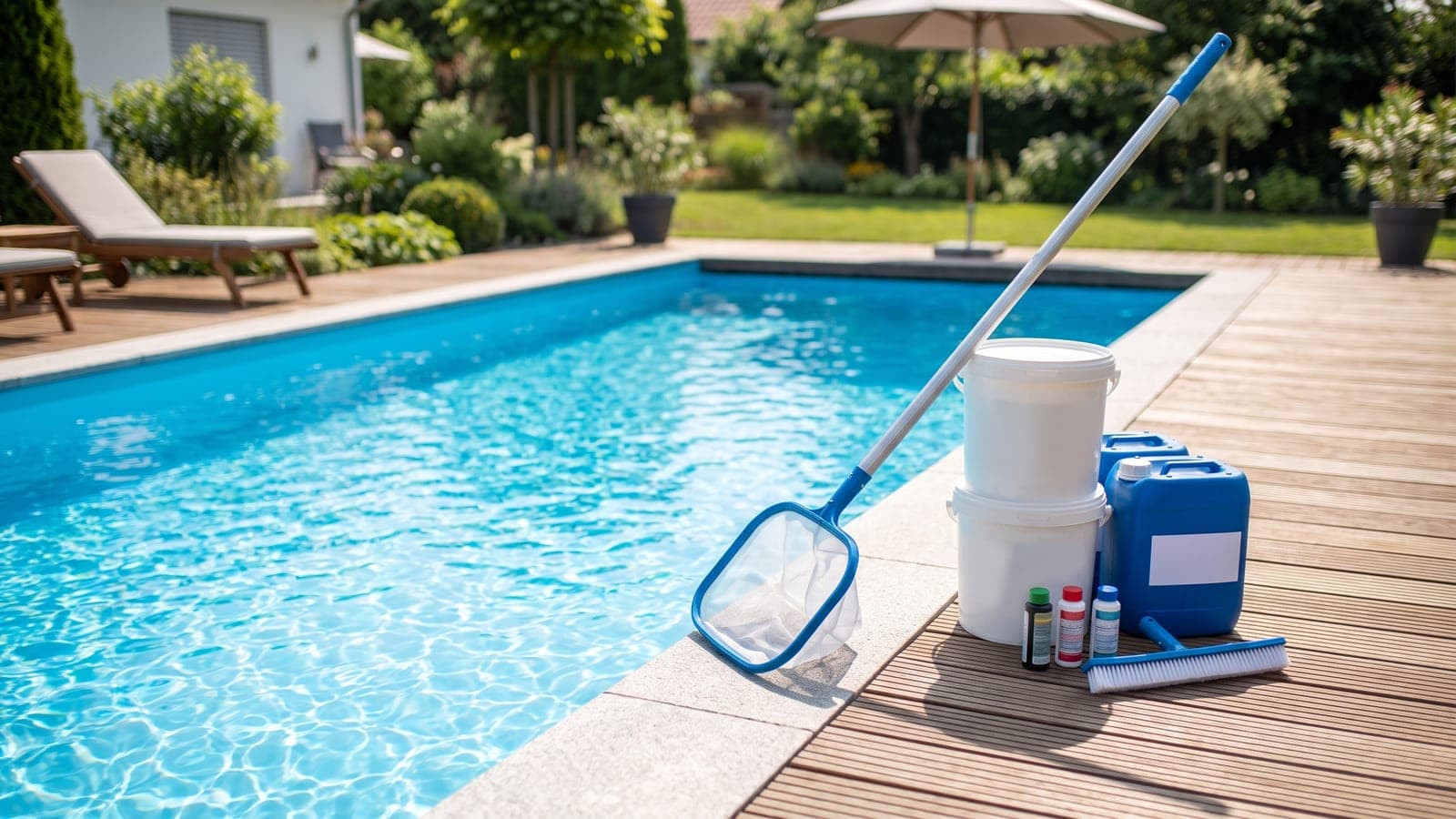
You remove phosphates from a pool by adding a phosphate remover (usually a lanthanum-based liquid), running the filter to catch the cloud it forms, then cleaning the filter. But most home pools with steady chlorine do not need to bother. Phosphates are algae food, not a sanitizer problem, so the honest first question is whether they are actually causing you trouble.
Let me define the term, because the phosphate panic is real and the marketing is loud. Phosphates are dissolved nutrients (measured in parts per billion, or ppb) that algae feed on. They are not harmful to swimmers and they do not affect chlorine, pH, or how the water feels. High phosphates just mean algae has a well-stocked pantry if your chlorine ever slips.
Should I even bother removing phosphates?
For most pools, no. Chlorine kills algae faster than algae can eat. If your free chlorine stays in range (roughly 2 to 4 ppm for a chlorine pool, a bit lower for salt), your cyanuric acid (CYA, the stabilizer that protects chlorine from sunlight) is 30 to 50 ppm, and the water is clear, phosphates are a non-issue. You can have 1,000 ppb and never see a green speck.
Phosphate removal earns its keep in a narrower set of cases. Consider it if algae keeps returning even though your chlorine reads fine, if you fight chronic algae in a pool surrounded by lawns and trees, or if you own a saltwater pool where the cell struggles to keep up during a heat wave. In those spots, cutting the food supply is a reasonable backup to good chemistry, not a replacement for it.
If your reaction to a high phosphate strip is to buy remover before checking chlorine, slow down. A green pool with high phosphates is almost always a low-chlorine problem wearing a phosphate costume.
How do I test for phosphates?
You test with a phosphate test kit or strips, since a standard test kit does not measure them. Strips give a rough range (low, medium, high), while liquid drop kits get you closer to an actual number. For a decision this optional, a strip is plenty to tell whether you are at a few hundred ppb or a few thousand.
Test before you buy anything. Knowing your starting number tells you how much product you need and whether the problem is worth chasing at all. If you are new to reading these numbers, our pool chemistry basics without the lab coat guide walks through what each test actually means.
How do I actually remove phosphates?
Here is the process once you have decided it is worth doing.
First, get your normal chemistry in range. Balance pH (7.4 to 7.6) and make sure the filter is clean, because the remover works by clumping phosphates into particles your filter has to catch. A dirty filter fights you here.
Second, add a phosphate remover with the pump running. A lanthanum-based product like SeaKlear Phosphate Remover binds the phosphates and forms a fine cloud. Dose by your pool's gallons per the label, not by eyeball, since overdosing just makes more cloud without helping.
Third, run the pump continuously for 24 to 48 hours. The water will look milky at first, which is the point, the particles are being filtered out. A pool clarifier such as In The Swim Super Clarifier can help a cartridge or sand filter grab the fine stuff faster if the cloud lingers.
Fourth, clean the filter. Backwash a sand or DE filter, or rinse a cartridge, once the water clears. All those trapped phosphate particles are now sitting in your filter, so cleaning it is not optional.
Retest after a day or two. If the number dropped and stayed down, you are done. Phosphates creep back over time from fill water and yard runoff, so treat this as occasional maintenance, not a monthly ritual.
What if I already have algae?
Then phosphate remover is the wrong first move. Removers do not kill algae, they only take away a food source. Clear the algae first with a proper shock (chlorine works, and products like HTH Super Shock Treatment raise free chlorine fast), brush the walls and floor, and run the filter hard. The CDC's guidance on home pool treatment and testing is a solid plain-language reference for getting sanitizer where it needs to be.
Once the water is clear and chlorine is holding, then you can decide whether ongoing phosphate control makes sense for your yard. For persistent algae despite good chlorine, an algaecide like In The Swim Algaecide 60 Plus is often a more direct backup than chasing phosphates.
Does this change for a saltwater pool?
The logic is the same, the stakes are slightly higher. A salt chlorine generator makes chlorine steadily rather than in big doses, so during heavy use or a heat wave the cell can fall behind, and that is exactly when a full phosphate pantry lets algae get ahead. Some salt pool owners keep phosphates lower as insurance, and that is defensible.
It is still not mandatory. A correctly sized cell running enough hours a day usually keeps up on its own. If you want the full picture on running a salt system, see our saltwater pool maintenance for beginners guide. The same optional-but-sometimes-useful thinking applies to spas, covered in hot tub maintenance for beginners without the chemical panic.
A quick word on safety
Phosphate remover is milder than shock or acid, but it is still a pool chemical. Store it separately from chlorine products, never mix chemicals in the same bucket, and add product to water rather than water to product. The EPA's safe storage and handling alert and the NPIC pool chemicals fact sheet both spell out the basics worth following.
The honest bottom line
You can remove phosphates, and the method is straightforward: test, balance, dose a remover, filter for a day or two, clean the filter. Whether you should is the real question, and for most clear pools with reliable chlorine the answer is no. Spend that money on a good test kit and steady sanitizer first. If algae keeps beating you despite solid chemistry, then phosphate control moves from marketing pitch to sensible tool. You can browse phosphate removers and other basics on our maintenance supplies page when you have decided it is worth it.
Frequently asked questions
Do I need to remove phosphates if my pool is clear and my chlorine is good?
Usually no. If chlorine is holding and the water is clear, phosphates are not causing a problem you need to spend money on. Keep sanitizer and CYA in range and skip the phosphate remover unless algae keeps coming back.
What phosphate level is too high?
Many test kits flag anything over about 500 ppb, but there is no universal danger line. A pool with 1,000 ppb and solid chlorine can stay perfectly clear, while a neglected pool with low chlorine can turn green at much lower numbers.
Will a phosphate remover kill algae I already have?
No. Phosphate removers take away one of algae's food sources, they do not sanitize. If you can already see algae, you clear it with shock, brushing, and filtration first, then decide whether phosphate control is worth it going forward.
How long does it take to lower phosphates?
The chemical reaction is fast, often within an hour, but your filter has to catch the cloud that forms. Plan on running the pump 24 to 48 hours and cleaning or backwashing the filter afterward. It depends on your filter type and how much product you added.
Where do phosphates even come from?
Common sources are lawn fertilizer runoff, leaves and pollen, some city water, and certain stain and metal control products. It depends on your yard and fill water, so a pool surrounded by landscaping will see more than one on a bare patio.