The short version: attach your vacuum head and hose to a telescopic pole, prime the hose so it fills with water, connect it to your skimmer or a dedicated suction port, then sweep the pool floor in slow, overlapping passes. Do it right and the water clears; rush it and you stir up a cloud. Here is the full walkthrough.
Vacuuming by hand means you, a pole, and a vacuum head doing the work your automatic cleaner cannot. It is the most reliable way to pull settled dirt, sand, and dead algae off the floor. A little patience beats any fancy gear here.
What do I need before I start?
You need four things for a classic pump-powered vacuum: a vacuum head (the flat plastic shoe that rides the floor), a telescopic pole, a vacuum hose long enough to reach the far end of the pool plus a few feet, and a skimmer plate or vacuum adapter that fits your skimmer. Most starter kits include the head, hose, and plate together.
Have a skimmer net on hand too. Scoop out the big leaves and floating debris first, because a vacuum head clogs fast on anything bigger than fine sediment.
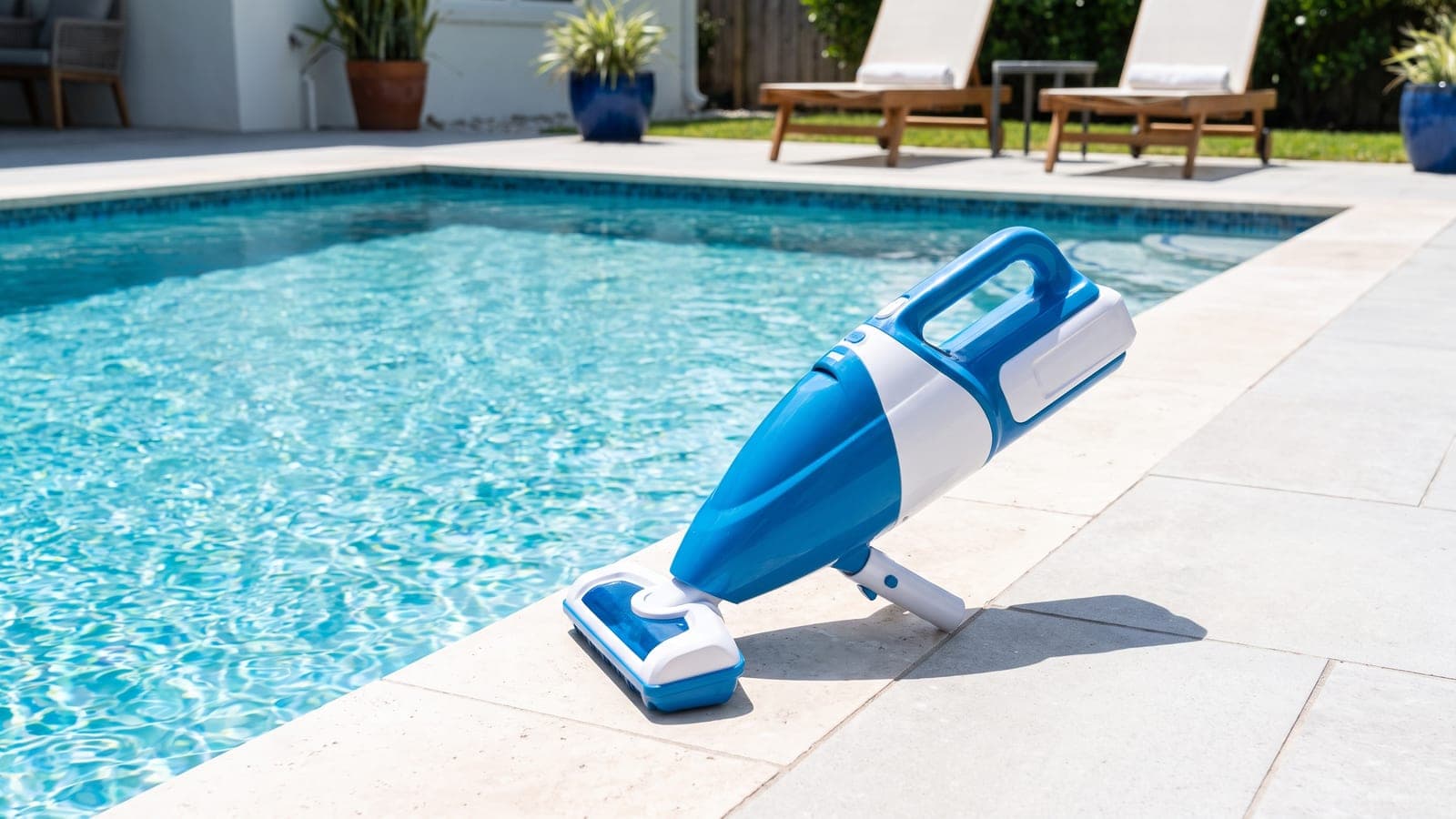
If you would rather skip the hose-and-pump routine, a cordless handheld vacuum handles small pools, steps, and stubborn corners without touching your equipment pad. The Pool Blaster Max Li Cordless Pool Vacuum and the Aiper Pilot H2 Handheld Cordless Pool Vacuum are examples that suck debris into an internal filter bag instead of routing it through your filter. You can browse the full lineup on our handheld vacuums page.
How do I set up and prime the vacuum?
Priming just means filling the hose with water so no air gets into your pump. Air in the line kills suction and makes the head float and skitter.
First, snap the vacuum head onto the telescopic pole, then attach one end of the hose to the head. Lower the whole assembly to the bottom of the pool so the head sits flat on the floor.
Now feed the water. Hold the free end of the hose directly in front of a return jet (the fitting that pushes clean water back into the pool). Water will flood the hose and push out the trapped air. You will see a steady stream of bubbles rise from the vacuum head, and when the bubbles stop, the hose is primed.
How do I connect it to the skimmer?
Keep the primed hose end underwater so it does not gulp air. With your free hand, remove the skimmer basket and set your skimmer plate (also called a vacuum plate or vac gate) over the basket opening, then press the hose end onto the plate's port.
If your pool has a dedicated suction line or a vacuum port on the wall, use that instead and skip the plate. Either way, you should feel the head grip the floor once suction takes hold. That grab is what you want.
What is the right way to actually vacuum?
Move slowly. This is the single biggest mistake owners make: fast strokes blow settled dirt back into the water and you end up with a cloudy pool and nothing to show for it.
Work in long, straight, overlapping lanes like you are mowing a lawn, letting each pass cover part of the previous one. Start at the shallow end and work toward the deep end so you are always pushing toward the water you have not cleaned yet.
Ease the head up and down slopes and take extra care around the main drain and steps, where debris likes to collect. If you kick up a cloud, pause and let it settle for a minute rather than chasing it.
Filter or waste: which setting should I use?
This depends on your multiport valve, the handle on top of a sand or DE filter with settings like Filter, Backwash, and Waste. A cartridge filter usually has no valve, so you vacuum on filter by default.
For everyday dirt and light debris, vacuum on the Filter setting so the water recirculates and stays in the pool. For heavy algae, fine silt, or a layer of mud, turn the valve to Waste (sometimes labeled Drain) so the gunk bypasses the filter entirely and pumps out of the pool. Waste keeps you from clogging and re-circulating fine particles, but it also drains water, so watch the level and top off with the hose as you go.
Never turn a multiport valve handle while the pump is running. Shut the pump off, move the handle, then restart. Turning it under pressure can wreck the internal gasket.
What do I do when I am finished?
Turn off the pump first, then lift the vacuum head, disconnect the hose from the skimmer, and drain the water out of the hose as you coil it. Put the skimmer basket back in.
Check your filter. If you vacuumed a lot on the Filter setting, that debris is now sitting inside, so glance at the pressure gauge and backwash the sand or DE filter, or rinse the cartridge, once pressure rises roughly 8 to 10 psi above its clean reading.
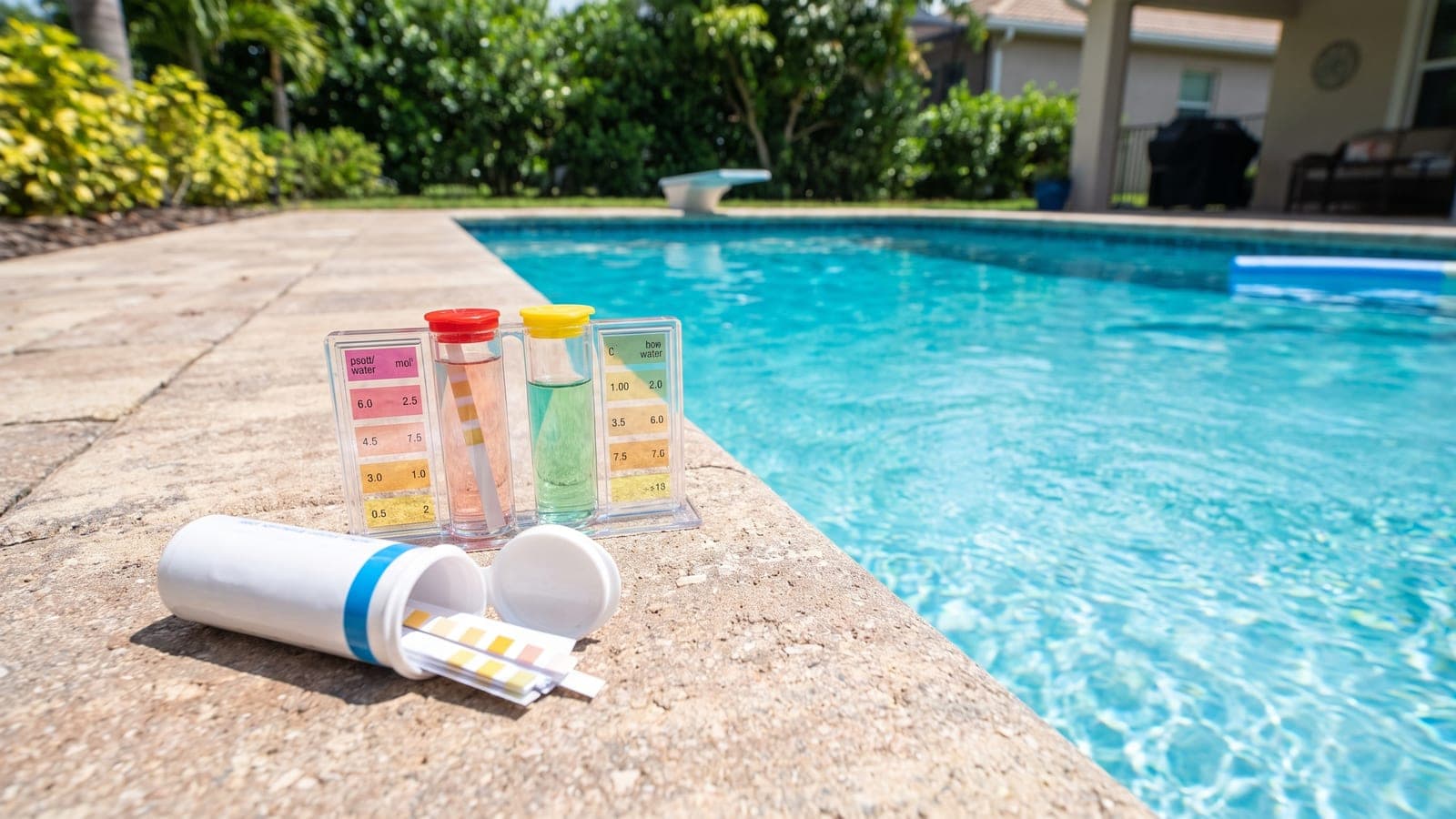
Give the water a quick test and rebalance if needed, since vacuuming (especially on waste) can shift your levels. If chemistry is not your comfort zone, our pool chemistry basics guide keeps it simple, and salt-pool owners can check the saltwater maintenance walkthrough. The same slow-and-steady vacuuming idea applies to spas, covered in our hot tub maintenance guide.
A quick word on safety
Vacuuming means bending over open water, often alone, so keep it in mind if kids or pets are around. Never leave a young child unattended near the pool while you work, and keep the area gated. The U.S. Consumer Product Safety Commission's drowning prevention resources are worth a read for layered-protection basics.
Hand vacuuming is not glamorous, but it is the step that separates a clear pool from a hazy one. Go slow, keep the head on the floor, and let the water do the rest.
Frequently asked questions
How often should I vacuum my pool by hand?
Once a week is a good baseline for most backyard pools, and more often after a storm, heavy leaf drop, or a pool party. If your automatic cleaner already runs and the water stays clear, a hand vacuum every couple of weeks for the spots it misses is usually enough.
Should I vacuum on the filter setting or the waste setting?
Use the filter setting for normal dirt and fine debris so the water recirculates. Switch to waste for heavy algae, silt, or a mud layer so the junk bypasses your filter and exits the pool, but remember waste sends water out, so top the pool back up afterward.
Why does my vacuum keep losing suction or floating up?
The most common cause is air in the hose because it was not fully primed, so hold the head over a return jet until the bubbles stop before you start. Loose cuff connections, a clogged pump basket, or a dirty filter can also drop suction.
Do I really need to backwash or clean the filter after vacuuming?
If you vacuumed a lot of debris on the filter setting, yes, because that dirt is now sitting in your filter and raising the pressure. Check the pressure gauge and backwash a sand or DE filter, or rinse a cartridge, once it climbs 8 to 10 psi above the clean baseline.
Can I use a handheld battery vacuum instead of hooking up to the pump?
Yes, and for small pools, spas, and quick spot cleanups a cordless handheld is often easier since there is no hose or pump to prime. For a large in-ground pool with heavy debris, a pump-powered manual vacuum still moves more volume, so it depends on your pool size and how much you are cleaning.