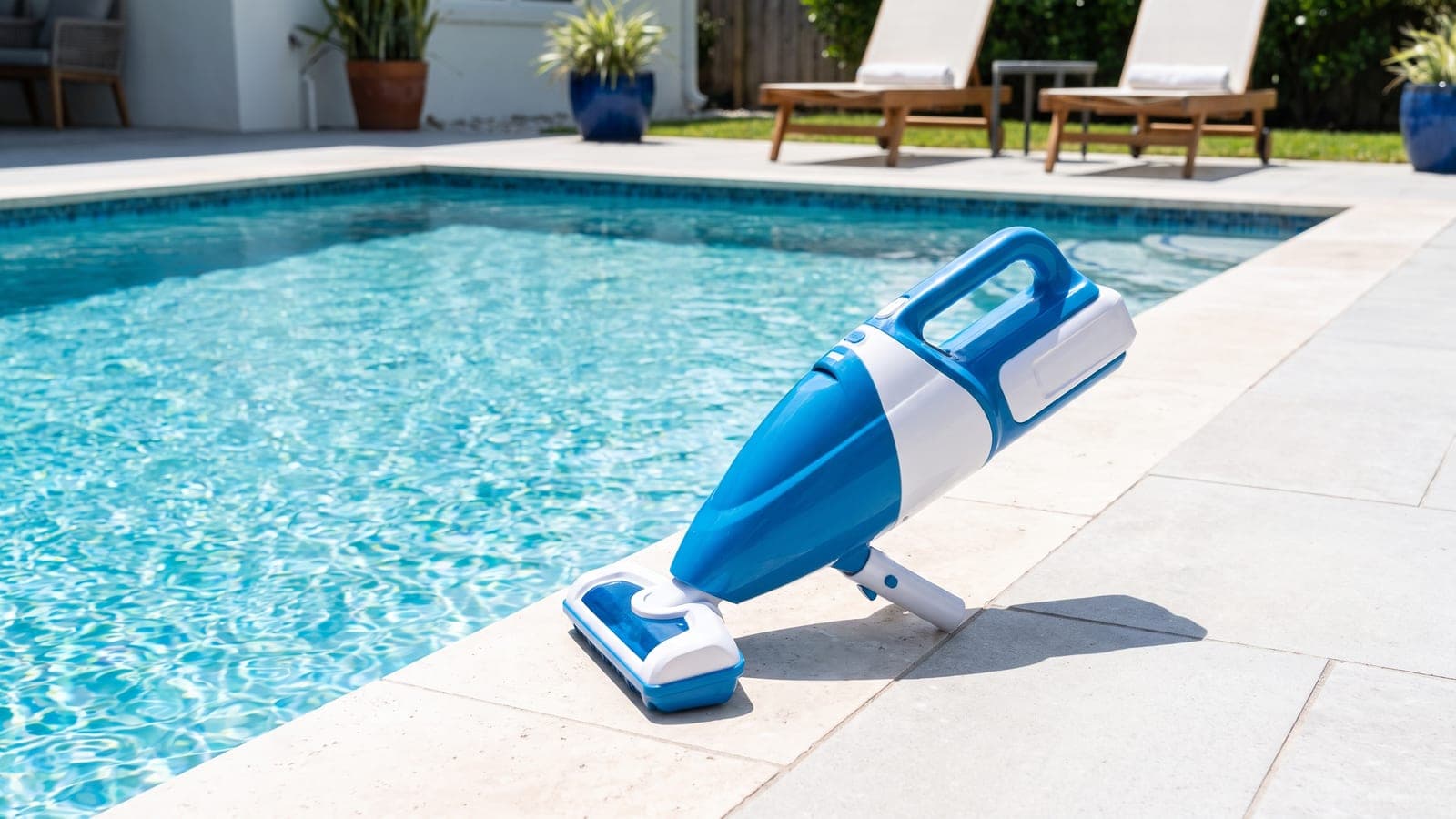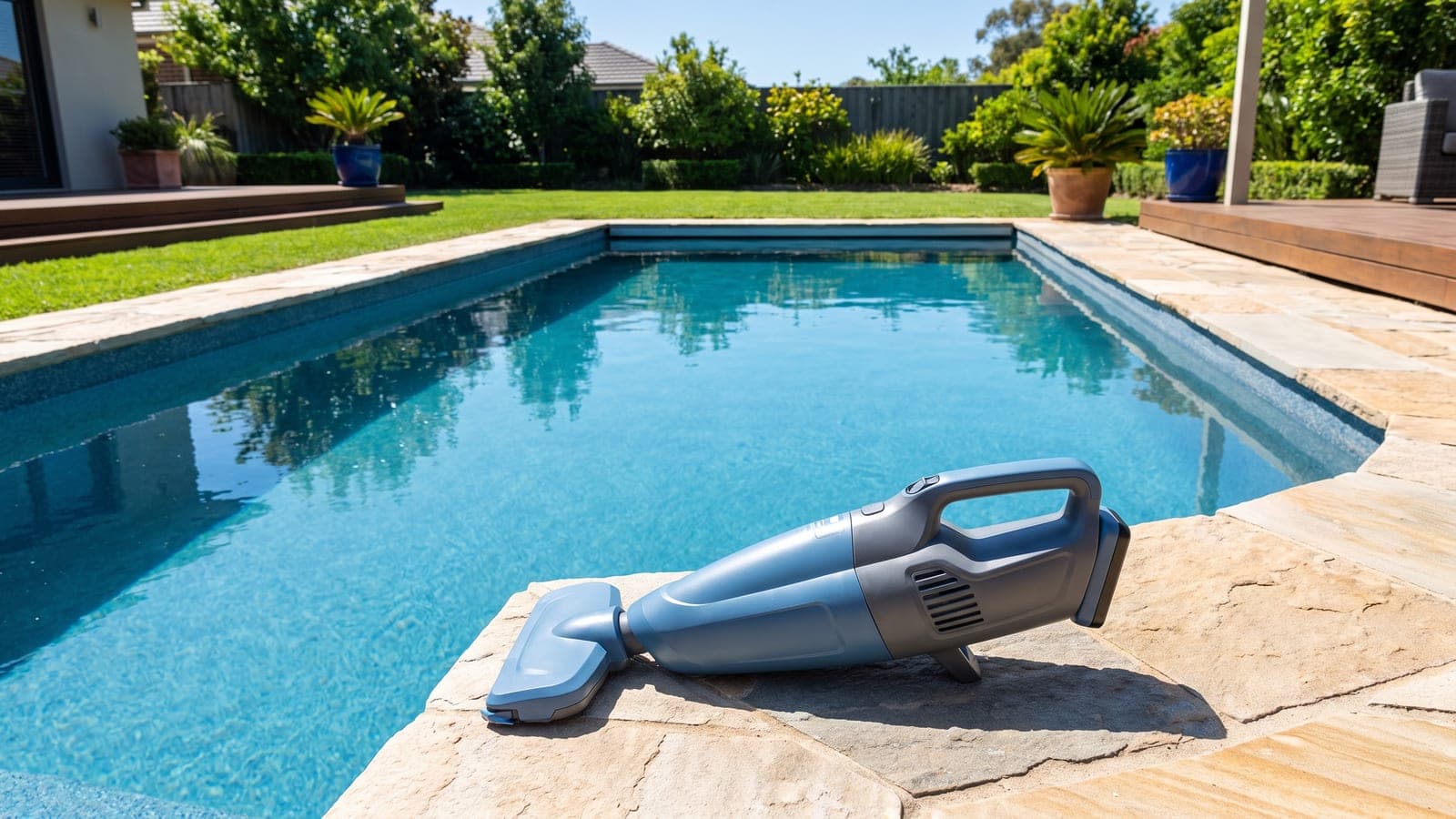
Pool Blaster and Aiper both make cordless handheld vacuums that suck up debris without a hose or pump, but they aim at slightly different owners. Pool Blaster leans toward spot cleaning, steps, and stubborn debris with strong suction and a reputation built over years. Aiper leans toward lower prices, longer runtimes on some models, and a spa-friendly lineup. Neither replaces a full robotic cleaner. Both are the tool you grab when a windstorm drops leaves in the shallow end and you do not feel like dragging out the big rig.
What does a handheld pool vacuum actually do?
A handheld vacuum is a battery-powered wand with a suction head and an internal filter basket. You run it along the floor, steps, or waterline, and it traps dirt, sand, leaves, and the fine silt that settles in corners. There is no hose and no connection to your pump, so you can clean a spot in two minutes without priming anything.
Think of it as a dustbuster for your pool. It is great for touch-ups and small pools. It is not built to cover 20,000 gallons of floor on a set schedule. For that, you still want a robot or a pressure-side cleaner. See the full lineup on our handheld vacuums page if you want to compare models side by side.
How do Pool Blaster and Aiper compare on suction and cleaning?
Pool Blaster is the older name here, made by Water Tech, and its units are known for punchy suction relative to their size. The Pool Blaster Catfish Cordless Spot Vacuum is a popular grab-and-go pick for steps and small debris, and the Pool Blaster Max Li Cordless Pool Vacuum steps up to a wider head and more capacity for full-floor passes.
Aiper is better known for robotic pool cleaners, and its handhelds tend to compete on price and runtime. The Aiper Handheld Cordless Pool Vacuum covers the basic spot-cleaning job at a friendly cost, and models like the Aiper Pilot H2 Handheld Cordless Pool Vacuum add refinements like better filtration or a scrub head.
On raw suction, owner reports generally give a slight edge to Pool Blaster for lifting sand and heavier grit. Aiper often wins on value and on longer stated runtimes. Exact suction numbers are hard to pin down, so treat any spec as approximate and check the listing for the model you are eyeing.
Which one is better for hot tubs and spas?
If your main job is a spa, Aiper has a clear advantage because it sells a dedicated spa unit. The Aiper Spa Vacuum for Hot Tub (Cordless Handheld) is sized for small water and tight footwells where a full pool vacuum feels clumsy. Small water shows every speck, so a compact head helps.
Pool Blaster's smaller models also fit spas, and many owners use a Catfish in both pool and hot tub. Either way, keep spa chemistry balanced so you are not just vacuuming problems you could dissolve. Our hot tub maintenance guide walks through that without the chemical panic.
Do they hold up in saltwater pools?
Both brands are generally fine in salt pools, since the vacuum only touches water briefly and gets rinsed after. Salt is mildly corrosive over time, so the same rule applies to any handheld: rinse it with fresh water after each use, dry it, and store it out of the sun. Direct UV and heat are harder on the plastic and battery than the salt itself.
If you run a salt system, keeping the cell and chemistry dialed in matters more than the vacuum brand. Our saltwater maintenance guide covers the basics so your gear lasts.
What about batteries, filters, and upkeep?
Runtime on these handhelds usually lands between 30 and 90 minutes per charge, which is plenty for spot work. The Efurden Handheld Cordless Pool Vacuum (90-Min) is one example that markets a longer runtime, though real-world time drops on high-suction settings. Check the manual for the exact figure on your model.
The filter basket or cartridge is the part you actually maintain. Rinse it after every use so debris does not dry and clog the mesh, and replace cartridges when they tear or stop sealing. A clogged filter is the number one reason owners think suction died when the battery is fine.
Which should you buy?
Buy a Pool Blaster if you want proven suction for steps, sand, and quick spot jobs, and you do not mind paying a bit more. The Catfish for small touch-ups and the Max Li for wider coverage are the two most owners reach for.
Buy an Aiper if you want a lower price, a longer stated runtime, or a spa-specific unit. It is a sensible entry point if you are new to handheld cleaning and want to test the idea before spending more.
Either way, a handheld vacuum is a supplement, not your whole cleaning plan. Keep your water balanced (our pool chemistry basics guide helps), and never let a clean-looking pool make you skip safety. Layered barriers and supervision still prevent drownings, as the CPSC drowning prevention toolkit lays out. A tidy pool is nice. A safe one matters more.
Frequently asked questions
Which is better for a small above-ground pool?
Either brand works, but a lightweight spot vacuum like the Pool Blaster Catfish handles a small pool fast. Aiper's budget handhelds also do fine here. It comes down to price and how much debris you deal with.
Can these replace my main pool vacuum or robot?
Not really. Handheld vacuums are for spot cleaning leaves, sand, and corners between full cleanings. For whole-pool coverage on a schedule, a robotic or pressure cleaner still does the heavy lifting.
Do Pool Blaster and Aiper vacuums work in a hot tub?
Some do. Aiper makes a spa-specific model, and smaller Pool Blaster units fit tight spa spaces. Check the listing for spa or hot tub rating before you buy, since suction and size matter in small water.
How long does the battery last on a handheld pool vacuum?
Most run somewhere between 30 and 90 minutes per charge depending on the model. That is usually enough for spot jobs. Check the manual for the exact runtime, since it varies by battery size and suction setting.
Do I need to add a pole, or can I use it by hand?
Both. Short jobs at the waterline or on steps are easy by hand. For the deep end or a full floor pass, screw on a standard telescopic pole, which most of these models accept.