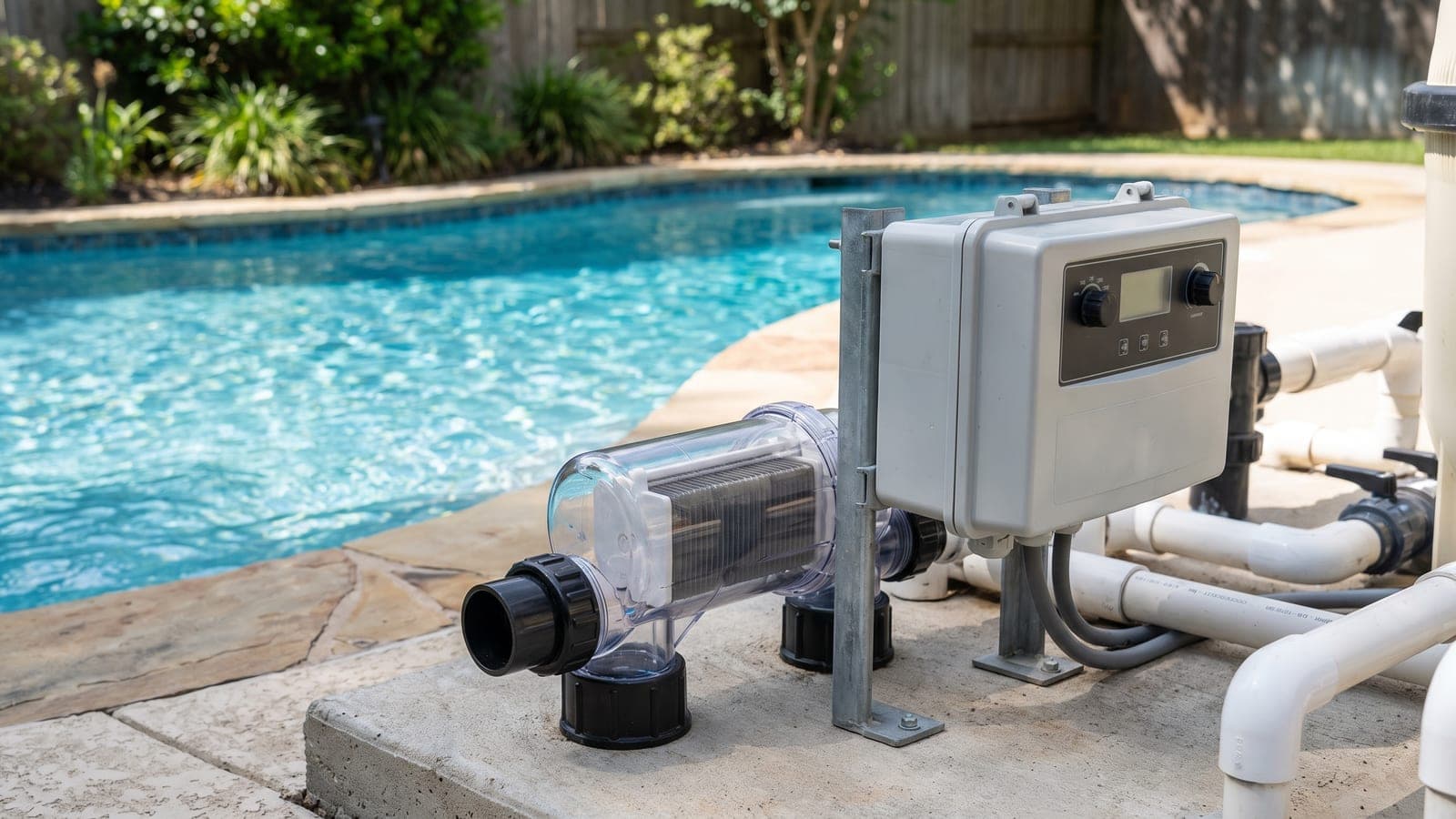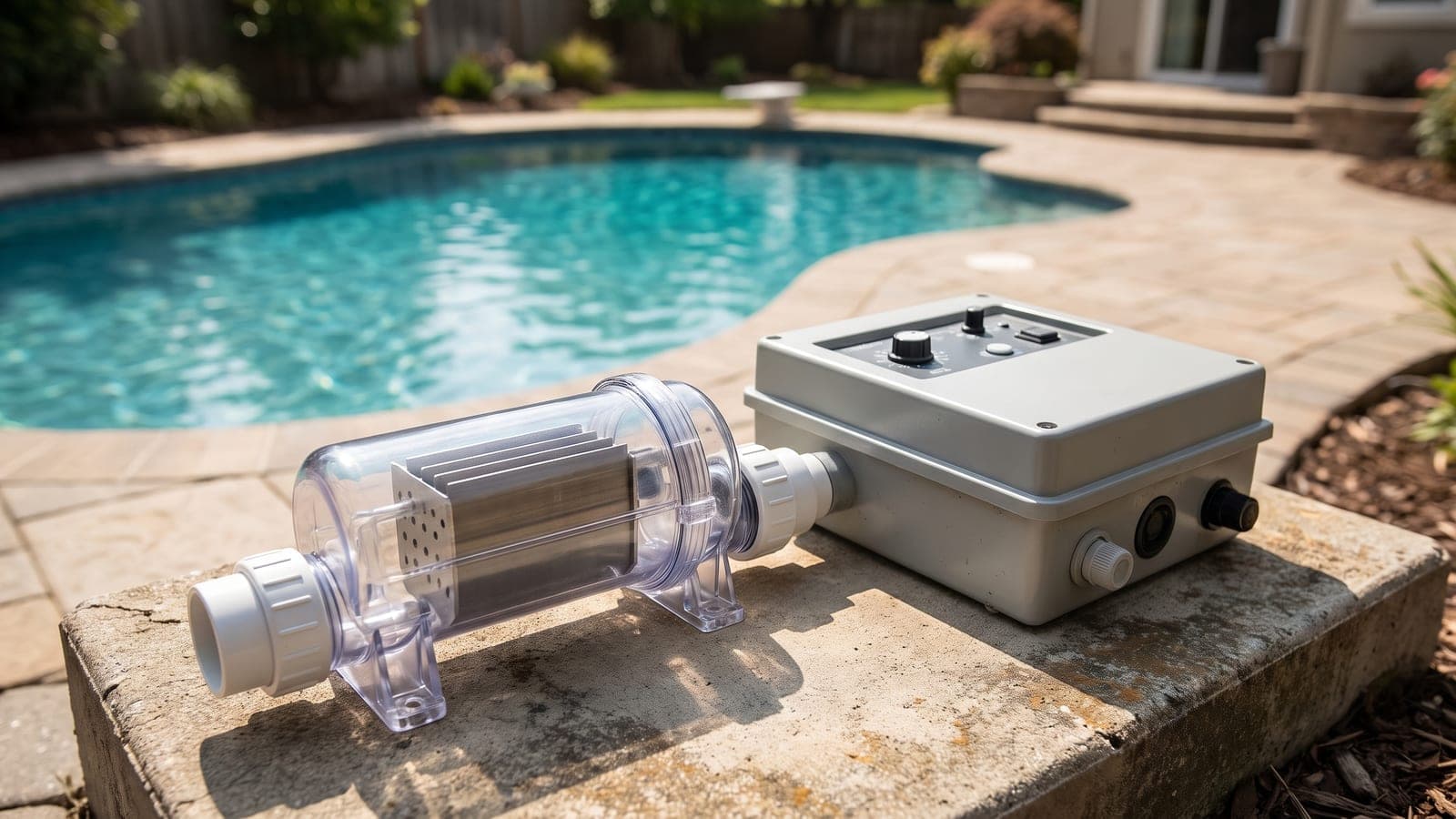
The salt system most above-ground pool owners should get is the Hayward AquaTrol Above-Ground Salt System, because it is built specifically for above-ground plumbing and comes ready to run out of the box. If you want more power, brand-crossover parts, or a rock-bottom price, there are better fits below. A salt system (also called a salt chlorine generator) turns dissolved salt into chlorine automatically, so you stop hauling tablets.
Use the calculator above to size this to your pool. Enter your gallons and target salt level, and it tells you how many pounds of salt to add. If you are brand new to this, start with our saltwater pool maintenance for beginners guide, then come back to shop.
Quick comparison
| Pick | Best for | Watch out for |
|---|---|---|
| Hayward AquaTrol Above-Ground Salt System | Most above-ground pools | Sized for mid-range gallons |
| CircuPool Universal40 Salt System | Value and long cell life | Overkill for tiny pools |
| Hayward AquaRite Salt System (40,000 gal) | Large above-ground setups | Priced for in-ground buyers |
| Intex Krystal Clear Saltwater System (15,000 gal) | Soft-side and small pools | Lower output ceiling |
| BLUE WORKS BLH40 Salt System (40,000 gal) | Budget large capacity | Newer brand, thinner support |
| CircuPool RJ45+ Salt System | Set-and-forget owners | More system than small pools need |
Best overall: Hayward AquaTrol Above-Ground Salt System
Mid-range
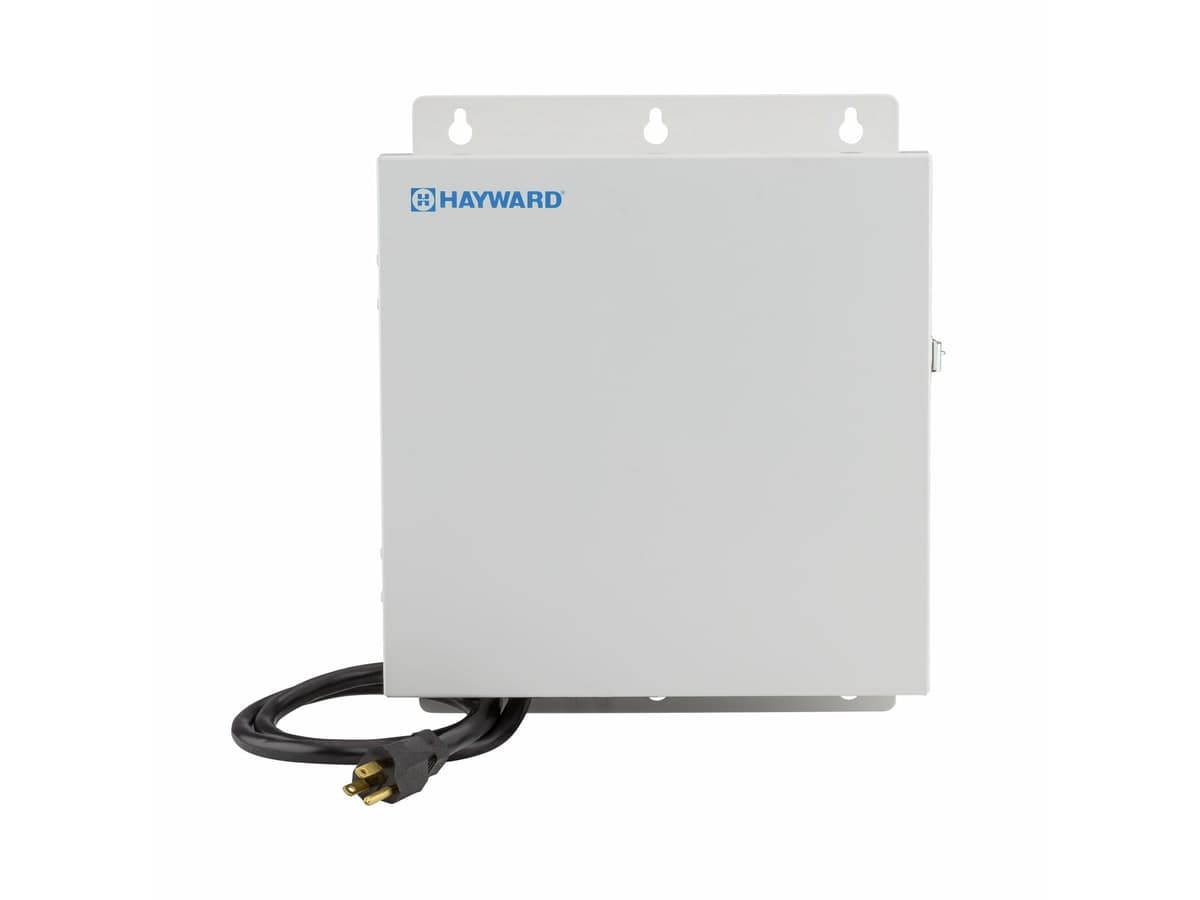
This is the one most above-ground owners should start with. It is designed around above-ground pools, ships with the cell and control included, and Hayward is easy to find parts and help for. For a typical 10,000 to 18,000 gallon pool, it does the daily chlorine job without fuss.
The tradeoff is capacity. It is tuned for mid-range above-ground volumes, so a very large or unusually warm pool may push it to run long hours. Confirm your gallons against the rated capacity on the listing before you buy.
Best value: CircuPool Universal40 Salt System
Mid-range
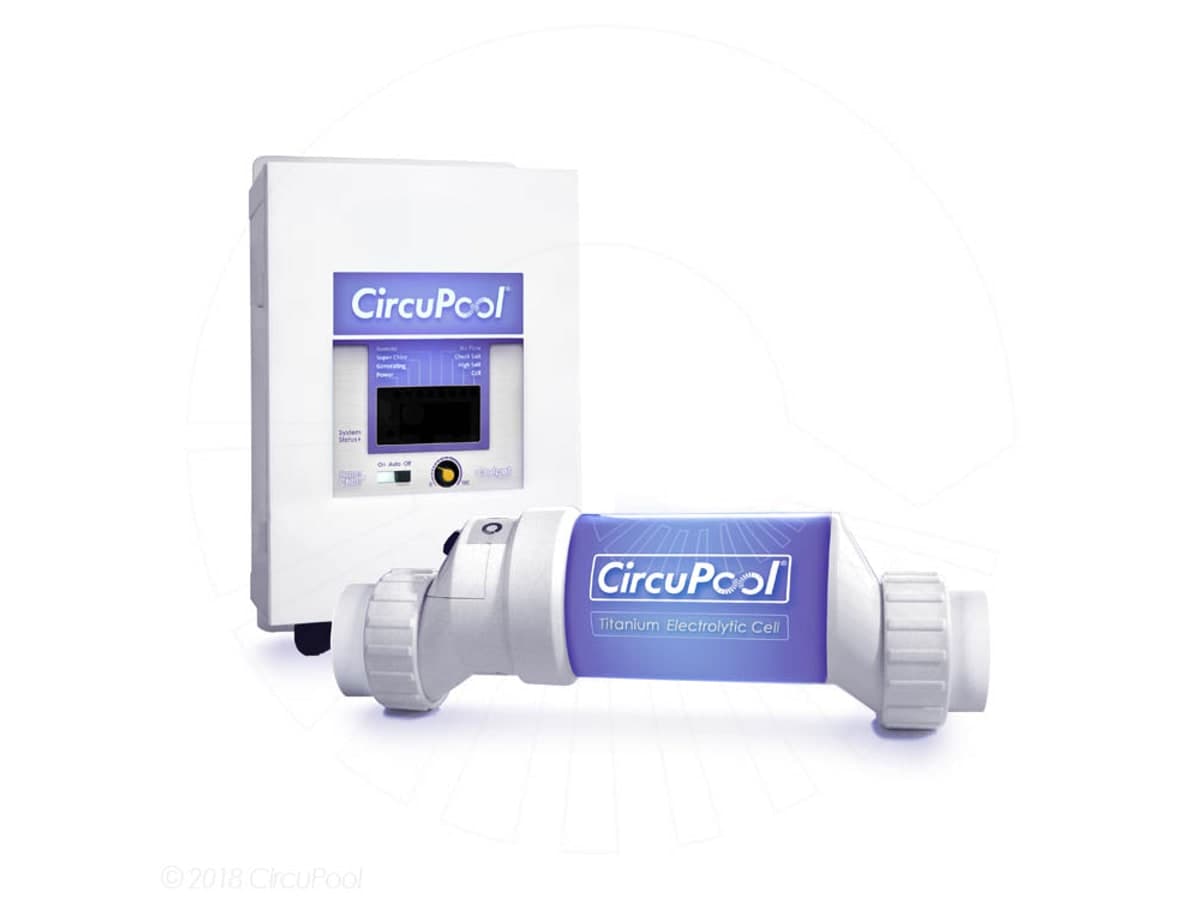
If you want the most cell for your money, the CircuPool Universal40 Salt System is a strong pick. It carries a high rated capacity and a cell that owners report holding up well, which matters because the cell is the expensive wear part. On a mid-size above-ground pool, running an oversized unit at lower output can stretch cell life.
The catch is that it is more system than a small 5,000 gallon pool needs, and it is plumbed like an in-ground unit. If your pool is tiny, you are paying for headroom you will not use.
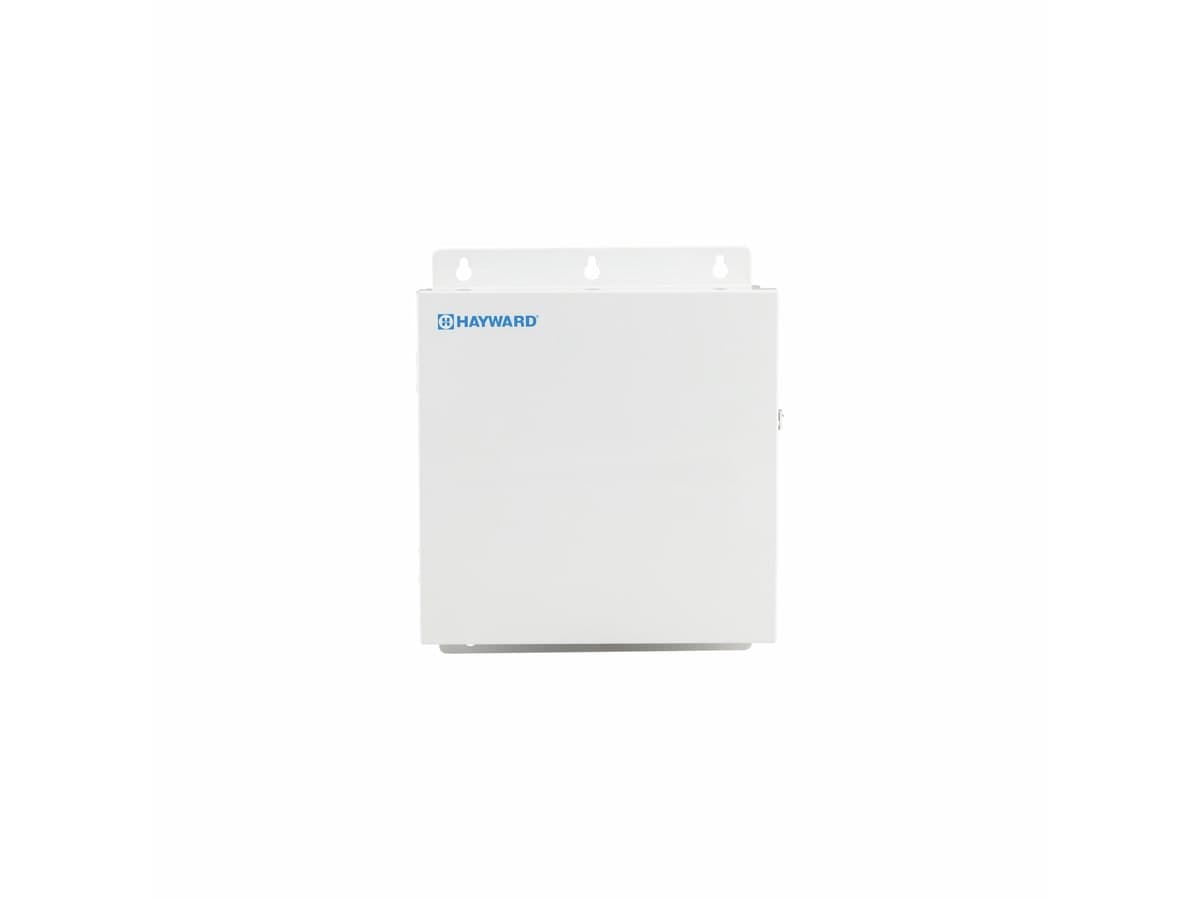
Best for large pools: Hayward AquaRite Salt System (40,000 gal)
Premium
Bigger above-ground pools, think large oval or deep round setups, benefit from the extra ceiling here. The Hayward AquaRite Salt System (40,000 gal) has a high rated capacity, so it makes enough chlorine on a sane run schedule instead of running all day. It also shares the familiar Hayward parts ecosystem.
The downside is that it is often priced and marketed toward in-ground buyers, so you may pay for capacity beyond what a smaller pool needs. Match it to real gallons, not to the biggest number on the box.
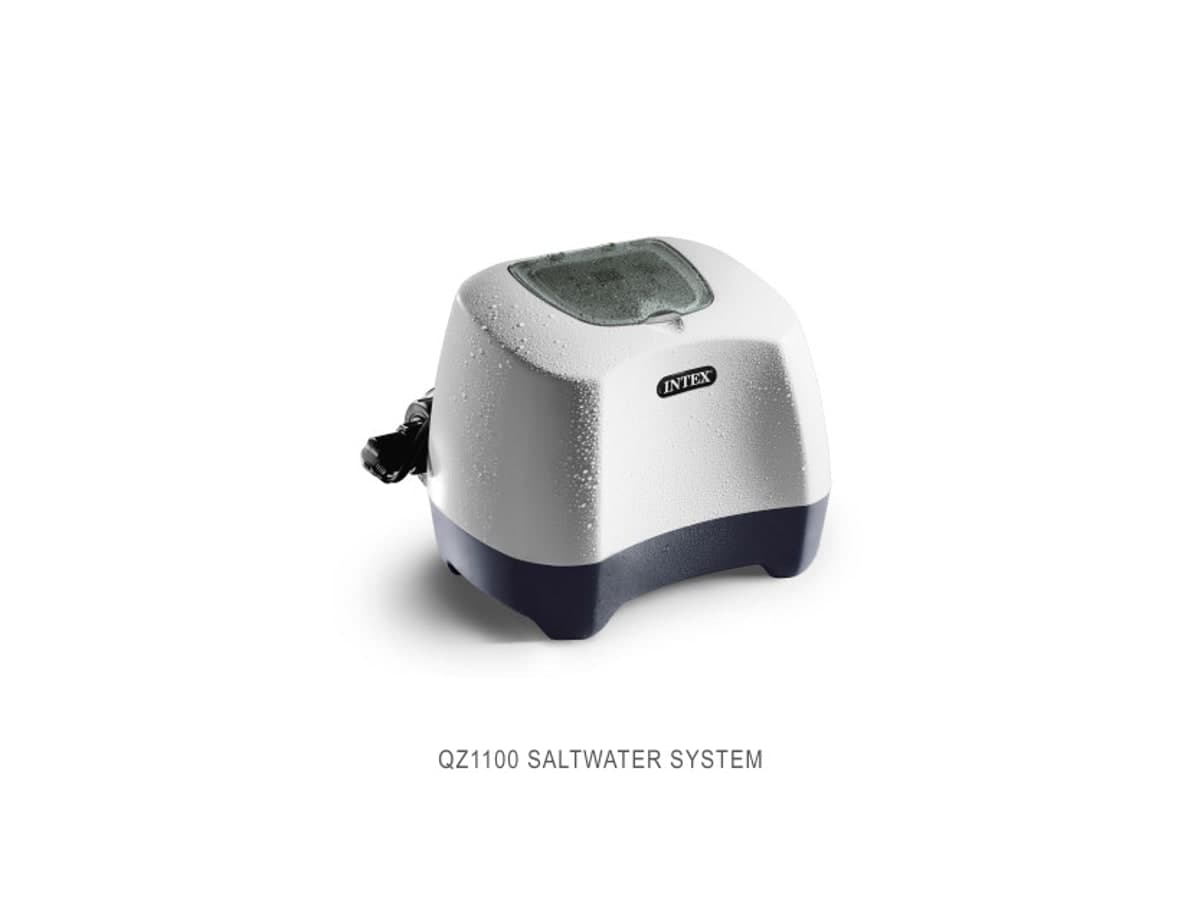
Best for soft-side and small pools: Intex Krystal Clear Saltwater System (15,000 gal)
Budget
For Intex-style soft-side pools and smaller round pools, the Intex Krystal Clear Saltwater System (15,000 gal) is an easy match. It is inexpensive, simple to hook into existing Intex plumbing, and rated for the smaller volumes these pools usually hold. Many owners like it as a first saltwater step.
The limit is output. It is not built to chlorinate a large or heavily used pool, and support and parts are thinner than the big brands. If you upsize your pool later, plan to upsize the system too.
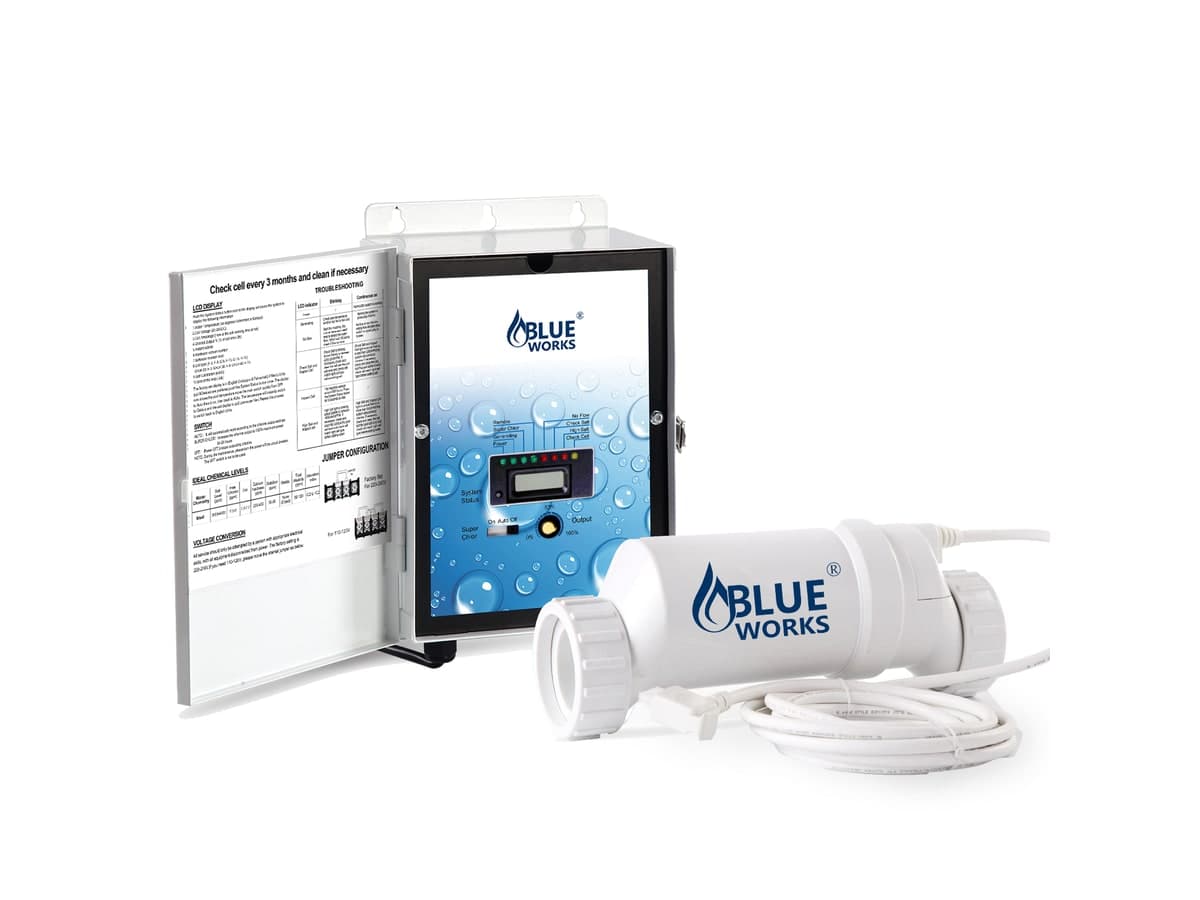
Best budget large capacity: BLUE WORKS BLH40 Salt System (40,000 gal)
Budget
If you need large capacity but not a premium price, the BLUE WORKS BLH40 Salt System (40,000 gal) covers it. It offers a high rated gallon capacity at a lower cost than the legacy brands, which appeals to owners of bigger above-ground pools watching the budget.
The tradeoff is brand maturity. It is a newer name with a smaller support and parts network, so factor in how you would source a replacement cell or get help down the road.
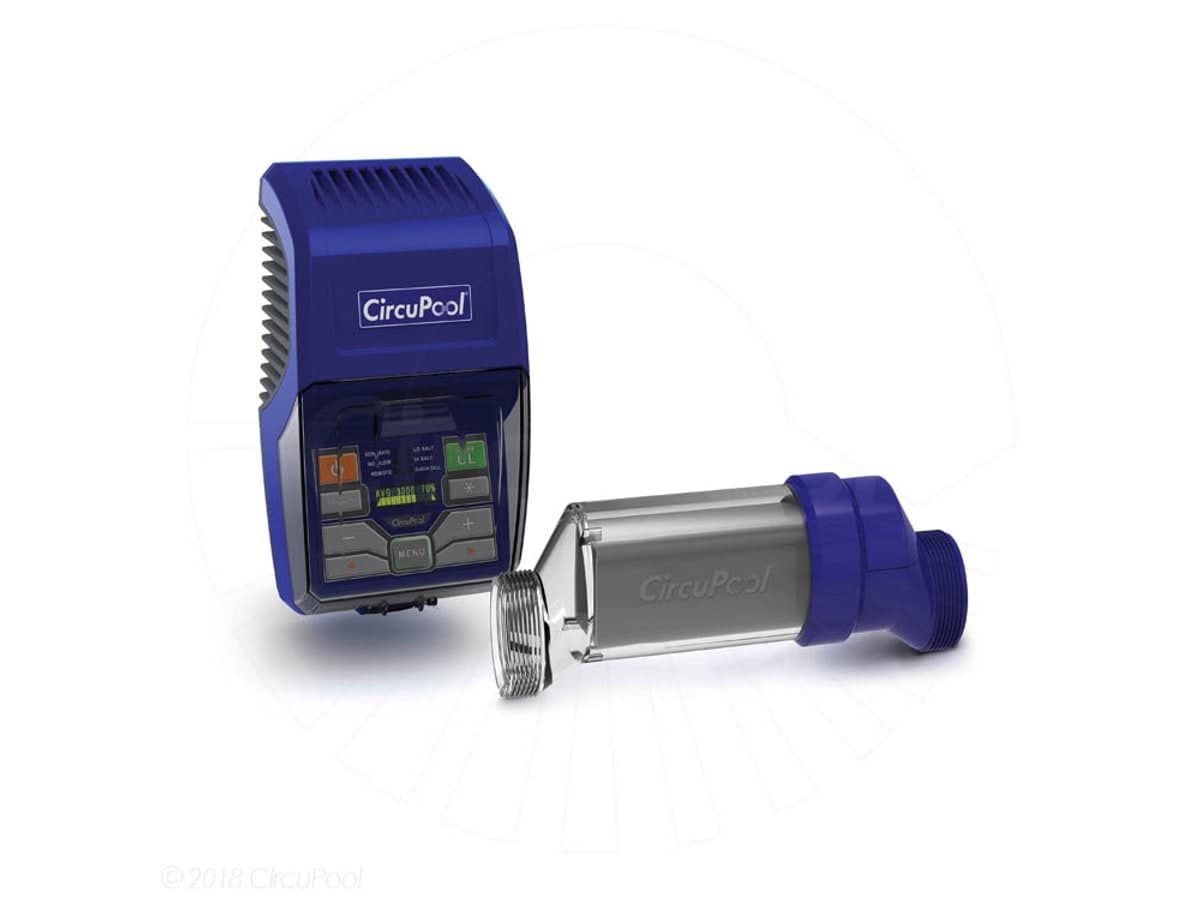
Best set-and-forget: CircuPool RJ45+ Salt System
Premium
For owners who want to check the pool less often, the CircuPool RJ45+ Salt System leans toward automation and a durable, high-capacity cell. On a mid to large above-ground pool, that combination means fewer touches during the busy swim months.
The tradeoff is size and cost. It is more system than a small pool needs, and like any oversized unit it is worth confirming your gallons first. See how these picks compare on the salt systems page.
What to check before you buy
Size to your real gallons first, then buy a rated capacity above that number so the system is not maxed out on hot days. The calculator above helps with the salt math, and Hayward publishes clear guidance on target salt levels in its salt dosing article.
Keep your water balanced, because a salt system does not fix pH, alkalinity, or stabilizer for you. The CDC pool water treatment and testing basics explain why testing matters, and our pool chemistry basics guide keeps it plain. If you also run a spa, the hot tub maintenance for beginners guide covers the same balance without the panic.
Finally, remember the cell is a wear part. Manufacturers like Pentair, in their IntelliChlor product notes, rate cells for thousands of run hours, so buying a slightly larger unit and running it gently is often the cheapest path over several seasons. Check the specific model manual for salt targets, cleaning steps, and warranty terms before you commit.
Frequently asked questions
Do I need a special salt system for an above-ground pool?
Not a different technology, but you do want one sized close to your gallons and, ideally, one with a plug-and-play cell like the Hayward AquaTrol. Most above-ground pools run 5,000 to 25,000 gallons, so an oversized in-ground unit is more chlorinator than you need. Match the rated capacity to your actual volume with some headroom.
How much salt does an above-ground saltwater pool need?
Most systems target roughly 3,000 to 3,500 ppm, but always follow your unit's manual because the ideal range varies by brand. Use the salt calculator above to convert that target into pounds for your gallons. Add salt gradually and retest before adding more.
Is a salt system cheaper than buying chlorine tablets?
Over a few seasons it usually pays back, since the generator makes chlorine from salt you already added. The catch is the salt cell, a wear part that typically lasts a few years and costs real money to replace. Whether you come out ahead depends on your pool size, run time, and local salt and tablet prices.
Will a salt system rust my above-ground pool?
Saltwater at pool levels is far less salty than the ocean, but it can still corrode unprotected metal over time, especially bare steel wall bands, ladders, and nearby hardware. Rinse metal parts, keep your water balanced, and use a sacrificial anode if your equipment allows. Check that your pool and accessories are rated as saltwater compatible.
How long do salt cells last on these systems?
Manufacturers commonly rate cells around 10,000 hours of run time, which often works out to three to five years depending on use and water balance. Running high acid, low stabilizer, or scaling water shortens that life. Clean the cell only when needed and follow the manual, since over-cleaning wears the coating faster.