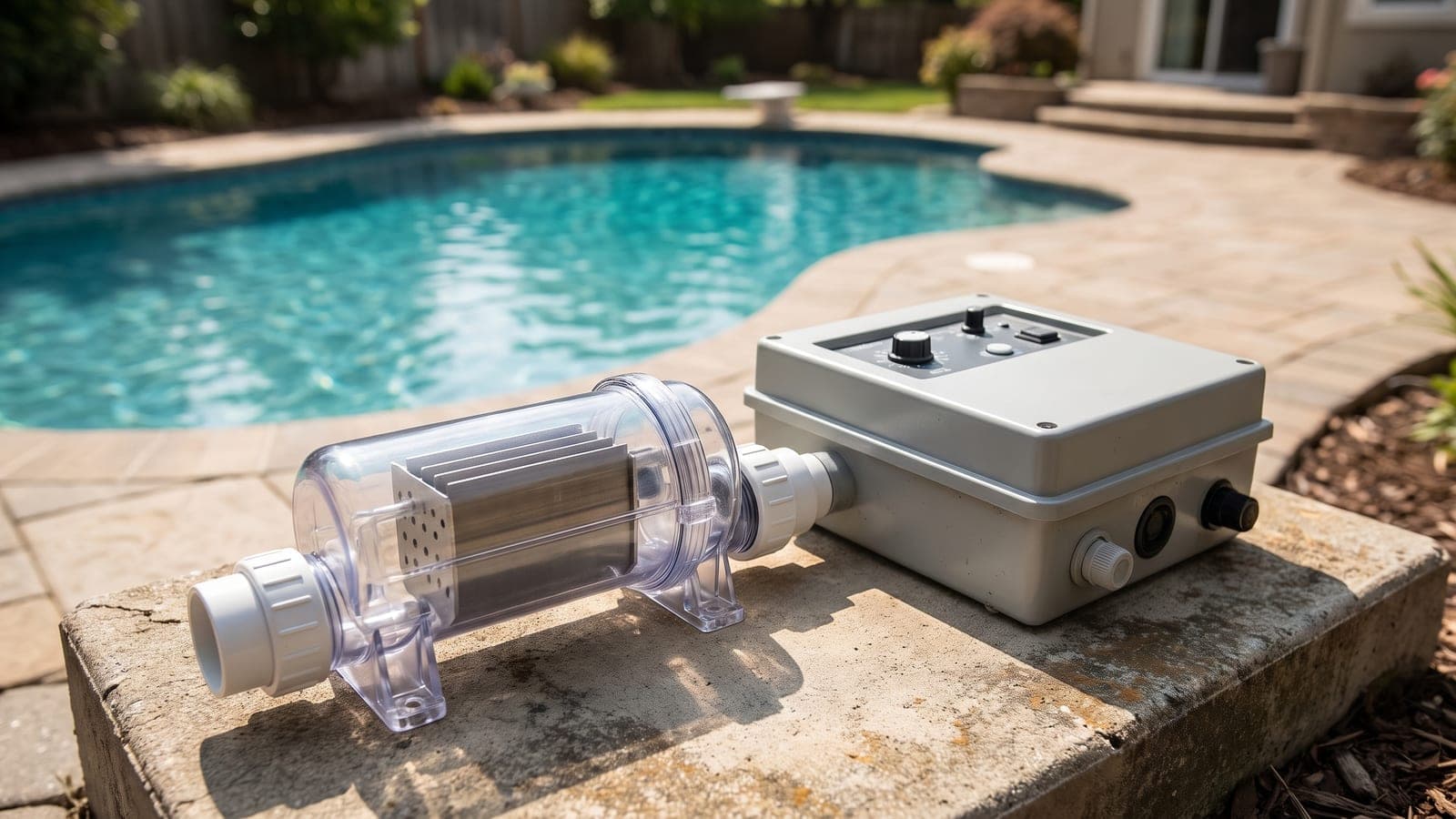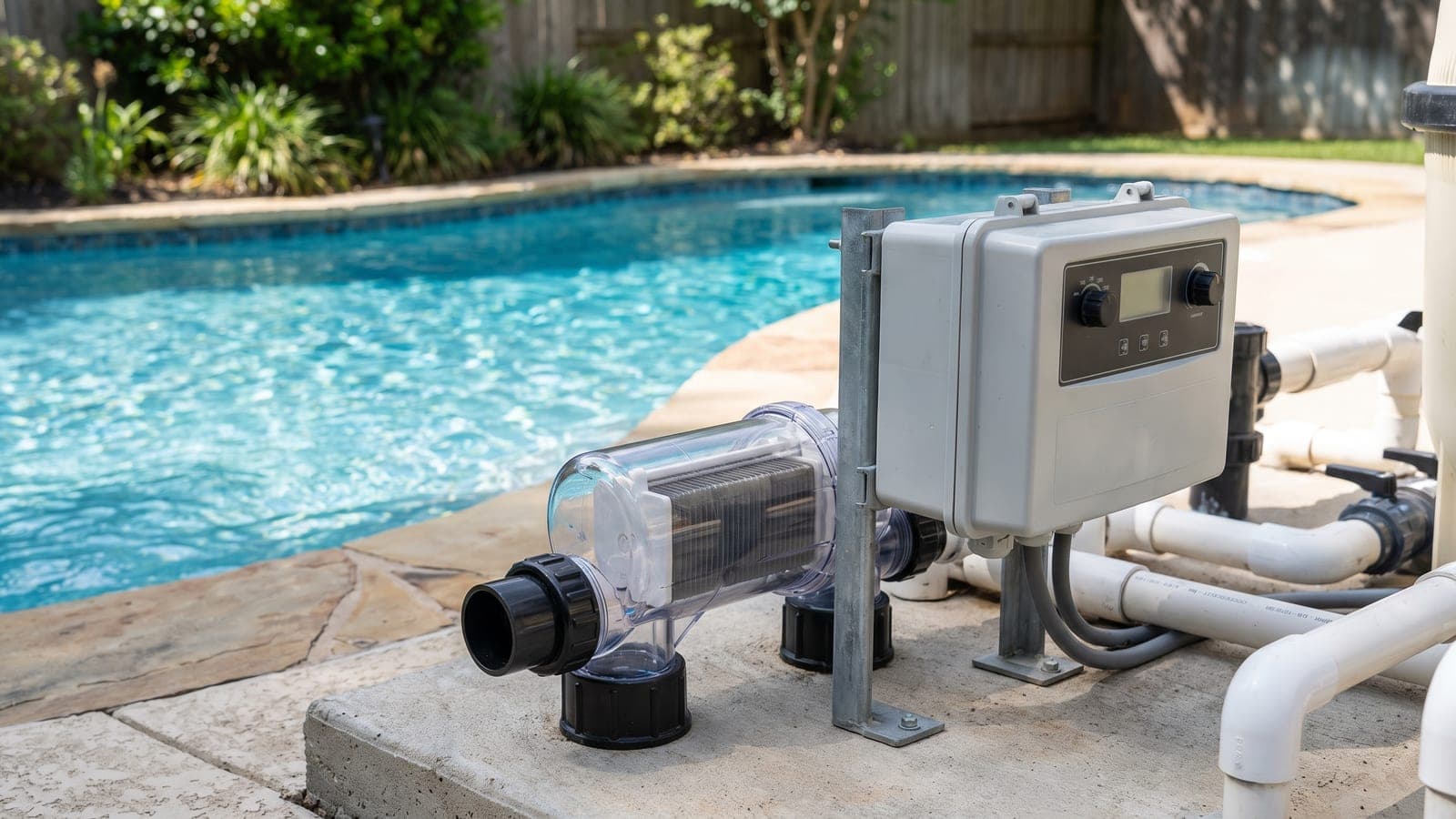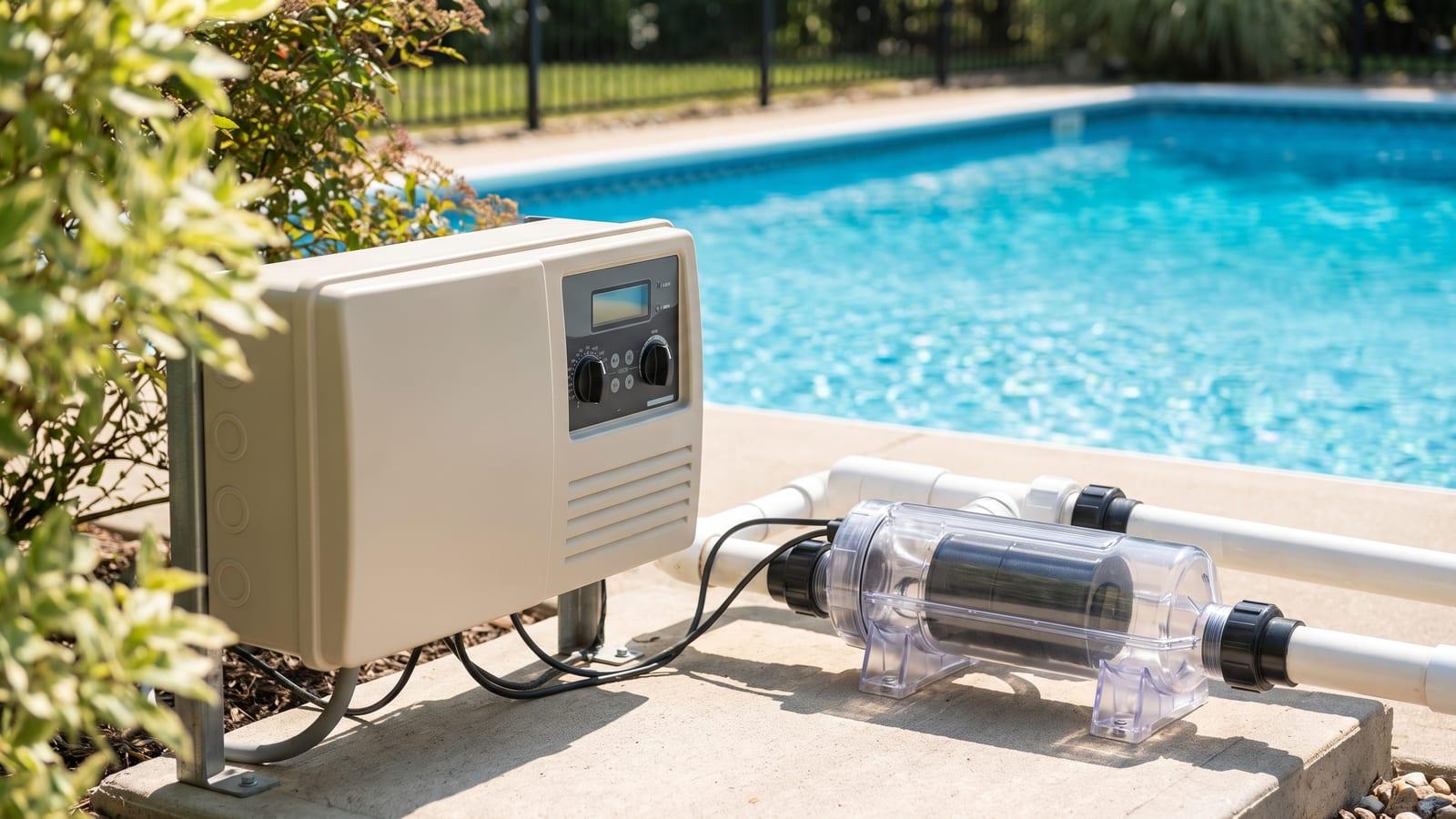
The salt system most large-pool owners should get is a cell rated for 40,000 gallons even if their pool holds less, because running an oversized cell at partial output makes it last for years instead of burning out in a couple of seasons. A salt system (also called a salt chlorine generator) makes chlorine from dissolved salt, so you skip hauling jugs of liquid chlorine. The trick with a big pool is buying enough cell capacity that it never has to run flat out all summer.
Use the calculator above to size this to your pool. Sizing here means matching the cell's gallon rating to your real water volume with headroom, and getting the salt level right, usually near 3,000 ppm (parts per million).
| Pick | Best for | Watch out for |
|---|---|---|
| Hayward AquaRite Salt System (40,000 gal) | Best overall for 30k to 40k pools | Buy the genuine T-Cell-15, not a clone |
| CircuPool RJ45+ Salt System | Best cell life and warranty | Higher upfront cost |
| BLUE WORKS BLH40 Salt System (40,000 gal) | Best value at full size | Smaller support network |
| Pentair IntelliChlor IC40 Salt System | Best for Pentair automation | Priced as a premium system |
| Jandy TruClear Salt System (35,000 gal) | Best compact all-in-one | 35k ceiling, tight for 40k pools |
| XtremepowerUS Salt System (40,000 gal) | Best budget big-pool pick | Thinner long-term track record |
Best overall for a 30k to 40k pool: Hayward AquaRite Salt System (40,000 gal)
Premium
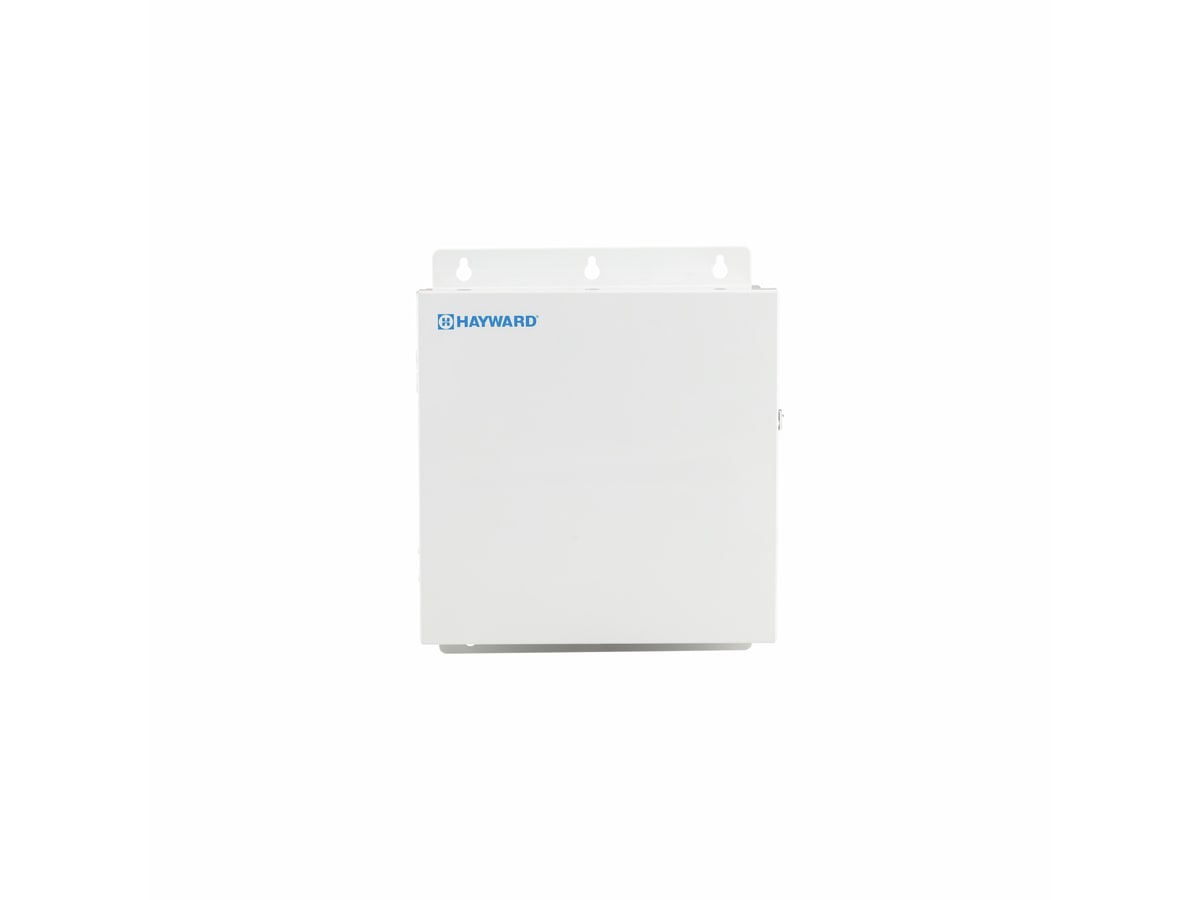
The Hayward AquaRite Salt System (40,000 gal) fits owners who want a proven workhorse with parts available at nearly every pool store. It runs the widely used T-Cell-15, and owner reports over many years point to steady output when the water stays balanced. For a pool in the 30,000 to 40,000 gallon range, this is the safe default.
The tradeoff is that the AquaRite's popularity attracts knockoff cells that look identical and fail early. Buy the genuine cell and keep your salt near the level Hayward recommends, which its own guide covers in detail. Skimp on either and you lose the reliability that makes this the pick.
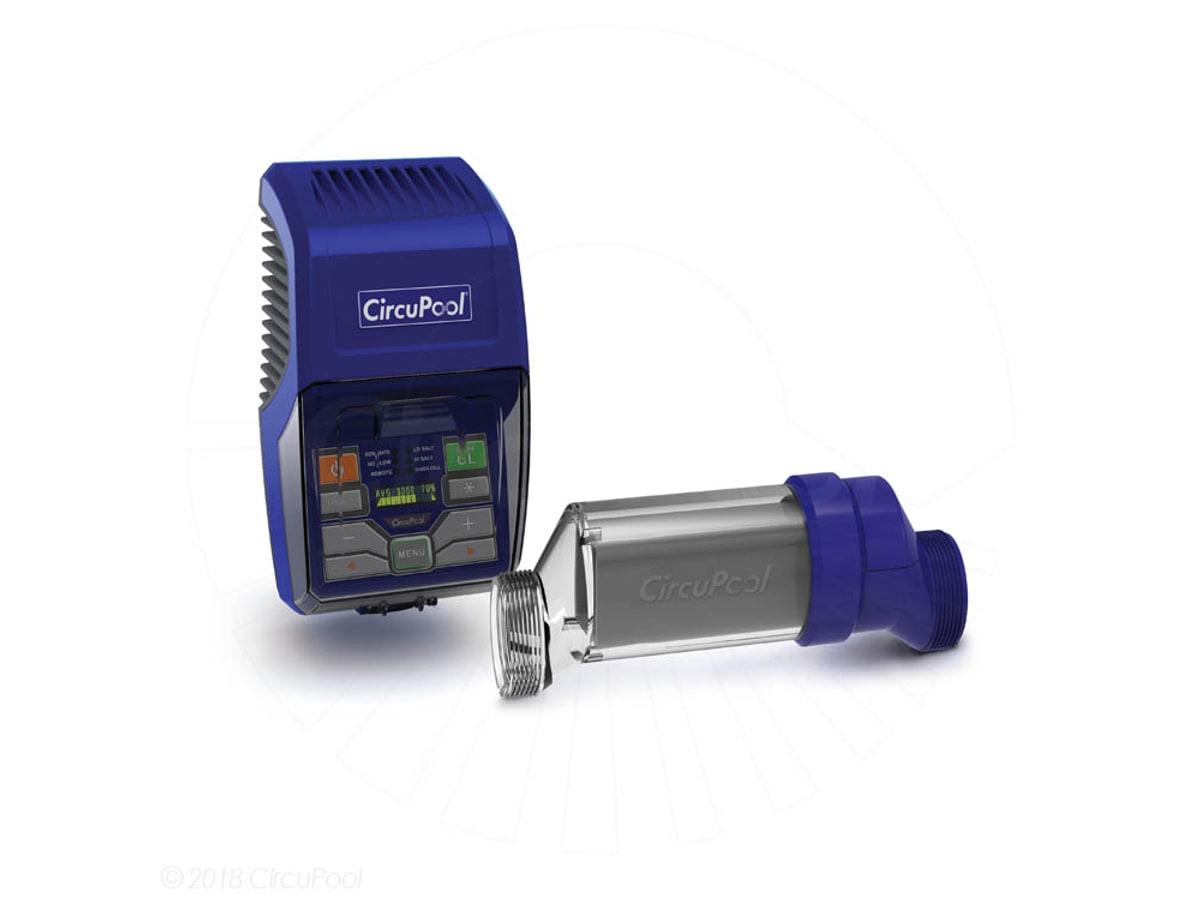
Best cell life and warranty: CircuPool RJ45+ Salt System
Premium
The CircuPool RJ45+ Salt System suits owners who plan to keep the same pool for a decade and want the longest cell life they can buy. It is built around a high-plate-count cell with a long warranty, and owner reports often praise how long the cell holds output on big pools. More plates spread the workload, so the cell runs cooler.
The catch is price. You pay more upfront than for a basic system, and on a smaller pool that premium would be wasted. On a large pool that runs long hours, the longer cell life is where that money comes back.
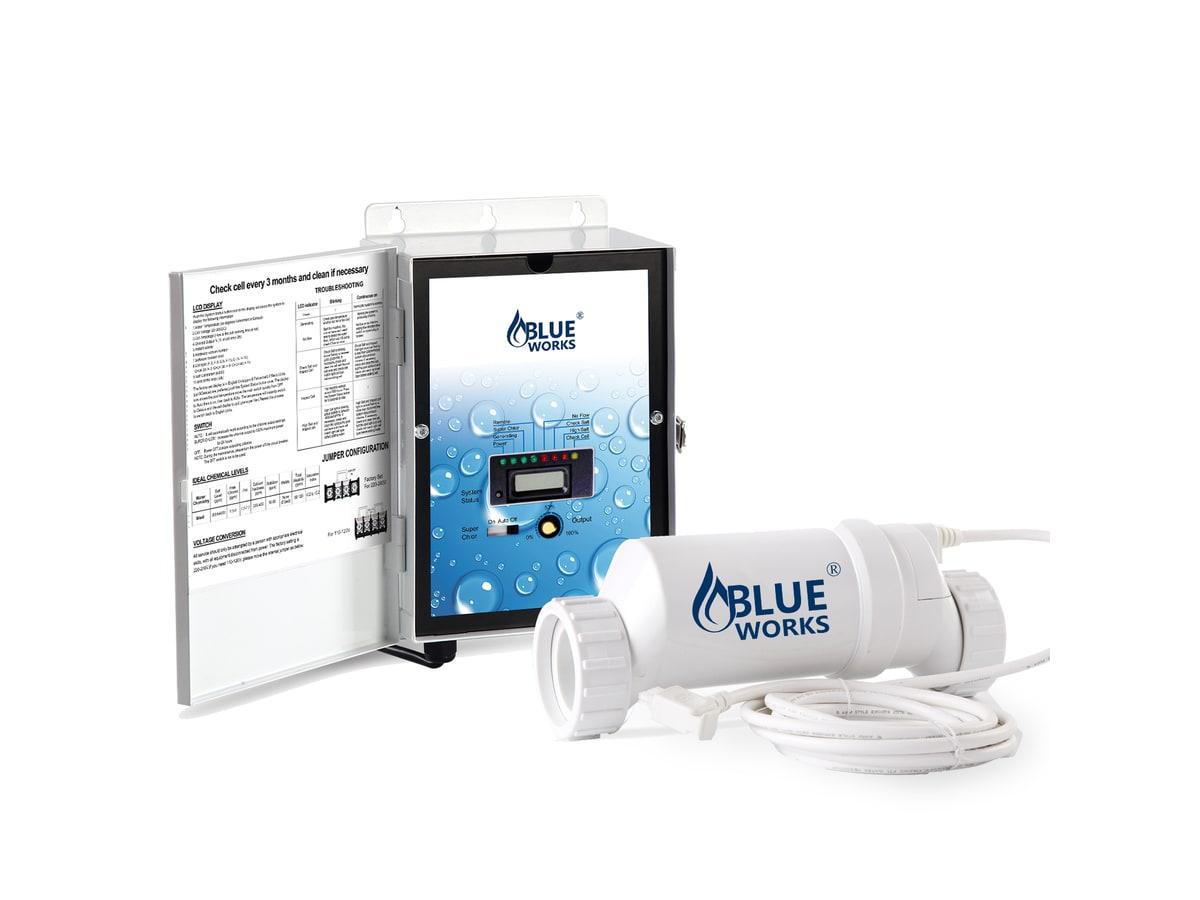
Best value at full size: BLUE WORKS BLH40 Salt System (40,000 gal)
Budget
The BLUE WORKS BLH40 Salt System (40,000 gal) is for owners who want a true 40,000-gallon cell without the top-brand price. It ships with the flow and cell hardware a big pool needs, and owner reports are generally positive on output for the money. If your budget is tight but your pool is large, this stretches the dollar.
The tradeoff is a smaller dealer and support network than Hayward or Pentair. Replacement cells and troubleshooting help are easier to find for the big brands, so weigh how much you value that local backup.
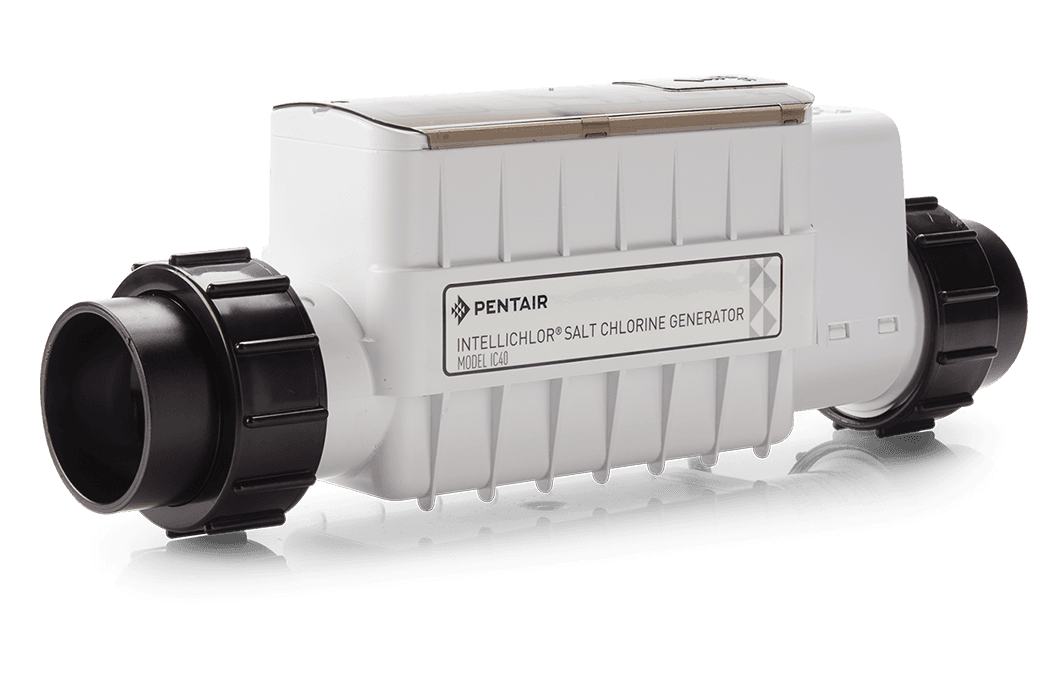
Best for Pentair automation: Pentair IntelliChlor IC40 Salt System
Premium
The Pentair IntelliChlor IC40 Salt System is the natural pick if you already run Pentair pumps and automation, since it talks to that ecosystem cleanly. It is rated for up to 40,000 gallons and reports salt level, cell life, and output right on the unit. For a connected large pool, that integration is genuinely useful. Pentair also offers a related LT line worth comparing on its product page.
The tradeoff is cost and lock-in. You pay a premium, and the system shines most inside a Pentair setup. On a standalone pool with no automation, a simpler unit does the same chlorinating for less.
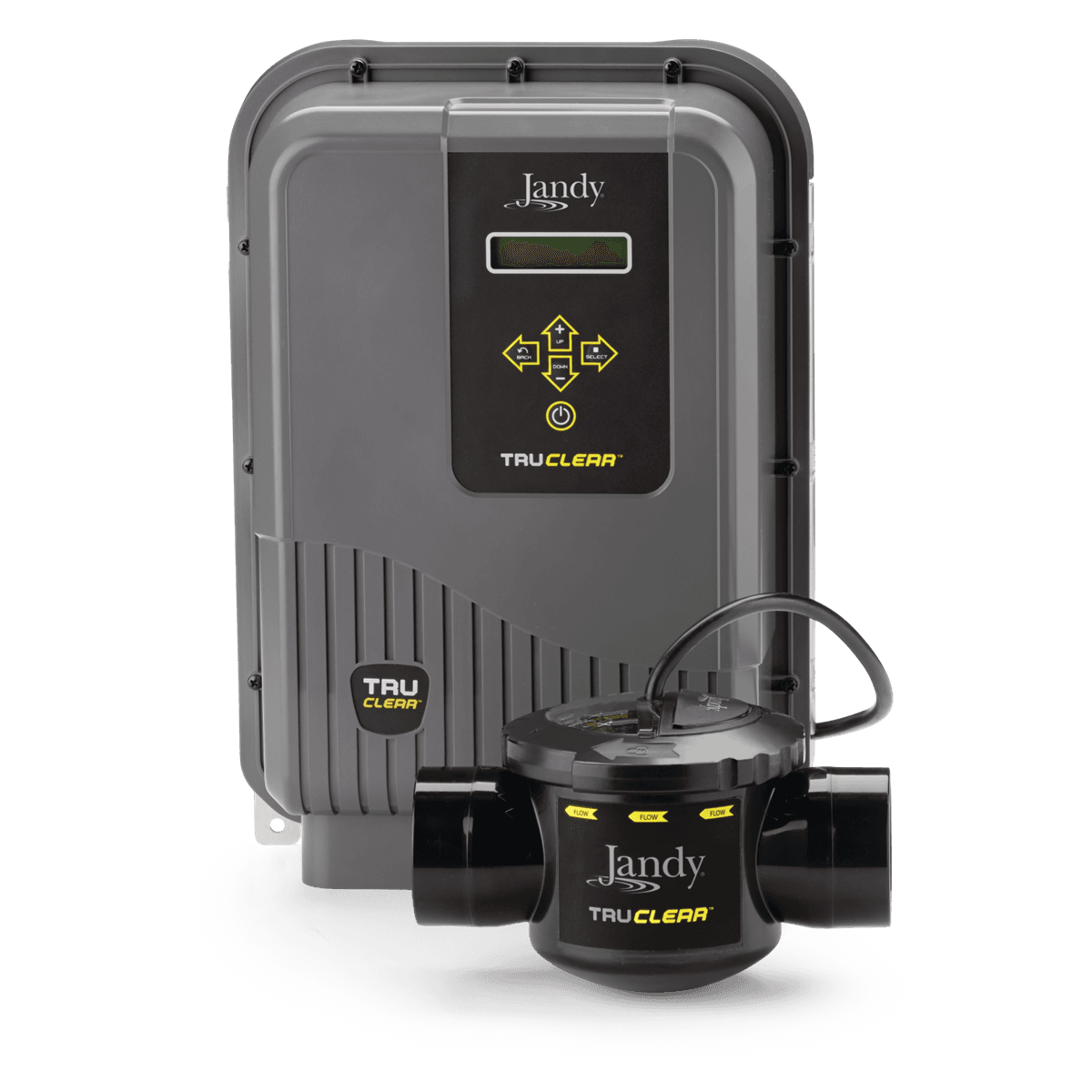
Best compact all-in-one: Jandy TruClear Salt System (35,000 gal)
Premium
The Jandy TruClear Salt System (35,000 gal) fits owners who want a tidy, integrated unit where the cell and control live together. It is rated to 35,000 gallons, and owner reports like its simple setup and small footprint on the equipment pad. For a pool at or under 35,000 gallons, it is a clean choice.
The watch-out is that 35,000-gallon ceiling. On a true 40,000-gallon pool, that cell would run near full output constantly, which shortens its life. Size up to a 40k-rated system if your pool is at the top end.
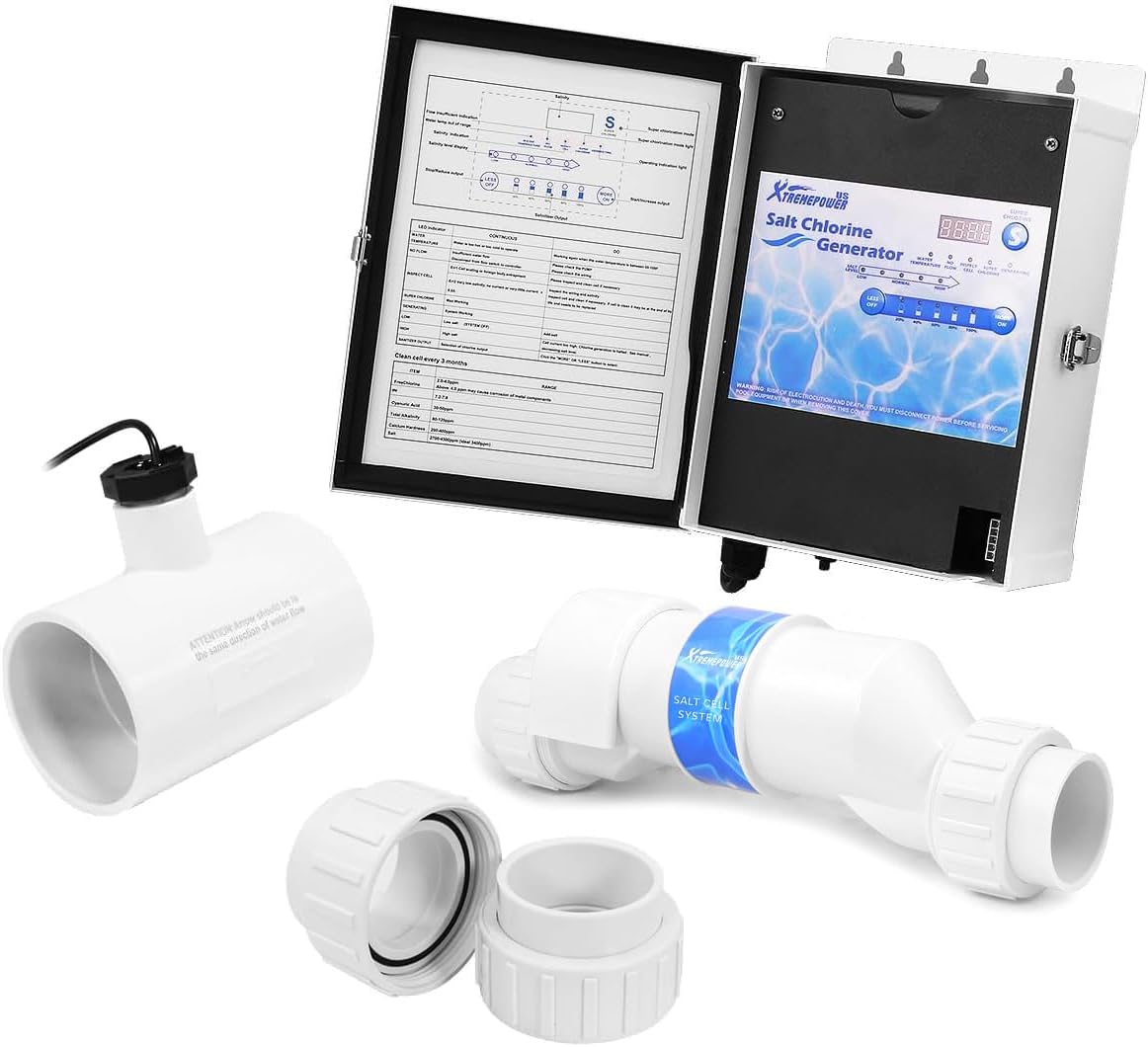
Best budget big-pool pick: XtremepowerUS Salt System (40,000 gal)
Budget
The XtremepowerUS Salt System (40,000 gal) is for owners who need to cover a large pool at the lowest entry price. It carries a 40,000-gallon rating and gets the basic job done, which is appealing when you are outfitting a big pool on a small budget.
The tradeoff is a thinner long-term track record and support network than the established brands. Owner reports are mixed on longevity, so treat it as a value play and keep your water balanced to give the cell its best shot. See the full lineup on our salt systems page to compare.
How to pick the right one
Start with real gallons, then buy a cell rated above that number so it never runs pinned at 100 percent. Keep salt near 3,000 ppm and test regularly, since the CDC stresses that consistent chlorine and testing are what actually keep water safe. If salt chemistry is new to you, our saltwater pool maintenance for beginners guide and pool chemistry basics without the lab coat walk through the numbers.
One more note: a salt cell only makes chlorine while the pump runs, so a big pool needs enough pump hours to match the water volume. If you also run a spa, our hot tub maintenance for beginners without the chemical panic guide covers the smaller-scale version of the same idea. When a cell reads full output and still cannot keep up, add pump hours before you blame the system.
Frequently asked questions
What size salt system do I need for a large pool?
Buy a cell rated well above your actual gallons, not right at it. For a 30,000 to 40,000 gallon pool, most owners pick a 40,000-gallon cell so it runs at partial output and lasts longer. A salt cell is the plate stack that turns salt into chlorine, and undersizing it means it runs at 100 percent all summer and wears out fast.
Can I run two salt systems on one big pool?
Yes, and on very large or oddly shaped pools it is sometimes the cleaner answer. Two cells split the load so each runs cooler and lasts longer, and you get chlorine even if one cell fails. The tradeoff is double the upfront cost and two cells to clean and eventually replace, so most owners try a single oversized cell first.
How much salt does a 40,000 gallon pool need?
It depends on your starting salt level and the target your system wants, usually around 3,000 ppm (parts per million). A pool near zero salt can need roughly 1,000 pounds to reach 3,000 ppm, but never dump a full guess. Use the calculator above and test first, because overshooting salt means draining water to fix it.
Does a bigger salt cell make more chlorine?
A bigger cell can make more chlorine per hour and hold that output longer, which matters when a large pool has high demand from sun and swimmers. It does not change your target chlorine level, just how easily the system hits it. If your cell runs at 100 percent and still cannot keep up, it is undersized or your pump runs too few hours.
How long do salt cells last on a big pool?
Most cells are rated for roughly 10,000 hours of run time, but a large pool that keeps the cell at full output all season will hit that sooner. Keeping water balanced, cleaning the cell only when scaled, and sizing up all stretch its life. Plan to replace the cell every 3 to 7 years and budget for it, since the cell is the priciest wear part.