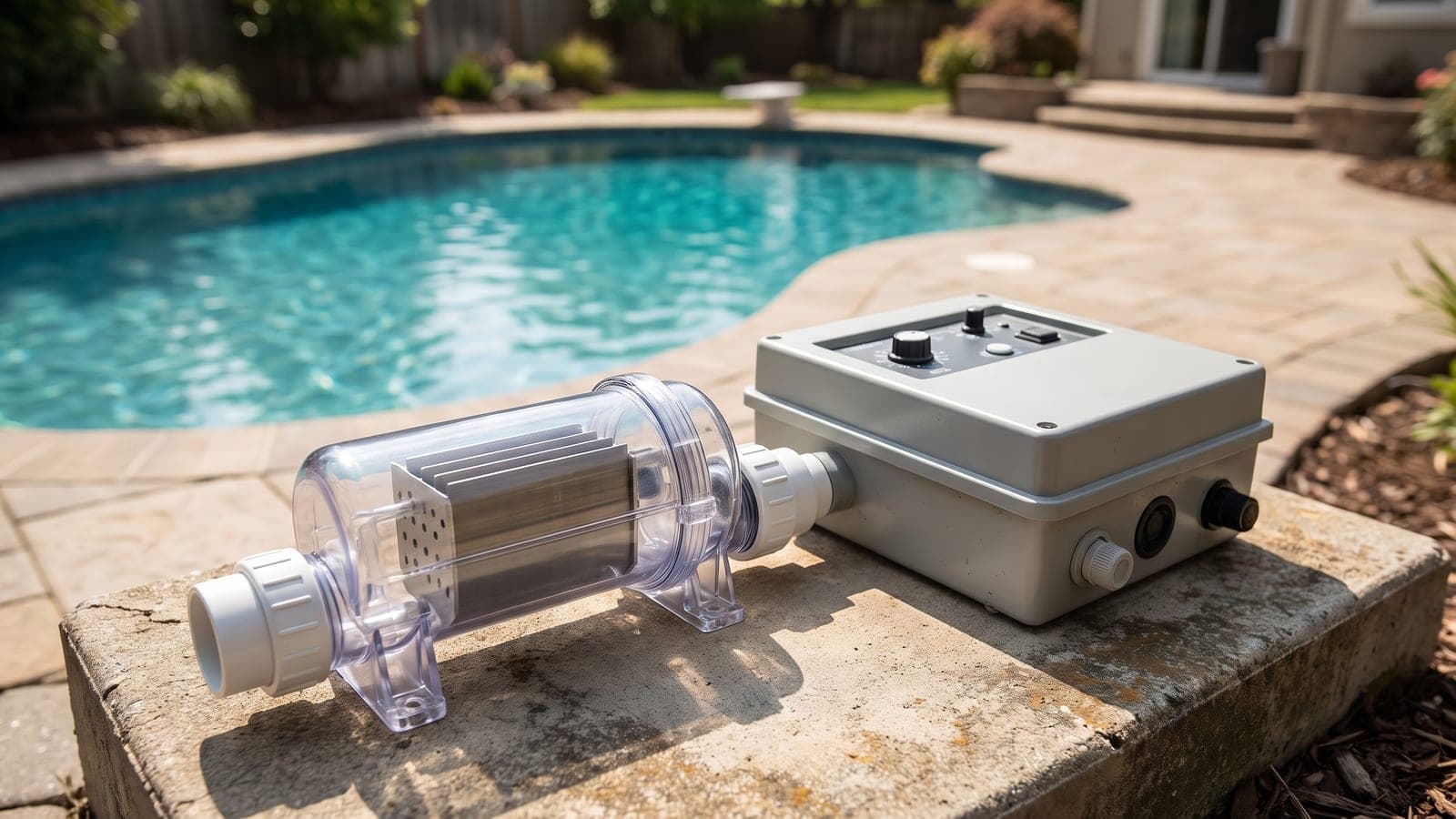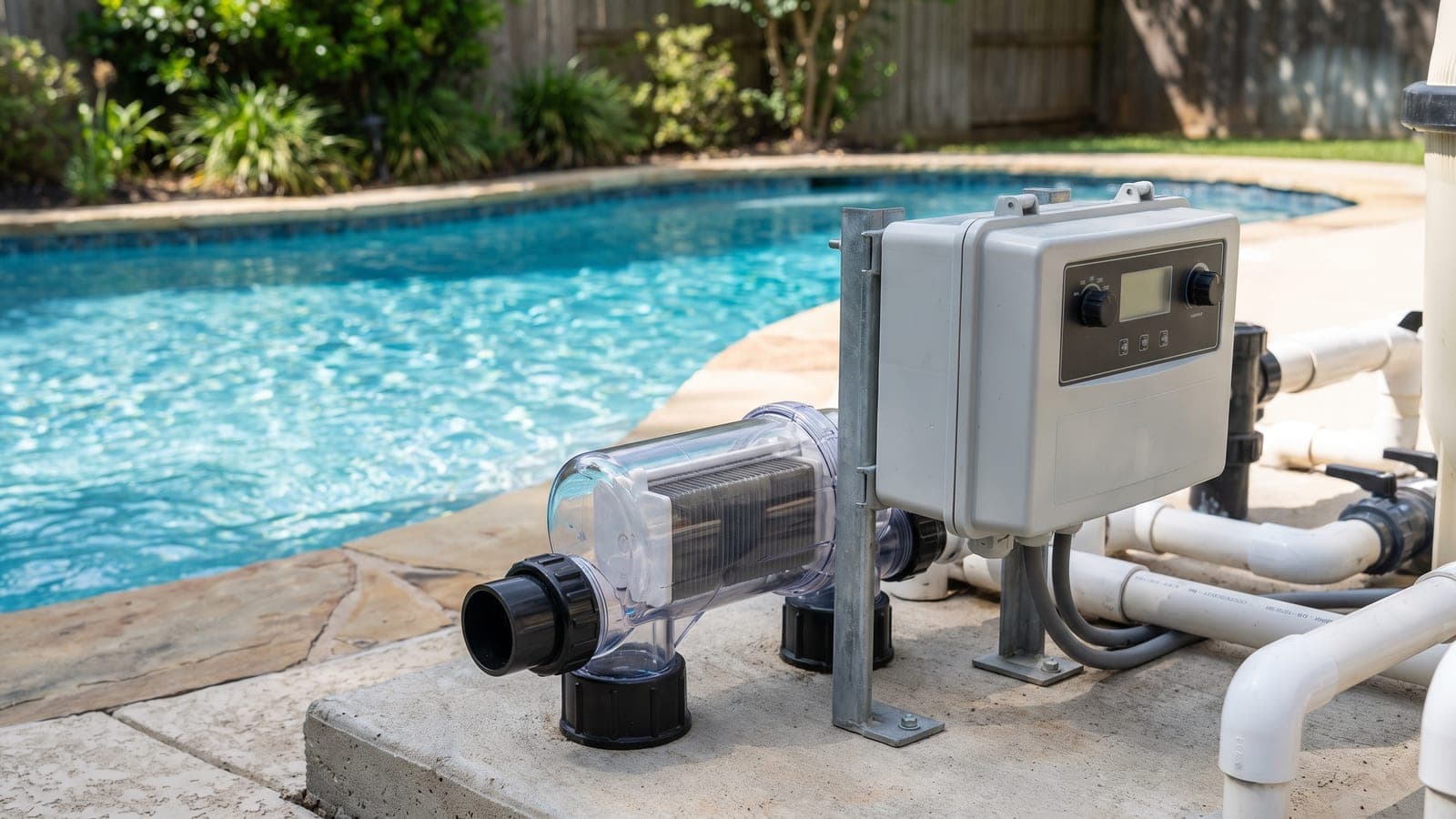
The saltwater chlorinator most in-ground pool owners should get is one rated for at least 40,000 gallons, even if your pool is smaller, because oversizing lets the cell loaf along and last longer. The Hayward AquaRite Salt System (40,000 gal) is the safe default: widely supported, easy to find parts for, and sized to carry a typical backyard pool without straining. A saltwater chlorinator (also called a salt chlorine generator) makes its own chlorine from dissolved salt, so you stop hauling jugs and tablets.
Use the calculator above to size this to your pool. Before buying any system, match its rated gallons to your real volume, then round up. New to salt entirely? Start with saltwater pool maintenance for beginners and pool chemistry basics without the lab coat, since a generator only works when pH and CYA are already in range.
| Pick | Best for | Watch out for |
|---|---|---|
| Hayward AquaRite Salt System (40,000 gal) | Most in-ground pools | Basic readout, no app |
| CircuPool RJ45+ Salt System | Value on large pools | DIY-leaning support |
| Pentair IntelliChlor IC40 Salt System | Pentair automation owners | Priced for the ecosystem |
| Jandy TruClear Salt System (35,000 gal) | Simple, compact installs | Tighter gallon ceiling |
| BLUE WORKS BLH40 Salt System (40,000 gal) | Budget 40k-rated pick | Smaller support network |
| CircuPool Universal40 Salt System | Universal, easy swaps | You wire and mount it |
What size chlorinator does an in-ground pool need?
The most common mistake is buying a cell rated exactly at your pool's volume. A generator makes chlorine while your pump runs, so a right-at-the-limit cell has to run near full output on hot, crowded days. That constant hard duty is what wears cells out early.
Oversize instead. If your pool holds 20,000 gallons, a 40,000-gallon-rated system still costs a bit more up front but runs at half effort, which owner reports link to longer cell life. Hayward's own salt guidance and the CDC both stress that stable, balanced water is what keeps sanitizer working, so size for headroom and keep chemistry steady.
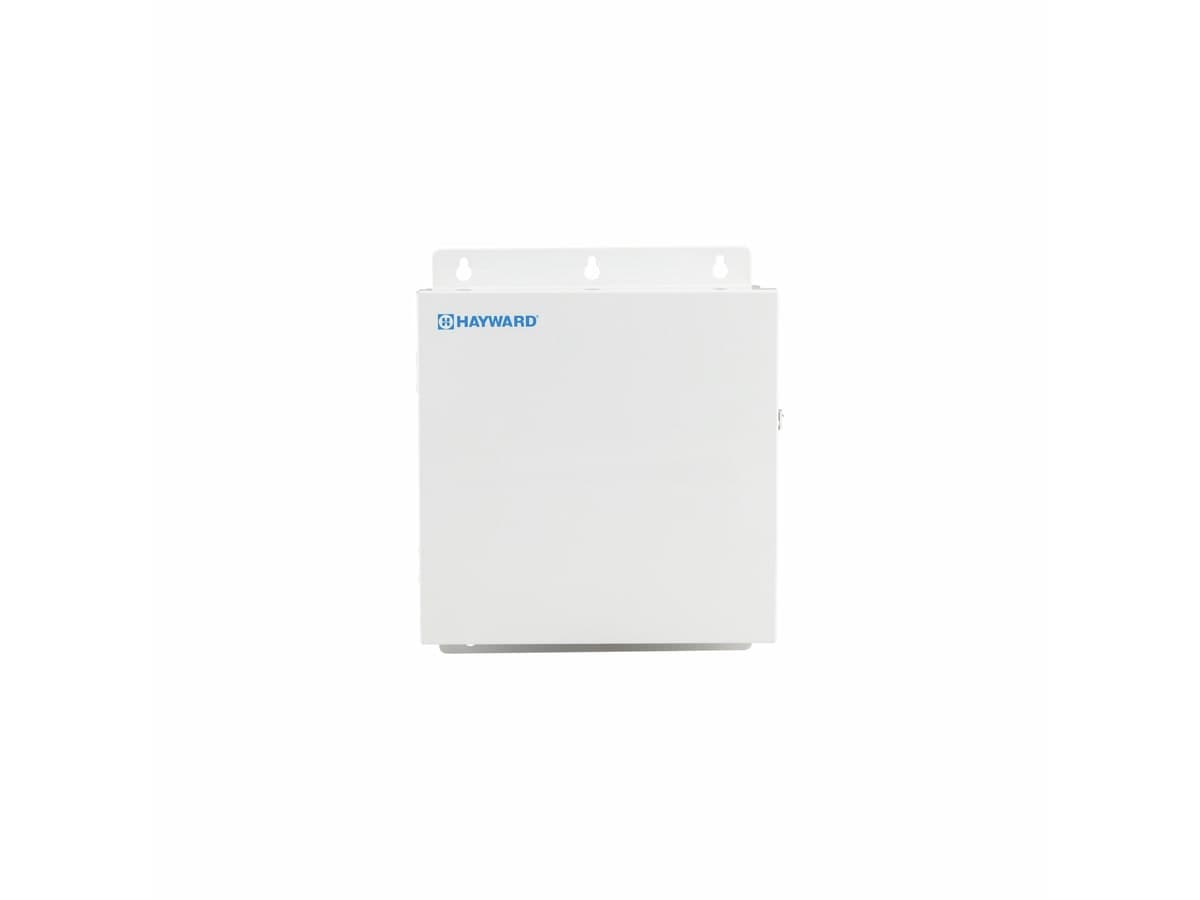
Best overall: Hayward AquaRite Salt System (40,000 gal)
Premium
This is the system to buy if you want the least drama. The AquaRite line is one of the most common salt systems on in-ground pools, which means replacement cells, flow switches, and how-to help are easy to find when something eventually wears out. For a typical 15,000 to 30,000 gallon pool, the 40,000-gallon rating gives comfortable headroom.
The tradeoff is that the base unit is fairly plain. You get a percentage output dial and a salt readout, not a phone app or fancy automation. If you want smart scheduling, you will pair it with separate controls, but as a pure chlorine maker it is hard to go wrong here.
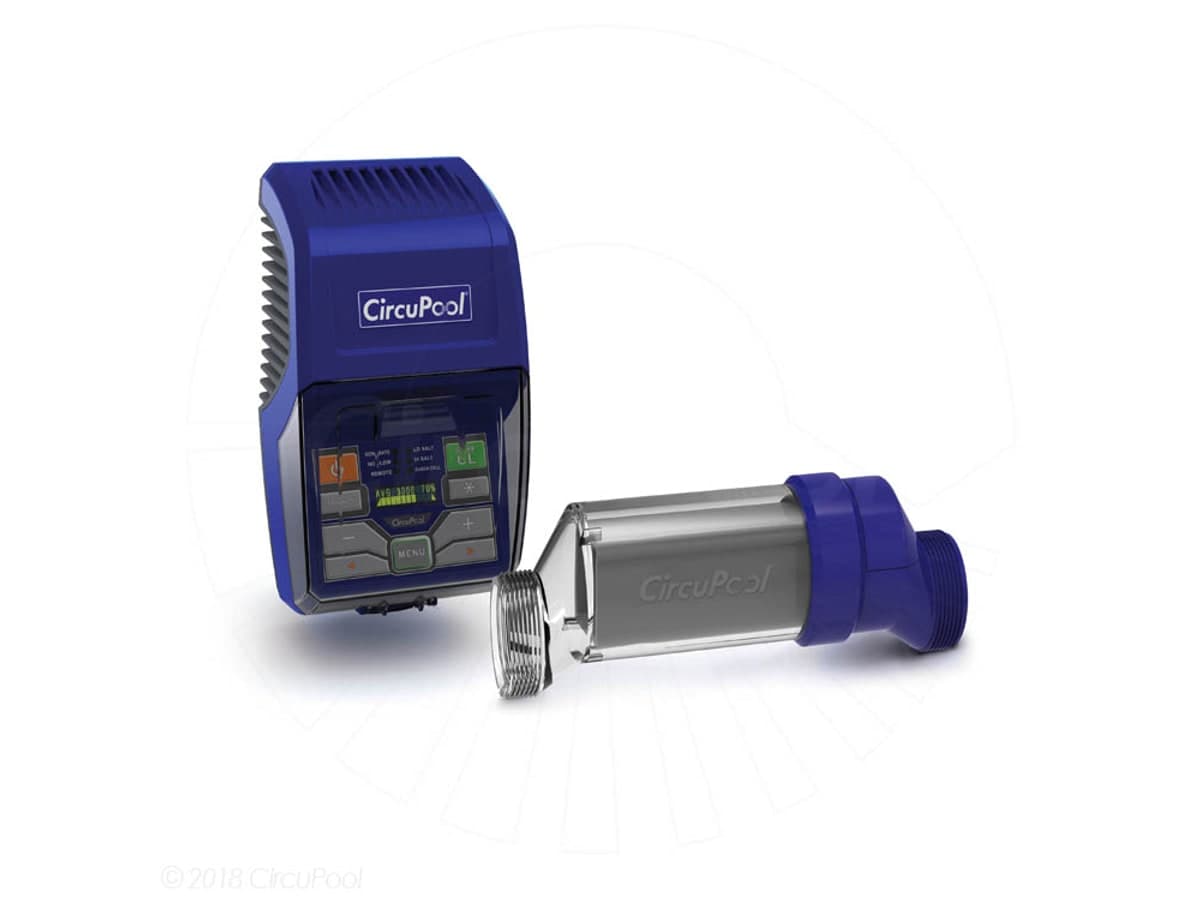
Best value for large pools: CircuPool RJ45+ Salt System
Premium
For big in-ground pools, the RJ45+ is a strong value pick because it is built around a high-capacity cell with a long rated cell life relative to price. Owners with 30,000-plus gallon pools tend to like that it does not run flat-out to keep up, which is exactly the oversizing logic that protects the cell.
The catch is the support model. CircuPool leans toward direct-to-owner and online help rather than a pool store on every corner, so you should be comfortable reading the manual and doing basic troubleshooting. If you are hands-on, that is a fair trade for the capacity you get.
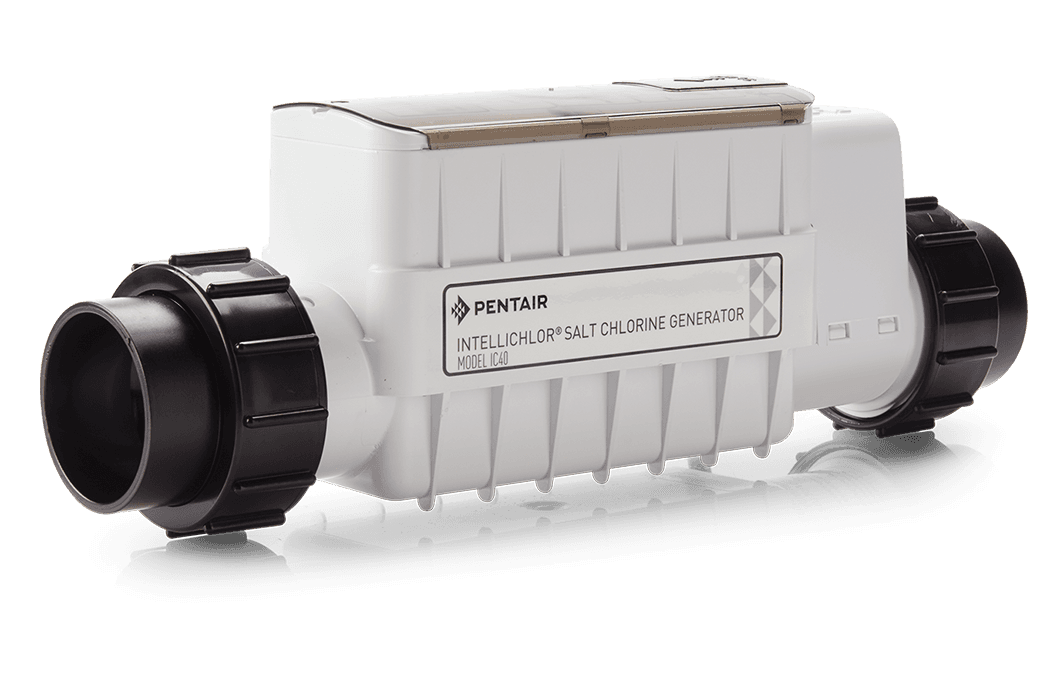
Best for Pentair automation owners: Pentair IntelliChlor IC40 Salt System
Premium
If your equipment pad is already Pentair, the IntelliChlor IC40 is the natural fit. It talks to Pentair automation cleanly, and the cell shows salt level, water temperature, and cell life on the unit, which makes diagnosing problems simpler. Pentair rates the IC40 for pools up to 40,000 gallons, so it suits most in-ground builds.
The tradeoff is cost and lock-in. You pay for the ecosystem, and replacement cells are priced accordingly. If you do not run other Pentair gear, the value case is weaker than a standalone unit. Pentair also makes a smaller LT-series option, the Pentair IntelliChlor LT15 Salt System (15,000 gal), for compact pools that do not need IC40 capacity.
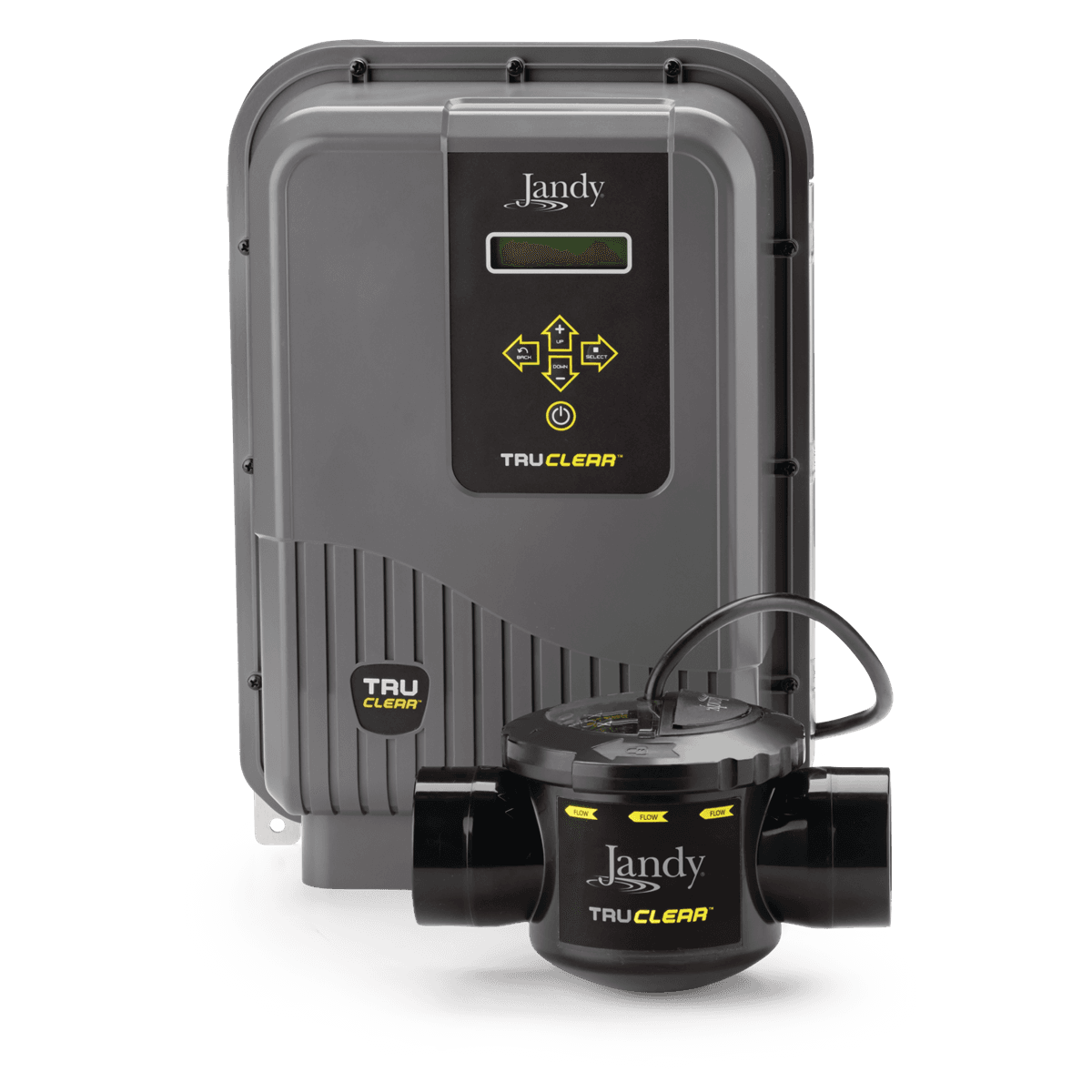
Best simple compact install: Jandy TruClear Salt System (35,000 gal)
Premium
The TruClear is a good pick when you want a clean, no-nonsense install without a giant control box. It uses a compact controller and a straightforward cell, and its 35,000-gallon rating covers most standard in-ground pools with a little headroom for average-sized builds.
The thing to watch is that 35,000-gallon ceiling. On a large or heavily used pool in a hot climate, you have less spare capacity than a 40,000-rated unit, so it will run closer to its limit in peak season. For small and mid-size pools, that is a non-issue.
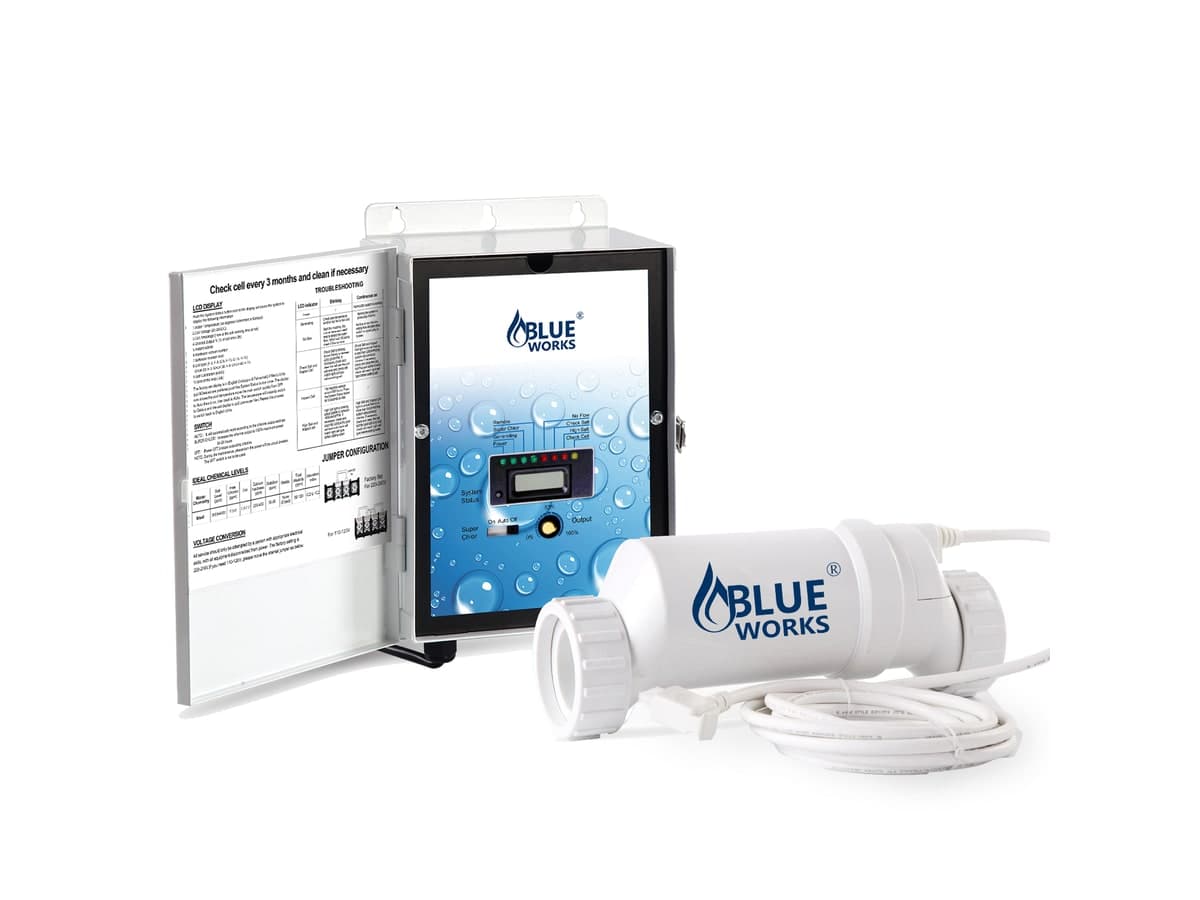
Best budget 40k-rated pick: BLUE WORKS BLH40 Salt System (40,000 gal)
Budget
The BLUE WORKS BLH40 gets you a 40,000-gallon rating at a friendlier price than the big three brands, which is appealing if you want oversizing without the premium sticker. It covers the core job, making chlorine on your pump's schedule, and includes a basic readout for salt and output.
The honest tradeoff is the support network. Parts and local help are not as ubiquitous as Hayward or Pentair, and long-term cell availability is a real thing to weigh on any value brand. If you keep chemistry tidy and do not mind ordering parts online, it is a sensible way to save.
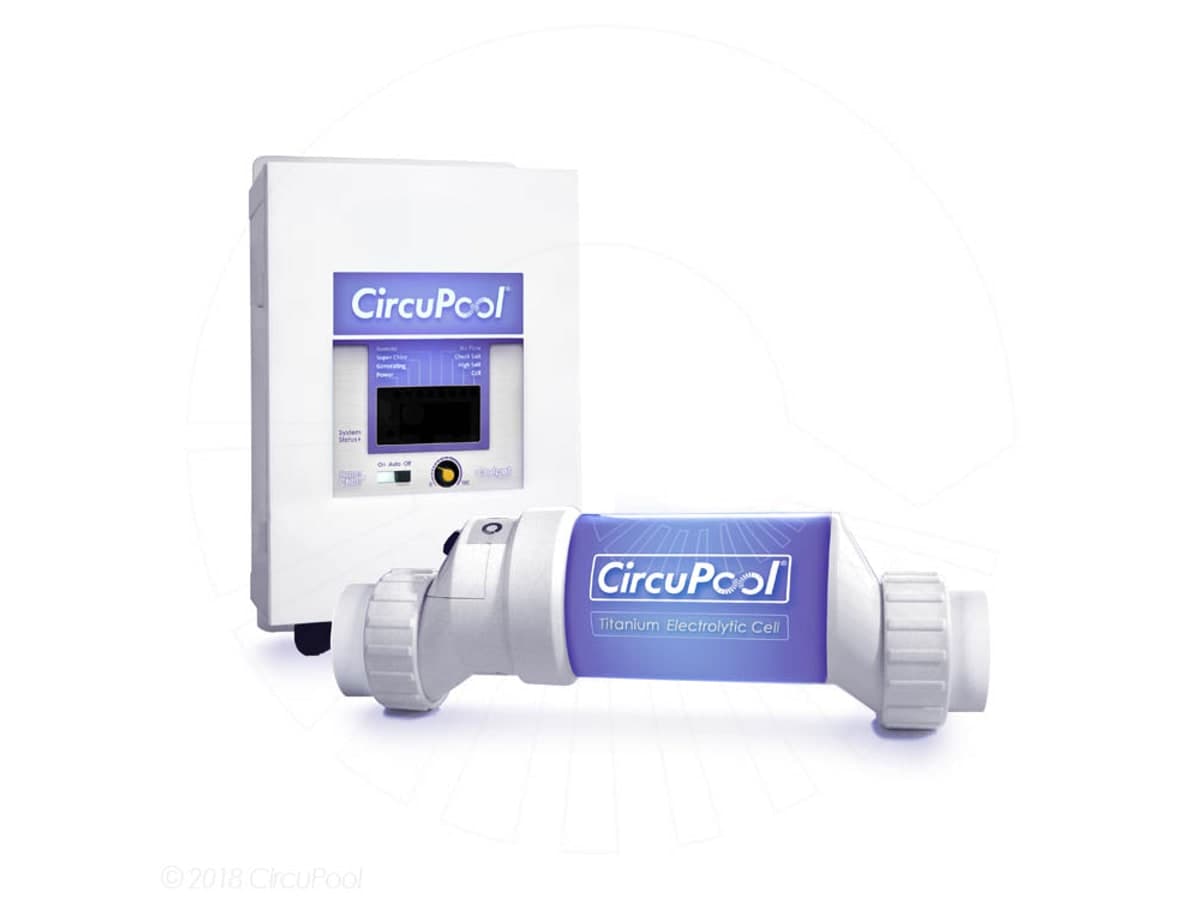
Best universal replacement: CircuPool Universal40 Salt System
Mid-range
The Universal40 is aimed at owners replacing a dead system who want flexibility rather than brand loyalty. It is a self-contained 40,000-gallon-rated unit that many people install themselves, and it fits the same oversizing advice: plenty of headroom for a standard in-ground pool.
The tradeoff is that you own the install and setup. There is no built-in tie-in to a specific automation brand, so if you rely on Pentair or Hayward controls, integration is on you. For a straightforward swap on a pool without heavy automation, it is a clean choice.
What about small pools, spas, and above-ground?
Not every pick needs 40,000 gallons of capacity. Small in-ground pools and spas do fine on right-sized units, and the Intex Krystal Clear Saltwater System (15,000 gal) covers modest setups. For above-ground pools, the Hayward AquaTrol Above-Ground Salt System is built for that job, and there are budget-leaning options like the XtremepowerUS Salt System (40,000 gal) if you want capacity on a tighter budget.
If you are salting a spa rather than a pool, the chemistry rhythm is different because the water is hotter and the volume tiny. Our hot tub maintenance for beginners without the chemical panic guide covers that. You can browse the full lineup on the salt systems page.
When should you call a pro?
Do it yourself for the salt cell swap, output tweaks, and routine cell cleaning, since those are owner-level tasks. Call a pro for the electrical hookup if you are not fully comfortable wiring 240V, and for bonding and grounding, which matter more on a metal-heavy pool. A bad ground can speed up corrosion, and that is not a corner to cut.
Whatever you install, keep testing. A generator does not fix pH drift or low CYA on its own, and the CDC's guidance is clear that regular testing is the backbone of safe water. Size for headroom, oversize the cell, and let the system loaf.
Frequently asked questions
How big a salt cell do I need for my in-ground pool?
Match the cell's rated gallons to your actual pool volume, then buy one size larger if you can. Oversizing means the cell runs fewer hours to make the same chlorine, which lightens the load and tends to stretch its lifespan. It depends on your climate and bather load, so a system rated well above your volume is rarely a mistake.
Do saltwater chlorinators make chlorine-free water?
No, they make chlorine, just on a schedule instead of from a bucket. The generator splits dissolved salt into chlorine that sanitizes the water, then it recombines back into salt, so you top off salt only occasionally. Your water still needs correct pH, chlorine, and CYA (cyanuric acid, the stabilizer that protects chlorine from sunlight).
How much salt do I actually add?
Most systems want the water somewhere around 3,000 to 3,500 ppm, but confirm the exact target in your unit's manual. Use the calculator above to convert your current reading and pool volume into pounds of salt. Add in stages and retest, since it is easier to add more salt than to remove it.
Will a salt system rust my ladders and heater?
Pool salt levels are far lower than seawater, so corrosion is usually slow, but it is not zero over many years. Keep water chemistry balanced, bond and ground metal parts correctly, and rinse salt off nearby surfaces. Some heater and light housings hold up better than others, so check what your equipment maker recommends.
How long do salt cells last?
Owner reports commonly land in the three to five year range, though it swings with runtime, water balance, and how oversized the cell is. Hard scale and low water temperatures shorten cell life, and running the generator harder than needed does too. Budget for a replacement cell as a planned maintenance cost, not a surprise.