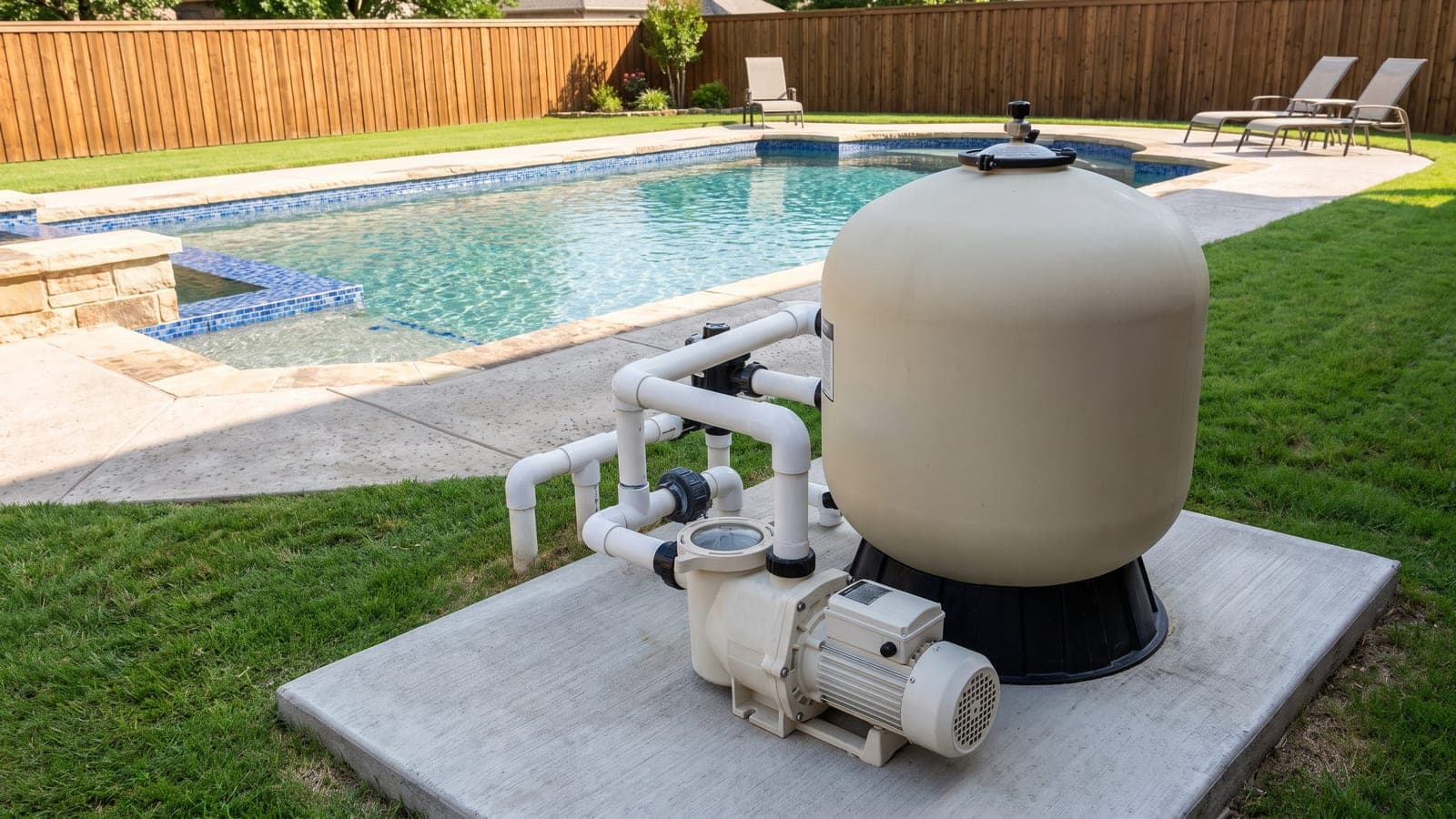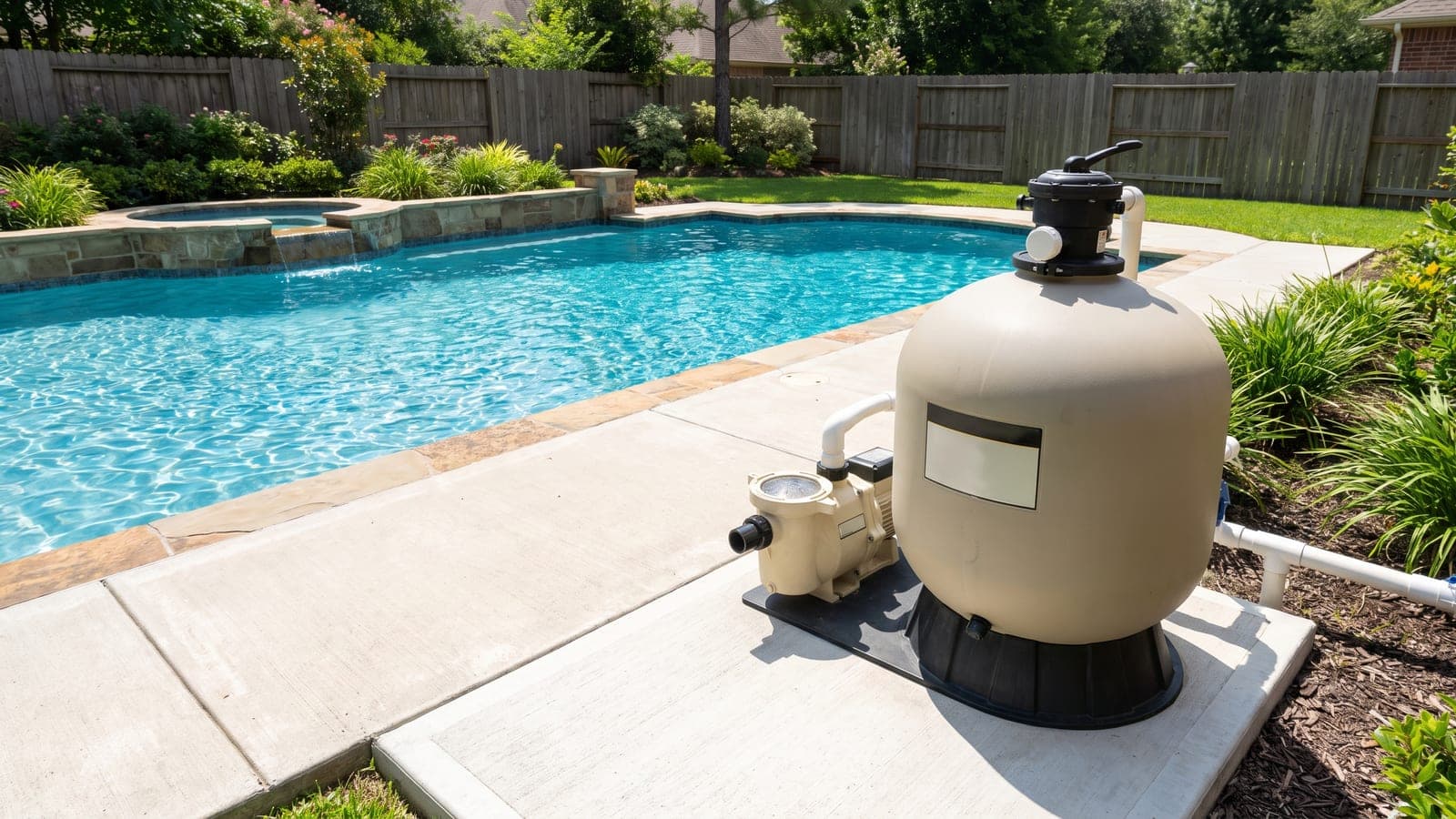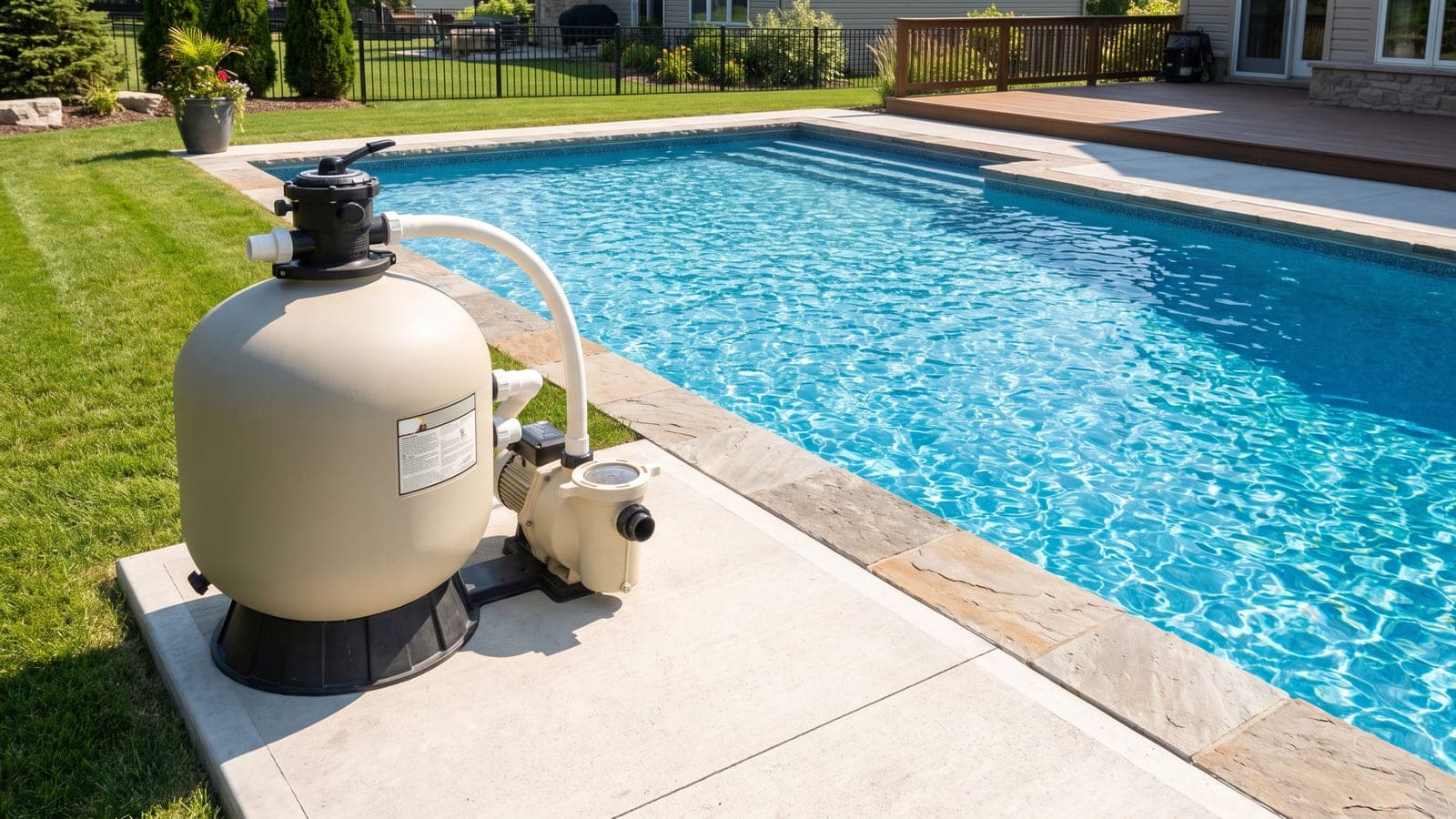
DE filters polish water finer than cartridges, catching particles down to a few microns while a cartridge stops at a coarser size. If your only goal is the clearest possible water, DE wins on paper. But "better polish" is not the same as "better filter for your pool," and for a lot of backyards a cartridge does the job with far less fuss.
Let me break down where each one actually earns its keep.
What does "polish" even mean for pool water?
Polishing just means removing the tiny suspended stuff that makes water look dull or slightly hazy instead of sharp and blue. Every pool filter catches the big debris. The difference shows up at the small end, measured in microns (a micron is one-millionth of a meter, and a human hair is roughly 50 to 70 of them).
DE stands for diatomaceous earth, a fine white powder made from fossilized algae. It coats a set of internal grids and acts like a super-fine sieve, trapping particles in the single-digit micron range. A cartridge filter uses a pleated fabric element and generally catches down to the 10 to 20 micron range depending on the cartridge.
So DE has the tightest weave. Sand, for context, is the coarsest of the three common types and lets the most fine material slip through.
Is the clarity difference something you can actually see?
Sometimes, and it depends on your starting point. On a balanced, well-run pool, a clean cartridge produces water that looks excellent to almost everyone. The DE edge becomes visible mainly when you are fighting fine haze, dead algae after a treatment, or very heavy pollen and dust seasons.
If you regularly deal with cloudy water that will not clear, DE gives you a real advantage. If your water is usually clear and you just want it low-effort, the cartridge advantage in clarity is small enough that most owners never notice it.
Clarity is not only the filter, either. Balanced chemistry does most of the visible work, and the CDC's guidance on treating and testing pool water is a good baseline for keeping chlorine and pH in range. A dirty pool with a DE filter still looks worse than a clean pool with a cartridge. Our pool chemistry basics guide covers the testing side.
How different is the maintenance between them?
This is where most people actually make the decision.
A cartridge filter is the low-drama option. You shut off the pump, pull the element, and rinse it with a hose. No backwashing, which means no dumping hundreds of gallons of pool water down the drain every cleaning. A large-capacity model like the Hayward SwimClear C3030 Cartridge Filter (325 sq ft) can go a long stretch between cleanings because there is so much surface area to load up before pressure climbs. Mid-size units like the Pentair Clean & Clear CC150 Cartridge Filter (150 sq ft) suit average residential pools.
A DE filter needs more hands-on attention. When pressure rises, you backwash to flush the dirty powder, then add a fresh charge of DE through the skimmer to recoat the grids. Every so often you pull the grids out and hose them fully. A unit like the Hayward ProGrid DE4820 D.E. Filter (48 sq ft) delivers that fine polish, but you are signing up for the powder-handling routine that comes with it.
Wear a dust mask when you pour DE powder, since the dry dust is not something you want in your lungs. And check your local rules for where backwash water and used DE can go.
Which one is cheaper to run over time?
Neither is dramatically expensive, but the cost shapes differ.
Cartridges save water because you do not backwash, which matters if you are on metered water or in a drought area. The tradeoff is that the fabric elements wear out and need replacing every few years, and premium cartridges are not cheap. DE filters add an ongoing cost most people forget: you buy powder for every recharge, plus the grids eventually need replacing.
Both connect to whatever pump you run, and your pump choice affects the electric bill far more than the filter type does. The Department of Energy's notes on efficient pool pumps are worth a read if you are also thinking about running costs, since a variable-speed pump paired with either filter usually saves more than the filter difference ever will.
So which should you actually buy?
Pick a DE filter if you chase crystal clarity, deal with fine dust or recurring haze, and do not mind the powder-and-backwash routine.
Pick a cartridge filter if you want the simplest maintenance, want to save water, or your pool water is usually clear anyway. For most suburban pools, this is the practical winner, and it is why cartridges have become the default recommendation on new builds. You can compare current options on our pool filters page.
One honest note on sizing: bigger filter surface area means longer runs between cleanings and lower pressure, regardless of type. Buying the largest filter that fits your plumbing and budget is almost always a better move than agonizing over DE versus cartridge.
Switching from one type to another means a new tank, so it is not a quick swap. If you are unsure, that is a fair moment to call a local pool pro and have them look at your pad. And if a hot tub is part of your setup, the hot tub maintenance guide and the saltwater pool maintenance guide cover the filter care those systems need.
The short version: DE polishes finer, cartridge lives easier, and the right pick is the one whose maintenance style you will actually keep up with.
Frequently asked questions
Does a DE filter really make water clearer than a cartridge?
Yes, in most cases DE filters trap smaller particles, so water can look glassier. The gap is usually visible only if your water was already borderline cloudy, since a clean cartridge on a balanced pool looks great to most eyes.
Can I switch my cartridge filter to DE without changing the tank?
No, the tanks are built differently inside, so you cannot pour DE into a cartridge housing. Switching filter types means a new filter tank and often new plumbing, which is a job many owners hand to a pool pro.
Is DE powder safe to handle and dump?
DE powder is safe with basic care, but you should wear a dust mask because the dry powder is not good to breathe. Used DE and backwash rinse water carry pool contaminants, so follow your local rules for disposal rather than dumping it just anywhere.
How often do I have to clean each filter type?
It depends on your pool size, bather load, and how dirty the water gets, so watch the pressure gauge instead of the calendar. Most owners rinse a cartridge every few weeks and backwash or recharge DE when pressure climbs about 8 to 10 psi over clean.
Which filter is cheaper to own over five years?
It depends on local prices and how hard you run the pool, but cartridges usually win on simplicity and water savings while DE adds ongoing powder cost. Sand sits in the middle, so compare all three against your actual pool before deciding.