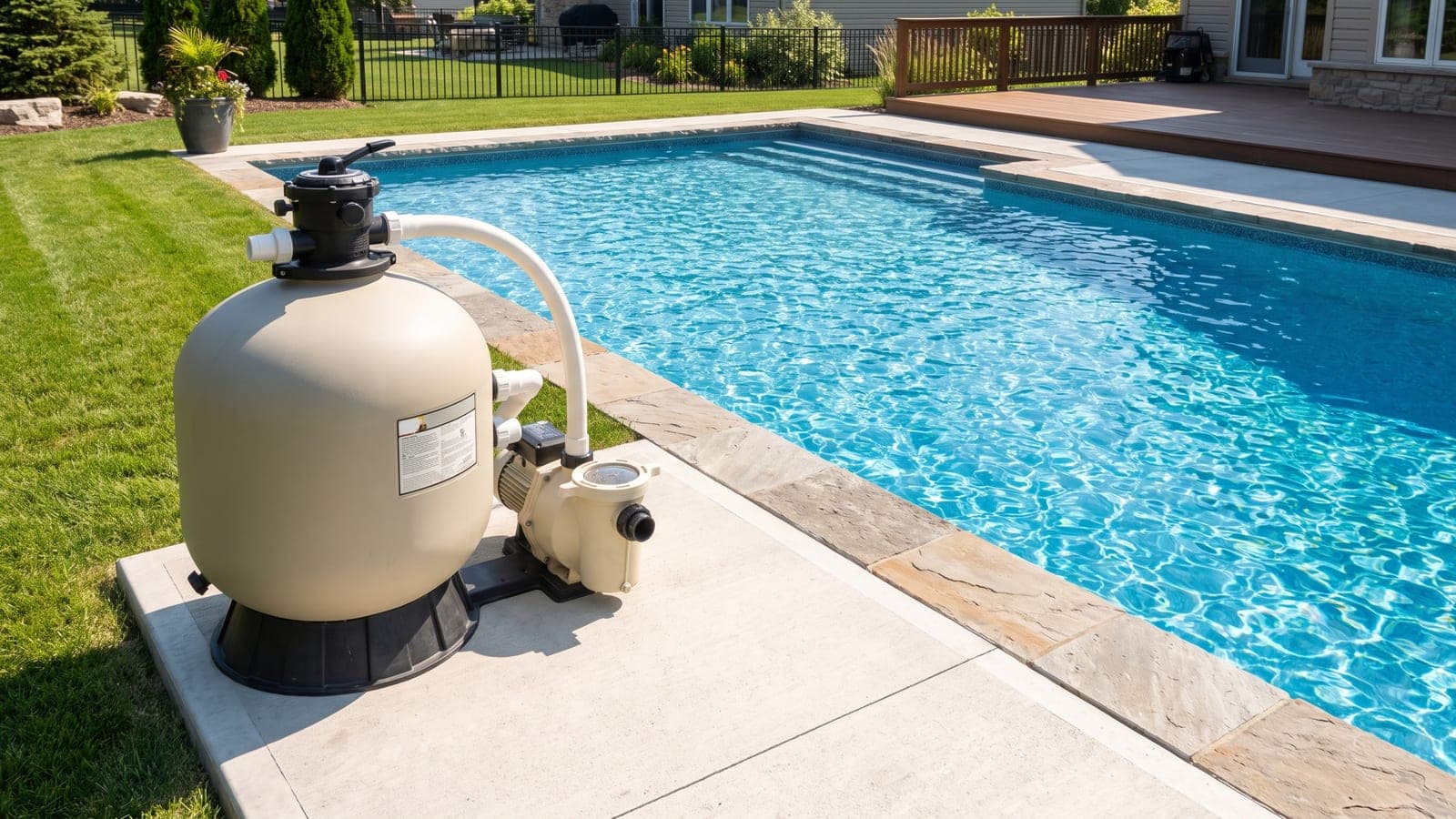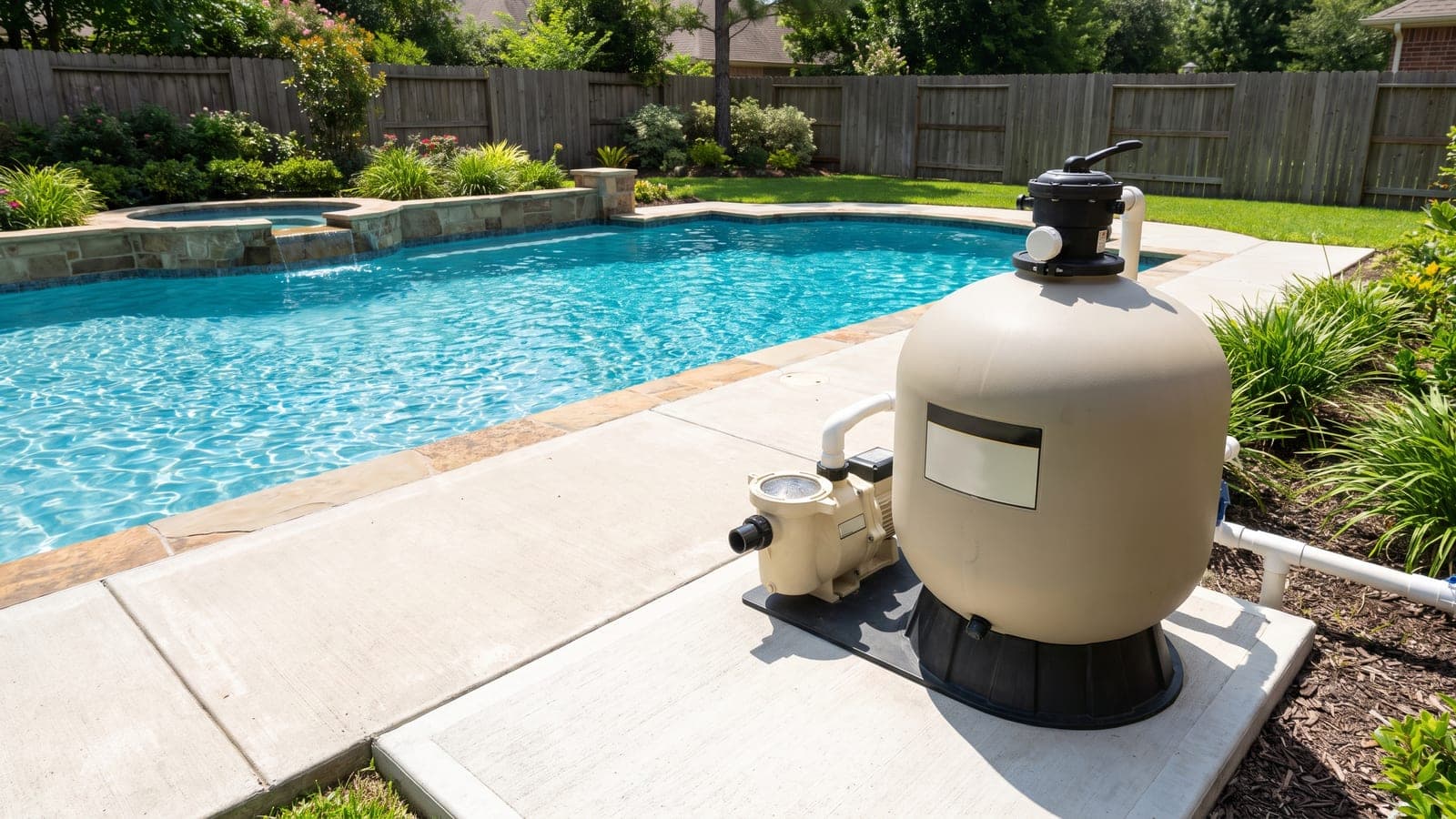
Cleaning a pool cartridge filter the right way means shutting off the pump, releasing the pressure, rinsing each pleat top to bottom with a garden hose, and deep-soaking the cartridge every month or so to strip out oils a rinse leaves behind. Do those steps in order and your water clears up, your pump works less, and your cartridge lasts years instead of months.
A cartridge filter is the pleated fabric element inside your filter housing that traps dirt, sunscreen, and debris as water passes through it. Over time those pleats clog, pressure rises, and flow drops. Here is how to reset it without wrecking the cartridge.
When should I clean my cartridge filter?
Let the pressure gauge tell you, not the calendar. Write down the pressure reading when the filter is freshly cleaned. That is your clean baseline, usually somewhere in the 10 to 20 psi range depending on the system.
When the gauge climbs about 8 to 10 psi above that baseline, it is time to clean. For most backyard pools that lands every 4 to 6 weeks, but a pool packed with swimmers and sunscreen all summer will need it sooner.
Rising pressure means the pump is straining to push water through a clogged element. That wastes electricity and can shorten the pump's life. The Department of Energy notes that a clean filter and efficient pump run together to keep energy use down, so this is not just a water-clarity issue.
What do I need before I start?
Keep it simple. A garden hose with a nozzle, a bucket or a large trash can, and a filter cleaner made for pleated cartridges cover the job. Skip the pressure washer, since the high force shreds the pleats.
If you want the rinse to go faster, a filter cleaning wand (a comb-shaped nozzle attachment) spreads water across several pleats at once. It is a nice-to-have, not a must-have.
Have a spare cartridge on hand if you can. Swapping in a clean spare lets the pool keep filtering while the dirty one soaks overnight, so you are never running the pump with no element in place.
How do I clean it step by step?
Work through these in order.
- Turn off the pump at the breaker or timer. Never open a filter with the pump running.
- Open the air relief valve on top of the housing to bleed off pressure. You will hear a hiss, then water. Wait until it stops before you go further.
- Open the housing. Depending on your model this is a clamp band, a lock ring, or a bolted lid. Larger cartridge filters like the Hayward SwimClear C3030 Cartridge Filter (325 sq ft) use a clamp band you loosen and lift, while a compact unit like the Pentair Clean & Clear CC150 Cartridge Filter (150 sq ft) opens the same general way at a smaller scale.
- Lift out the cartridge. Note how it seats so you can put it back the same way.
- Rinse from the top down, holding the hose at a slight angle so water gets into each pleat. Rotate slowly and work all the way around. Spread the pleats gently with your fingers where dirt hides.
- Inspect the cartridge. Look for cracks, flattened pleats, or a wobbly end cap. Damage here means it is time to replace, not clean.
A plain rinse handles loose dirt and leaves. It does not remove the oily film from sunscreen and body oils, which is why pressure can creep back up quickly if rinsing is all you ever do.
Do I really need to soak it?
Yes, about once a month. Rinsing clears the surface, but sunscreen, lotions, and mineral scale bury themselves deep in the fabric where a hose cannot reach. That buried gunk is the usual reason a "clean" filter still shows high pressure.
Fill a bucket or trash can with water and add a cartridge filter cleaner following the label's dilution. Submerge the cartridge fully and let it soak overnight, or at least a few hours. For oily buildup, a filter degreaser works better than a plain chemical cleaner.
After soaking, rinse the cartridge thoroughly until the water runs clear and you no longer see suds. Any cleaner left in the pleats can foam up your pool water once the filter goes back online.
A quick note on chemistry: never soak a cartridge in a bucket that also has muriatic acid mixed in with the cleaner unless the product says so, and never combine cleaning chemicals. If your pleats are crusty with white mineral scale, that is a water-balance signal worth reading up on in our pool chemistry basics without the lab coat guide.
When should I just replace the cartridge?
Replace it when cleaning stops working. If pressure returns to high within days of a good soak, the fabric has lost its ability to filter and no amount of scrubbing brings it back.
Also replace it if you see cracked pleats, a torn seam, a broken end cap, or pleats so matted they no longer stand apart. A damaged cartridge lets dirty water slip past unfiltered, which shows up as cloudy water no matter how much chlorine you add.
Most cartridges last 1 to 3 years. The exact lifespan depends on how hard the pool gets used, how balanced the water stays, and how gently you clean. Check the listing for your specific model, since square footage and build quality vary. You can compare options on our pool filters page.
Does this apply to hot tubs and saltwater pools too?
The same cleaning method works, with a couple of notes. Hot tubs run hotter and smaller, so cartridges foul faster and appreciate more frequent rinses. Our hot tub maintenance for beginners without the chemical panic guide walks through the spa side.
Saltwater pools use a cartridge filter exactly like a chlorine pool does. The salt does not change the cleaning steps, though you will still want to keep an eye on scale. Our saltwater pool maintenance for beginners guide covers the salt-cell side of things.
One last honesty check: keeping the filter clean is only half of clear water. The CDC's guidance on home pool water treatment and testing is a good reminder that filtration works alongside proper chlorine and pH, not instead of them. A spotless cartridge in badly balanced water will still leave you with a cloudy pool.
Frequently asked questions
How often should I clean my pool cartridge filter?
A quick rinse every 4 to 6 weeks works for most backyard pools, but heavy use or a dirty pressure gauge can push that shorter. Watch the pressure gauge instead of the calendar: clean when it climbs 8 to 10 psi above your clean starting point.
Can I use a pressure washer on a cartridge filter?
It is best to skip the pressure washer because the high force tears the pleated fabric and shortens cartridge life. A regular garden hose nozzle gives plenty of pressure to lift debris out of the pleats without damage.
Why is my filter pressure still high after cleaning?
Sunscreen, body oils, and mineral scale build up deep in the pleats and a plain rinse will not touch them. A monthly overnight soak in a filter cleaner or a diluted degreaser usually fixes it, and if pressure stays high after that, the cartridge is likely worn out.
How long does a pool filter cartridge last?
Most cartridges last 1 to 3 years depending on pool use, water chemistry, and how gently you clean them. Check the manufacturer listing for your specific model, since square footage and pleat quality vary a lot between filters.
Do I need to turn off the pump before opening the filter?
Yes, always shut off the pump and release the air relief valve before opening the housing. A filter under pressure can launch the lid or clamp band with real force, so this step is about safety, not just tidiness.