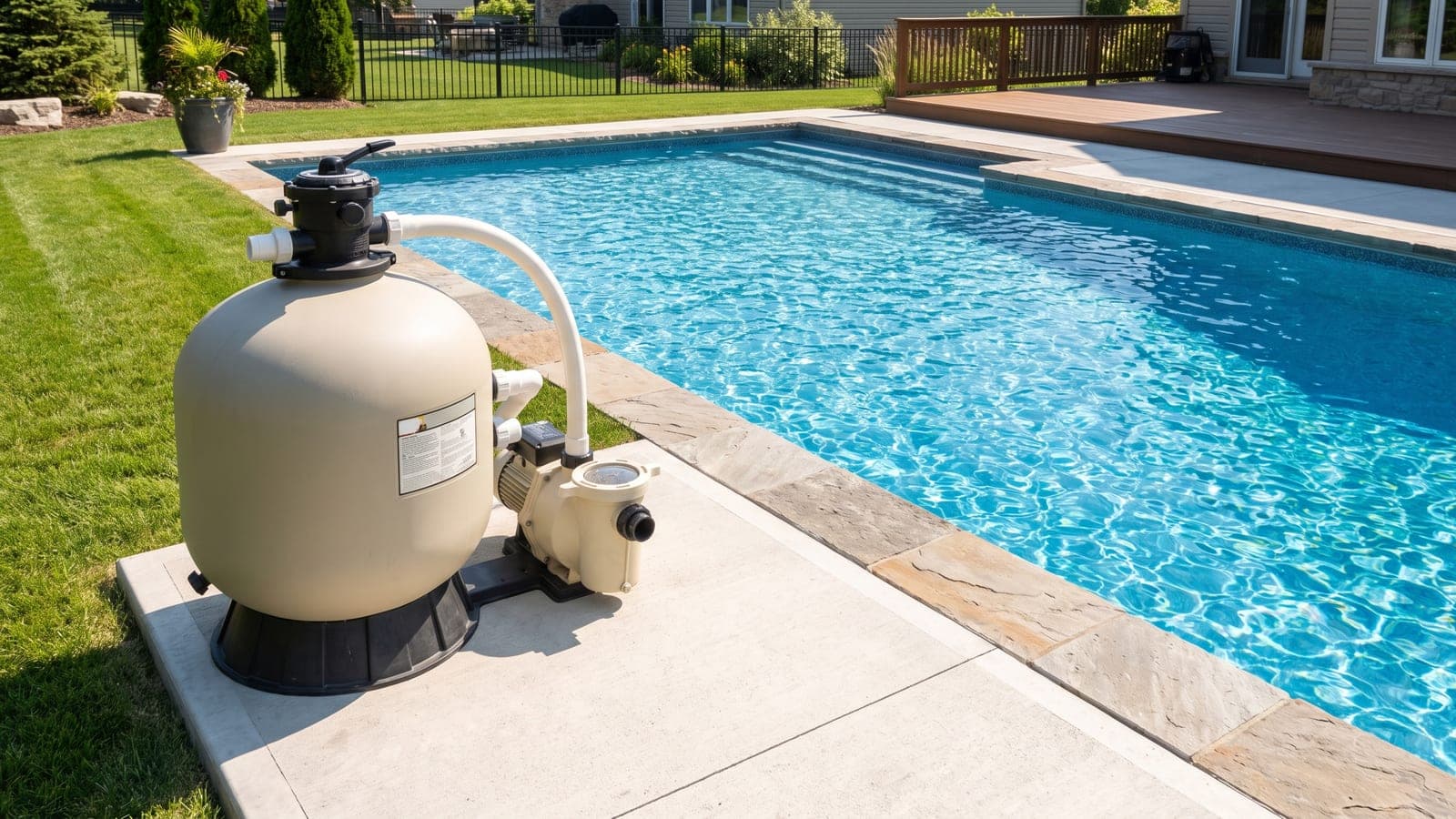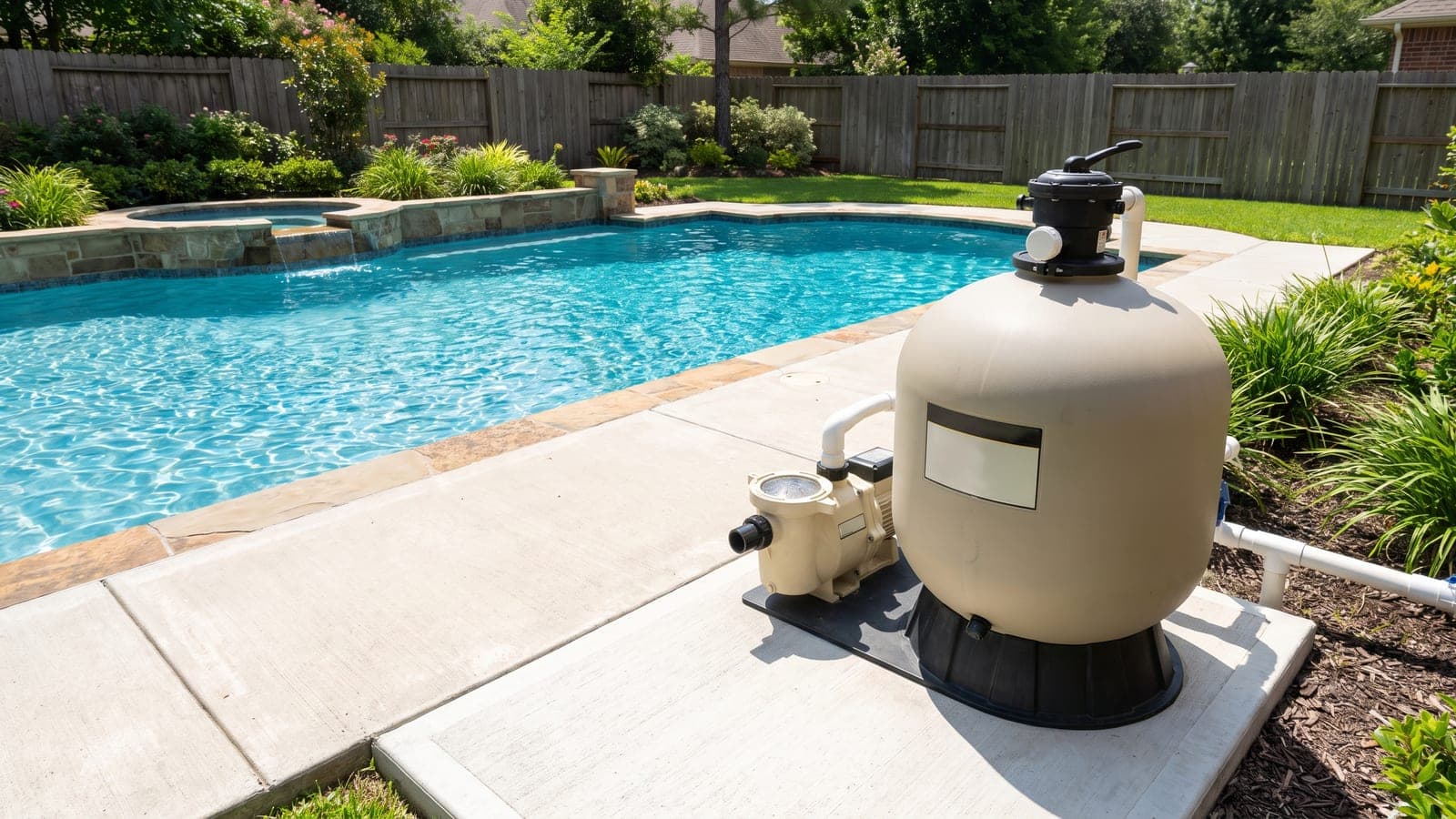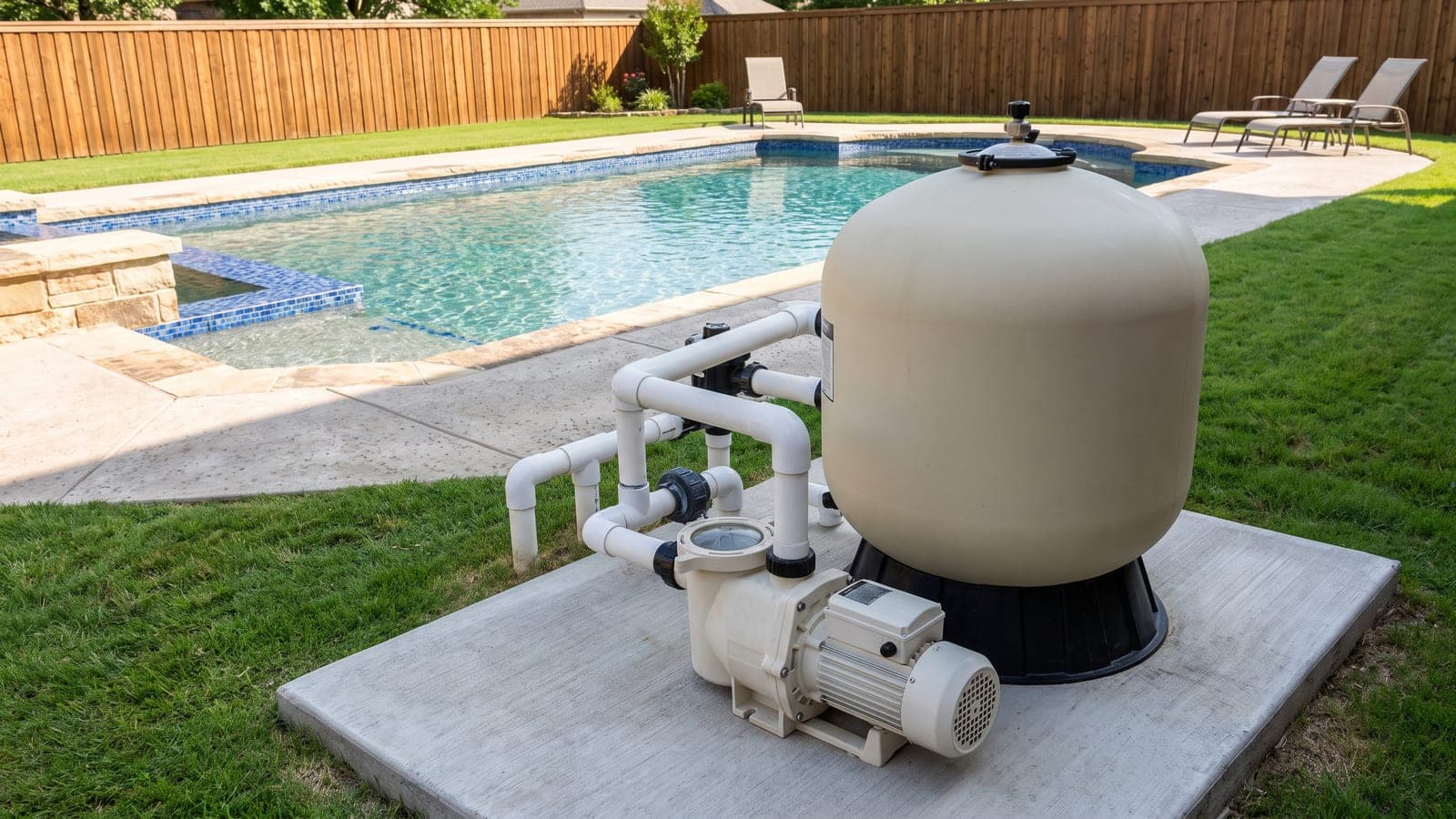
Most pool filter sand needs changing every 5 to 7 years, and you replace it when the filter stops clearing your water even though your chemistry is balanced and you have backwashed. That is the honest answer. The sand itself does not "expire" on a calendar, but the sharp grains that trap dirt wear down over time until the filter can no longer do its job.
Filter sand is special silica sand with jagged edges. Water pushes through it, and those rough edges snag dirt, oils, and fine particles. Over years of water flow, the edges round off like sea glass. Smooth sand lets debris slip through, so your water turns hazy no matter what you do.
What actually wears out pool filter sand?
Three things age your sand: water flow, chemistry, and gunk. Every hour your pump runs, water scrubs past the grains and slowly polishes them smooth. Higher pump speeds and more running hours mean faster wear, which is one more reason a variable-speed pump run on low is easier on your whole system (the U.S. Department of Energy covers pump efficiency well).
Chemistry plays a bigger role than most owners expect. Water with high calcium hardness or a scaling tendency can cement grains into clumps, creating a hard mass that water tunnels around instead of through. This is called channeling. If your chemistry runs rough, brush up with our pool chemistry basics guide, because balanced water makes your sand last closer to that full 5 to 7 years.
The last factor is plain dirt. Oils, sunscreen, and fine debris coat the grains and don't always backwash out. Over time that film reduces how much the sand can grab.
How do I know it is time to change the sand?
Watch your pressure gauge and your water clarity together. Here are the signals that point to worn sand rather than a routine cleaning.
- Water stays cloudy even with balanced chemistry and a fresh backwash.
- Filter pressure climbs back up within days of backwashing instead of weeks.
- You backwash far more often than you used to for the same results.
- You see fine sand or grit blowing back into the pool (this can also mean a cracked lateral, so inspect before you assume).
- The sand has been in there 5 to 7 years and clarity is slipping.
One or two of these together usually means the sand is done. A single cloudy week is more often a chemistry problem, so test before you tear the filter apart. The CDC has solid guidance on water treatment and testing basics if you want a refresher on what balanced water should look like.
How do you actually change pool filter sand?
The job is not hard, just slow and messy. Here is the general sequence, but always follow your specific filter manual for sand amount and fill level.
- Turn off the pump and set the multiport valve so you can work safely. Remove power at the breaker if you are unsure.
- Release pressure and remove the drain plug at the bottom of the tank to let the tank water out.
- Remove the multiport valve or top assembly. Take your time, since the standpipe and laterals below are brittle.
- Scoop out the old wet sand with a plastic cup or shop vac. This is the long part. Protect the laterals at the bottom.
- Rinse the tank, inspect the laterals for cracks, and cover the standpipe so sand cannot fall in.
- Add water partway, then pour in the new pool-grade sand to the manual's fill line.
- Reassemble, then run a backwash and rinse cycle to flush fines before returning to filter mode.
If a lateral is cracked, replace it while the tank is open. It is the cheapest moment you will ever get to that part.
Does the type of sand filter change how often you replace it?
The media life is similar across most residential sand filters, but tank size changes how much sand you buy and how long the swap takes. A compact above-ground unit like the Pentair Sand Dollar SD40 Above-Ground Sand Filter holds less sand than a larger tank, so the job is quicker and cheaper. A mid-size in-ground model like the Hayward Pro Series S244T Sand Filter (24 in) or the Pentair Tagelus TA60D Sand Filter holds more, so budget more sand and more scooping time.
Bigger filters generally run longer between backwashes and can be gentler on the media because water moves through more surface area. That does not make the sand immortal, but a properly sized filter tends to hit the upper end of that 5 to 7 year range.
Can I use something other than sand?
Yes, and it is worth knowing your options before you refill. Some owners switch to glass filter media, which is recycled glass ground to a similar grade. Owner reports and manufacturer claims suggest it can filter slightly finer and last longer than sand, though it costs more up front. Filter balls are another lightweight alternative, though performance reports are mixed.
If your filter manual approves an alternative media, changing the sand is a natural time to try it. If you are unsure, standard pool-grade silica sand is the proven, low-cost default that every sand filter is designed around.
The short version
Change your pool filter sand about every 5 to 7 years, or sooner if the water stays cloudy despite balanced chemistry and regular backwashing. Test your water before blaming the sand, since chemistry causes most short-term cloudiness. When the sand truly is worn, plan a half-day, buy pool-grade silica sand to your manual's fill line, and inspect the laterals while you are in there.
Shopping for a new tank or comparing media options? Browse our pool filters roundup. And if you also run a spa, the same test-first thinking applies in our hot tub maintenance guide and, for salt pools, our saltwater pool maintenance guide.
Frequently asked questions
How do I know if my pool sand is bad or just needs backwashing?
Backwash first and watch the pressure gauge. If pressure drops back to normal and stays there for a few weeks, the sand is fine and you were just due for a backwash. If pressure climbs back up within days, or water stays cloudy after balanced chemistry, the sand is likely worn or channeled.
Can I add new sand on top of old sand instead of replacing it all?
It is not a real fix. Old sand loses its rough edges and can clog or channel below whatever you add on top, so the new layer sits on a bad foundation. When sand is done, remove all of it and refill to the level in your filter manual.
What kind of sand goes in a pool filter?
Use pool-grade silica filter sand, usually labeled #20 grade at roughly 0.45 to 0.55 mm. Do not use play sand or builder sand, since the grain size is wrong and it can pack, channel, or pass through the laterals. Check your filter manual for the exact type and amount.
Does sand type or pool chemistry make sand wear out faster?
Chemistry matters more than most owners think. Chronically high calcium hardness or scaling can cement grains together, and running the pump against a very dirty filter grinds the media. Keeping water balanced helps the sand reach its normal 5 to 7 year life.
How long does the whole sand change take?
Plan on two to four hours for a first-timer, mostly spent scooping wet sand out of the tank. It depends on filter size, how easy the drain plug and old sand come out, and whether you need to clear a clogged lateral. Nothing is technically hard, it is just slow and messy.