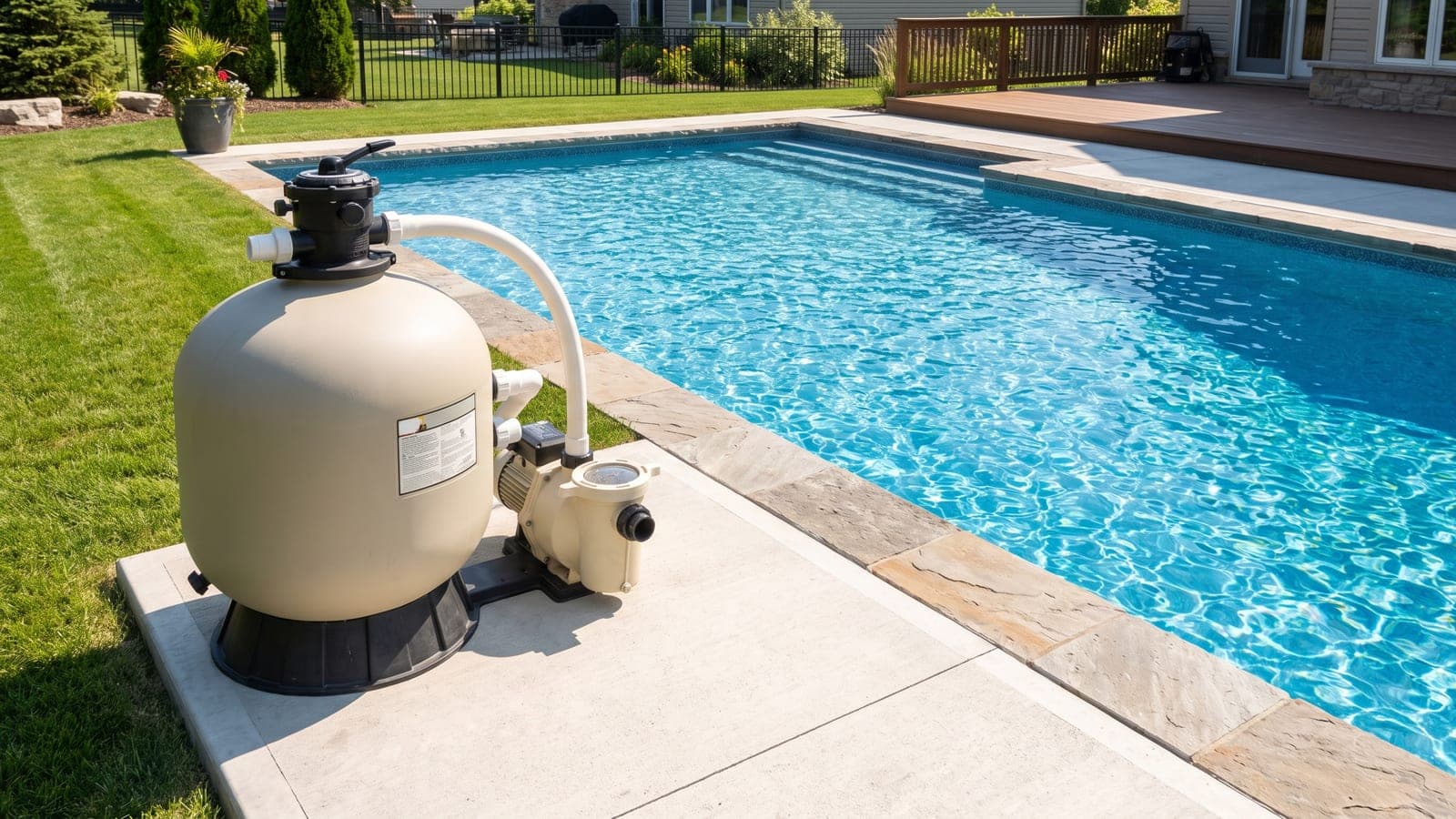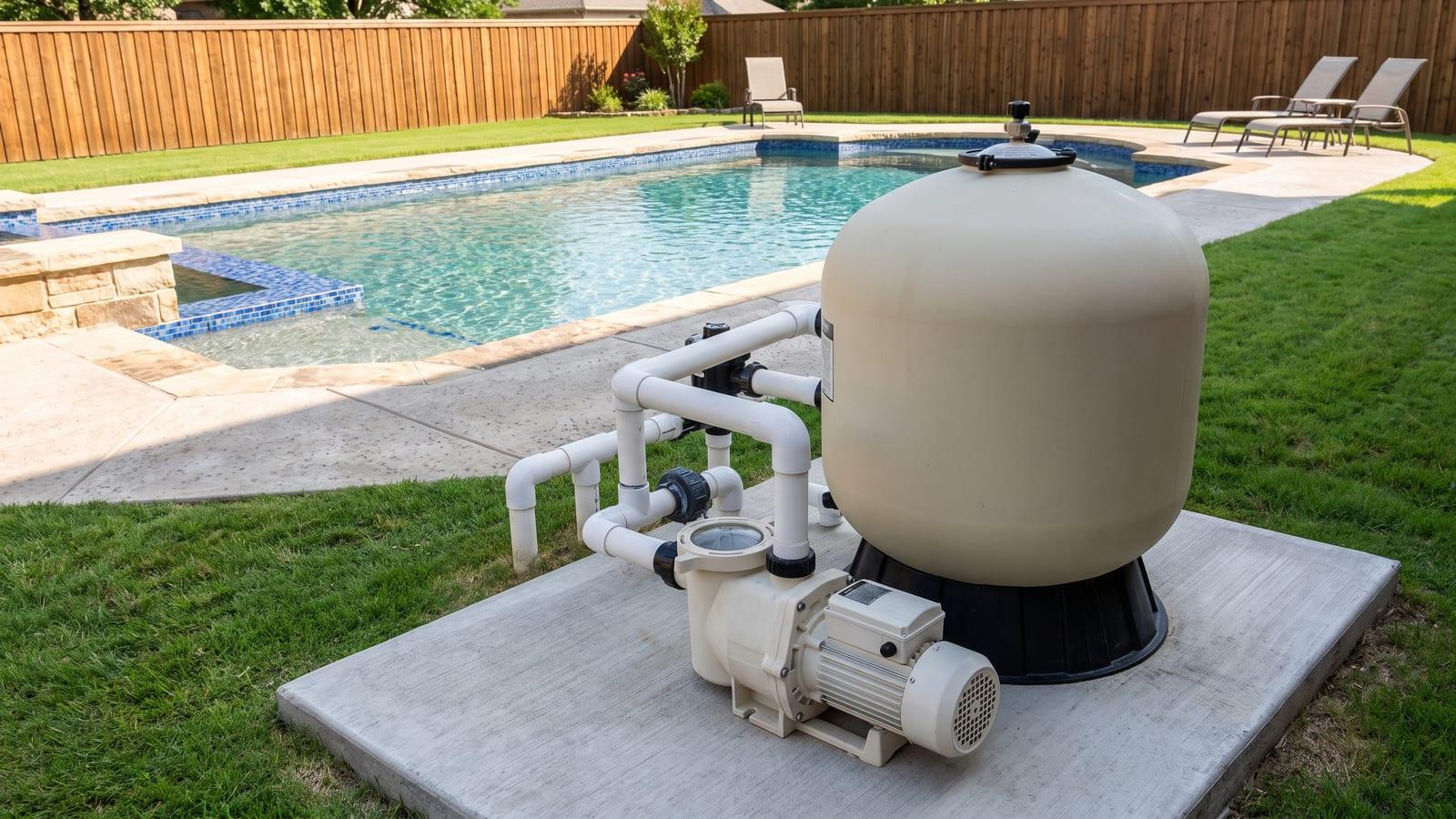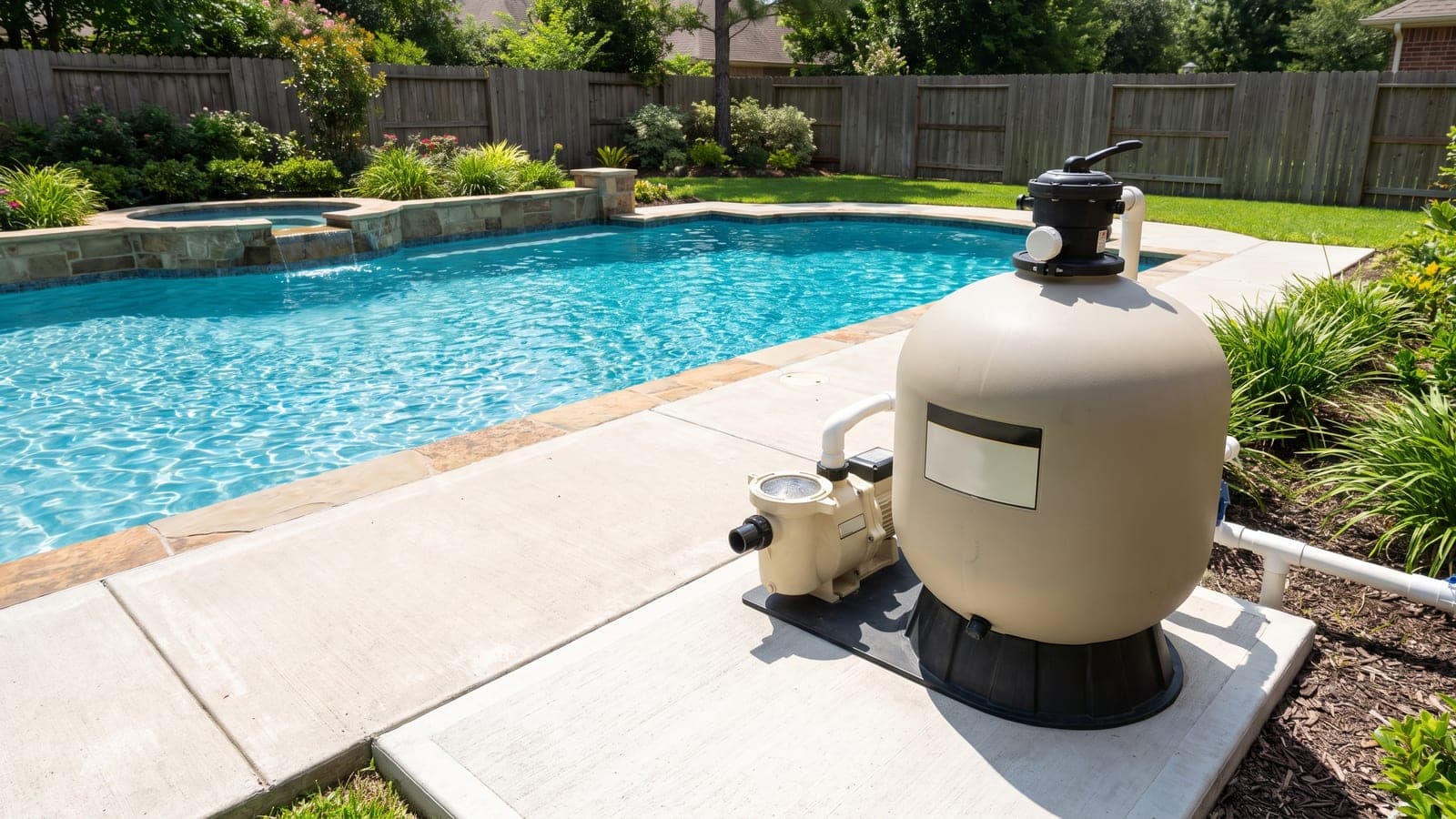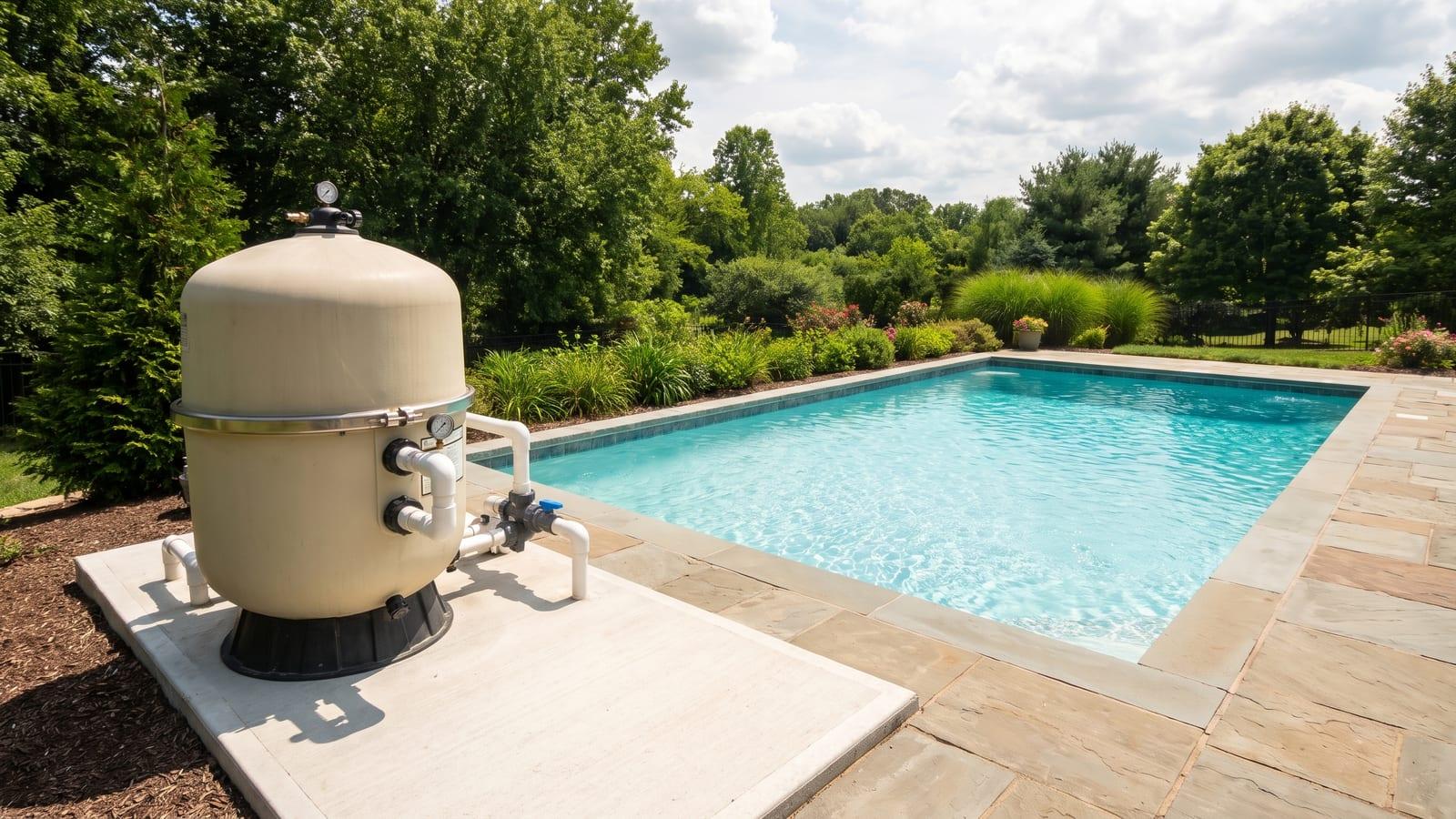
A DE pool filter stays low-mess if you pour the powder into the skimmer as a slurry (mixed with water in a bucket) instead of dumping dry powder near the tank, and if you backwash by pressure reading rather than habit. DE stands for diatomaceous earth, a fine white powder made of fossilized algae that coats the filter grids and traps very small dirt particles. It gives you the clearest water of the three common filter types, but it earns its reputation for mess if you rush the steps.
Here is how to run the whole maintenance cycle without wearing half a bag of powder.
What does a DE filter actually do?
Inside the tank sits a set of grids, which are plastic frames covered in fabric. You add DE powder through the skimmer, and the pump pulls it in so it coats those grids in a thin white layer. Water passes through, dirt sticks to the powder, and clean water returns to the pool.
Over time the coating loads up with debris and pressure climbs. That rising pressure is your main maintenance signal, so a working gauge matters more than any calendar reminder. If your gauge is stuck or foggy, replace it before you trust it.
How do I backwash without a powder cloud?
Backwashing reverses the flow to blow the dirty DE and debris out the waste line. The mess happens when powder puffs up dry, so the fix is to keep everything wet and slow.
Turn the pump off first, every time you move the multiport valve, or you can damage the internal gasket. Set the valve to backwash, roll out the backwash hose so the discharge goes where you want it (not your neighbor's fence), then run the pump for two to three minutes until the sight glass runs clear. Turn the pump off, switch to rinse for 20 seconds, off again, then back to filter.
You just blew out most of your DE, so the grids are now bare and need a fresh charge.
How much DE do I add back?
After a backwash, add about 80 percent of the filter's full charge, because some powder clings to the grids. The exact full amount depends on the filter's square footage and is printed in the manual, so do not guess. A Pentair FNS Plus 48 D.E. Filter (48 sq ft) and a Hayward ProGrid DE4820 D.E. Filter (48 sq ft) both call for a specific pound count that you should confirm on the label, not from memory.
To keep it clean, mix the measured powder into a bucket of pool water until it looks like thin milk, then pour that slurry slowly into the skimmer with the pump running. No cloud, no dusty deck. Wear a dust mask while you measure the dry powder, since DE is a lung irritant.
When do I need to open the tank and deep clean?
Backwashing gets the loose stuff, but oils, sunscreen, and old caked DE build up on the fabric and backwashing never fully clears them. Once or twice a season, or when your clean starting pressure keeps creeping higher, open the tank.
Kill the pump, relieve the air with the top bleed valve, and open the clamp. Lift the grid assembly out, then hose each grid top to bottom to strip the old DE. For a yearly deep clean, soak the grids in a filter cleaner and degreaser to cut oils and scale, then rinse well. While the grids are out, inspect each one for tears and check the manifold for cracks. A torn grid is the number one reason DE blows back into the pool.
Reassemble carefully so every grid seats flat, close it up, and add a fresh full charge of slurry.
Does chemistry affect how the filter runs?
Yes, more than most owners expect. Balanced water keeps scale off the grids and keeps the powder doing its job, and the CDC notes that proper filtration plus disinfection is what actually keeps pool water safe. If your pH and calcium run high, you will scale the grids and deep-clean far more often. Our pool chemistry basics without the lab coat guide walks through the tests to run.
Filter choice also ties into pump behavior. Running a right-sized, efficient pump lowers energy use and eases wear on the whole system, something the Department of Energy covers in its pool pump guidance. If you are still choosing hardware, browse the pool filters options and match the square footage to your pool volume.
The low-mess routine in short
Watch the gauge, backwash at 8 to 10 PSI over clean, recharge with a wet slurry through the skimmer, and open the tank for a hose-down once or twice a season plus a yearly chemical soak. Keep the powder wet and the pump off during valve changes, and the mess mostly disappears.
If you also run a spa, the same wet-and-slow habit applies to its cartridge, covered in hot tub maintenance for beginners without the chemical panic. And if you are on a salt system, the filter care is the same, but your chlorine source differs, which the saltwater pool maintenance for beginners guide explains.
Frequently asked questions
How often should I backwash my DE filter?
Backwash when the pressure gauge reads about 8 to 10 PSI above the clean starting pressure, not on a fixed calendar. Some pools hit that in two weeks, others in six, depending on bather load and how dirty the water gets. Chasing a set schedule usually means you are wasting DE and water.
How much DE powder do I add after backwashing?
Add roughly 80 percent of the full charge after a backwash, since some powder stays in the grids. The full charge depends on your filter's square footage, so check the manual for the exact pound count. Adding too little lets the grids clog fast, and too much can spike your pressure.
Can I skip the deep clean and just keep backwashing?
For a while, yes, but backwashing alone never fully clears oils, scale, and old DE from the grids. Most owners open the tank and hose the grids down once or twice a season, plus a chemical soak once a year. If your clean pressure keeps creeping up over time, it is time to open it.
Why is DE powder blowing back into my pool?
Usually a torn grid, a cracked manifold, or a grid that is not seated right after cleaning. Powder in the pool means water is bypassing the fabric and going straight through. Open the tank, inspect each grid for tears, and reseat everything before adding fresh DE.
Is DE powder dangerous to handle?
Pool-grade DE is a mild lung irritant as a dust, so avoid breathing the cloud and wear a dust mask when you pour it. Keep the bag dry and off to the side while you work. It is not a corrosive chemical like acid, but treat it with the same do-not-inhale respect.