Clean your salt cell only when you see white, crusty scale on the plates, usually every two to three months, using a diluted acid soak. Cleaning a cell that does not need it actually shortens its life, so the honest answer to "how often" is: inspect on a schedule, clean on demand.
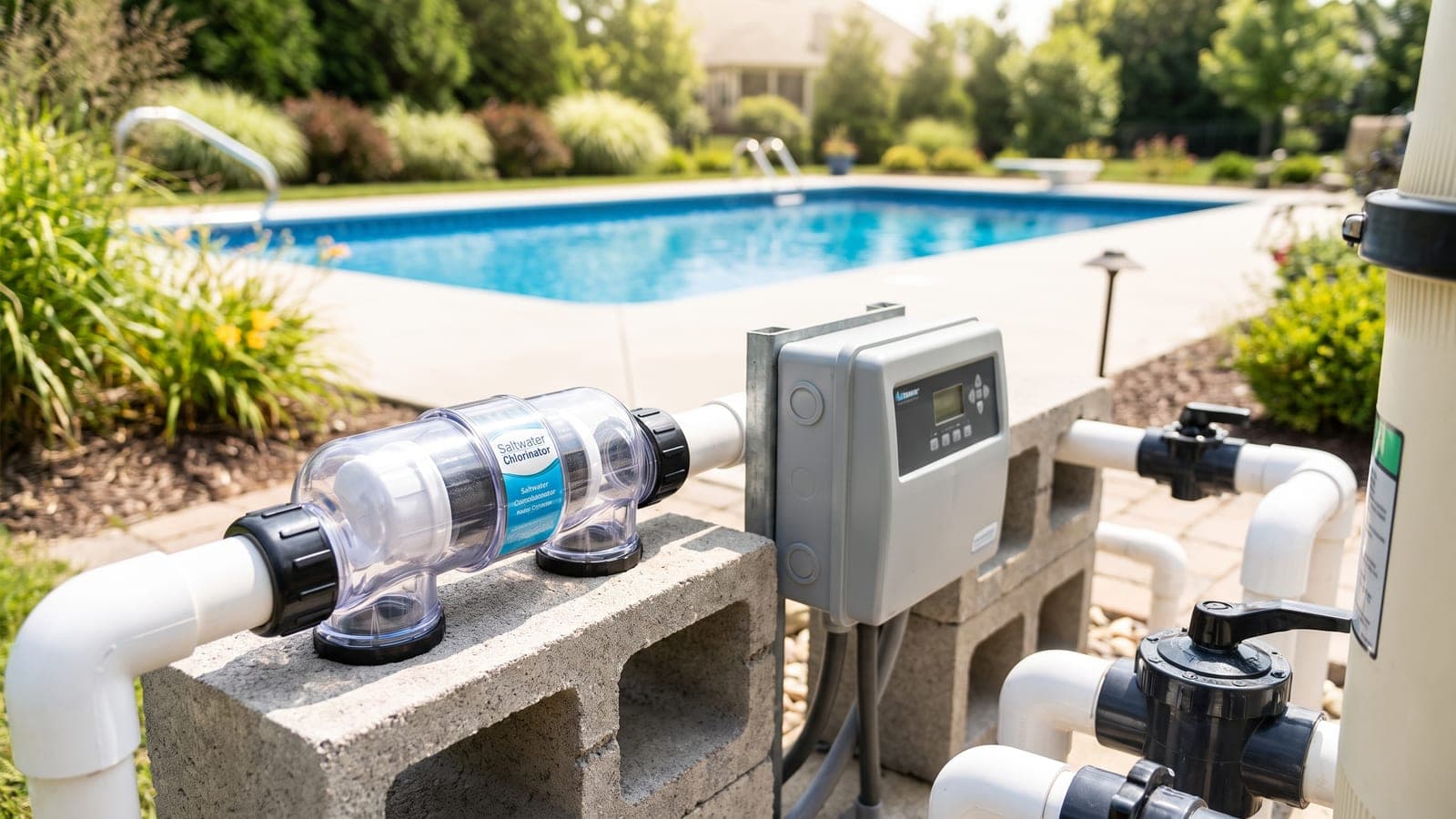
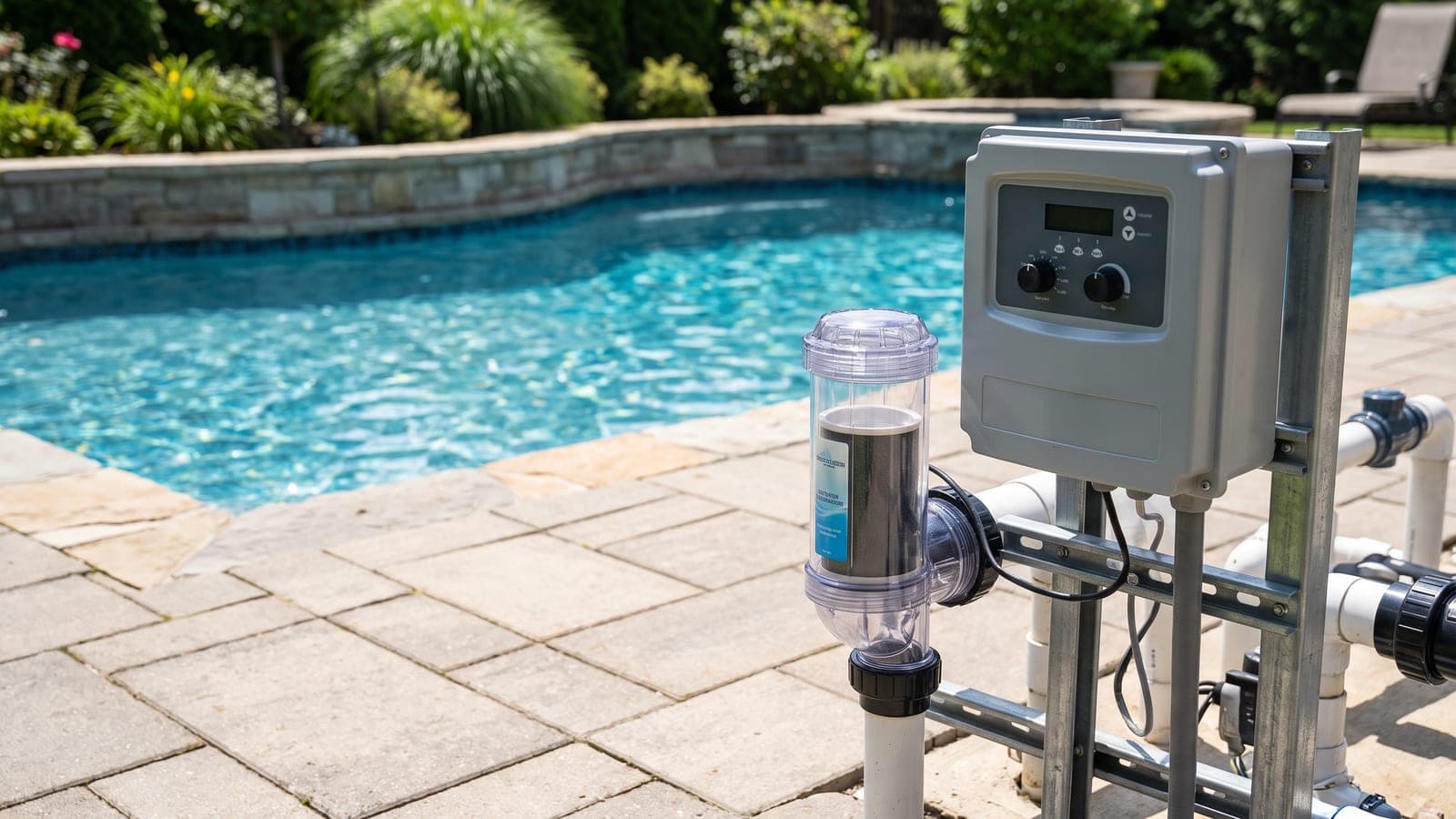
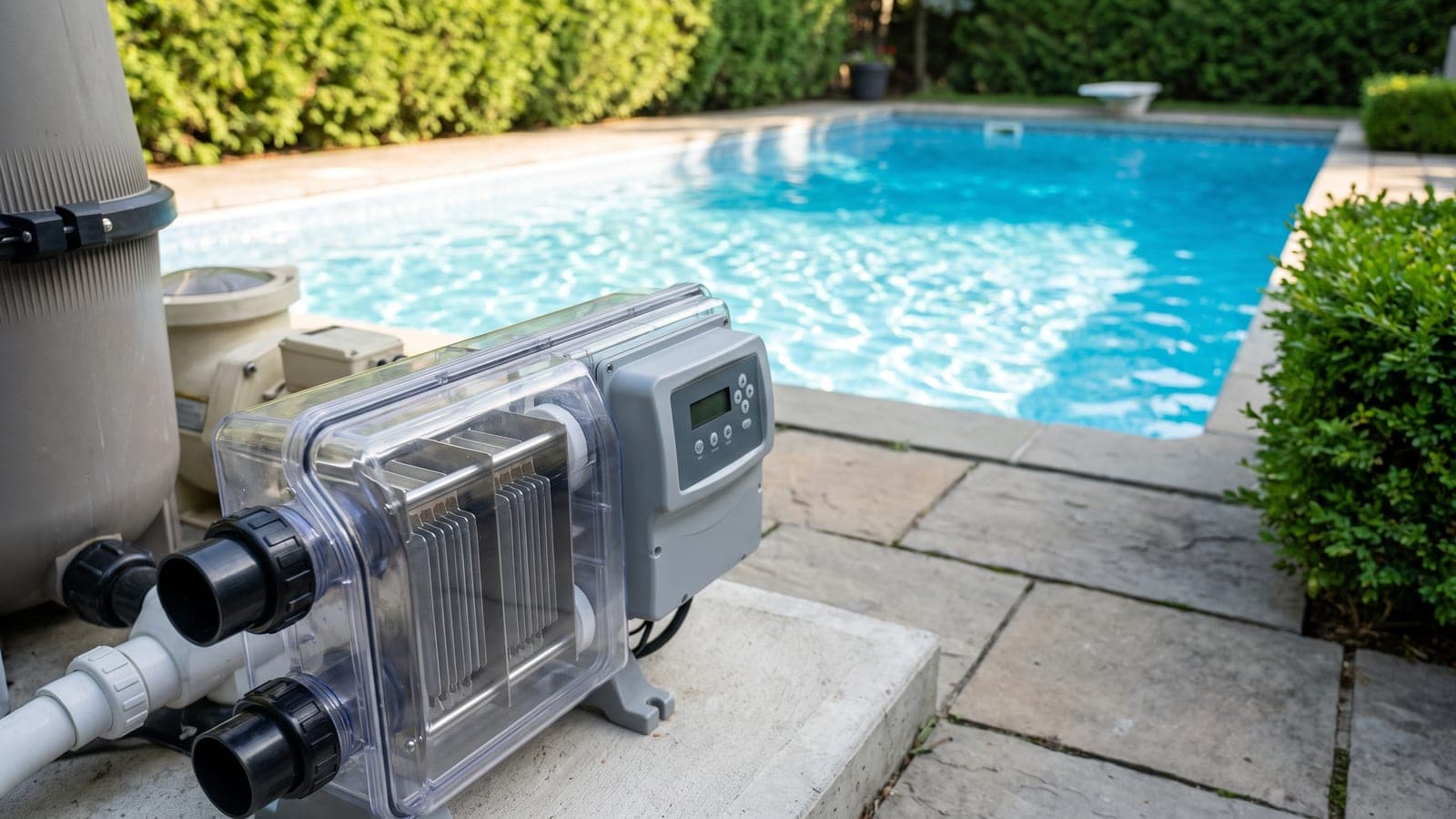
A salt cell (the part of your salt chlorine generator where salt water gets turned into chlorine) has metal plates coated with a thin, expensive layer that does the electrical work. Hard-water minerals, mostly calcium, love to crust onto those plates. Too much scale blocks the reaction, and your generator makes less chlorine or throws a "check cell" or "inspect cell" warning.
How do I know when my salt cell needs cleaning?
Kill power to the system, unscrew the cell, and shine a light between the plates. If they look clean and gray, put it back. You are done. If you see white flaky buildup bridging the gaps, it is time for a soak.
Newer generators help you here. Systems like the Hayward AquaRite Salt System (40,000 gal) and the Pentair IntelliChlor IC40 Salt System track cell condition and flag low output, which is often your first hint that scale is building before you can even see it.
Do not clean on a fixed calendar just because three months passed. In soft, well-balanced water a cell can stay clean for half a year. In hard water with high pH, it might scale in six weeks. Your pool tells you, not a rule.
What do I need to clean a salt cell?
Keep it simple. You need rubber gloves, safety glasses, a bucket or a cell-cleaning stand, muriatic acid, and clean water. A cell stand (a capped section of PVC or a purpose-made cradle) holds the cell upright so the solution covers the plates without spilling.
Muriatic acid is strong stuff. Work outside, add acid to water and never the reverse, and keep it away from your skin, eyes, and metal. Many owners start with plain white vinegar because it is far gentler on the plate coating and often clears light scale on its own.
What is the actual method to clean a salt cell?
Here is the standard acid soak, but always defer to your unit's manual since ratios vary by brand.
- Turn off the generator and the pump. Close the valves around the cell if you have them.
- Unscrew the cell from its unions and lift it out. Rinse loose debris off the plates with a garden hose.
- Mix a cleaning solution of four parts water to one part muriatic acid in your bucket or stand. Water first, then acid.
- Stand the cell in the solution so the plates are covered but the wiring and cap stay dry. Never submerge the electrical end.
- Let it soak. You will see fizzing as the acid dissolves the scale. Ten to fifteen minutes is usually plenty. If it stops fizzing and scale remains, mix fresh solution.
- Pour the used solution back for safe disposal, rinse the cell thoroughly with a hose, reinstall it, open the valves, and restart.
Never scrape the plates with a screwdriver or wire brush. Metal tools gouge the coating, and that coating is the part you paid for. If a stubborn fleck will not budge after two soaks, leave it. A little scale does no harm.
Above-ground and smaller setups follow the same idea. Compact cells on units like the Hayward AquaTrol Above-Ground Salt System come off just as easily, and the reduced plate area means soaks go quickly.
How often is too often for cleaning?
Every soak strips a thin bit of the plate coating along with the scale. Clean a cell that did not need it and you have traded lifespan for nothing. This is the single most common way owners accidentally kill a cell early.
The fix is discipline: inspect every two to three months, but only run acid through it when you genuinely see buildup. If you are reaching for the acid every few weeks, the problem is your water chemistry, not your cleaning habit.
Why does my cell scale up so fast?
Fast, repeat scaling almost always traces back to water balance, not a bad cell. High pH, high total alkalinity, and high calcium hardness all push minerals out of solution and onto the plates.
Keep pH in the 7.2 to 7.6 range and hold your salt and stabilizer where the manufacturer wants them. The CDC's guidance on home pool water treatment is a solid plain-language starting point, and Hayward's salt-level guide explains why the right salt reading matters for cell output. If your numbers wander, our pool chemistry basics without the lab coat guide walks through balancing without the jargon.
Balance the water first and the cell mostly cleans up after itself. Chasing scale with acid while the chemistry stays wrong just wears out the plates faster. For the full routine, see our saltwater pool maintenance for beginners guide, and if you also run a spa, the same scale rules apply in our hot tub maintenance for beginners without the chemical panic guide.
When should I just replace the cell instead?
Cells wear out. Most are rated for a set number of chlorine-producing hours, and once the coating is spent, no amount of cleaning brings the output back. If a freshly cleaned cell still reads low or the generator keeps flagging it, the cell may simply be at the end of its life.
Pentair notes that its IntelliChlor line reports remaining cell life, which takes the guesswork out of this call. When it is time to shop, our salt systems roundup compares current cells so you can match one to your pool size and existing plumbing.
Frequently asked questions
How often should I clean my salt cell?
Inspect it every 2-3 months and clean it only if you see white scale on the plates. Many cells in balanced water go 6 months or longer between real cleanings, so let the plates tell you rather than the calendar.
Can I clean a salt cell without taking it apart?
Some cells let you pour diluted acid into the cell while it sits upright in a stand or capped pipe. It works, but removing the cell and inspecting the plates directly is safer and lets you confirm the scale actually came off.
What acid should I use to clean a salt cell?
A 4-to-1 water-to-muriatic-acid mix is the standard, though many owners prefer a milder vinegar soak first since it is gentler on the plates. Always check your manual, because some manufacturers specify a weaker ratio or a branded cleaning solution.
Will cleaning the cell too often damage it?
Yes. Acid strips a little of the plate coating every time, so cleaning a clean cell shortens its life for no benefit. Only soak when you actually see scale, and use the mildest solution that removes it.
Why does my salt cell keep scaling up so fast?
Frequent scale usually points to high pH, high calcium hardness, or high alkalinity, not the cell itself. Balance your water first, because chasing scale with acid soaks while the chemistry stays off just wears the cell out faster.