If you want to replace a salt cell without overpaying, do three things in order: confirm the cell is actually dead, match the exact model and pool size, then buy the right cell (OEM or a trusted compatible) instead of a whole new system. Most owners who overpay skip step one and replace a cell that just needed cleaning, or panic-buy a full system when only the cell was worn out.
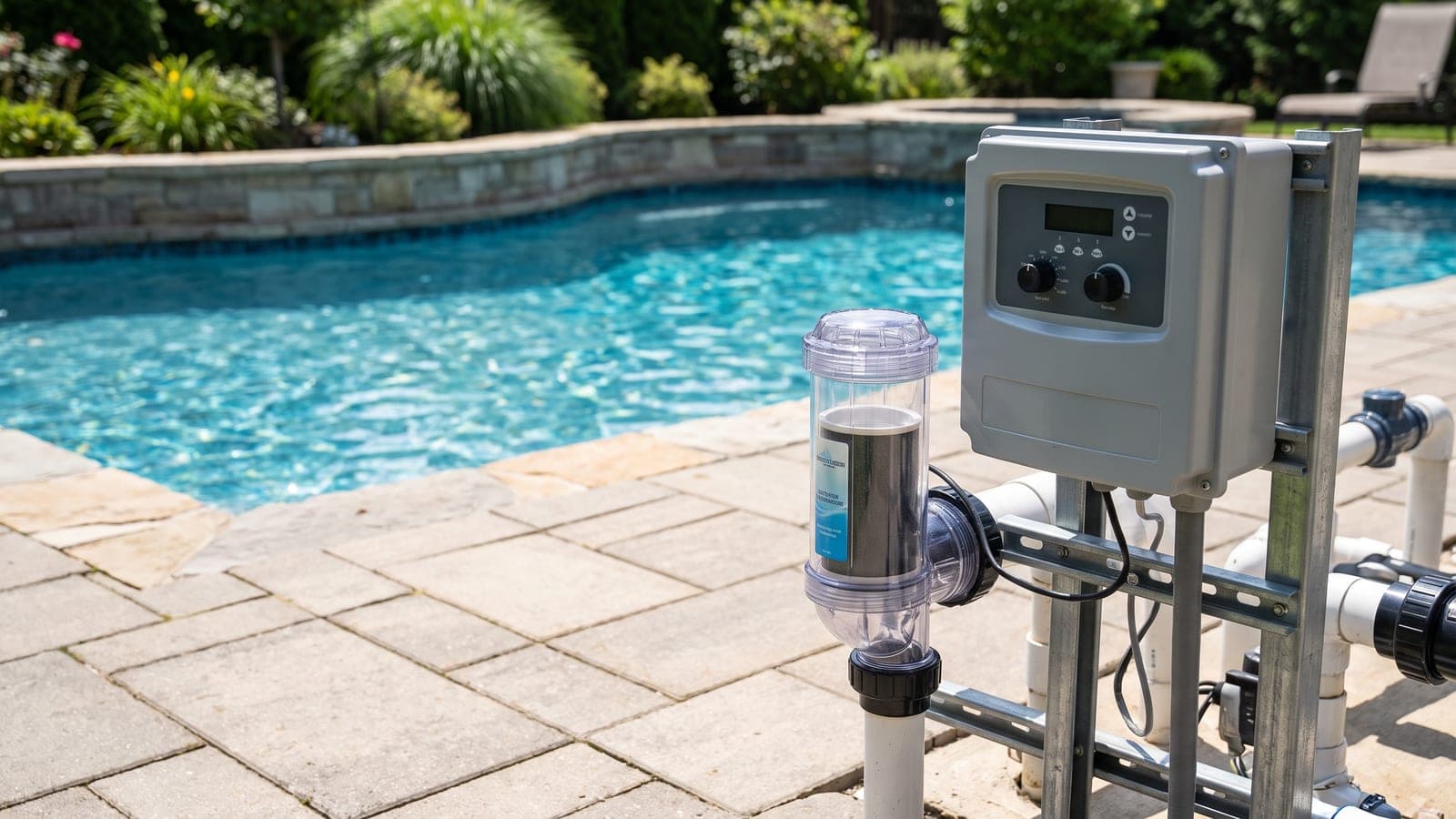
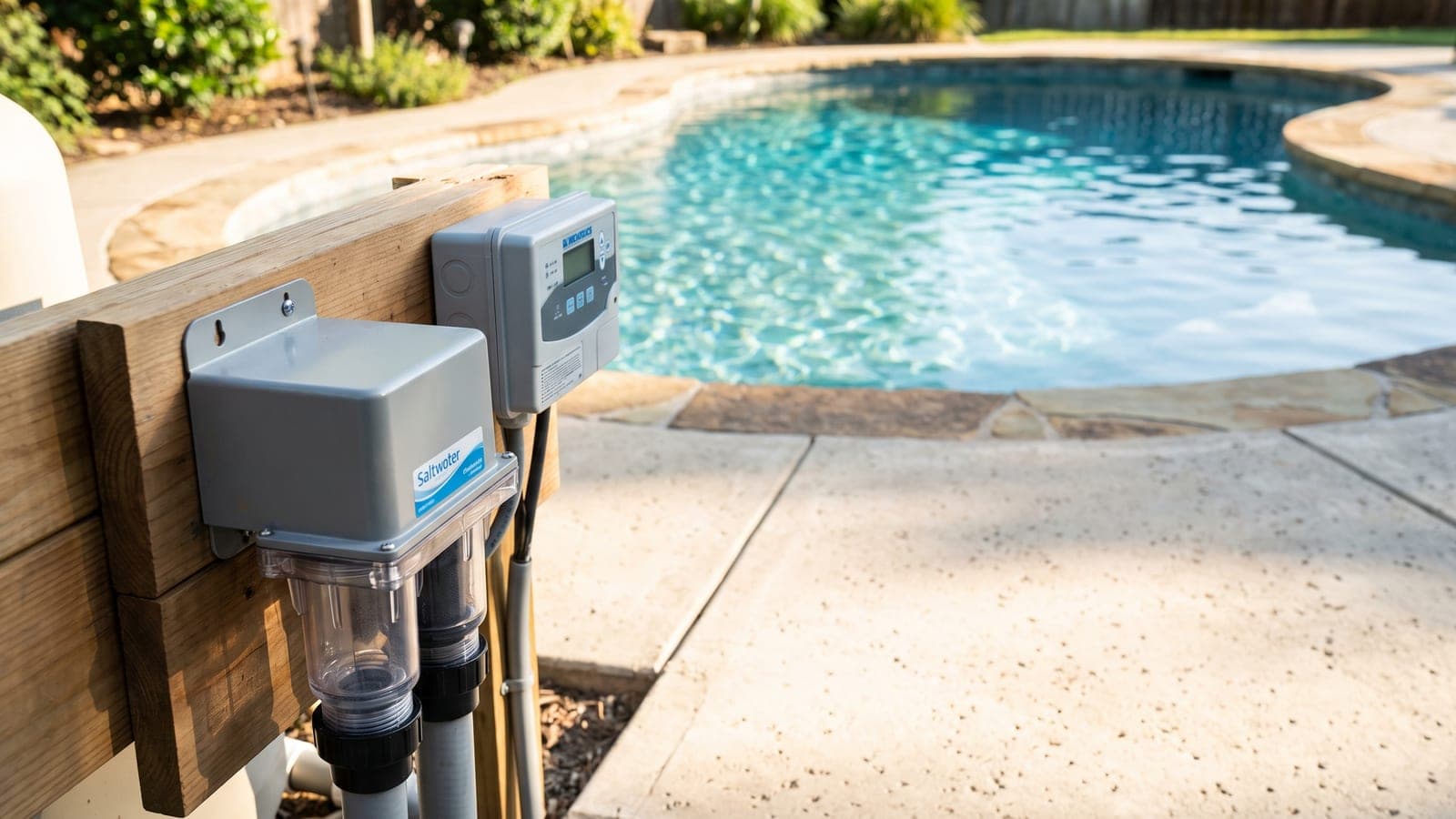
A salt cell is the part of a saltwater chlorine generator that turns dissolved salt into chlorine as water passes over its metal plates. It is a wear item, like brake pads. The control box (the brain on the wall) usually outlives several cells, so replacing the cell alone is the cheaper, smarter move most of the time.
How do I know the cell is really dead?
Before you spend anything, rule out the two cheap fixes. First, clean the cell. Scale buildup (white crusty calcium on the plates) blocks chlorine production and fakes a dead cell. Turn off the pump, remove the cell, and rinse or soak it per your manual. Many systems have an inspect or diagnostic mode that lets you see the plates and check for scale.
Second, check your salt level. A cell cannot make chlorine from water that is low on salt. Test with salt strips or a digital meter and compare to the range your manual lists. Hayward, for example, targets around 3,200 ppm for many of its systems, and adding salt is far cheaper than a new cell (see Hayward's salt guide in the sources).
If the cell is clean, the salt is in range, and the system still shows low output or a cell error, then the cell is the likely problem. That is the point where replacing it makes sense.
How do I match the right replacement cell?
This is where overpaying happens, so slow down. A salt cell has to match your control box brand, model, and connector, plus your pool volume in gallons. A cell sized for 15,000 gallons on a 30,000 gallon pool will run constantly and wear out fast.
Find your model number on the cell label or in the manual, then buy the cell built for that system. A Hayward AquaRite Salt System (40,000 gal) owner replaces with the T-Cell rated for that box, not a random universal part. Same idea for a Pentair IntelliChlor IC40 Salt System owner, who wants the IC40 cell, not a smaller IC unit. Pentair's IntelliChlor product page (in the sources) shows how the LT and standard lines differ by pool size.
If you own a smaller or above-ground setup, match down accordingly. A Pentair IntelliChlor LT15 Salt System or an Intex Krystal Clear Saltwater System (15,000 gal) uses a smaller, cheaper cell, and you do not need a 40,000 gallon part.
Should I buy OEM or a compatible cell?
Both can be right, depending on what you value. OEM (the original manufacturer's cell) guarantees fit and usually preserves any system warranty, but it costs more. A reputable compatible or aftermarket cell can cost noticeably less and still work well, as long as the listing confirms it matches your exact box and connector.
Read the fit notes carefully. Look for your exact model called out by name, matching plate count, and the correct cord and union size. If the listing is vague about compatibility, skip it. You can browse salt systems and cells on our salt systems product page to compare sizes and connectors.
One honest tradeoff: some compatible cells carry shorter warranties. If your pump runs long hours in hard water, a slightly pricier cell with a longer warranty can be the cheaper choice over a few years.
When is it smarter to replace the whole system?
Sometimes the math flips. If your control box is also failing, is very old, or parts are discontinued, a new full system can cost only a bit more than a premium cell and resets the warranty on everything. Systems like the CircuPool Universal40 Salt System or Jandy TruClear Salt System (35,000 gal) are sold as complete units when a full refresh makes sense.
The tell is simple. If only the cell is worn and the box works, replace the cell. If the box throws random errors, has corroded terminals, or no longer supports a compatible cell, price out a full system and compare. Do not let a store upsell you into a new box when your board is fine.
How do I actually swap the cell?
The physical job is short and dry. Turn off the pump and the salt system. The cell sits in the plumbing after the filter, held by two unions (the big threaded collars). Unscrew both, lift the old cell out, and note the flow-direction arrow.
Slide the new cell in facing the same direction, replace or reseat the union o-rings so they do not leak, and hand-tighten the unions. Reconnect the cell cord to the box, turn the pump back on, and check for leaks. Then set the correct model or pool size if your box asks, and let the water circulate before judging output.
Give it time. A new cell will not fix low salt, so test and balance your water first. For the full routine, see saltwater pool maintenance for beginners and the broader pool chemistry basics. Keeping chlorine and pH in the CDC's recommended ranges (linked in the sources) protects both swimmers and your new cell. If you also run a spa, the same salt logic shows up in hot tub maintenance for beginners.
The short version
Do not replace what you can clean, do not oversize or undersize the cell, and do not buy a whole system when only the cell is tired. Confirm the diagnosis, match the model and gallons, weigh OEM against a trusted compatible, and the swap itself takes about fifteen minutes. That is how you replace a salt cell without handing over money you did not need to spend.
Frequently asked questions
How long should a salt cell last before I replace it?
Most cells are rated for roughly 3 to 7 years, often quoted as 8,000 to 15,000 running hours in the manual. The real number depends on how many hours a day you run it, your water balance, and how often you clean scale off the plates. Heavy use or hard water shortens that life.
Can I use a cheaper aftermarket cell instead of the OEM one?
Sometimes, yes. Compatible cells from reputable brands can work with popular systems and cost less, but fit and warranty vary, so read the listing to confirm it matches your exact control box and connector. If you want the manufacturer warranty honored, the OEM cell is the safe pick.
How do I know it is the cell and not the control box?
Run the diagnostic or inspect cell menu if your system has one and look for low or no salt readings even when your salt is correct. Clean the plates and retest first, because scale mimics a dead cell. If a cleaned, correctly salted cell still will not produce chlorine, the cell is the likely culprit, but a pro can confirm the board.
Do I need to drain the pool to replace a salt cell?
No. The cell sits in the plumbing after the filter, so you just turn off the pump, close any valves or plan for a little spillage, and unscrew the unions. It is a dry, quick swap once the pump is off.
Why does my new cell still show low salt?
Usually the water itself is low on salt or the reading needs time and flow to settle. Test your actual salt level with strips or a meter and add salt to the range in your manual, then let it circulate. A brand new cell cannot fix water that is short on salt.