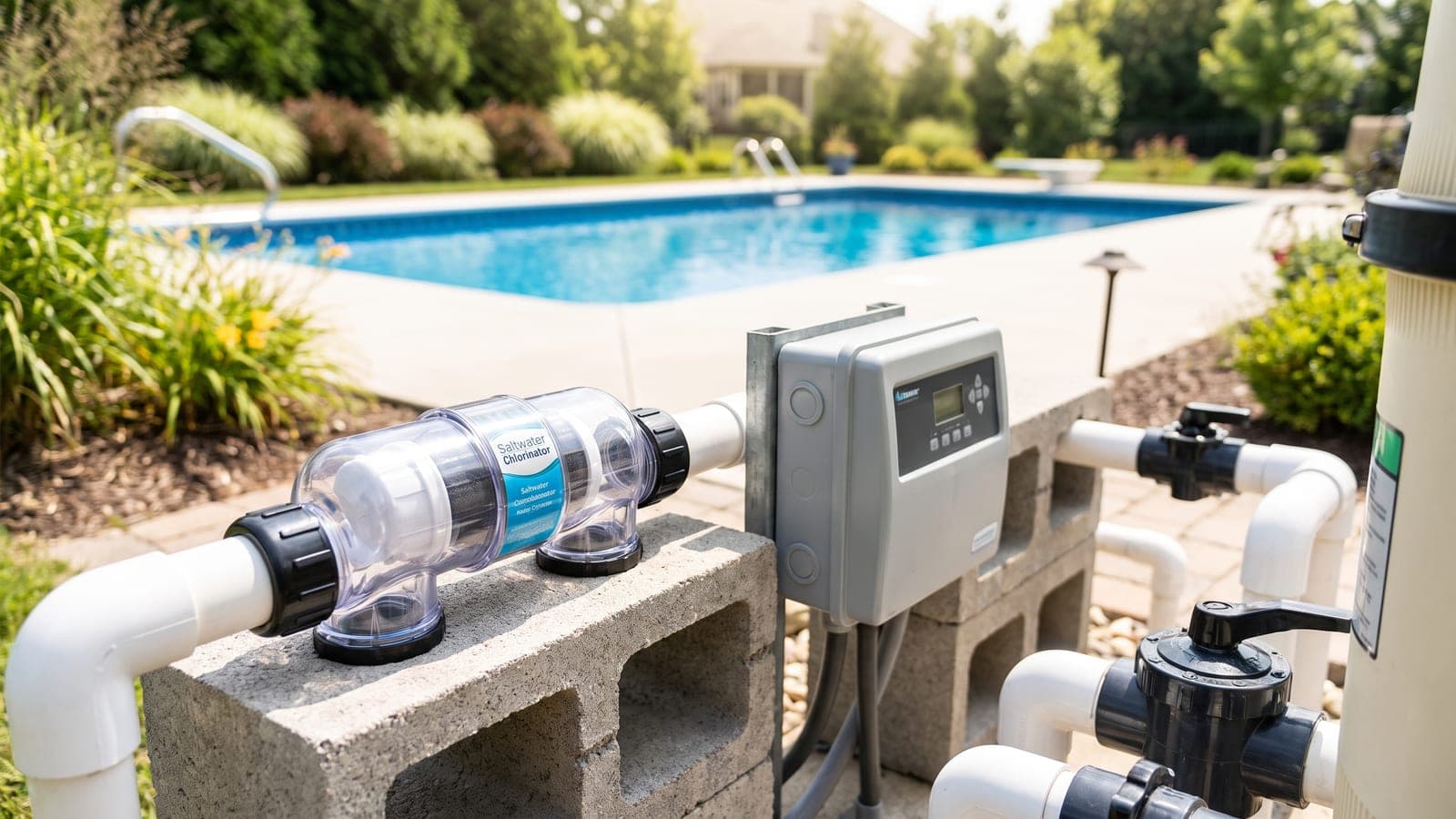
Turn off chlorine generation once the water drops below about 60 degrees, and if you are fully closing the pool, remove the salt cell and store it indoors so it never sits in freezing water. That is the short version. A salt cell (the part that turns dissolved salt into chlorine) stops working in cold water and can crack if water freezes inside it, so winter is mostly about protecting the cell, not running it.
Why does the salt cell stop making chlorine in winter?
Salt chlorine generators need reasonably warm water to work. The electrolysis process that splits salt into chlorine slows down as water cools, and most systems have a built-in low-temperature cutoff. Once the water falls below roughly 50 to 60 degrees, the unit either produces very little chlorine or shuts generation off entirely to protect the plates.
This is normal and by design. Running the cell hard in cold water does not force more chlorine out, it just wears the electrodes. So when your controller shows a low-temp or "no flow at temperature" message in late fall, that is the system doing its job.
Do I leave the cell in or take it out?
This depends on whether you are closing the pool or keeping it open.
If you fully winterize (drain the equipment pad, blow out the lines, and cover the pool), take the cell out. Any water trapped inside a cell can freeze, expand, and crack the housing or bend the plates. Replacing a cell is one of the more expensive parts of owning a salt pool, so this five-minute step protects real money.
If you live somewhere that rarely freezes and you keep the pump running all winter, you can leave the cell in place. Just turn off chlorine generation (or drop the output to its lowest setting) once the water is cold. Systems like the Hayward AquaRite Salt System (40,000 gal) and the Pentair IntelliChlor IC40 Salt System have controls that make this easy, and your manual will list the exact temperature behavior for your model.
How do I remove and store the cell?
Once the pump is off and pressure is released, disconnect the unions on either side of the cell and lift it out. Look inside at the plates.
If you see white, crusty scale, it is worth a cleaning. Use a cell cleaning stand or a bucket with the manufacturer's recommended acid-and-water mix, never straight acid, and never more often than the plates actually need it. Hayward publishes salt and maintenance guidance that is a good sanity check on dosing and cleaning intervals. If the plates look clean and gray, just rinse and move on.
Let the cell dry, then store it indoors somewhere it will not freeze, like a garage shelf or utility closet. Cap the ends or bag it so debris stays out. That is really all a cell needs over winter.
What about chlorine while the cell is off?
With the generator idle, you need another way to keep the water sanitary.
For a closed pool, add a winterizing chemical kit or a proper dose of shock right before you cover it, following label directions for your pool volume. The CDC's home pool guidance is a solid reference on keeping treated water safe. A good cover then keeps sunlight and debris out so that chlorine lasts.
For a pool that stays open through a mild winter, you may occasionally add liquid chlorine by hand on the coldest days when the cell cannot keep up. Test your free chlorine, pH, and salt level regularly. If salt chemistry still feels fuzzy, our saltwater pool maintenance for beginners guide and the broader pool chemistry basics without the lab coat explainer both walk through the numbers.
What should I check before closing up?
Balance the water first. Get pH, alkalinity, and calcium hardness into range, and confirm salt is where your unit wants it (many target around 3,000 to 3,400 ppm, but check your manual). Balanced water is easier on both the cell and the pool surface all winter.
Then power down the salt system at the breaker or controller so it does not try to fire up during a random warm afternoon. If you are new to salt systems in general and want to compare units before a spring upgrade, our salt systems roundup lays out the common models. And if you also run a spa, the same cold-water logic applies, which our hot tub maintenance for beginners without the chemical panic guide covers.
The bottom line
Winter salt cell care comes down to three moves: stop generating chlorine when the water gets cold, protect the cell from freezing (remove and store it if you are draining the lines), and keep the water sanitary another way until spring. Do those, and your cell will be ready to make chlorine again the moment the water warms up.
Frequently asked questions
Do I have to take the salt cell out for winter?
If you fully close and drain the plumbing, yes, remove the cell so it does not sit in freezing water. If you keep the pump running through a mild winter, you can leave the cell in place and just turn off chlorine generation when the water drops below about 60 degrees. Check your system manual for the exact cutoff temperature.
Will cold water damage my salt cell?
Cold water itself does not hurt the cell, but water freezing inside it can crack the housing and plates. Most systems stop producing chlorine on their own below roughly 50 to 60 degrees to protect the electrodes. The real risk is standing water freezing, so drain the cell if there is any chance of a hard freeze.
Should I clean the cell before storing it?
Inspect it first, and only acid-wash if you see white scale buildup on the plates. A cell going into clean storage does not always need a chemical bath, but it is a convenient time to do one if it is due. Rinse well and let it dry before storing indoors.
Can I keep swimming or running the salt system all winter?
In warm climates that never freeze, many owners run the system year round and just lower the output. In cold climates the generator will not make meaningful chlorine once the water gets cold, so you switch to a winterizing routine instead. It depends entirely on your local low temperatures.
How do I keep chlorine up if the cell is off?
For a closed pool, a winterizing kit or a dose of non-chlorine or chlorine shock before covering usually holds the water until spring. For a pool that stays open in a mild winter, you may add liquid chlorine manually on cold days when the cell is idle. Test regularly and follow label directions.