High pool filter pressure almost always means your filter is dirty and needs cleaning or backwashing. The gauge on the tank is reading the resistance water fights against as it passes through the filter media. As debris builds up, that resistance climbs, and the needle rises. In most cases the fix is a routine cleaning, not a repair.
Let's walk through what the number means, when to act, and the exact steps to bring it back down.
What is the filter pressure gauge actually telling me?
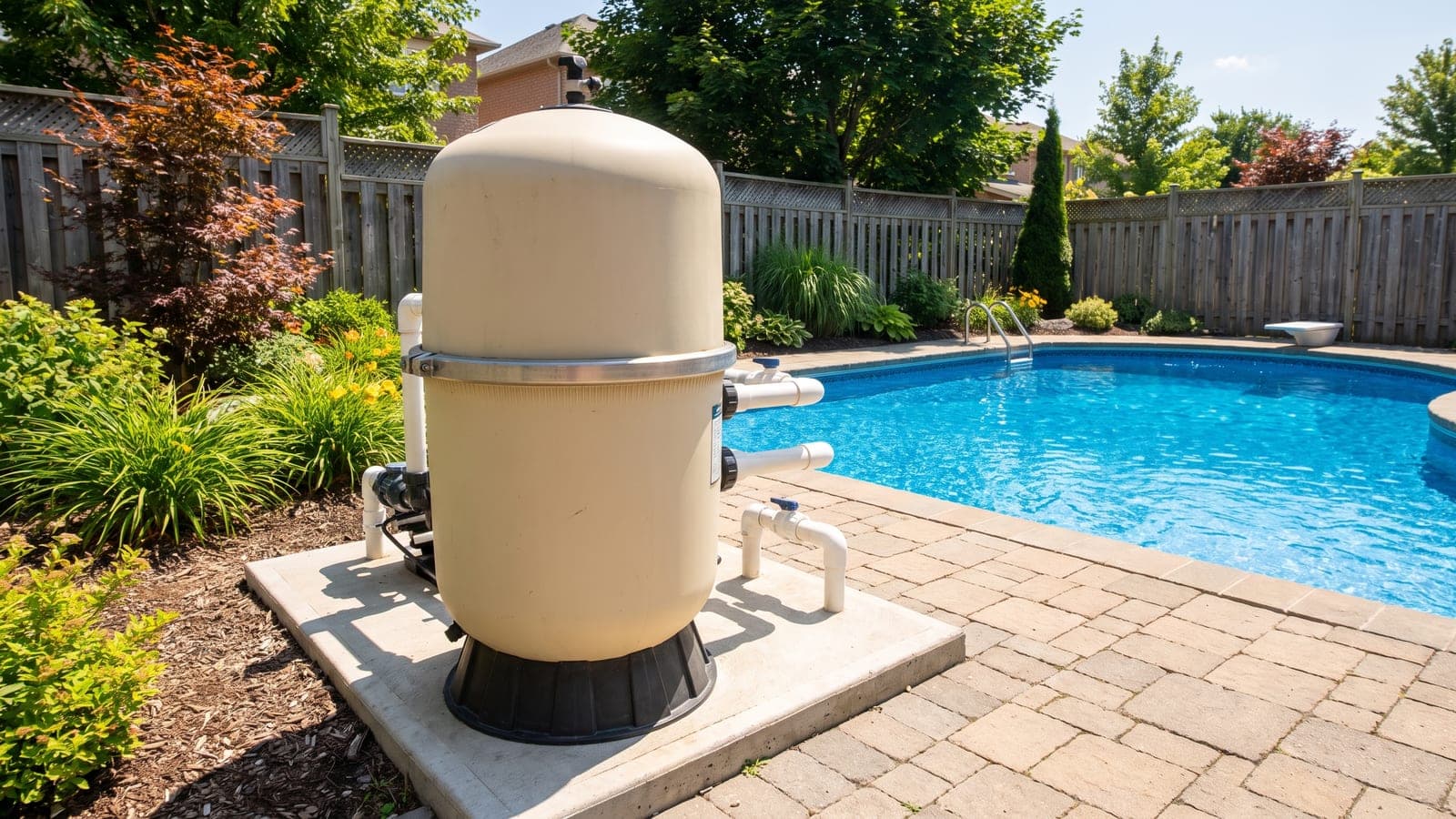
The gauge measures pressure in psi (pounds per square inch) at the top of your filter tank. Clean filter media lets water flow through easily, so pressure stays low. Trapped dirt, oils, and debris narrow the paths water can take, so pressure rises.
The key idea is your clean baseline. Right after you clean or backwash the filter, note the reading. That is your normal number, whether it is 10, 15, or 20 psi. Every filter and plumbing setup is different, so your baseline is the only number that matters for you.
When the gauge climbs 8 to 10 psi above that clean baseline, the filter is telling you it is loaded up and ready for service. Watch for a slow creep over days or weeks, which is normal, versus a sudden jump, which points to a valve or blockage.
Why did my pool filter pressure suddenly get high?
A slow rise is expected as the filter does its job. A fast spike usually means something changed. Common causes:
- A dirty filter that has simply reached its cleaning point.
- A closed or partly closed valve on the return side after the filter.
- A clogged filter cartridge, dirty D.E. grids, or channeled sand.
- Debris jammed in the plumbing after heavy leaves, algae, or a storm.
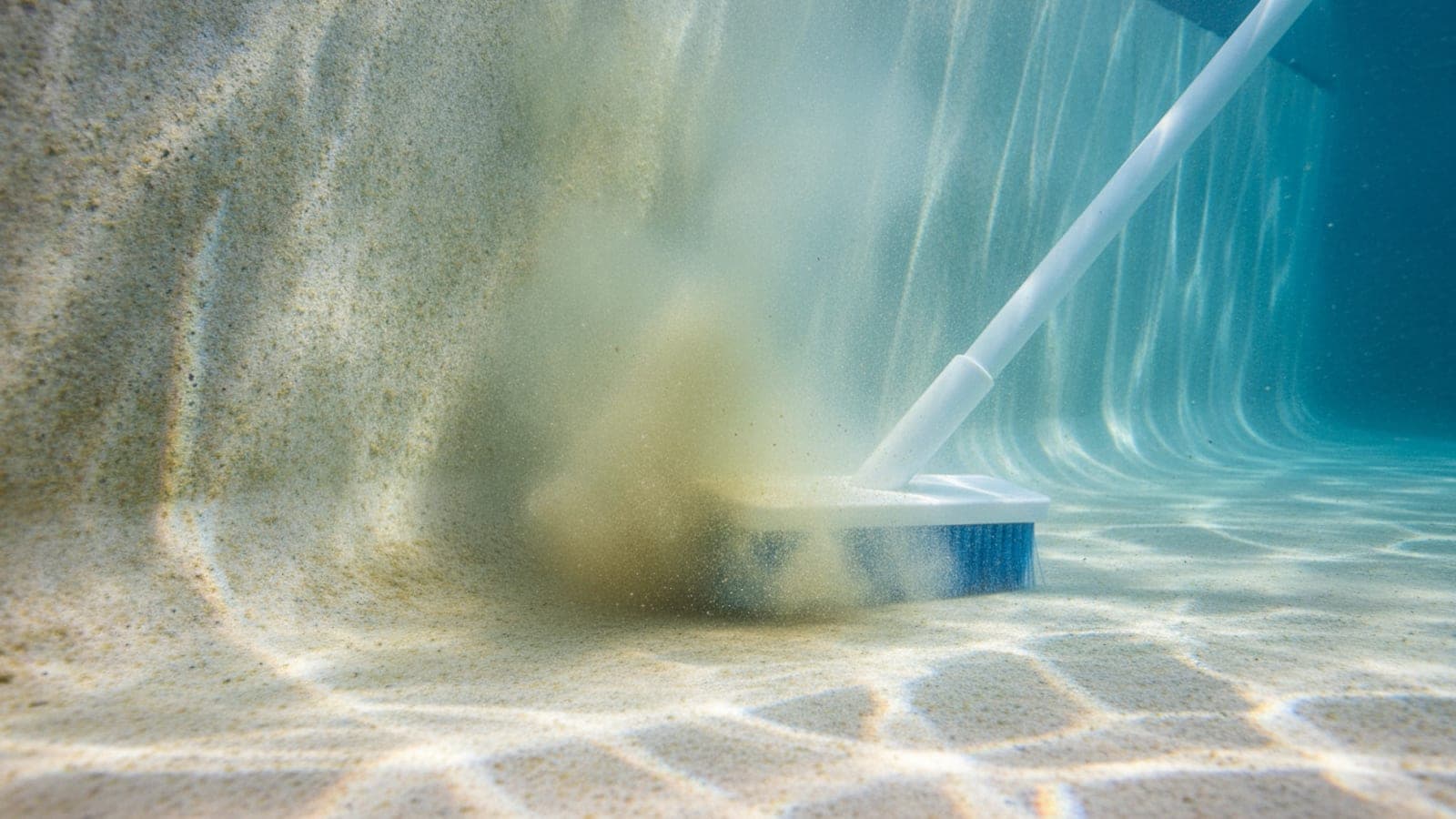
- A recent algae treatment or heavy swimmer load dumping fine particles into the media.
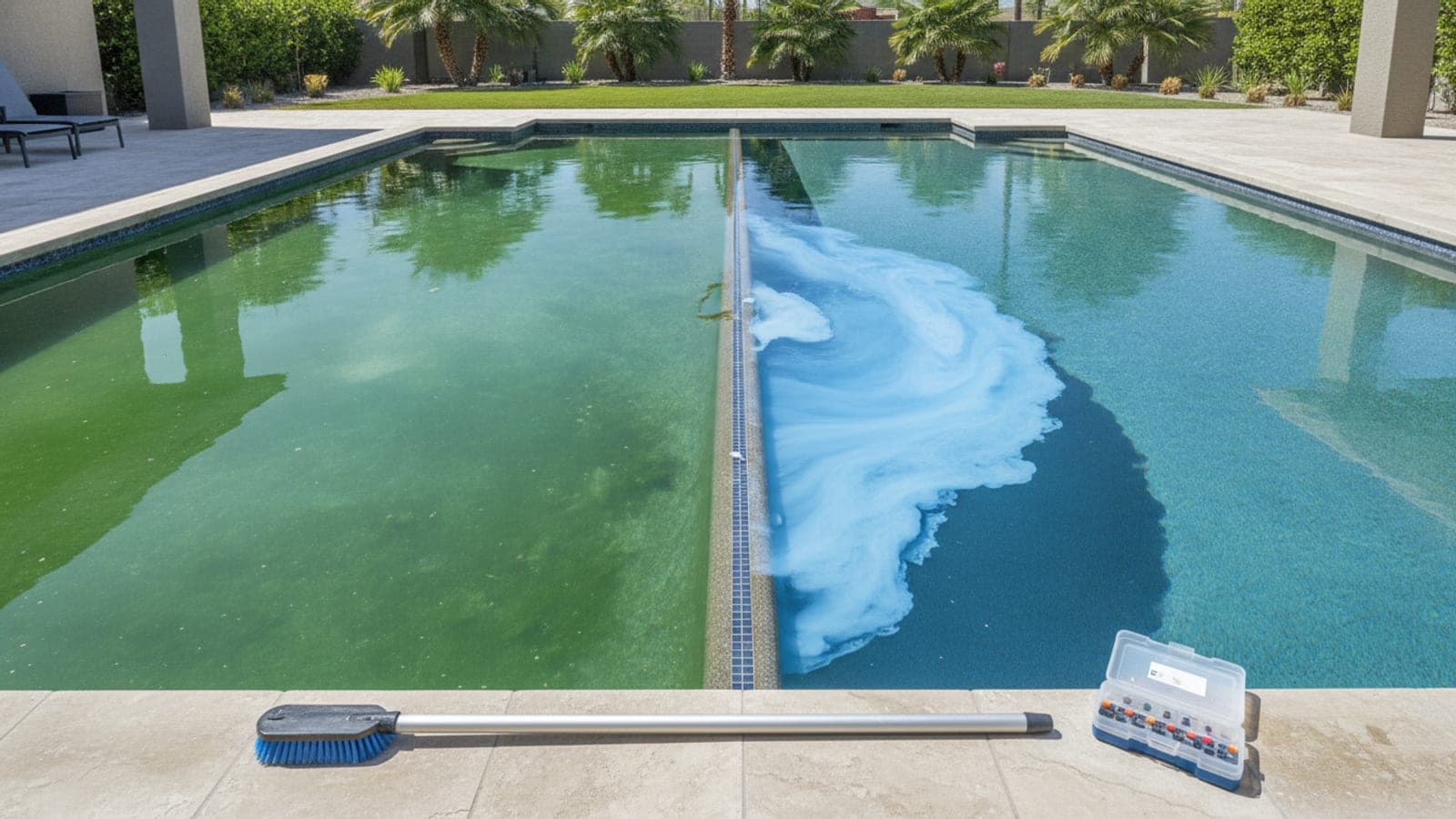
If you just shocked the pool or cleared an algae bloom, expect pressure to rise faster than usual because the filter is catching all that fine matter. That is good filtration, and it means more frequent cleaning until the water clears. For a refresher on balancing water so algae does not keep coming back, see our pool chemistry basics guide.
How do I lower my pool filter pressure step by step?
Start simple and work up. Most of the time step one solves it.
- Turn off the pump before touching any valve or lid. Never open a pressurized filter.
- Confirm the reading. With the pump off, the gauge should drop to near zero. If it does not, the gauge may be stuck.
- Check the valves. Make sure return-side valves are fully open and nothing downstream is closed.
- Clean the filter based on its type (see below).
- Restart the pump, let it prime, and read the new pressure. It should be back near your clean baseline.
If pressure is still high after a thorough cleaning, look for a blockage in the plumbing or a valve you missed. A stubborn high reading with weak return jets points to a flow restriction worth tracing.
How do I clean each type of filter?
Your steps depend on which filter you have. All three types live in our pool filters lineup.
Sand filters get backwashed. You reverse the water flow to flush trapped debris out to waste, then rinse and return to filter mode. Models like the Hayward Pro Series S244T Sand Filter (24 in) or the Pentair Tagelus TA60D Sand Filter use a multiport valve for this. Backwash when pressure hits that 8 to 10 psi rise, not on a fixed calendar. Sand itself typically lasts several years before it needs replacing.
Cartridge filters are removed and rinsed. You pull the cartridge and hose it down, working between the pleats to clear trapped gunk. A larger cartridge like the Hayward SwimClear C3030 Cartridge Filter (325 sq ft) holds more dirt and goes longer between cleanings than a small one. For oils and deep grime, soak the cartridge in a filter cleaner solution, then let it dry.
D.E. filters (diatomaceous earth) are backwashed like sand, then recharged with fresh D.E. powder through the skimmer. After a few backwashes, most manuals recommend a full teardown and grid rinse. Always follow your model's manual for the exact D.E. amount, since overloading causes its own pressure problems.
Whatever the type, check your gauge after cleaning. If the needle does not fall back near baseline, the media may be near the end of its life or something else is restricting flow.
When should I replace the gauge or call a pro?
Sometimes the gauge itself is the problem. If the needle does not drop to zero with the pump off, or it never moves at all, it is likely dead. A replacement gauge is inexpensive and easy to swap, so do not chase phantom problems with a broken one.
Call a pro when pressure stays high after cleaning and you cannot find a closed valve or blockage, when you see cracks or leaks on the tank, or when the pump is running hot or loud. Efficient flow matters for both cost and equipment life, and the U.S. Department of Energy notes that a right-sized, well-maintained pump system runs far more efficiently, which you can read about in their pool pump guide.
Good filtration is also a health basic. The CDC points out that proper circulation and filtration work alongside chlorine to keep water safe, covered in their pool and hot tub water treatment guidance. A filter that is choked with debris is not moving water the way it should, so keeping pressure in range is part of keeping the water clean.
The short version
High filter pressure is usually your filter asking for a cleaning, not a sign of failure. Learn your clean baseline, clean or backwash when the gauge climbs 8 to 10 psi above it, and check valves and the gauge itself before assuming something is broken. The same watch-the-pressure habit applies to a spa, which we cover in our hot tub maintenance guide, and to salt systems in our saltwater pool maintenance guide. Keep the baseline in mind and the gauge becomes one of the easiest tools you own.
Frequently asked questions
What is a normal pool filter pressure?
There is no single right number, because it depends on your filter, pump, and plumbing. The rule that matters is your own clean starting pressure, and you clean when it climbs 8 to 10 psi above that. Note the clean reading right after a filter cleaning so you have a baseline to compare against.
How high is too high before I should worry?
Most owners clean the filter when the gauge reads about 8 to 10 psi over the clean baseline. Well past that, you risk poor flow, strained equipment, and even a burst filter tank. If pressure spikes suddenly rather than creeping up slowly, stop the pump and look for a closed valve or blockage.
Does high pressure mean my filter is broken?
Usually not. High pressure almost always means the filter media is doing its job and has trapped a lot of debris, so it needs cleaning or backwashing. A broken gauge or a genuine internal problem is possible but less common, so start with cleaning first.
Can high filter pressure damage my pump?
High pressure at the filter often goes with reduced flow, which can make a pump run hot and work harder than it should. Running a starved or high-pressure system for long stretches shortens equipment life. Clearing the restriction and restoring normal flow is the fix, not just ignoring the gauge.
Should I just replace the gauge if the reading looks wrong?
If the needle does not drop to near zero with the pump off, the gauge is likely stuck or dead and worth replacing, since it is a cheap part. But confirm real flow first by checking your return jets. A gauge is only useful if you trust it, so swap a bad one before chasing other causes.