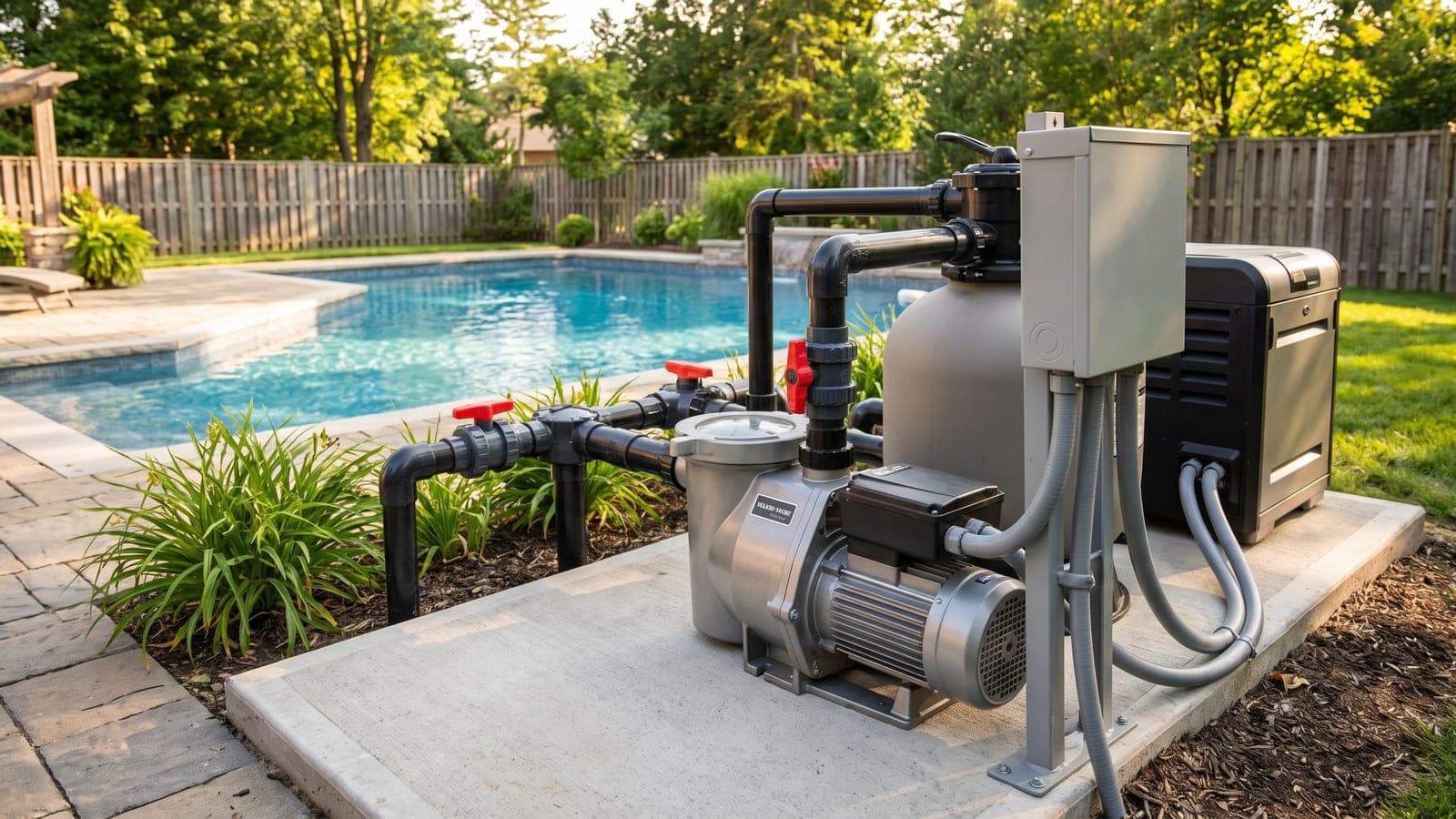
A loud pool pump almost always comes down to one of three things: the pump is starved for water and sucking air, the motor bearings are worn out, or the whole unit is vibrating against its pad or plumbing. The good news is that two of those are cheap and quick to fix yourself, and the third tells you it is time to plan a motor or pump swap. Start by listening to the type of noise, because the sound points straight at the cause.
What does the noise tell me?
Different sounds mean different problems, so match what you hear before you touch anything.
A gurgling, sucking, or sputtering sound means air is getting into the system. This is the most common and the easiest to fix. A high-pitched screech or squeal means the motor bearings are failing. A deep rattle or buzz that you can feel in the pad usually means vibration, loose hardware, or debris in the impeller. A low grinding hum with a hot motor is the worst case and often means the motor is on its way out.
Once you know the category, you can work through the fixes below in order from cheapest to most involved.
Why is my pump gurgling and sucking air?
Air in the system makes a pump loud and also makes it work harder for less flow. The pump is designed to move water, not air, so when it gets a mix of both it rattles and cavitates (that is when tiny air bubbles form and collapse inside the pump, which sounds like gravel).
Check the water level first. If the pool surface has dropped below the middle of the skimmer opening, the skimmer starts pulling in air. Top it off with a hose until the water sits at the mid-point of the skimmer mouth.
Next, look at the pump lid. A cracked lid, a dried-out lid o-ring, or a lid that is not screwed down tight will let air sneak in. Pull the lid, wipe the o-ring clean, coat it with a thin film of pool-grade silicone lube, and hand-tighten the lid firmly. Then check the strainer basket underneath for cracks and clear out leaves, acorns, and bug bodies.
If the basket is packed, the pump is straining to pull water through it, which raises both noise and stress on the motor. A spare basket and a fresh lid o-ring are cheap insurance, and you can find both alongside other odds and ends in our pool accessories roundup.
Could it be the motor bearings?
If you hear a screech or squeal that gets louder over weeks, the motor bearings are the likely culprit. Bearings are small metal rings that let the motor shaft spin smoothly, and they wear out from years of heat, water intrusion, and just plain mileage.
You can confirm it with a simple test. Turn the pump off at the breaker, let it sit, then spin the motor shaft by hand using the slot on the back end of the motor (check your manual for where to grip). A rough, gritty feel or a dragging spin backs up the bearing theory.
Bearings can be pressed out and replaced, but it takes a puller and some patience. On an older motor, the labor plus parts often lands close to the price of a new motor or even a new pump, so get a quote both ways before you commit. A screeching pump left to run will eventually seize, and a seized motor can trip your breaker or overheat.
Is vibration making it worse?
Sometimes the pump itself is fine and the noise is coming from how it is mounted. A pump bolted to a thin plastic or hollow pad transmits every bit of hum into the deck, which acts like a drum.
Slide a set of rubber vibration pads or a rubber mat under the pump feet to soak up the buzz. Make sure the mounting screws are snug but not cranked down so hard that they crack the base. Check that the pump is not touching the filter tank, a fence, or a wall, since any hard contact turns into a rattle.
Rigid PVC plumbing carries sound too. Some owners add a short flexible coupling or a union kit near the pump to break the direct path, though keep any flex section short so it does not restrict flow.
Would a new pump actually be quieter?
Often, yes, and this is where an old single-speed pump shows its age. Single-speed pumps run at full blast whenever they are on, which is loud and expensive. A variable-speed pump lets you run at a low speed for most of the day, where both noise and power draw drop sharply. Both the Department of Energy and ENERGY STAR point to variable-speed models as the efficient choice for pool circulation.
If your motor is failing anyway, replacing the whole unit with a variable-speed model often makes more sense than rebuilding an old single-speed. Popular quiet options include the Pentair SuperFlo VS Variable-Speed Pump, the Hayward MaxFlo VS Variable-Speed Pump, and the budget-friendlier Black+Decker Variable-Speed Pool Pump. Sizing depends on your pool volume and plumbing, so match the pump to your gallons and check the model listing before buying.
Quick fix checklist
Work through these in order and you will solve most loud pumps without a pro:
- Top the water to mid-skimmer to stop air suck.
- Clean the strainer basket and check it for cracks.
- Lube the lid o-ring and tighten the lid.
- Inspect for suction-side leaks at fittings and valves.
- Add rubber pads under the pump to kill vibration.
- Hand-spin the motor shaft to test for bad bearings.
- If the motor grinds, runs hot, or smells like burning, shut it off and call a pro.
A quieter pump is also a sign of a healthier system overall, and steady circulation makes your water chemistry easier to manage. If you want to keep the whole setup running smoothly, our pool chemistry basics guide covers the testing routine, and salt-system owners can check the saltwater pool maintenance guide, since salt cells and pumps share the same plumbing. Have a spa on the same pad? The hot tub maintenance guide walks through the equivalent care.
Frequently asked questions
Is it normal for a pool pump to be loud?
A steady hum in the 65 to 75 decibel range is normal for a full-speed single-speed pump. A screech, a rattle, or a grinding that is new or getting worse is not normal and points to a specific problem worth chasing down.
Can a low water level make my pump loud?
Yes. If the water drops below the skimmer mouth, the pump pulls in air and starts to gurgle, sputter, and rattle. Top the pool off to mid-skimmer and the noise usually clears within a minute or two.
Why does my pump scream when I first turn it on?
A high-pitched screech at startup is almost always worn motor bearings. Bearings can sometimes be replaced, but on an older motor the repair often costs close to a new motor, so price both before deciding.
Will a variable-speed pump really be quieter?
Usually yes, because it can run most of the day at a low speed where noise drops a lot. The exact difference depends on your plumbing and pool size, so check the model listing and owner reports rather than assuming a fixed number.
When should I call a pro instead of fixing it myself?
Call a pro if the motor is grinding and hot, if you smell burning, or if you are not comfortable pulling the wet end apart. Electrical work and bearing pressing are worth handing off if you have any doubt.