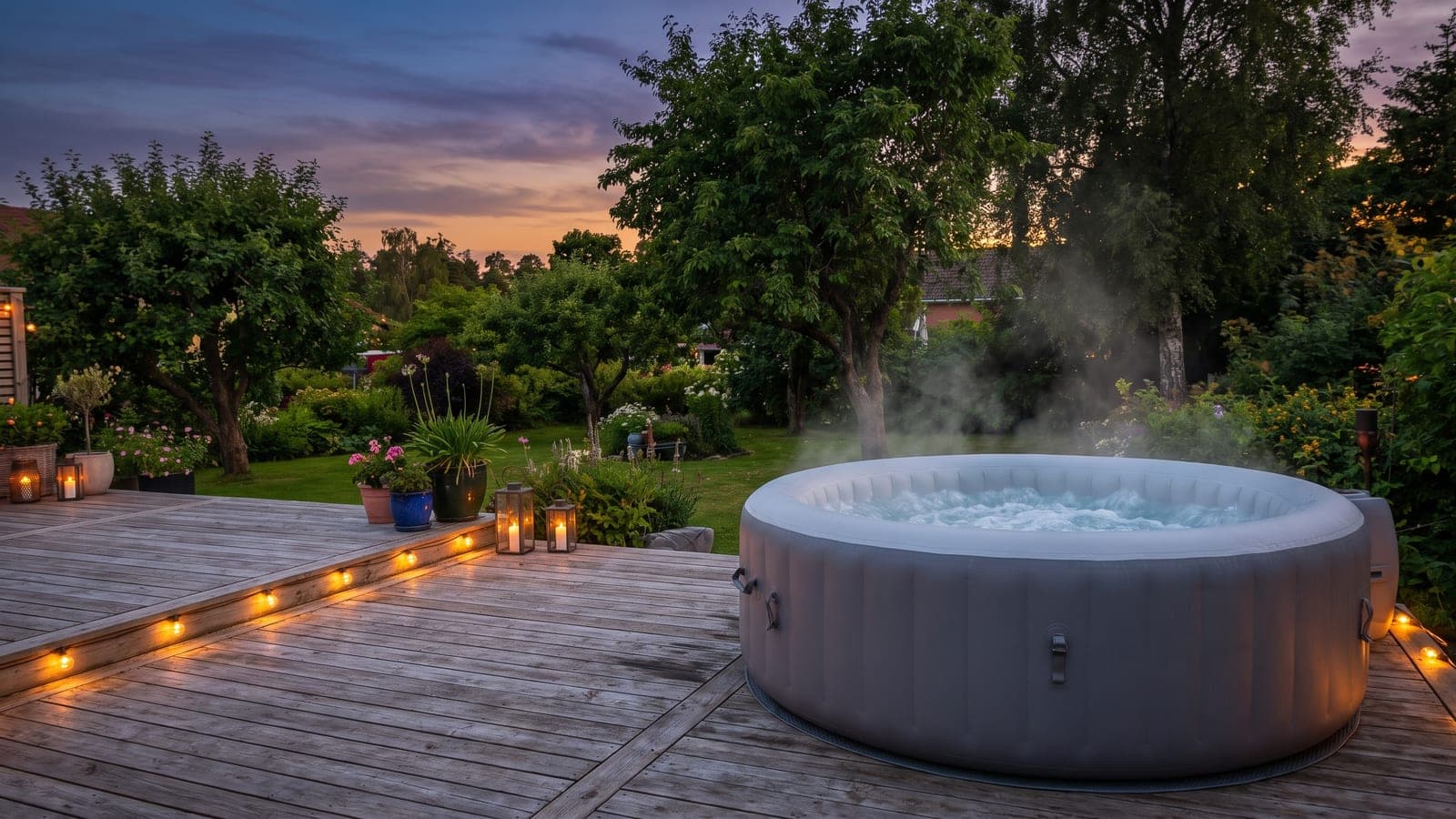
Your inflatable hot tub will not heat up almost always because of one of three things: the pump is stuck in filter mode instead of heat mode, the cover is off so heat escapes as fast as it builds, or a clogged filter is choking the water flow the heater needs. All three are fixable at home in a few minutes, and none of them mean the tub is broken.
Inflatable hot tubs heat slowly by design. The heating element is small (roughly 1,000 to 1,500 watts on most models), so expect about 1 to 2 degrees Fahrenheit per hour. A cold fill reaching 104 degrees can take most of a day. So before you troubleshoot, ask whether the tub is actually failing or just being its normal slow self.
Is the heater actually turned on?
This is the most common false alarm. On most units the pump has separate buttons for filtration, bubbles, and heat, and the heat function has to be switched on as its own step. The heater light or icon should be lit, not just the power light.
Two things also block heating on purpose. First, the bubble jets: on the majority of inflatable spas, the heater pauses while the air jets run because the jets pull in cool air. Long bubble sessions can leave you colder than you started. Second, a target temperature set below the current water temp means the heater has nothing to do. Set it to your goal (usually 100 to 104 degrees) and confirm the heat indicator comes on.
If you own an app-connected model like the Coleman SaluSpa Atlantis AirJet Inflatable Hot Tub (4–6 Person, App Control), open the app and check that heat is enabled there too. App and panel settings can disagree.
Is the cover on, and is the tub insulated?
An open inflatable hot tub loses heat fast. Water sitting in cold air can shed several degrees an hour, which means a 1-to-2-degree-per-hour heater is fighting a losing battle. If your tub heats fine on a warm afternoon but never climbs overnight, heat loss is your culprit, not the heater.
Keep the inflatable lid clipped on any time you are not in the water. The single biggest upgrade beyond that is putting a foam mat under the tub, since a lot of heat drains straight into a cold patio or lawn. Owners in cool climates often report a noticeable jump in heat retention after adding a ground mat and keeping the cover sealed.
Energy-conscious models help here too. The Coleman Palm Springs EnergySense Smart AirJet Plus Hot Tub (4–6 Person) is built around better insulation and scheduling, but even a basic tub benefits enormously from a cover and a mat.
Is the filter clogged or the water low?
The heater only works when water flows through it. A dirty filter cartridge cuts that flow, and many pumps will refuse to heat (or throw an error code) when they sense weak circulation. If your tub was heating fine last month and slowed down over time, a clogged filter is the prime suspect.
Pull the cartridge and rinse it. If it is grey, matted, or older than a few weeks of regular use, replace it. Filters are cheap and are the most common quiet cause of slow heating. Low water is the other flow problem: if the level drops below the intake, the pump can air-lock and stop heating. Top off to the fill line and restart.
Keeping the water balanced also protects the heater. Scale from hard water can coat the element and slowly kill its output, so mind your chemistry the same way you would for a pool. Our hot tub maintenance for beginners guide walks through the routine, and the pool chemistry basics guide explains pH and sanitizer in plain terms. The CDC's hot tub water treatment page is a solid reference for safe ranges.
Could it be an error code or a tripped breaker?
Check the control panel for a code. Different brands use different letters, so match yours against the manual, but the usual suspects are low flow, low water, or an overheat cutoff. Most clear after you fix the cause (clean filter, top off water) and unplug the unit for a minute to reset.
The pump plug matters more than people think. Inflatable tubs draw a lot of current, and their GFCI plug can trip if it shares a circuit or sits in a damp spot. If the whole pump is dead, test and reset the GFCI on the cord before assuming the heater failed. Avoid cheap extension cords, which cause voltage drop and nuisance trips.
When is it the heating element or control board?
If the pump runs, the filter is clean, water flows, the cover is on, and the tub still will not gain heat after a full day, the heating element or control board may have failed. A repeating error code that comes back after every reset points the same direction.
At that stage, stop tinkering. The pump box holds mains voltage and water, a combination to respect. Contact the manufacturer, especially if the unit is still under warranty, rather than opening the housing yourself. General home-water-safety guidance from the CPSC is worth a read for any household with a tub.
Quick fix checklist
Run through these in order before you call anyone:
- Confirm the heat function is on and the target temp is above current water temp.
- Turn off the bubble jets and let the heater run undisturbed.
- Clip the cover on and add a foam mat underneath.
- Clean or replace the filter cartridge.
- Top off the water above the intake line.
- Reset the GFCI plug and check the target temp again.
Most no-heat complaints end at one of those steps. If you are shopping for a replacement or a first tub, our inflatable hot tubs roundup compares heat retention and pump features across models, including well-insulated options like the Intex PureSpa Plus 6-Person Inflatable Hot Tub (170 Jets). And if you eventually move up to a saltwater setup, the saltwater pool maintenance guide covers what changes.
Frequently asked questions
How long should my inflatable hot tub take to heat up?
Most inflatable hot tubs heat somewhere between 1 and 2 degrees Fahrenheit per hour, so a cold fill can take 12 to 24 hours to reach 100 to 104 degrees. Colder outside air, a missing cover, or a large tub all push that toward the slow end. Check your model's manual for its stated heating rate before deciding something is wrong.
Can I run the heater and the jets at the same time?
On most inflatable models, no. The bubble jets pull in cool outside air and the heater usually pauses while they run, so long jet sessions can actually cool the water. Run the jets in short bursts and let the heater work the rest of the time.
Why does my hot tub heat then suddenly stop or go cold?
That usually points to a tripped safety cutoff, a clogged filter starving the pump of flow, or an error code from low water. Clean or replace the filter, top off the water, and let the unit reset. If it keeps cutting out, it may be the heating element or a flow sensor, which is a repair or warranty issue.
Does the cover really make that big a difference?
Yes, more than most owners expect. An uncovered tub can lose several degrees an hour to the air, so the heater never catches up. Keeping the inflatable lid on and adding a foam mat underneath are the two cheapest heat fixes you can make.
When should I stop troubleshooting and call for service?
If the pump runs, water flows, the filter is clean, the cover is on, and the water still will not climb after a full day, the heating element or control board may have failed. A persistent error code that returns after a reset is another sign. Contact the manufacturer while the unit is still under warranty rather than opening the pump box yourself.