Trust a good liquid drop kit as your accuracy benchmark, use digital testers and smart monitors for speed and convenience, and keep test strips for quick daily glances. None of the three is a scam, they just earn trust in different jobs. The trick is knowing which reading to believe when they disagree.
Here is the short version before the details. Liquid kits win on accuracy, digital photometers win on repeatability and ease of reading, strips and smart monitors win on speed. Most pool owners are best served by owning two of these, not one.
What is the difference between digital and liquid pool testing?
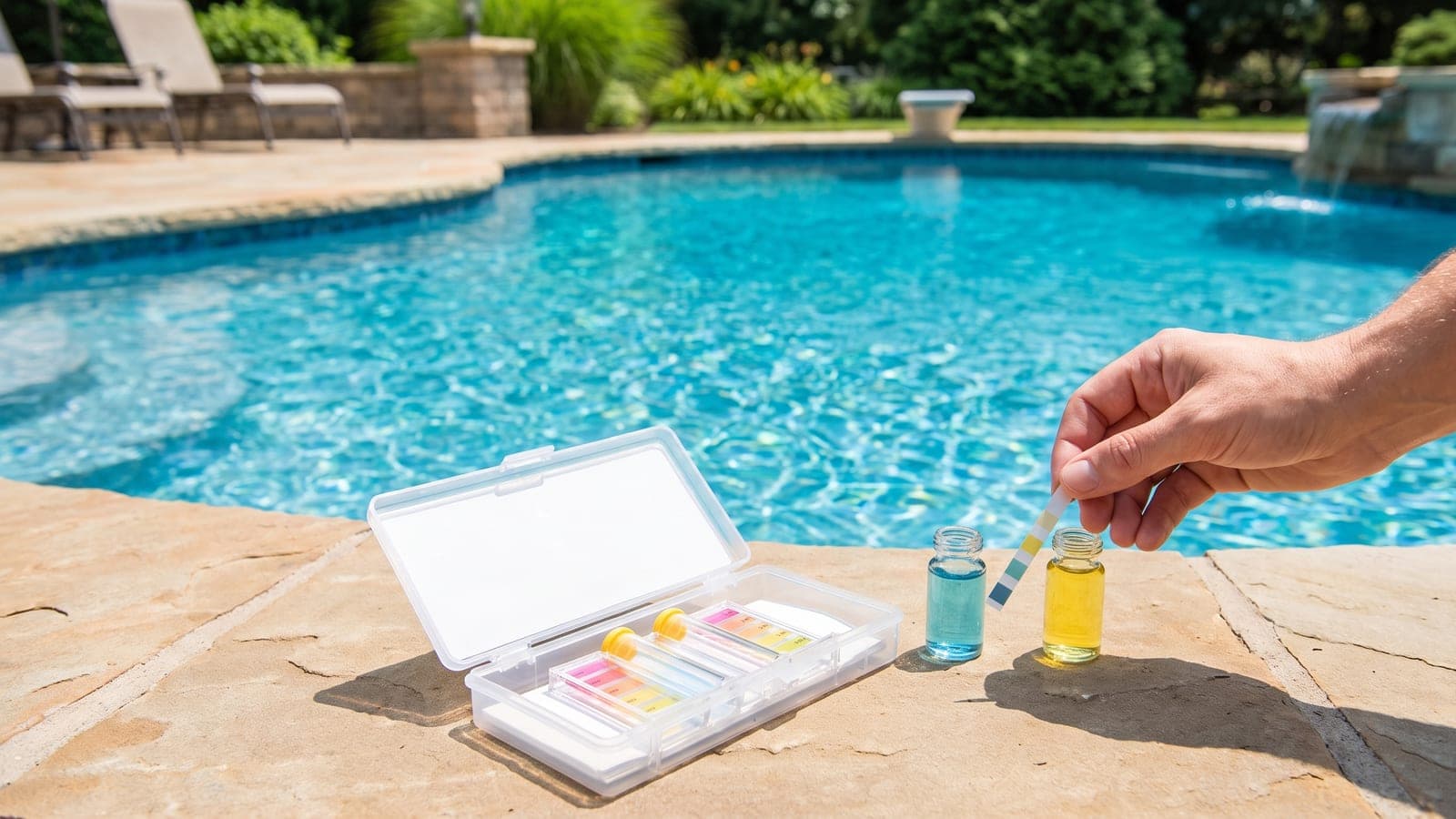
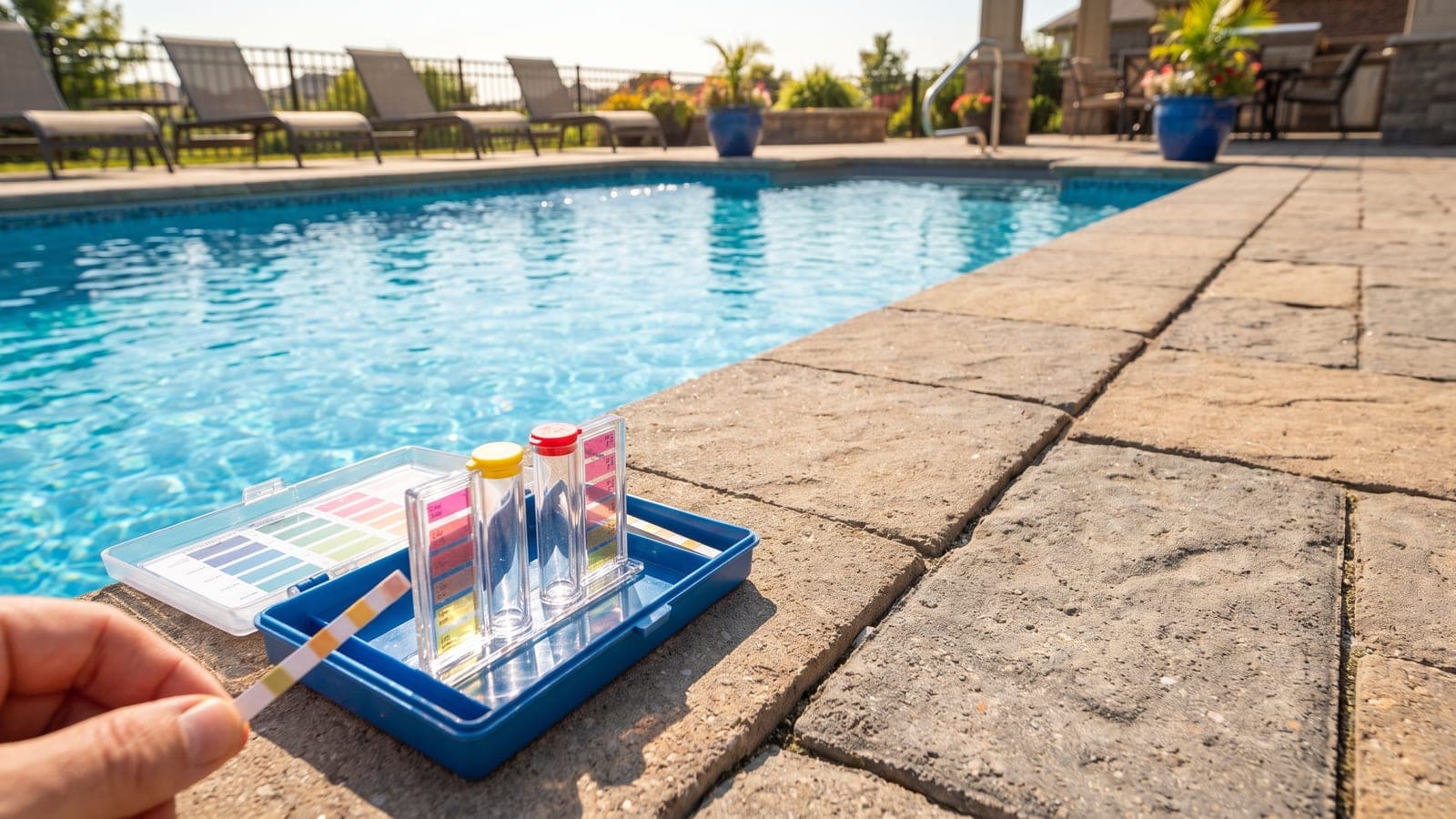
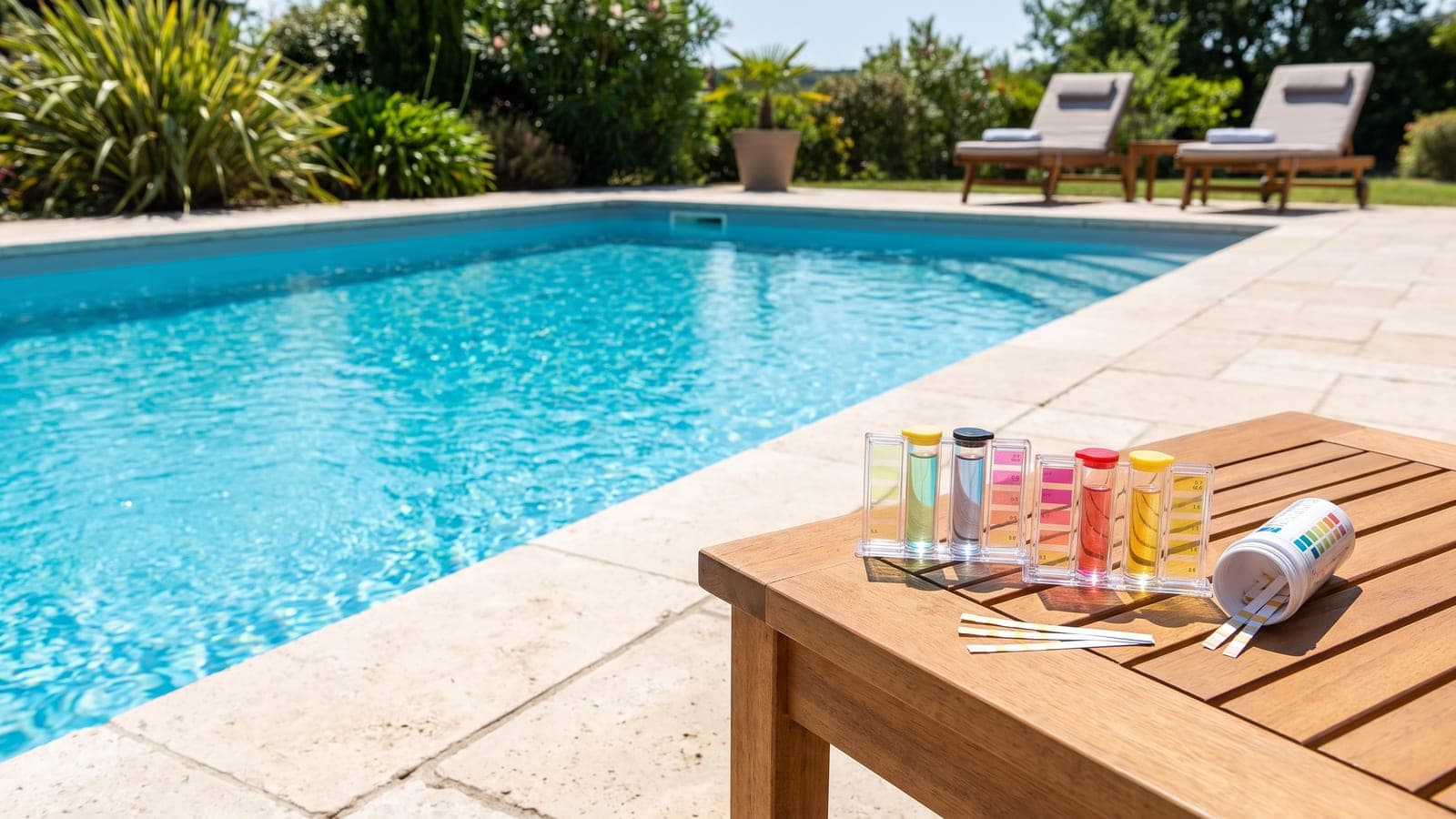
Liquid testing means adding drops of reagent (a testing chemical) to a water sample and reading a color or counting drops. Kits like the Taylor K-2006 Complete Test Kit (FAS-DPD) count how many drops it takes to hit a color change, which gives you a precise number instead of a color you have to eyeball.
Digital testing covers two different things. A digital photometer, like the LaMotte ColorQ 2X Pro 7 Digital Tester, still uses reagents but reads the color with a sensor and shows a number on a screen. Smart monitors, like the Sutro Smart Pool Monitor or the WaterGuru Sense S2 Smart Monitor, sit in the pool or skimmer and sample the water on a schedule.
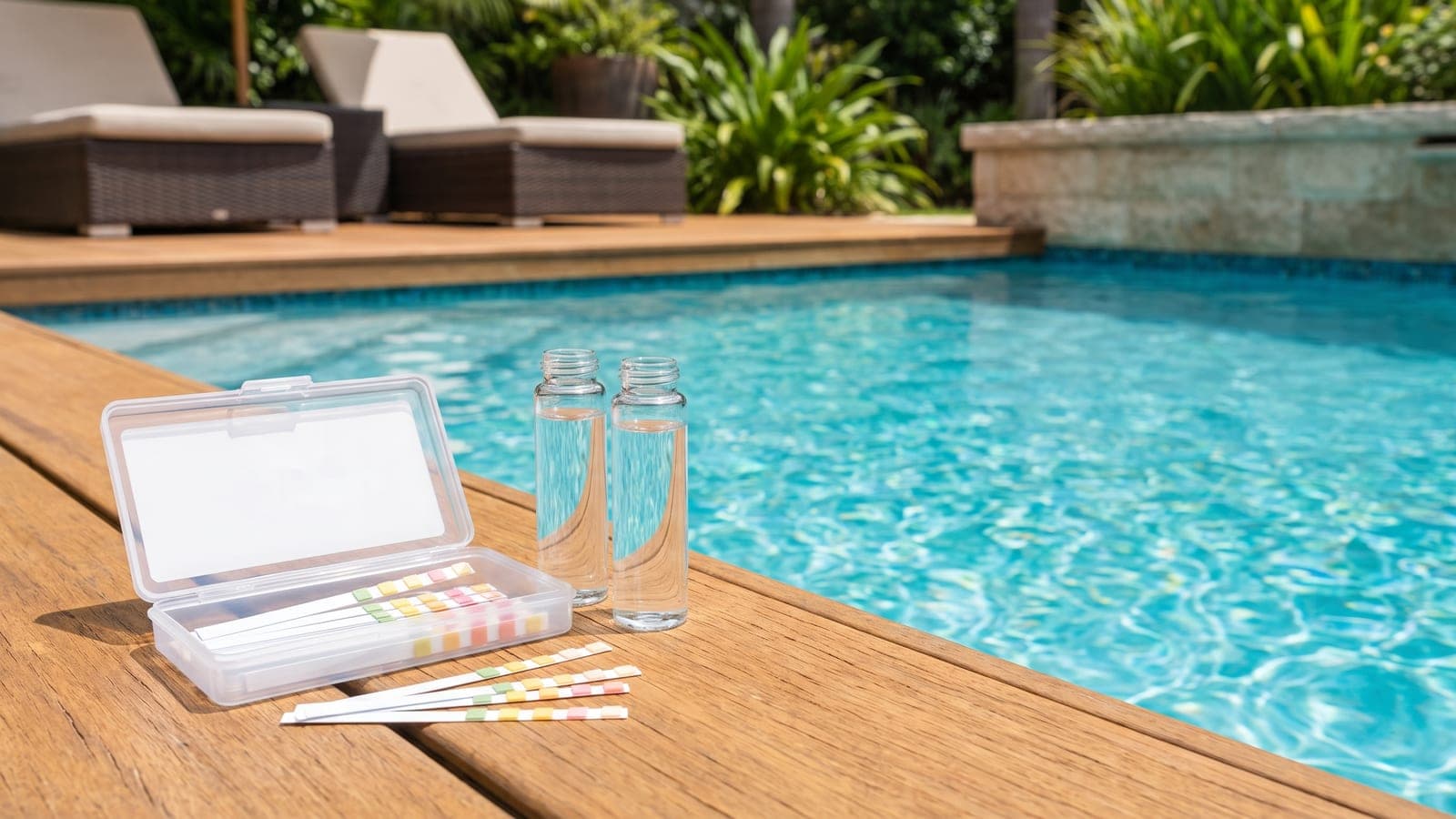
Test strips are the fourth option. You dip, wait, and match pads to a color chart. Fast and cheap, less precise.
Which one is the most accurate?
The FAS-DPD liquid method is the one most pool professionals treat as the reference for chlorine, especially when chlorine is high. The Taylor K-2005 Complete Test Kit (DPD) and the FAS-DPD version are common home benchmarks for a reason: drop-counting removes a lot of the color-guessing that trips people up.
Digital photometers are close behind and often easier to read, which matters if your eyes struggle with subtle color shades. Their weak spot is maintenance. Dirty sample vials, fingerprints, and expired reagents all skew the number, and the screen still shows a confident-looking value.
Strips are the least precise of the group. They are genuinely useful for a fast pass, but color-matching gets unreliable at the high and low ends of the scale, which is exactly where you least want to guess.
When should I trust the digital reading over the liquid one?
Trust the method with the freshest reagents and the cleanest sample. That single rule settles most disagreements. Reagents degrade over time and heat, so a two-year-old bottle in a hot pool shed can throw either method off. Keep a Taylor Reagent Refill Set on hand and replace reagents on a sensible cycle.
Trust the digital or strip reading when you need a fast daily check and the water has been stable. Trust the liquid kit when you are about to add chemicals, when a reading looks strange, or when two methods disagree by a lot. Confirming before you dose is cheaper than fixing an overcorrection.
If you run a saltwater pool, remember that salt and cyanuric acid (CYA, the stabilizer that protects chlorine from sunlight) need their own tests, and not every device covers them. Our saltwater pool maintenance guide walks through what to watch.
Do smart monitors replace a test kit?
No, and the good ones do not claim to. A monitor is a trend tracker. It tells you chlorine is drifting down on Thursday so you are not surprised on Saturday, which is real value. But most owners still verify a surprising alert with a liquid or digital test before dumping chemicals in.
Think of a smart monitor as a smoke detector, not a firefighter. It is great at telling you something changed. You still confirm and act with a kit you trust.
How often should I actually test?
The CDC recommends checking free chlorine and pH at least twice a day when a pool is heavily used, and testing more often after rain, heavy swimmer loads, or adding chemicals. See the CDC pool water treatment and testing guidance for the full picture.
This is where a fast method earns its keep. A daily strip or monitor check plus a weekly liquid confirmation is a realistic routine for most backyards. If you also run a hot tub, the smaller water volume swings faster, so our hot tub maintenance guide covers that separately.
The honest bottom line
Own a good liquid kit for accuracy and a faster method for daily habit. If you test more when you have a quick tool nearby, the quick tool is worth it even if it is a hair less precise. Store all reagents cool and dry, follow the safety notes in the CDC pool chemical safety guide, and never mix pool chemicals together.
New to the numbers themselves? Start with pool chemistry basics, then browse maintenance supplies once you know which tests you actually need. The exact right kit depends on your pool volume, sanitizer type, and how much color-matching you trust your own eyes to do, so check the product listing and your equipment manual before you buy.
Frequently asked questions
Are digital pool testers more accurate than liquid kits?
Not automatically. A good liquid drop kit is the accuracy benchmark most pool pros trust, and digital photometers match it well when the reagents are fresh and the vials are clean. Cheap digital meters and old test strips are where accuracy tends to drift.
Can I just use test strips and skip everything else?
Strips are fine for a fast daily glance at chlorine and pH, and they beat not testing at all. For balancing chemicals or chasing a problem, confirm with a liquid or digital test because strip color-matching gets rough on the high and low ends.
Do smart pool monitors replace regular testing?
Not fully. Monitors like the Sutro Smart Pool Monitor track trends between checks, but most owners still keep a liquid kit for verification and for readings the monitor does not cover. Treat the monitor as an early-warning system, not the final word.
Why does my digital tester disagree with my liquid kit?
Usually it is fresh reagents versus old ones, a dirty vial, or a reading taken outside the meter's range. Expired reagents drift on both methods. When two tests disagree, re-run with fresh reagents and a clean, rinsed sample cup.
How often should I test my pool water?
The CDC suggests checking chlorine and pH at least twice a day when a pool is in heavy use, and most home owners test a few times a week. Test more often after heavy rain, a big pool party, or adding chemicals.