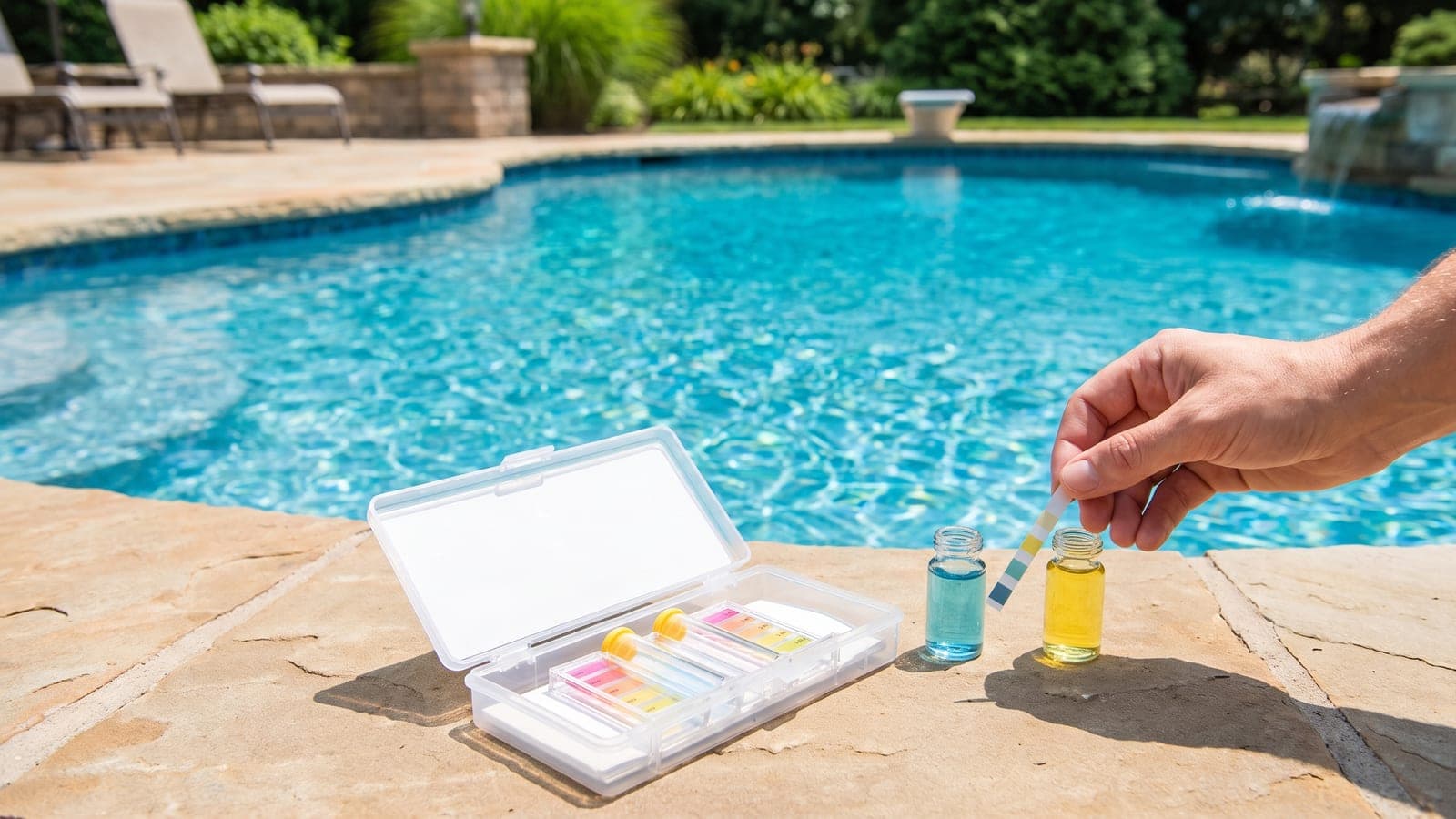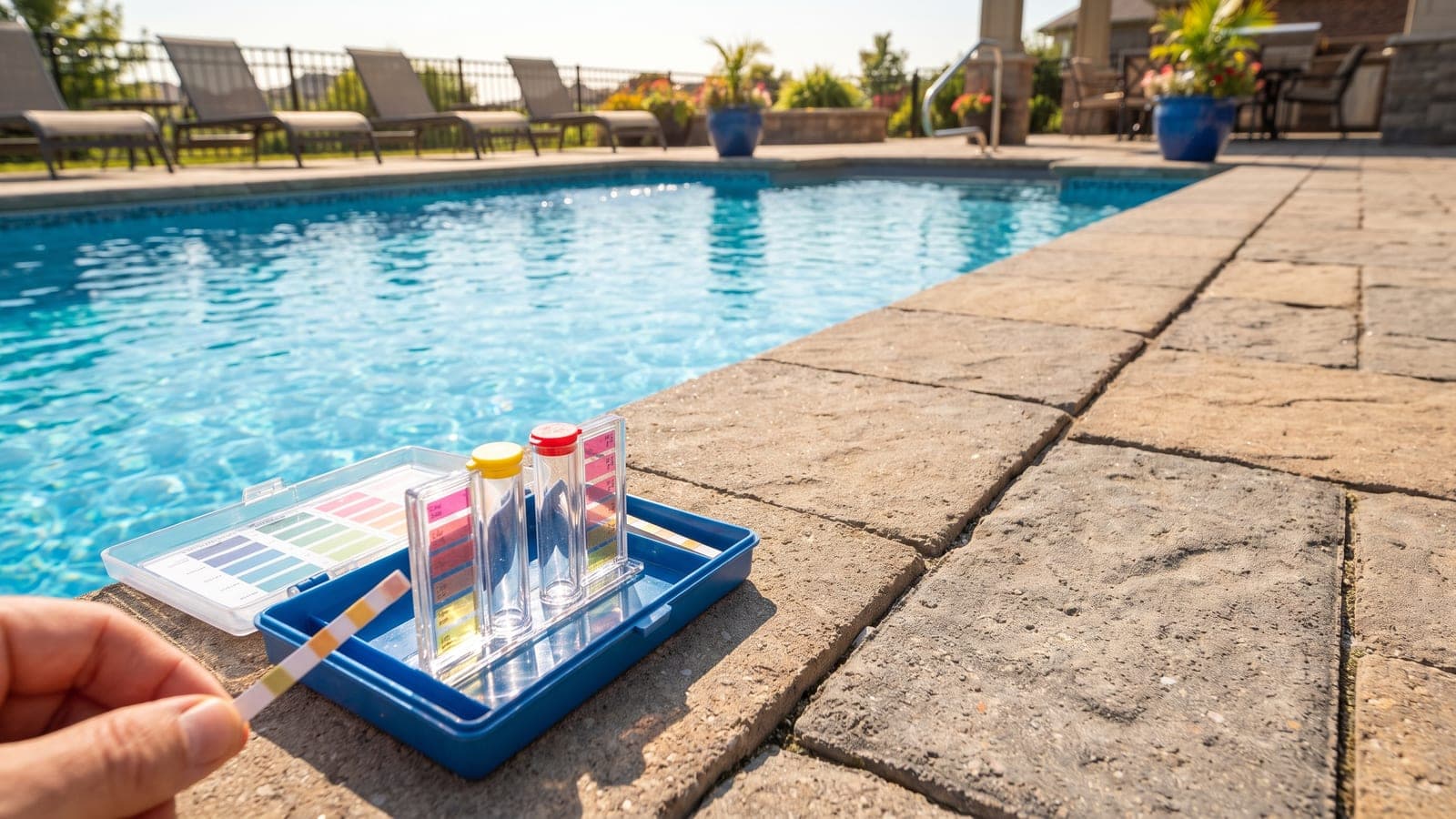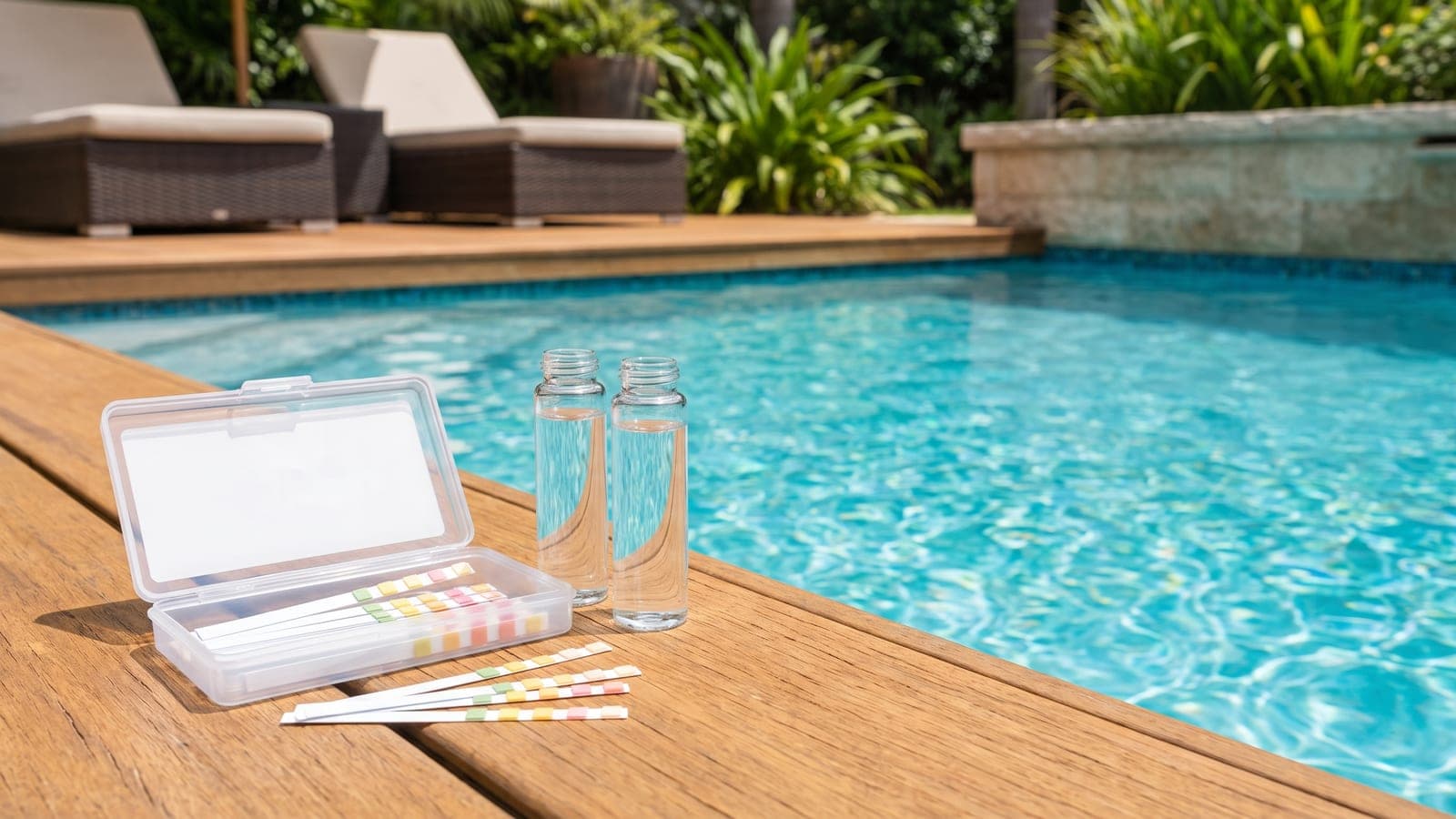
The right way to test pool water at home is to pull a sample from elbow depth away from the returns, then check free chlorine and pH first, followed by total alkalinity, cyanuric acid, and calcium hardness on a slower schedule. Do that consistently and you catch most problems before the water turns cloudy or green.
Testing is how you turn guessing into a plan. Once you have real numbers, adding chemicals becomes math instead of hope. Use the calculator above to size a chlorine dose to your pool's gallons and current reading.
What should I actually test for?
Five numbers cover almost every home pool. Free chlorine is the sanitizer actively killing germs, and it matters most. pH tells you how acidic or basic the water is, which affects both comfort and how well chlorine works.
Total alkalinity is pH's shock absorber, keeping it from swinging wildly. Cyanuric acid (CYA, also called stabilizer) protects chlorine from sunlight but slows it down when it climbs too high. Calcium hardness rounds it out, since water that is too soft can corrode surfaces and too hard can scale.
If terms like CYA and alkalinity feel fuzzy, the pool chemistry basics guide walks through what each one does without the lab coat.
How do I take a good water sample?
Bad samples cause bad decisions, so this step matters. Reach down to about elbow depth, roughly 18 inches, and fill your container there rather than skimming the surface. Surface water collects oils and reads differently from the water swimmers actually move through.
Move away from return jets and the skimmer. Water right at a return has freshly circulated chemicals that are not yet evenly mixed, which skews the reading. The deep end, away from equipment, is a reliable spot.
Rinse the container with pool water once, dump it, then fill it. Test soon after collecting, because chlorine especially starts to change once the sample sits in sunlight or warm air.
Strips, drop kits, or a smart monitor?
All three work, and they trade speed for precision. Test strips such as the AquaChek Select 7-Way Test Strips are the fastest: dip, wait, and match the pads to a color chart. They are great for a quick daily glance, though color matching gets subjective in low light.
Liquid drop kits are the accuracy benchmark. The Taylor K-2005 Complete Test Kit (DPD) and the Taylor K-2006 Complete Test Kit (FAS-DPD) walk you through counting reagent drops, and the FAS-DPD chlorine test in the K-2006 resists the bleach-out that makes high chlorine falsely read low. When your reagents run low, a Taylor Reagent Refill Set keeps the kit going without buying a whole new one.
Smart monitors like the WaterGuru Sense S2 Smart Monitor sit in the water or skimmer and log readings to an app. They are convenient for trend-spotting, but treat them as a helper, not a replacement for a drop kit when a number looks off. You can compare test kits and strips on the maintenance supplies page.
What order should I test and read in?
Follow the kit's instructions, because reagent amounts and wait times vary by brand. As a general flow, test free chlorine and pH first since they change fastest and drive most decisions. Then work through alkalinity, cyanuric acid, and calcium hardness.
Read colors in natural daylight, not under a yellow porch bulb. Hold strips level so reagent does not run between pads, and rinse the drop-kit vial between tests. Small habits like these remove a surprising amount of noise from your results.
How often do I need to test?
Check free chlorine and pH two to three times a week in peak season, per general guidance echoed by the CDC's home pool testing page. After a pool party, a heat wave, or heavy rain, test the next day because demand spikes fast.
The slower-moving numbers, alkalinity, CYA, and calcium hardness, are fine on a weekly or every-other-week rhythm. A hot tub runs hotter and smaller, so it drifts faster; the hot tub maintenance guide covers that pace. Saltwater pools still need the full panel plus a salt reading, which the saltwater pool maintenance guide explains.
What do I do with the numbers?
Adjust one thing at a time and retest before adding more. Aim to bring free chlorine into range first, then correct pH, then alkalinity if it is pulling pH around. Chasing every number at once usually leads to overcorrecting and a cloudy weekend.
When you need to raise chlorine, plug your gallons and current reading into the calculator above so you add a measured dose instead of a capful and a prayer. Give the pump time to circulate, then test again.
Store your chemicals and reagents safely: cool, dry, sealed, and never mixed together. The CDC's pool chemical safety guidance is worth a read before you handle acid or concentrated chlorine.
When should I stop testing and call a pro?
Most home testing is straightforward, but a few situations call for backup. If chlorine will not hold no matter what you add, if the water stays cloudy after balancing, or if you suspect very high CYA (which usually means a partial drain to fix), a local pool pro or a shop water test can confirm what your home kit hints at.
Bring a fresh sample in a clean bottle for shop tests, and jot down your own readings to compare. Two data sources beat one when something stubborn is going on. The rest of the time, a good kit and a steady schedule handle the job.
Frequently asked questions
How often should I test my pool water?
Test free chlorine and pH two to three times a week during swim season, and more often after heavy use, heat, or rain. Total alkalinity, cyanuric acid, and calcium hardness can be checked every week or two. If your pool gets very little use, you can stretch the schedule, but chlorine and pH still drift fastest.
Are test strips or liquid drop kits more accurate?
Liquid drop kits like the Taylor K-2005 or K-2006 are generally more precise, especially for chlorine, because you count reagent drops instead of matching a color to a pad. Strips are faster and fine for quick checks. Many owners keep both and confirm odd strip readings with a drop kit.
Where should I take the water sample from?
Collect from elbow depth (about 18 inches down) away from return jets and skimmers, ideally in the deeper end. Surface water and spots right by a return can read differently because chemicals are less mixed there. Rinse the sample container with pool water first, then fill and test promptly.
Why does my chlorine read zero even after I added some?
A zero free chlorine reading often means demand outran what you added: heavy bather load, algae, sunlight with low cyanuric acid, or a high combined-chloramine level. It can also mean very high chlorine bleached the test (common with DPD strips and some kits). Retest with a fresh sample and consider an FAS-DPD kit, which resists that bleach-out.
Do I still need to test a saltwater pool?
Yes. A salt system makes chlorine, but you still test free chlorine, pH, alkalinity, cyanuric acid, and salt level, since the generator only responds to what you set. Salt cells also push pH up over time, so regular testing keeps you ahead of scale and cloudy water.
How long do test reagents and strips stay good?
Most reagents and strips carry a shelf life of one to two years, but heat, humidity, and sunlight shorten it. Store them cool, dry, and sealed, and replace anything that gives off readings or has faded pads. When results seem impossible, fresh reagents are often the fix.