Size a pool heater by working from three numbers: your pool's surface area, the temperature rise you want, and the heater type you plan to run. Gallons alone will not get you there, because most heat leaves through the surface, not the deep end. Get those three inputs right and the BTU rating almost picks itself.
BTU stands for British Thermal Unit, the standard measure of heating output. A heater's BTU rating tells you how much heat it can push into the water per hour. More BTUs means faster heating, not warmer water, since your target temperature is whatever you set.
Use the calculator above to size this to your pool. It handles the math for gas, electric resistance, and heat pump options so you can compare before you buy.
Why surface area matters more than gallons
Water loses heat mostly from the top, where it meets the air. That means a wide, shallow pool and a narrow, deep pool with the same gallons can need different heaters, because the wide one exposes more surface to evaporation and cool air.
To find surface area, multiply length by width in feet. A 16 by 32 foot rectangle is 512 square feet. Freeform and kidney shapes are trickier, so measure the widest length and width and accept a rough number, then round up.
The U.S. Department of Energy notes that evaporation is the largest source of pool heat loss, which is exactly why surface area drives sizing. You can read their overview at https://www.energy.gov/energysaver/swimming-pool-heating.
What temperature rise do I actually need?
Temperature rise is the gap between the coldest average air temperature during your swim season and the water temperature you want. If your cool evenings average 60 degrees and you want 82 degree water, your rise is 22 degrees.
Most gas heaters are sized to deliver a specific rise across a given surface area within roughly 24 hours. A bigger rise, or a bigger surface, needs more BTUs. This is why a March opener in a cold climate needs a stronger heater than a July-only pool in the South.
Wind and shade quietly raise your real-world rise by stealing heat, so if your yard is exposed or breezy, size up a notch rather than sizing exactly to the calculator's minimum.
Gas heater, heat pump, or electric?
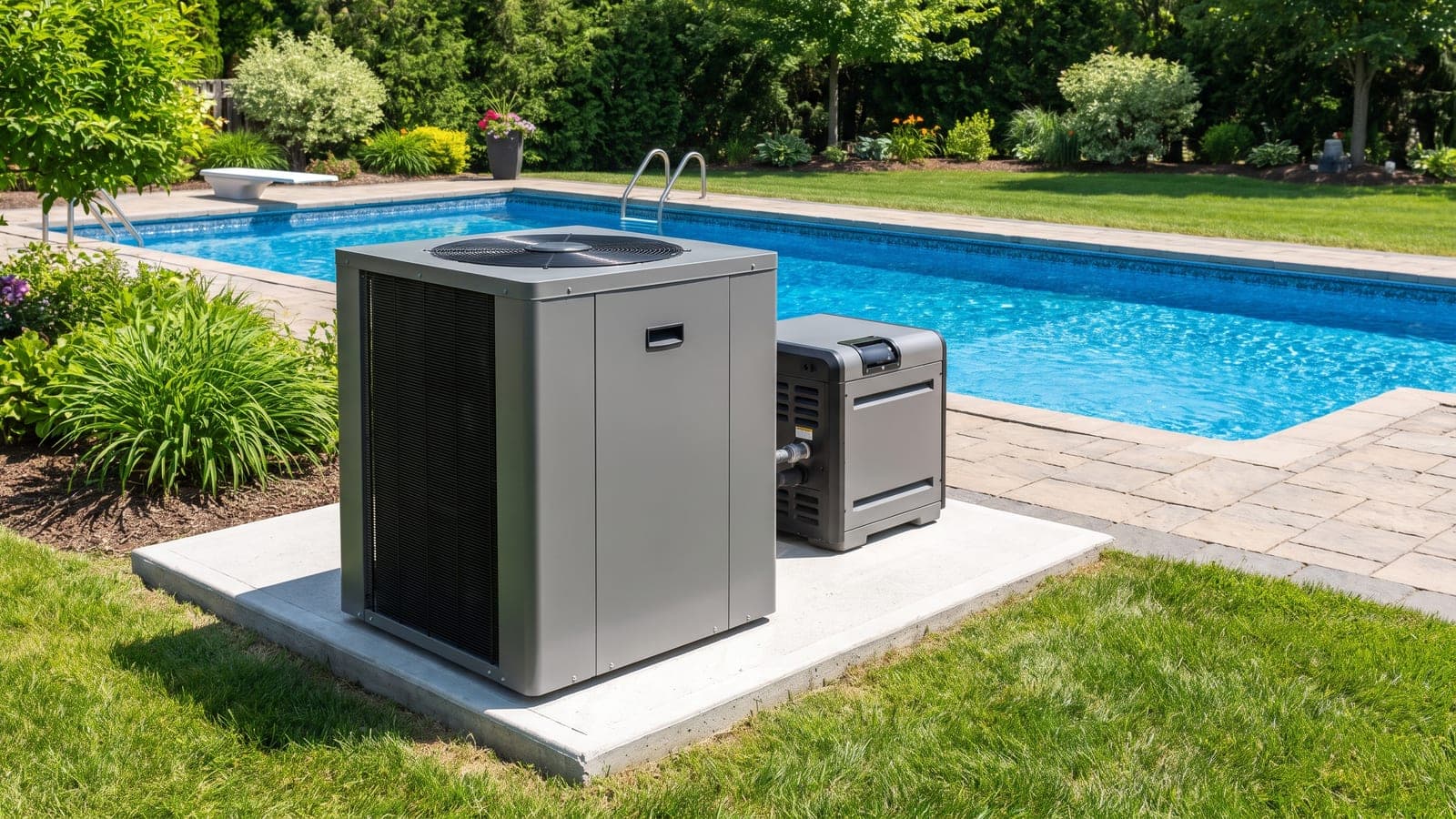
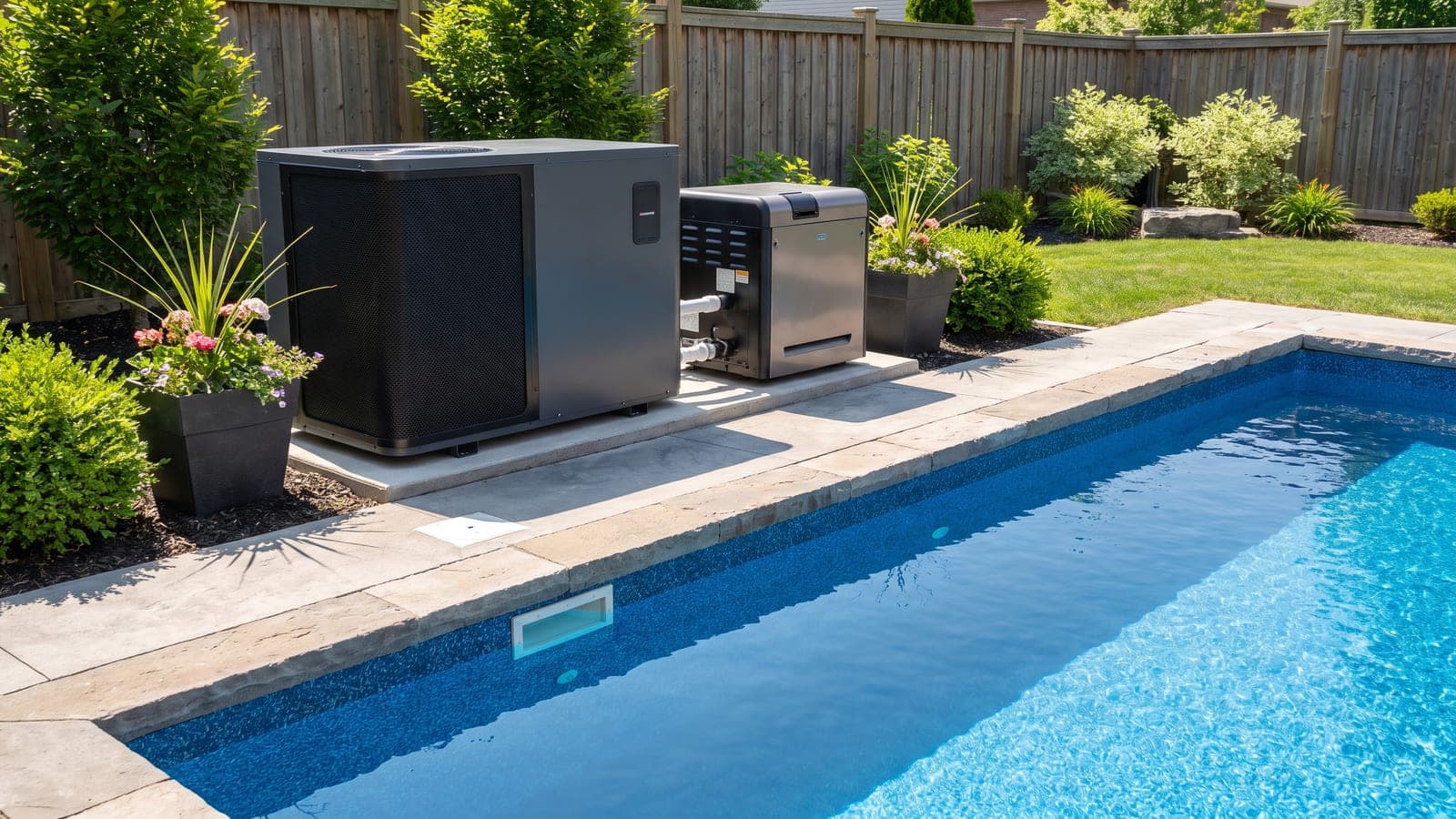
Gas heaters (natural gas or propane) heat fast and work in any weather, which makes them the pick for pools used now and then or in cool climates. The tradeoff is running cost, since you are burning fuel. Popular gas units span a wide output range, from the Pentair MasterTemp 125K Natural Gas Heater on smaller pools up to the Raypak 266,000 BTU Digital Natural Gas Heater for large pools or fast heating.
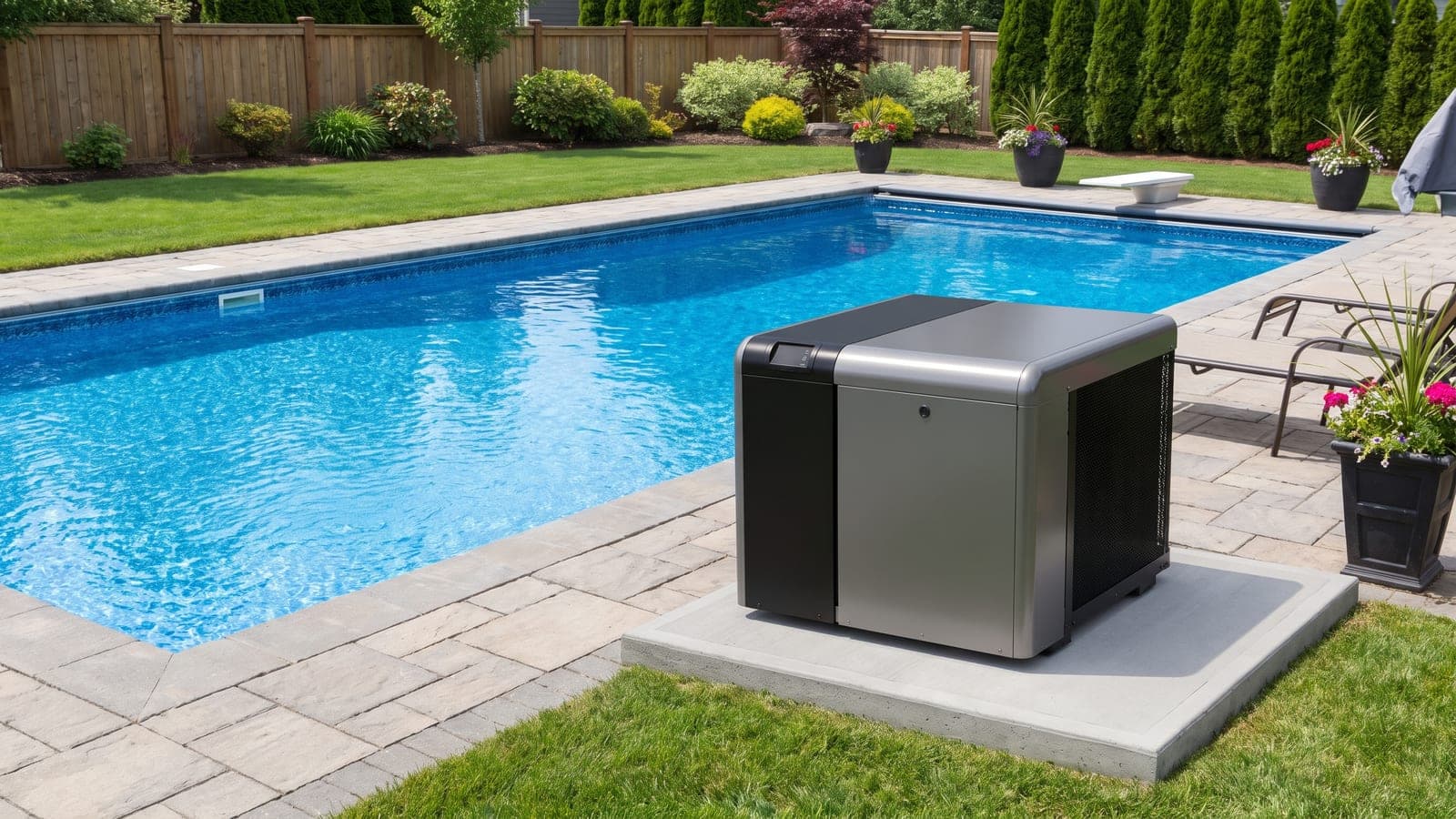
Heat pumps pull warmth from the surrounding air and move it into the water, so they sip electricity but heat slowly and lose output as the air cools below the mid-50s. In a warm climate with a pool you keep heated all season, a unit like the Hayward HeatPro 140,000 BTU Heat Pump can cost far less to run than gas over a summer.
Electric resistance heaters are simple but expensive to run at pool scale, so they mostly make sense for spas and very small pools rather than a full backyard pool.
Matching a heat pump to your pool
Heat pumps are sized by BTU output, but their real output drops as air temperature falls, so the number on the box assumes warmish conditions. For a small aboveground or compact pool, a smaller unit such as the FibroPool FH255 55,000 BTU Heat Pump may be plenty. Larger inground pools generally want 100,000 BTUs or more.
Because heat pumps heat slowly, they pair best with a pool you keep at temperature rather than one you reheat from cold each weekend. A cover does a lot of the work here by holding the heat the pump slowly adds.
You can compare full specs across types on our pool heaters page before committing.
How a cover and pump change the math
A cover is the cheapest upgrade you can make to any heater. By blocking evaporation it can cut heat loss dramatically, which means your heater cycles less and hits temperature sooner. The Department of Energy covers this in detail at https://www.energy.gov/energysaver/swimming-pool-covers.
Your pump matters too, because a heater only heats water that flows through it. Running a right-sized, efficient pump keeps flow in the heater's happy range. If you are shopping pumps, ENERGY STAR lists certified efficient models at https://www.energystar.gov/products/pool_pumps.
Balanced water also protects your investment, since corrosive or scaling water damages heat exchangers over time. Our pool chemistry basics without the lab coat guide walks through the tests that matter, and if you run salt, the saltwater pool maintenance for beginners guide covers the extra care a salt cell needs near a heater.
When to call a pro
Sizing is math you can do at the kitchen table, but installation often is not. Gas heaters need proper gas line sizing and venting, and both gas and heat pumps need correct electrical and plumbing connections. If any of that is unclear from the manual, hire a licensed installer, because an undersized gas line or bad bonding is a safety issue, not a comfort one.
For spa-only heating questions, our hot tub maintenance for beginners without the chemical panic guide is a friendlier starting point than pool heater sizing.
The short version
Measure surface area, decide your temperature rise, pick your heater type, then let the calculator turn those into a BTU target. Size up if your yard is windy, shaded, or opened early in the season, and add a cover no matter which heater you choose. Do that and you are buying to a number you can defend, not a guess.
Frequently asked questions
What size pool heater do I need for a 15,000 gallon pool?
It depends more on surface area and how fast you want to heat than on gallons alone, but a typical inground pool that size often lands in the 100,000 to 150,000 BTU range for gas. A heat pump for the same pool is usually sized by surface area and your local air temperature, so run your numbers through the calculator rather than copying someone else's setup.
Is it bad to buy a heater that is too big?
An oversized gas heater heats faster and is rarely a problem beyond upfront cost, since it just runs for shorter cycles. An undersized heater is the real headache because it may never reach your target temperature on cool or windy days, so when in doubt size up rather than down.
Gas heater or heat pump, which should I size for?
Gas heats fast and works in any weather, which suits pools used occasionally or in cold climates. Heat pumps cost less to run but heat slowly and lose output as the air cools, so they fit warm climates and pools kept warm all season. Your climate and how you use the pool decide this more than pool size does.
Does a pool cover change what size heater I need?
A cover does not shrink the heater you should buy, but it dramatically cuts how hard that heater has to work by slowing evaporation, which is the biggest source of heat loss. Many owners find a properly sized heater plus a cover reaches and holds temperature far more cheaply than a bigger heater with no cover.
How long should a pool heater take to warm the water?
Gas heaters often raise a pool a degree or two per hour, so a big temperature jump can take several hours to most of a day. Heat pumps are slower, sometimes needing a day or more for the same rise. Exact times depend on your BTU rating, pool volume, cover use, and outdoor conditions, so treat any estimate as a range.