A low salt reading usually does not mean your pool is actually low on salt. More often it means the water is cold, the salt cell is dirty or scaled, or the cell is simply getting old and its sensor is drifting. So before you haul a 40 pound bag out to the equipment pad, work through a short troubleshooting path. Adding salt you did not need is the one mistake here that is genuinely hard to undo, because the only way to lower salt is to drain and refill.
If it turns out you really are low, use the calculator above to size this to your pool. Enter your gallons and current salt level and it tells you how much to add, so you are not guessing with a bag and a prayer.
What does the low salt reading actually measure?
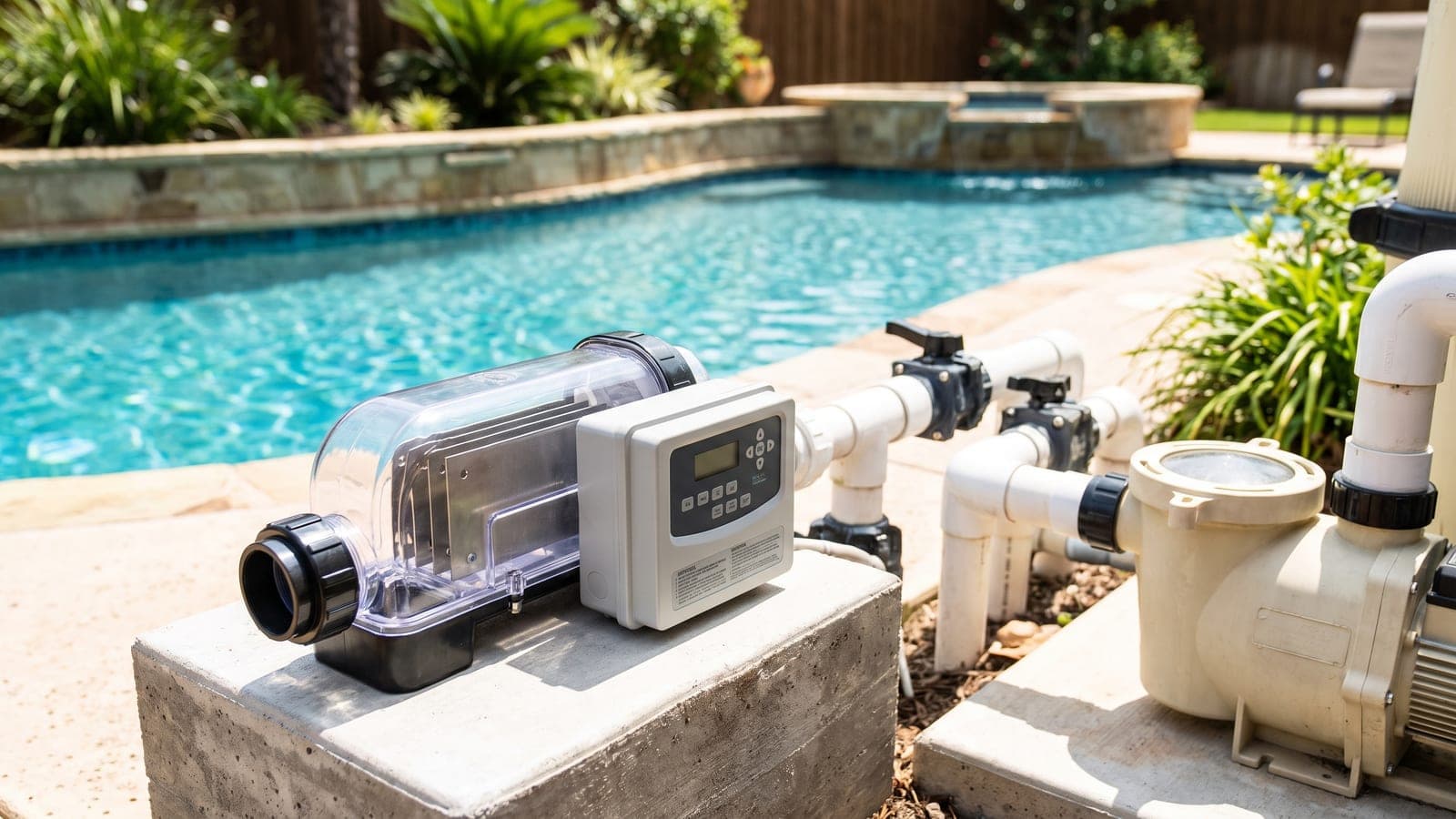
Your salt cell (the cartridge in the plumbing that turns dissolved salt into chlorine) does not have a true salinity probe. It estimates salt from the electrical current flowing across its plates, then corrects that number for water temperature. That is an educated guess, not a lab measurement.
This matters because anything that changes the current or the temperature reading can move the number without your real salt level changing at all. A Hayward AquaRite Salt System (40,000 gal) and a Pentair IntelliChlor IC40 Salt System both work this way, as do most others. So treat the panel number as a symptom to investigate, not a verdict.
First check: is the water just cold?
Cold water is the most common false alarm, and it shows up on a predictable schedule every fall. Salinity readings are temperature-corrected, and once the pool drops below roughly 60 degrees Fahrenheit, many cells read low or trip a cold-water fault even when the salt is exactly where it should be.
If your reading dropped as the season turned and nothing else changed, this is very likely the cause. Do not add salt to chase a cold-water number. It usually corrects itself as the water warms, and if you overcorrect now you will be draining water in spring to fix it.
Second check: what does an independent test say?
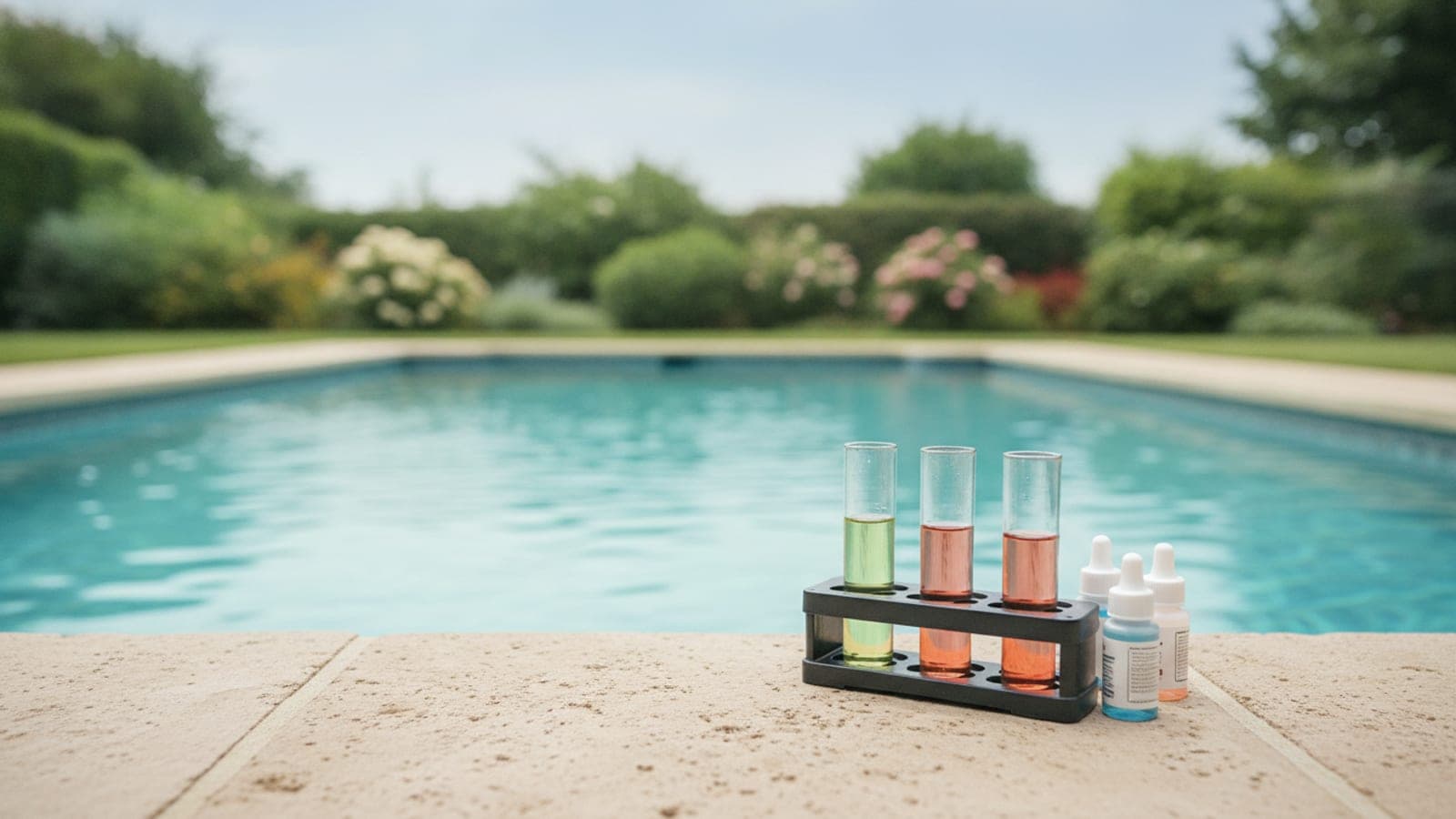
Never trust one instrument. Confirm the panel with a second source before you touch the salt level. Salt test strips are cheap and fast, and a digital salt tester or a pool store water test gives you a tighter number.
Compare that reading to your system's ideal range, which is printed in the manual and usually lands somewhere around 3,000 to 3,400 ppm depending on the brand. Hayward's own guidance walks through target levels and how to dose, and the CDC's water treatment and testing page is a good plain-English refresher on why balanced water keeps chlorine working. If your independent test agrees the salt is fine but the panel says low, the pool is not the problem. The cell or the sensor is.
Third check: is the cell dirty or scaled?
Open the cell and look at the plates. White crusty buildup is calcium scale, and it interferes with both chlorine production and the cell's ability to read salinity. A scaled cell frequently reports low or erratic salt.
Cleaning is straightforward. Turn off the system, remove the cell, and rinse with a hose first. If scale remains, soak it in a diluted muriatic acid solution (a common mix is one part acid to four parts water, but check your manual, since some makers now discourage acid and prefer a proprietary cleaner). Never mix the acid into the pool. Recheck the reading after cleaning and running the pump a while, because a clean cell often reads correctly again.
Fourth check: connections, flow, and stabilizer
A few quick items catch a surprising number of cases. Inspect the cell's cable and the connector at the control board for corrosion or a loose fit, since a poor connection can garble the current the cell reads. Confirm water is actually flowing, because low flow from a dirty filter or a lazy pump can trigger faults that look like a salt problem.
Then check your stabilizer, the cyanuric acid (CYA) that protects chlorine from sunlight. It does not change the salt reading, but low CYA is often why a saltwater pool cannot hold chlorine even when the cell is working fine. Our pool chemistry basics without the lab coat guide covers where CYA should sit, and the saltwater pool maintenance for beginners guide ties the whole salt-and-chlorine loop together.
When is it the cell, not the salt?
If your independent test confirms salt is in range, the water is warm, the cell is clean, connections are solid, and flow is good, but the panel still reads low or throws inspect-cell errors, the cell itself is aging out. Cells wear from normal use, and most last several seasons before output and sensing both fade. Pentair notes typical service life in the multi-year range for its IntelliChlor line, and other brands are similar.
Replacement is routine maintenance, not a failure on your part. Match the new cell to your exact system so the control board and the cell speak the same language. You can compare current options on our salt systems page. If you run a smaller setup or a spa, the hot tub maintenance for beginners without the chemical panic guide scales these same ideas down.
The short version
Read the panel as a clue, not a command. Rule out cold water, confirm with an independent test, clean the cell, check connections and flow, and only then add salt using the calculator above. Work it in that order and you will fix the real problem instead of burying it under a bag of salt you cannot take back out.
Frequently asked questions
Should I add salt as soon as my cell says low?
Not yet. The reading on the panel is an estimate the cell calculates from voltage and temperature, so a cold pool or a scaled cell can fake a low number. Confirm with test strips or a drop test first, then use the calculator to add only what you actually need.
How much will a low reading really move my chlorine?
It depends on how low the actual salt is and how warm the water is. A genuine low reading below your system's range usually drops chlorine output or shuts the cell off to protect it, so the water can slowly lose its chlorine cushion. If the salt is truly fine, output should be normal even while the panel complains.
Why does my reading drop every fall when nothing changed?
Cold water is the classic cause. Salinity readings are temperature-corrected, and below roughly 60 degrees many cells read low or throw a cold-water fault even with the right amount of salt in the pool. It often clears on its own as the water warms, so avoid dumping in extra salt you cannot easily remove.
Can a dirty cell cause a false low salt reading?
Yes. Scale and calcium buildup on the plates interfere with the cell's ability to read salinity and generate chlorine, which often shows up as a low or erratic number. Inspect the cell, clean it if you see white crust, and recheck before assuming the salt level is the problem.
When is the cell itself the problem and not the salt?
When your independent test confirms salt is in range, the cell is clean, and the water is warm, but the panel still reads low or shows inspect-cell errors, the cell is likely aging out. Most cells last several seasons, and replacement is normal wear. Match a new cell to your exact system model.