The best pool shock for most people is a cal-hypo product like HTH Super Shock Treatment (Cal-Hypo, 1 lb bags), because it hits hard, dissolves fast, and clears green water without adding stabilizer you may not want. Shock just means a big, fast dose of oxidizer to burn off contaminants, and the right type depends on your water. Below are the shock and shock-adjacent products worth knowing, matched to the job each one does best.
Use the calculator above to size this to your pool. Dose depends on your gallons and how far off your chlorine is, so plug in real numbers before you open a bag.
Quick comparison
| Pick | Best for | Watch out for |
|---|---|---|
| HTH Super Shock Treatment (Cal-Hypo, 1 lb bags) | Fast green-to-clean recovery | Raises calcium hardness over time |
| In The Swim 3-Inch Stabilized Chlorine Tablets | Steady daily chlorine between shocks | Slowly raises CYA (stabilizer) |
| In The Swim Algaecide 60 Plus (1 Quart) | Backup after shocking algae | Not a chlorine substitute |
| Morton Pool Salt (40 lb) | Saltwater pools that shock themselves | Needs a working salt cell |
| SeaKlear Phosphate Remover (1 Quart) | Algae that keeps coming back | Fixes food source, not the algae itself |
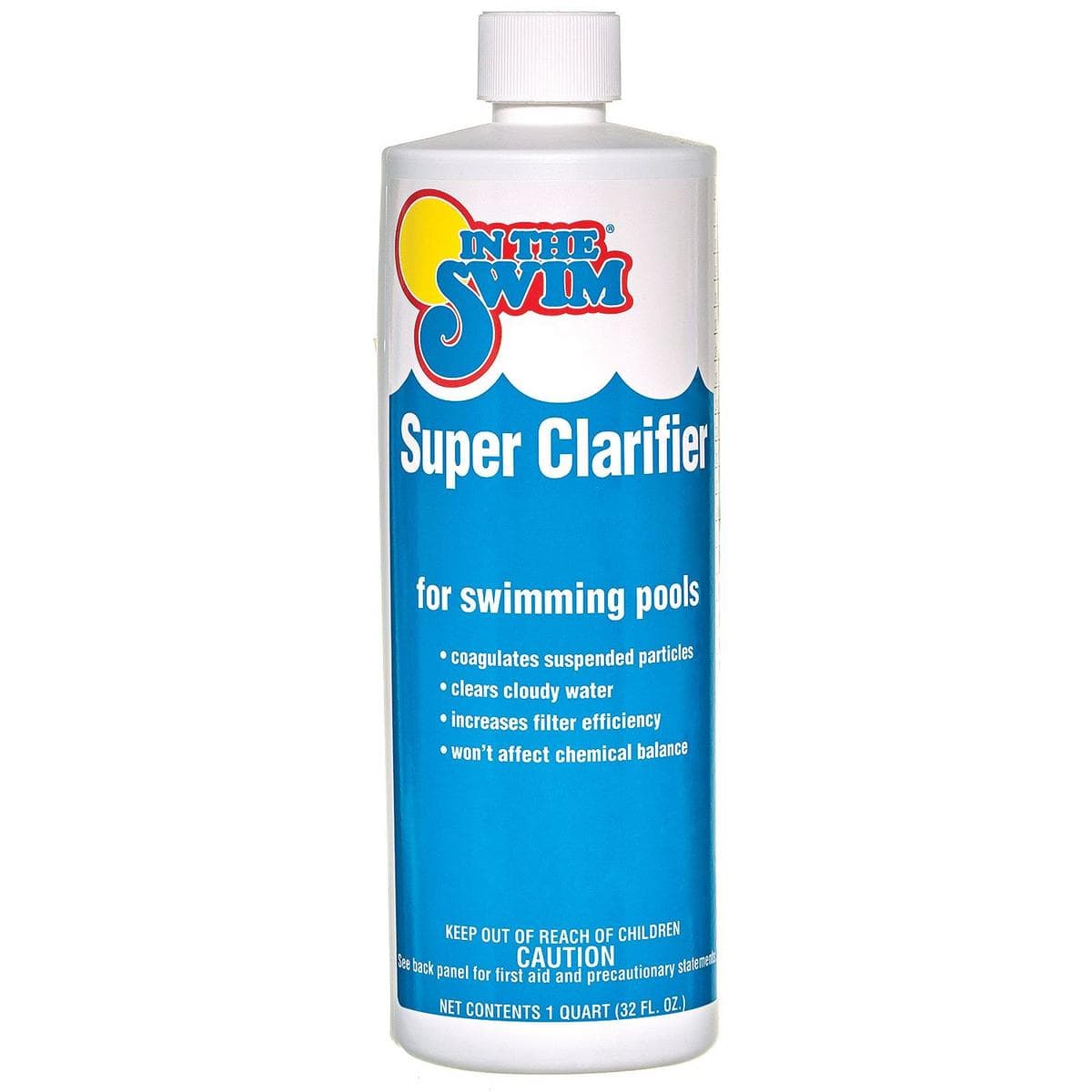
| In The Swim Super Clarifier (1 Quart) | Cloudy water after a shock | Clumps particles, does not sanitize |
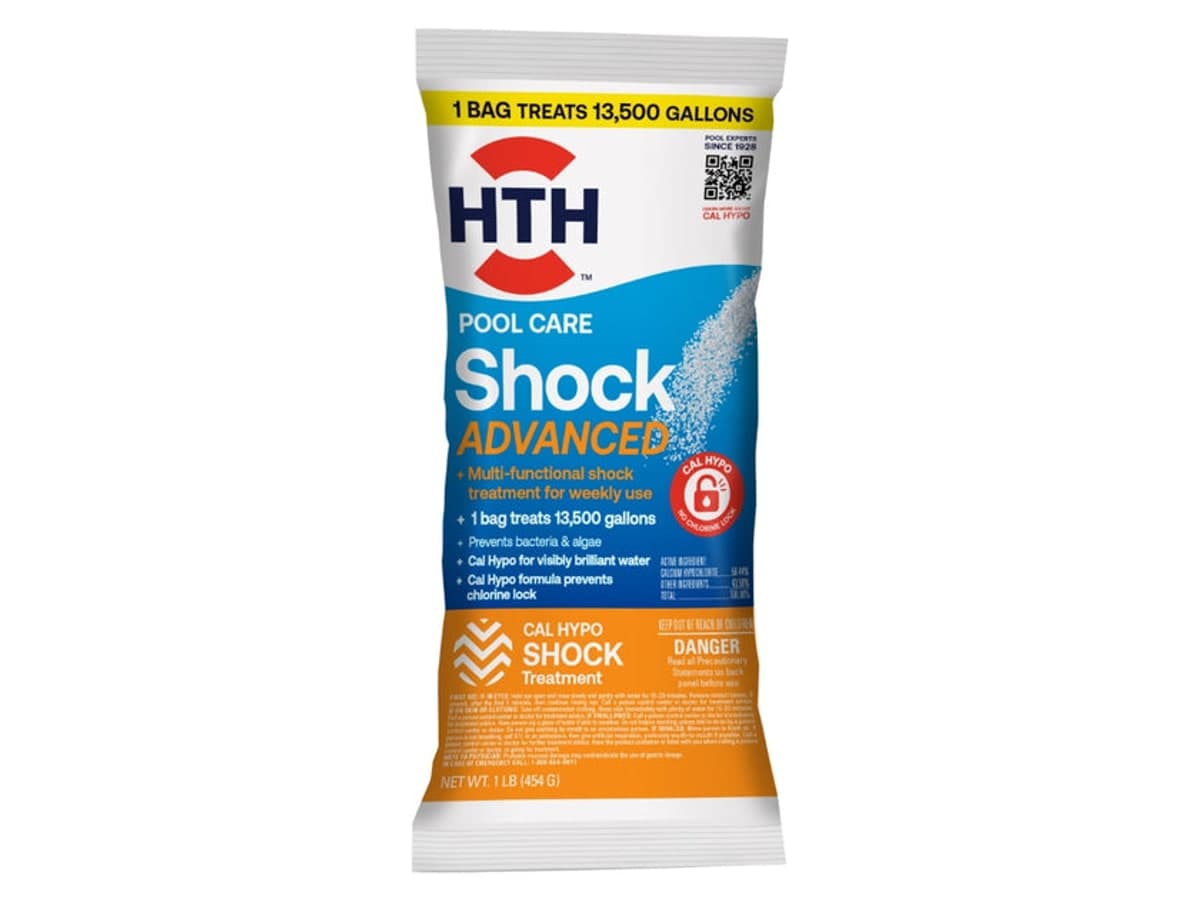
Best overall: HTH Super Shock Treatment (Cal-Hypo, 1 lb bags)
Budget
Calcium hypochlorite, or cal-hypo, is the workhorse shock. It carries a high available-chlorine punch and no cyanuric acid, so it raises your free chlorine fast without pushing up your stabilizer level. That makes HTH Super Shock Treatment (Cal-Hypo, 1 lb bags) the go-to for a green pool, a post-party reset, or a storm cleanup where you need numbers to move quickly.
The tradeoff is calcium. Every dose adds a little calcium hardness, which matters in hard-water regions or plaster pools where scale is already a concern. Cal-hypo also wants to be pre-dissolved in a bucket of water for vinyl liners to avoid bleaching spots, and it should never touch other chemicals dry. Store it sealed and cool, because heat and moisture degrade it, a point the EPA safe-storage guidance and the NPIC pool chemicals factsheet both stress.
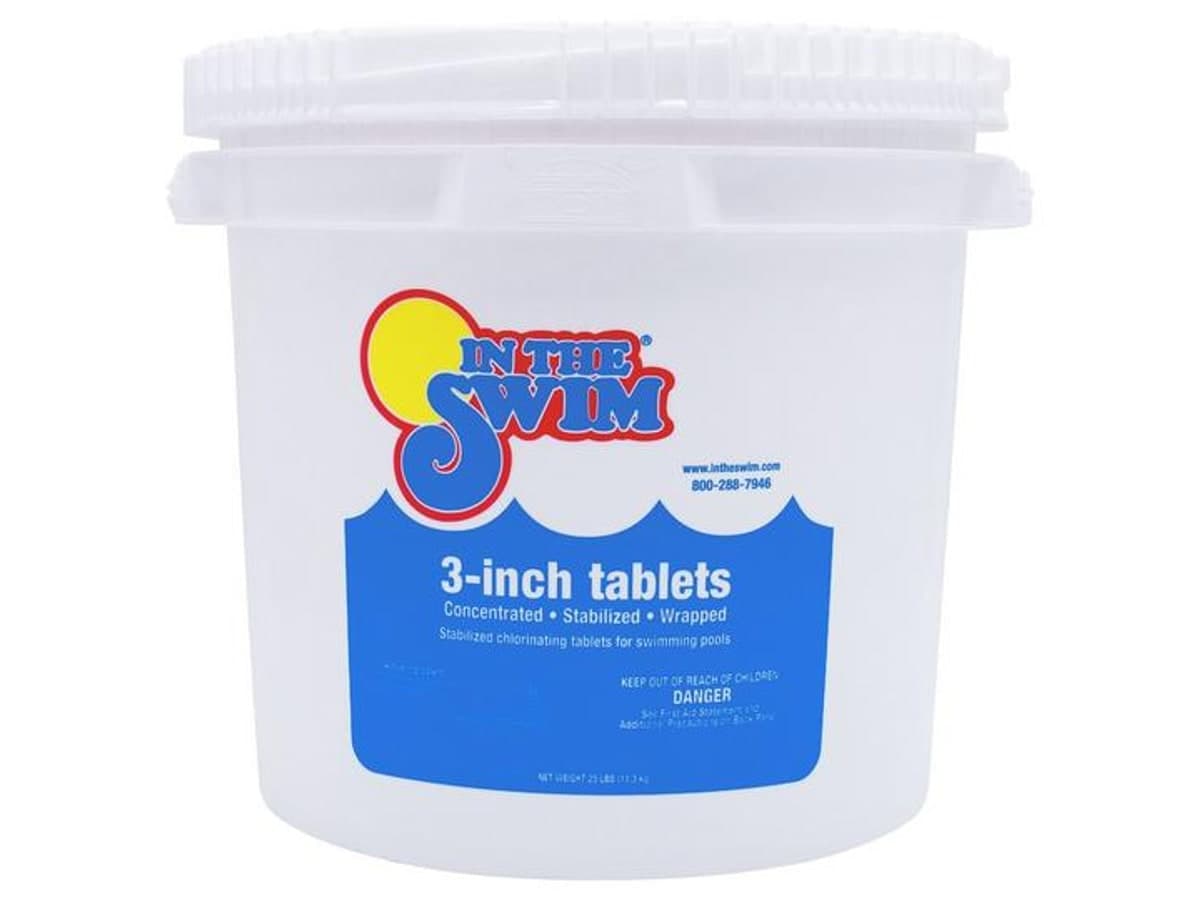
Best for daily chlorine between shocks: In The Swim 3-Inch Stabilized Chlorine Tablets
Mid-range
Tablets are not shock, but they are half the reason your shock works less often. In The Swim 3-Inch Stabilized Chlorine Tablets are dichlor/trichlor pucks that feed a slow, steady chlorine dribble into your water through a floater or feeder, holding your everyday sanitizer in the 1 to 4 ppm range the CDC recommends for swimmable water. Keep that baseline solid and you shock to fix problems, not to paper over a chlorine hole.
The catch is stabilizer. These tablets are stabilized with cyanuric acid (CYA), which protects chlorine from sunlight but builds up with every puck. Too much CYA and your chlorine gets sluggish, forcing bigger shock doses to get the same kill. Test CYA a couple of times a season, and if it climbs past roughly 50 ppm, dilute with fresh water. Our maintenance basics run through this in more detail.
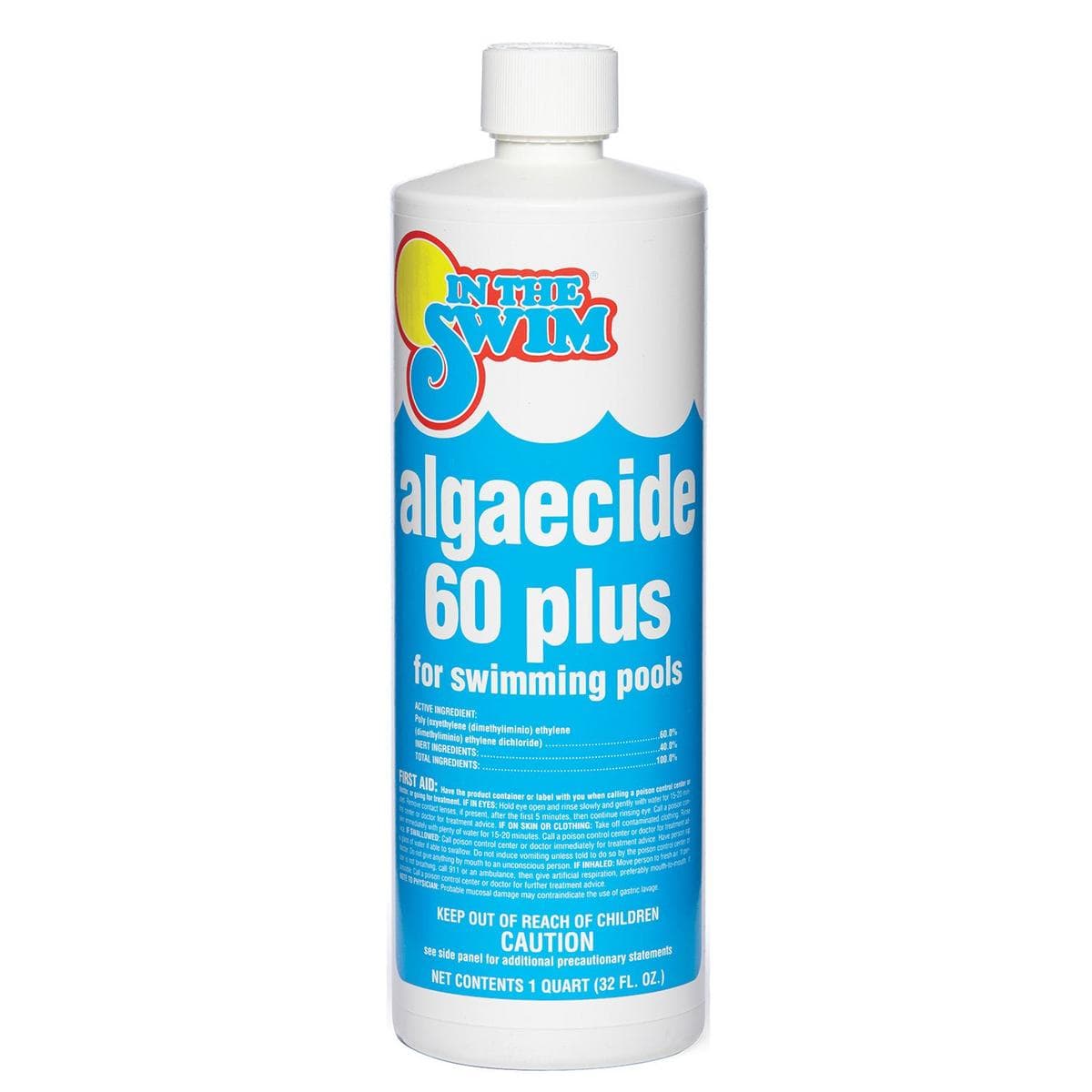
Best backup for algae: In The Swim Algaecide 60 Plus (1 Quart)
Budget
When you are fighting a real bloom, shock does the killing and algaecide guards the flank. In The Swim Algaecide 60 Plus (1 Quart) is a polyquat-style product that helps prevent regrowth and mops up stragglers after a heavy chlorine shock has done the heavy lifting. It fits pools that green up fast in summer heat or shaded corners that never fully clear.
The honest limit: algaecide is not a sanitizer and will not replace a shock. Add it after the chlorine has dropped back down, not at the same time, because high chlorine can break down some algaecides and waste your money. Think of it as insurance on the shock you already did, not a standalone fix.
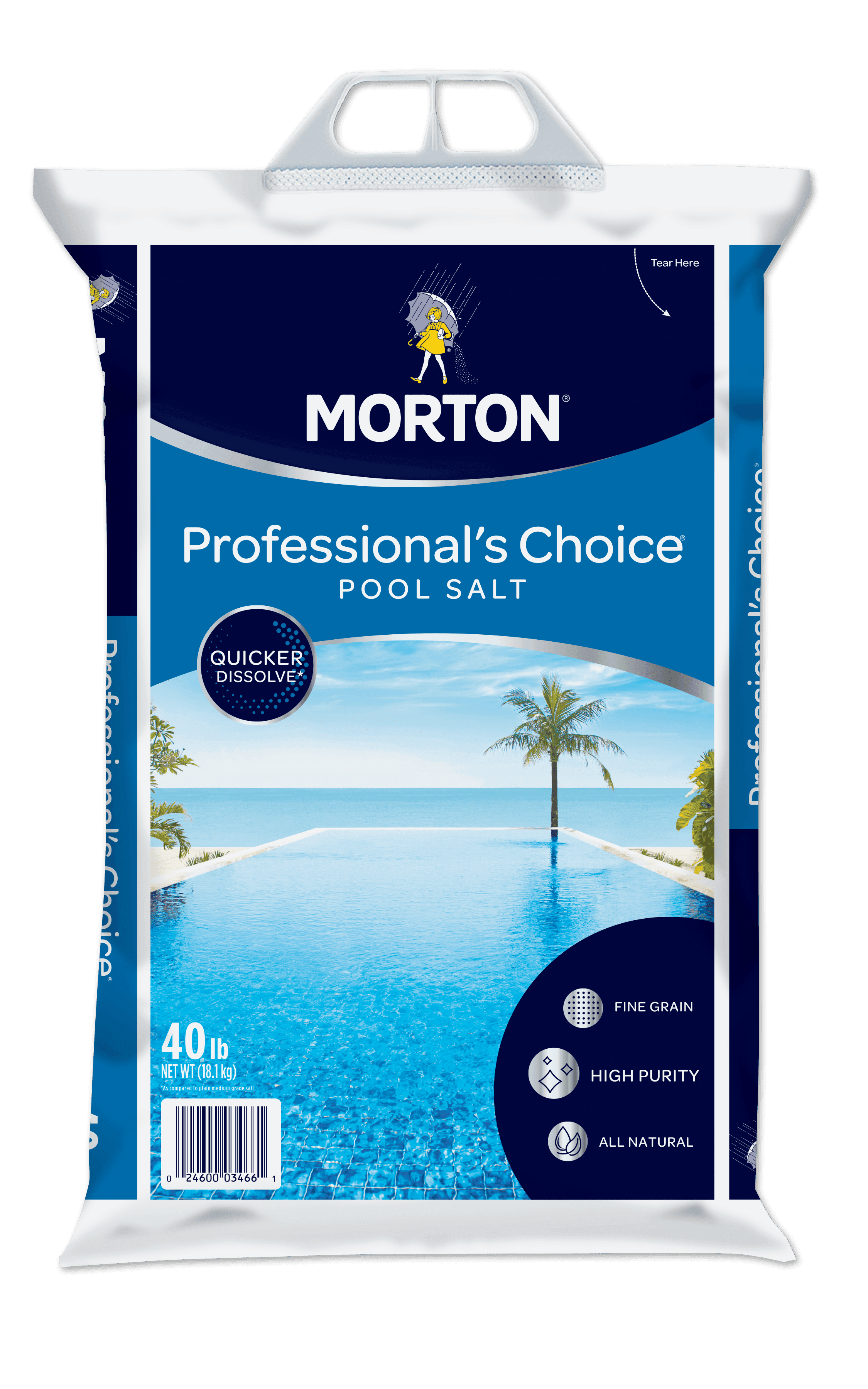
Best for saltwater pools: Morton Pool Salt (40 lb)
Budget
Saltwater pools shock a little differently, and Morton Pool Salt (40 lb) is the fuel. Your salt cell splits dissolved salt into chlorine as water passes through, so many salt systems include a "super chlorinate" or boost mode that acts as a built-in shock without you hauling bags of powder. Keep the salt level in your cell's target range and the system does most of the routine oxidizing for you.
The tradeoff is that you are trusting the cell. A dirty or aging cell makes weak chlorine, and boost mode cannot outrun a scaled-up plate. Salt pools still benefit from an occasional manual cal-hypo shock after a big bloom or heavy bather load, because the cell alone is slow to catch up. Our saltwater maintenance guide walks through cell care if this is your setup.
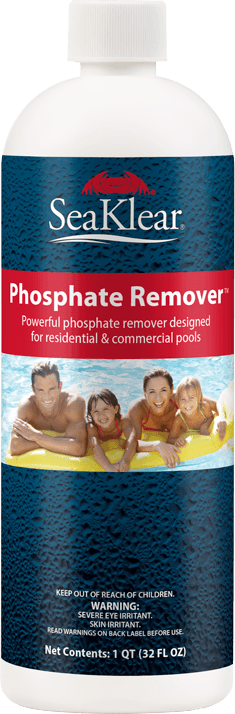
Best for algae that keeps returning: SeaKlear Phosphate Remover (1 Quart)
Budget
If you shock, clear the pool, and it greens again within days, the problem may be food, not sanitizer. Phosphates feed algae, and SeaKlear Phosphate Remover (1 Quart) strips that food source so your chlorine is not fighting a losing battle every week. It fits pools near lawns, gardens, or heavy runoff where phosphates keep sneaking in.
The nuance: phosphate remover does not kill algae or sanitize anything. It clumps phosphates so your filter can pull them out, which means you still shock to handle a live bloom first, then remove phosphates to keep the next one from starting. Used at the wrong step it just clouds the water, so shock, clear, then treat phosphates.
Best for cloudy water after shocking: In The Swim Super Clarifier (1 Quart)
Budget
A heavy shock can leave water hazy while dead algae and fine debris hang in suspension. In The Swim Super Clarifier (1 Quart) coagulates those tiny particles into clumps big enough for your filter to grab, speeding up the clear-up after you have done the sanitizing work. It suits sand or cartridge filters that struggle to catch the finest cloudiness on their own.
Just know what it is not. Clarifier does not sanitize, kill algae, or replace a shock, and dumping in extra will overload your filter rather than help. Add the recommended dose, run the pump, and give it time. If the water is genuinely green rather than just cloudy, shock first and reach for clarifier only once the chlorine has done its job.
How to pick the right shock for the job
Match the product to the problem, not the panic. Green water or a fouled pool means cal-hypo shock for speed. Routine weekly upkeep means solid tablet chlorine plus a smaller maintenance shock. Recurring algae points at phosphates, and cloudiness after the fact points at clarifier. Saltwater owners lean on the cell first and keep a bag of cal-hypo for emergencies.
Whatever you reach for, test before and after. A decent test kit tells you free chlorine, pH, and CYA so you dose on data instead of guessing, and it tells you when the water is safe to swim again. You can browse the full maintenance supplies lineup to round out your kit, and the same safe-handling rules apply to every product here.
One safety note before you scoop
Pool shock is a strong oxidizer, and the EPA and NPIC both flag the same handling rules: never mix chlorine products together, never combine them with acid, add chemical to water and not water to chemical, and store everything sealed, cool, dry, and away from other chemicals. A stray splash of trichlor into a cal-hypo bucket can react violently. If you are shocking a hot tub instead of a pool, the doses and cadence differ, so see our hot tub maintenance guide rather than eyeballing pool amounts.
Frequently asked questions
What is the difference between shock and regular chlorine?
Shock is just a large, fast dose of chlorine (or another oxidizer) meant to blast contaminants in one shot, while your tablets or feeder handle the slow daily chlorine. Same chemistry family in most cases, different job. You shock to fix a problem, and you chlorinate to prevent one.
How often should I shock my pool?
A common rhythm is once a week in swim season, plus an extra shock after heavy use, storms, or a visible algae bloom. Pools with heavy bather loads or lots of sun may need it more often. Test first, because a pool holding good chlorine may not need a weekly shock at all.
Can I swim right after shocking my pool?
Not right away with most chlorine shocks. Wait until free chlorine drops back to roughly 1 to 4 ppm, which often means overnight for a full cal-hypo dose. Always confirm with a test kit before anyone gets in, and follow the product label.
Does pool shock expire?
Yes, chlorine-based shock loses strength over time, especially cal-hypo and dichlor stored in heat or humidity. Buy what you will use in a season and keep it sealed, cool, and dry. Weak shock means you dump more in and still miss your target.
Should I shock at night or during the day?
Evening or after sunset is usually better because the sun burns off unstabilized chlorine fast, wasting part of your dose. Run the pump for several hours after adding it so it circulates. This is especially true for cal-hypo, which carries no stabilizer of its own.