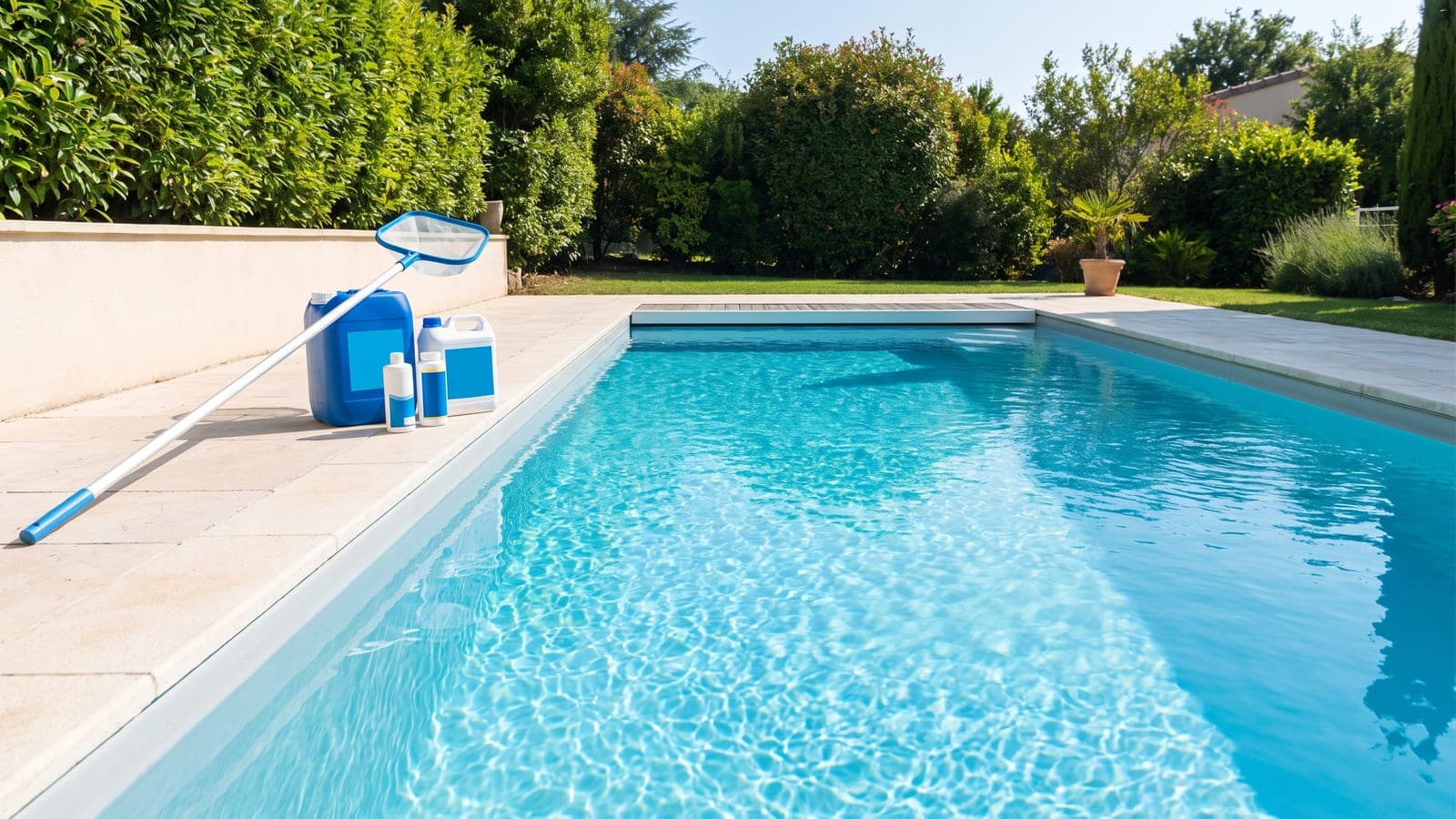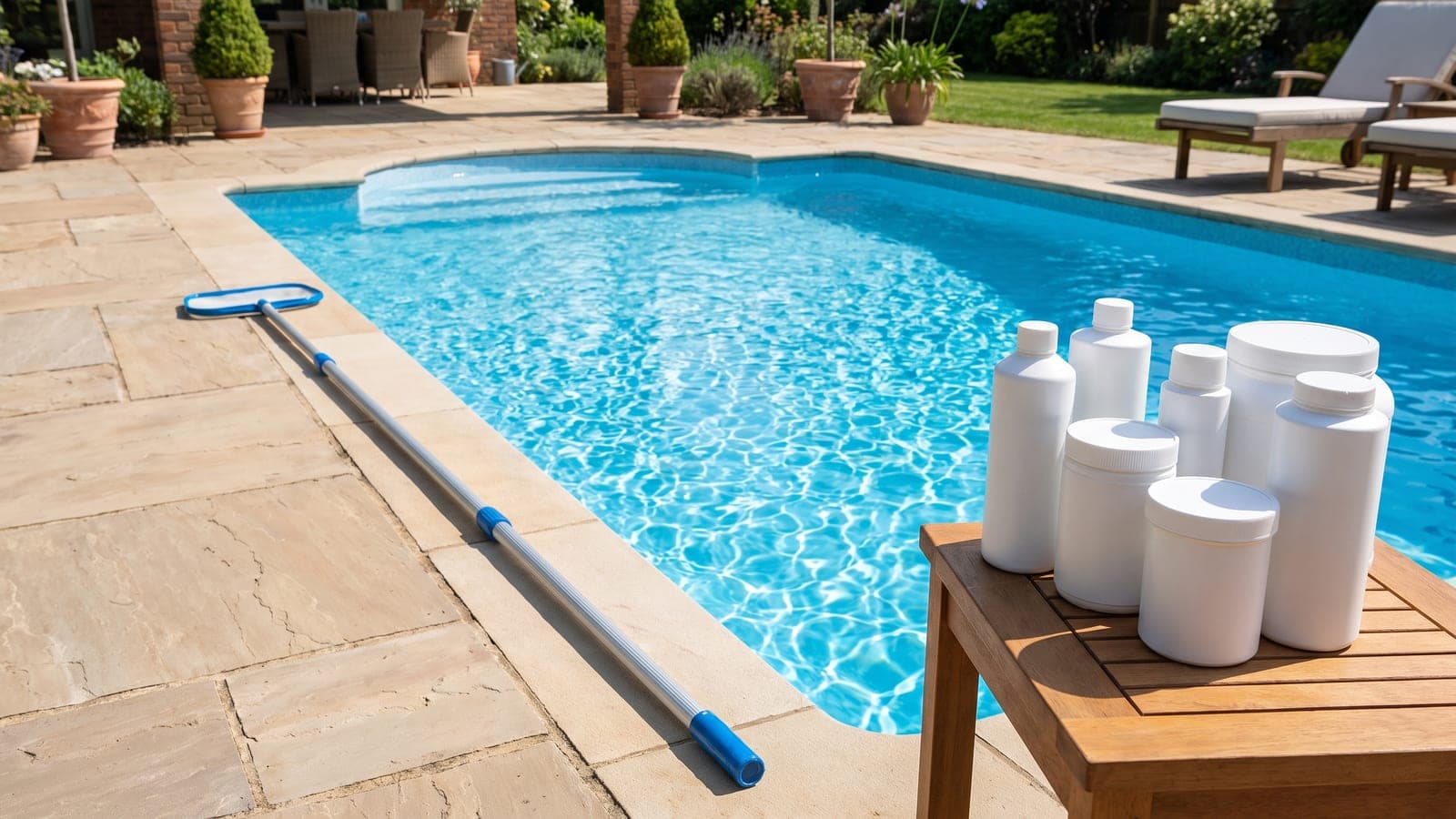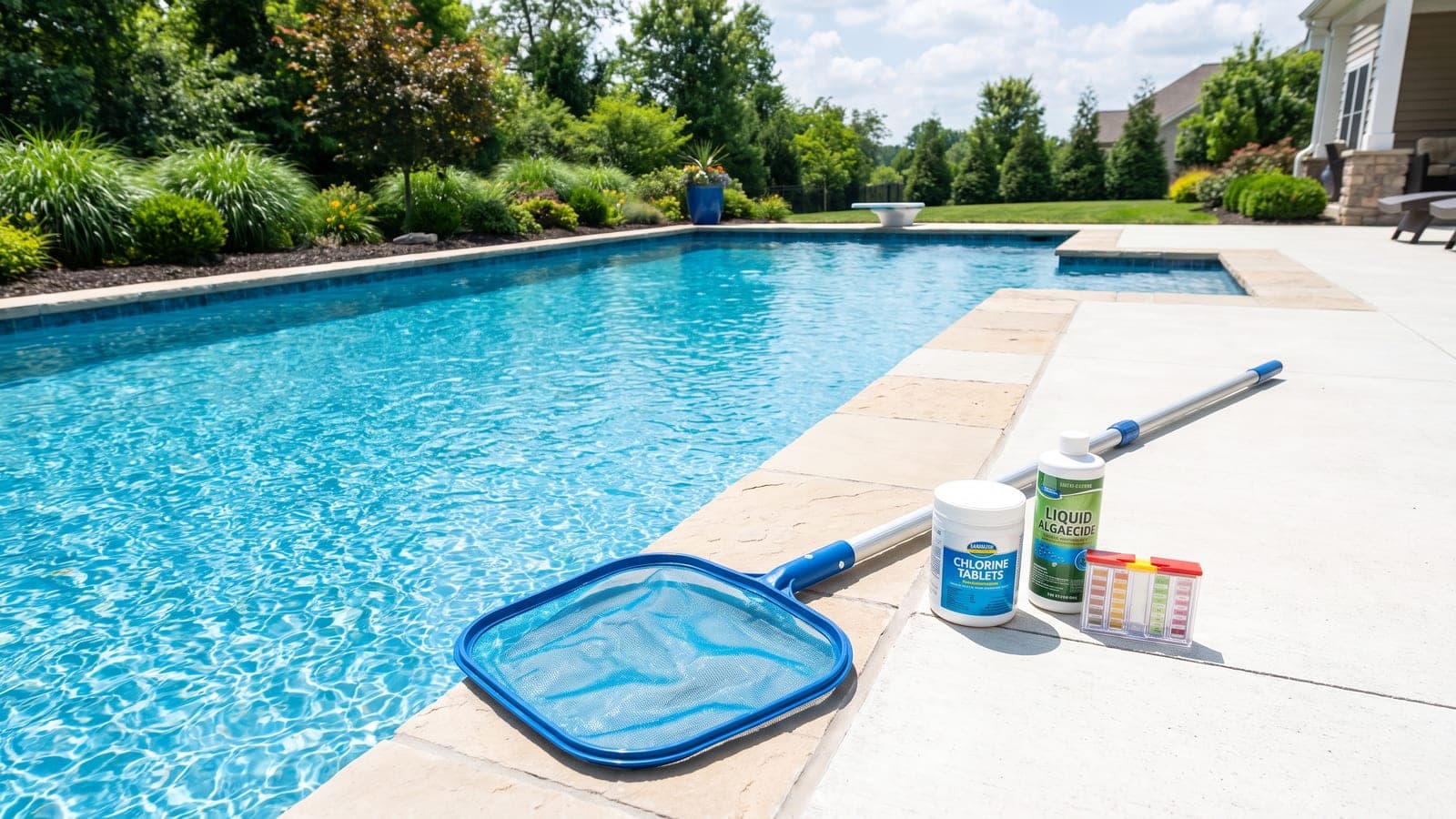
The clarifier most people should reach for is a concentrated polymer type like In The Swim Super Clarifier, because it works in normal cloudy-water situations, doses by the ounce, and lets your filter do the cleanup instead of draining water. Clarifier is a chemical that bunches up microscopic particles (the stuff too small for your filter to catch) into bigger clumps the filter can grab. It is the right tool for haze and dull water, not for green algae or a stain problem, so match the pick to what you are actually seeing.
Before you dose anything, get your basic chemistry in range and your filter clean. A clarifier fighting bad pH or a clogged cartridge is wasted money. If your numbers are a mystery, start with pool chemistry basics without the lab coat.
| Pick | Best for | Watch out for |
|---|---|---|
| In The Swim Super Clarifier | Everyday cloudy water | Needs filter running to work |
| SeaKlear Phosphate Remover | Recurring haze and algae fuel | Not a same-day cloudiness fix |
| In The Swim Algaecide 60 Plus | Cloudy after an algae bloom | Kills algae, does not clump haze |
| In The Swim Super Stain Away | Cloudy or tinted from metals | For metals, not organic haze |
| HTH Super Shock Treatment | Cloudy from low chlorine | Wait for chlorine to drop before swim |
| Morton Pool Salt | Saltwater pools with cell haze | Salt itself does not clarify |
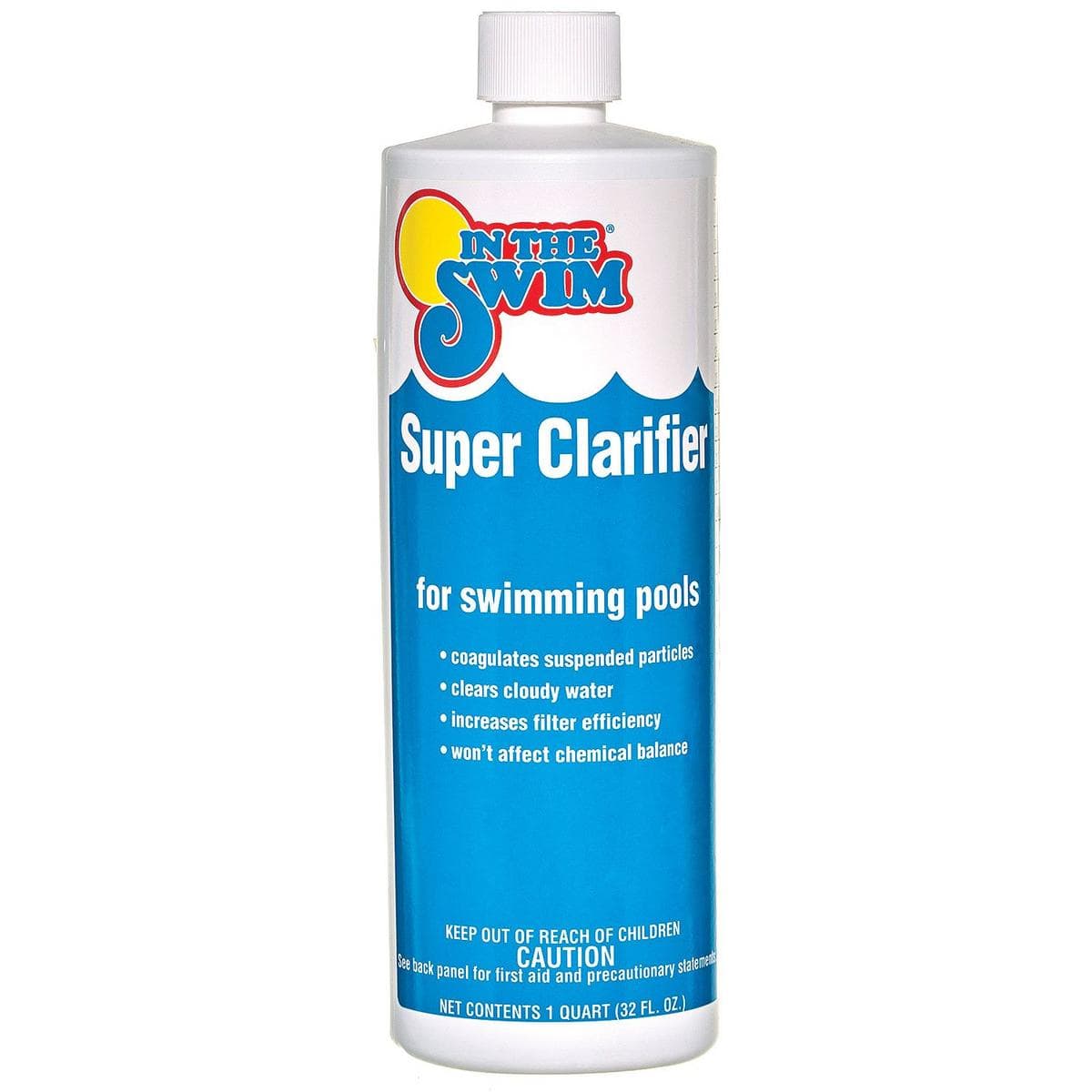
Best overall: In The Swim Super Clarifier (1 Quart)
Budget
This is the pick for the most common problem: water that looks dull, milky, or slightly hazy but is not green. A polymer clarifier like In The Swim Super Clarifier gathers fine particles into clumps your sand or cartridge filter can trap, so you add a measured dose, run the pump, and let it work over a day or two.
The tradeoff is patience. It is not instant, and it does nothing if your filter is off or filthy. Owners who get poor results usually skipped a filter cleaning or dumped in extra hoping for speed, which can backfire. Dose by your gallons and clean the filter when pressure climbs.
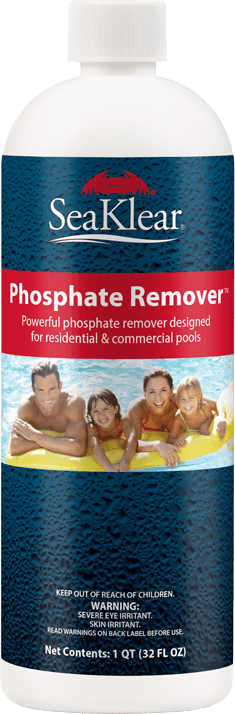
Best for recurring cloudiness: SeaKlear Phosphate Remover (1 Quart)
Budget
If your water keeps going cloudy or algae keeps coming back no matter how much you shock, phosphates may be feeding the problem. SeaKlear Phosphate Remover strips out phosphate, a nutrient that algae uses as food, which can make your other chemicals work less hard over time.
Be clear on what this is: a root-cause tool, not a same-day defogger. It will not clear today's haze by dinnertime. Use it when you have a repeat pattern, ideally after testing phosphate levels, and pair it with normal clarifier or filtering to handle the visible cloudiness.
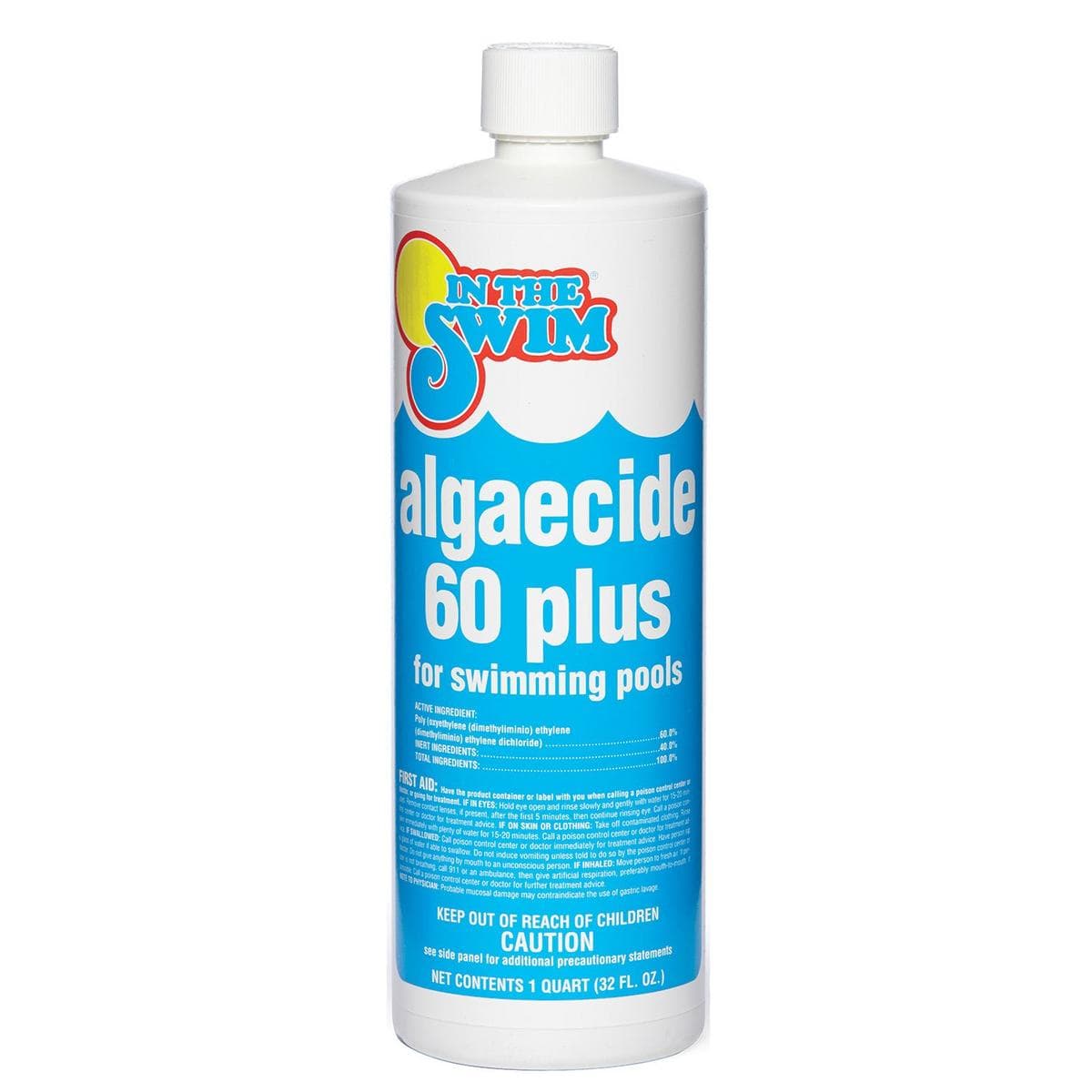
Best after an algae bloom: In The Swim Algaecide 60 Plus (1 Quart)
Budget
When your pool has just turned or is recovering from green water, a clarifier alone will disappoint you. In The Swim Algaecide 60 Plus helps kill and prevent algae, which is the step that has to happen before any water looks clear. Dead algae still needs to be filtered or vacuumed out.
The tradeoff is that algaecide treats the living problem, not the cloudiness left behind. The usual sequence is shock first, then algaecide per the label, then scrub, vacuum, and only then a clarifier to polish the leftover haze. Rushing to clarifier while algae is still alive just wastes product.
Best for metal-tinted water: In The Swim Super Stain Away (Stain & Metal Control, 1 Quart)

Budget
Sometimes water is not cloudy from dirt, it is tinted or dull from dissolved metals like iron or copper, often after adding well water or certain shocks. In The Swim Super Stain Away is a stain and metal control product that keeps those metals in check so they do not cloud the water or stain surfaces.
This is a targeted fix, so use it only when metals are the suspect (well water, brown or green tints that a regular clarifier ignores). It will not clear ordinary organic haze, and heavy metal loads may need repeat doses per the label. If you are unsure, a metal test strip settles it fast.
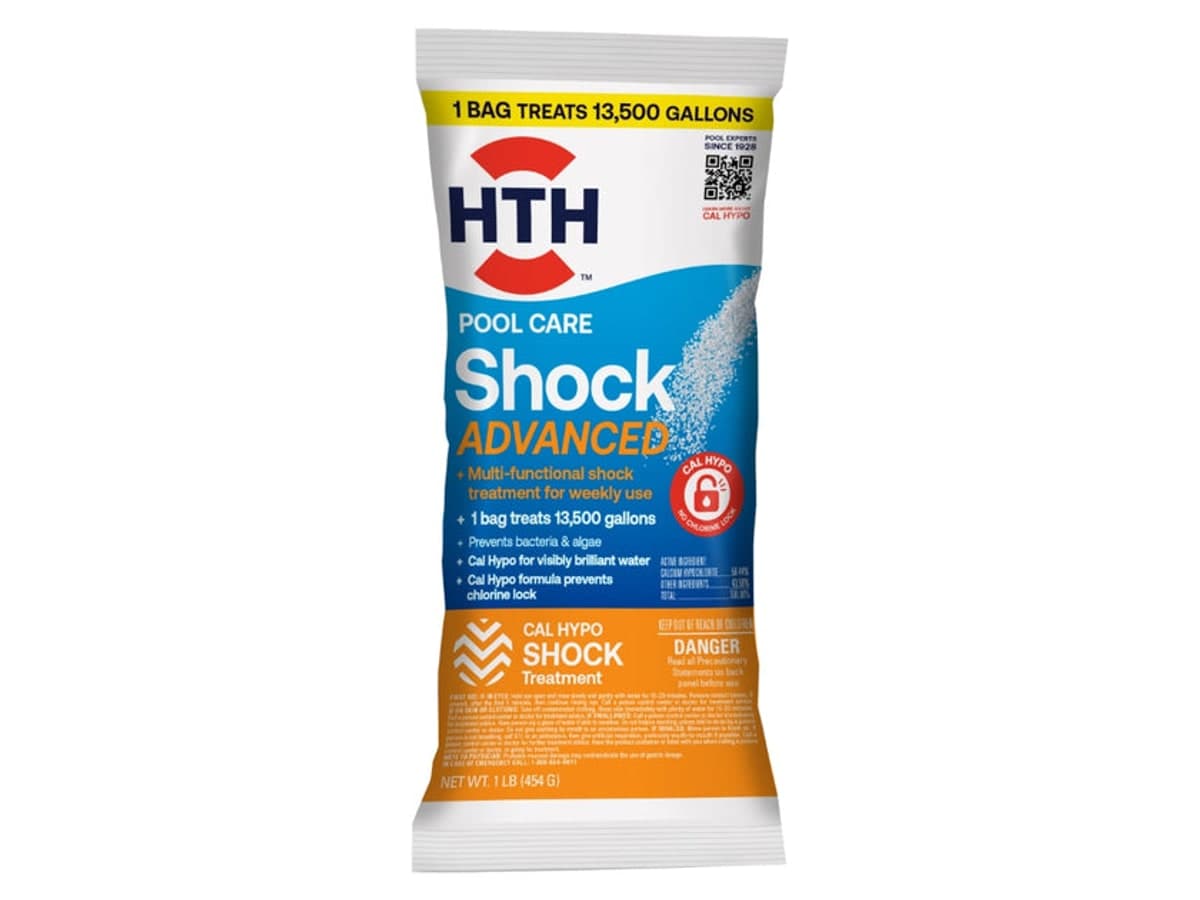
Best for chlorine-related cloudiness: HTH Super Shock Treatment (Cal-Hypo, 1 lb bags)
Budget
Cloudy water is often a chlorine problem in disguise. When free chlorine drops, waterborne stuff multiplies and the water goes dull before it goes green. HTH Super Shock Treatment (a cal-hypo shock) raises chlorine hard to burn through that load, and once sanitizer is back up, the water usually clears with the filter running.
The catch is timing and safety. Cal-hypo spikes chlorine, so you wait until levels fall back into the swim range before anyone gets in, and you follow safe storage and handling rules for pool chemicals from the EPA. The CDC also has plain guidance on treatment and testing. Shock is the fix when low chlorine is the cause, not a general clarity booster.
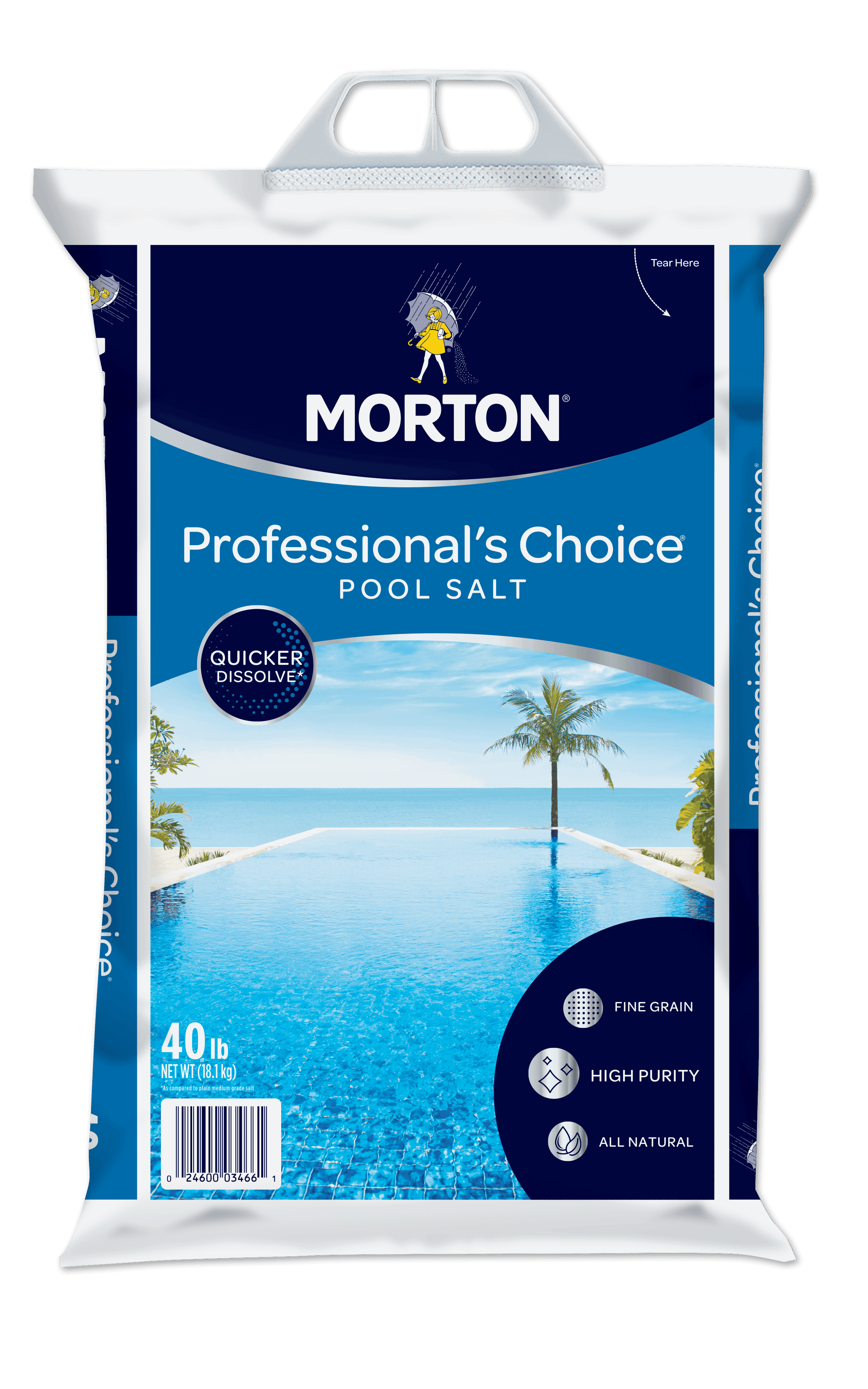
Best for saltwater pool haze: Morton Pool Salt (40 lb)
Budget
Salt pool owners sometimes see haze tied to salt cell scaling or chemistry drift rather than dirt. Morton Pool Salt keeps your salt level where the cell needs it so the generator makes chlorine correctly, which is the real engine of clarity in a salt system. Wrong salt level, weak chlorine, cloudy water.
To be honest, salt does not clarify anything by itself. It just keeps the sanitizing system healthy. If your salt pool is hazy, confirm salt and chlorine output first, then use a normal clarifier for the visible cloudiness. New to salt systems, start with saltwater pool maintenance for beginners.
How to pick and dose safely
Match the tool to the symptom. Plain haze wants a clarifier, repeat cloudiness wants phosphate control, green wants shock and algaecide, and tints want metal control. The same logic applies to a hot tub at a smaller scale, covered in hot tub maintenance for beginners.
Whatever you add, dose by your actual gallons, keep chemicals in their original containers, and never mix products in a bucket. The National Pesticide Information Center has a good safety rundown. Browse the maintenance supplies that fit each job once you know the problem.
Frequently asked questions
How long does a clarifier take to clear my pool?
Most clarifiers start clumping tiny particles within a few hours, and the water looks noticeably clearer in 24 to 48 hours with the filter running. It depends on your pool volume, how cloudy it was, and whether your filter is clean, so give it a full day before you decide it did not work.
Do I run the filter or turn it off after adding clarifier?
Run the filter. A clarifier groups small particles into bigger clumps so the filter can catch them, so no filter run means no cleanup. Run the pump on a normal or extended cycle and clean or backwash the filter when pressure rises.
Will a clarifier fix a green algae pool?
Not on its own. Clarifier handles cloudiness and fine debris, but active algae needs to be killed first with shock and often an algaecide, then cleared. Once the algae is dead and you have scrubbed and vacuumed, a clarifier can help polish out the leftover haze.
Is clarifier the same as flocculant?
No. Clarifier clumps particles so the filter removes them slowly with the pump running. Flocculant drops particles to the floor so you vacuum them to waste, which is faster but wastes water and skips the filter. For a slow, low-effort cleanup, clarifier is usually the better first move.
Can I use too much clarifier?
Yes, and more is not better. Overdosing can actually keep water cloudy because the excess charge stops particles from clumping. Follow the label dose for your gallons, wait a full day, and only redose if the label allows it.