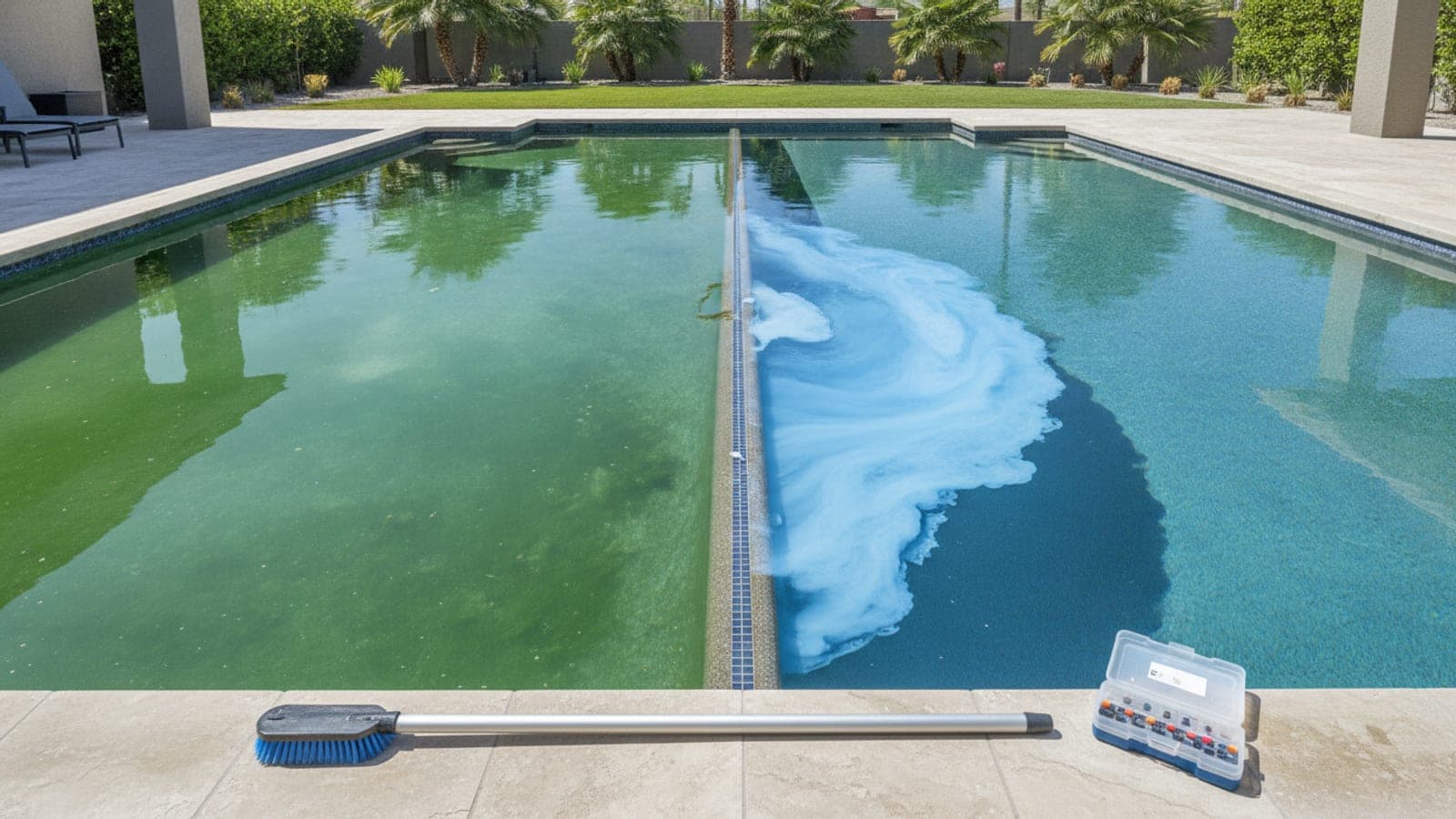
Burning eyes in a pool almost never means too much chlorine. Nine times out of ten it means the pH is off, or a group of irritating compounds called chloramines has built up. Both are easy to test for and fix, and neither requires you to drain the pool.
The "too much chlorine" theory is one of the most stubborn myths in backyard pool care. Free chlorine (the active sanitizer that actually kills germs) has to climb to a very high level before it stings on its own, and most home pools never get anywhere close. So if your eyes are red after a swim, the chlorine number is probably not the villain.
Is it the pH, not the chlorine?
Start here, because pH is the usual culprit. pH is a 0 to 14 scale that measures how acidic or basic your water is. Healthy human tears sit around 7.4, and that is exactly where you want your pool water too.
When pool water drifts below about 7.2, it turns acidic. Acidic water strips the natural film that protects your eyes, and that is the sting people feel. The CDC's pool water treatment and testing guidance points to a target range of roughly 7.2 to 7.8, and most owners find the sweet spot for comfort at 7.4 to 7.6.
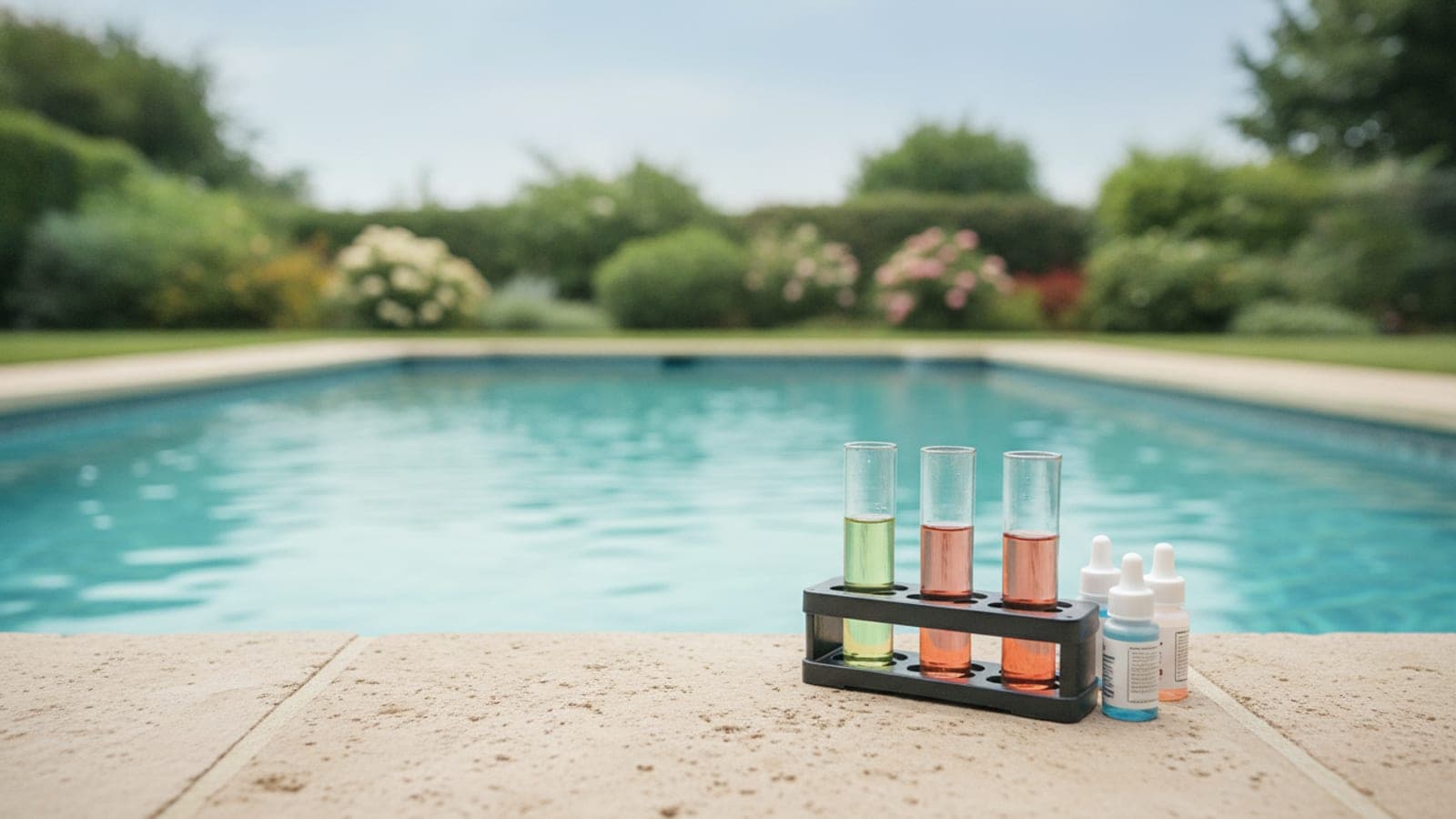
Grab a test kit or test strips and read the pH first. If it is low, you raise it with a pH increaser such as In The Swim pH Increaser (Soda Ash, 25 lb). If it is high (over about 7.8, which can also cause cloudy water and scaling), you bring it down with a pH reducer like In The Swim pH Reducer (Sodium Bisulfate, 30 lb). Add the smaller dose the label suggests, run the pump, wait a few hours, and retest before adding more.
What are chloramines and why do they smell like "too much chlorine"?
Here is the twist that fools almost everyone. That sharp chemical odor at indoor pools and busy backyard parties is not extra chlorine. It is chloramines, and they are a sign your chlorine is losing the fight.
Chloramines (also called combined chlorine) form when chlorine binds to the sweat, sunscreen, body oils, and yes, the occasional bit of urine that swimmers bring in. Once chlorine combines with that gunk, it stops sanitizing well and starts irritating eyes and lungs instead. The strong smell means you need more effective chlorine, not less.
A standard test kit measures free chlorine (the good, available kind) and total chlorine. Subtract free from total and you get combined chlorine, the chloramine level. If that gap is more than about 0.2 to 0.5 ppm, chloramines are your problem.
How do I fix chloramines?
You break them apart by shocking the pool, which means adding a large dose of chlorine to blast past the "breakpoint" and destroy the combined chlorine. A fast-dissolving cal-hypo shock such as HTH Super Shock Treatment (Cal-Hypo, 1 lb bags) is the common choice for this job.
Shock in the evening after the sun is down, run the pump for at least several hours, and keep swimmers out until free chlorine drifts back to a normal range (usually around 1 to 4 ppm). Your specific dose depends on your pool's gallons and current readings, so follow the product label rather than eyeballing it. When you handle shock, follow basic safety: the EPA's guidance on safe storage and handling of pool chemicals and this NPIC fact sheet on pool chemicals both stress adding chemical to water (never water to chemical), keeping products in their original containers, and never mixing different chemicals together.
Could low chlorine actually be the real issue?
Yes, and it hides behind the myth. If free chlorine reads at or near zero, the water is not sanitized, algae and bacteria move in, and swimmers can end up with irritated eyes from the water itself being unsafe rather than from any chemical.
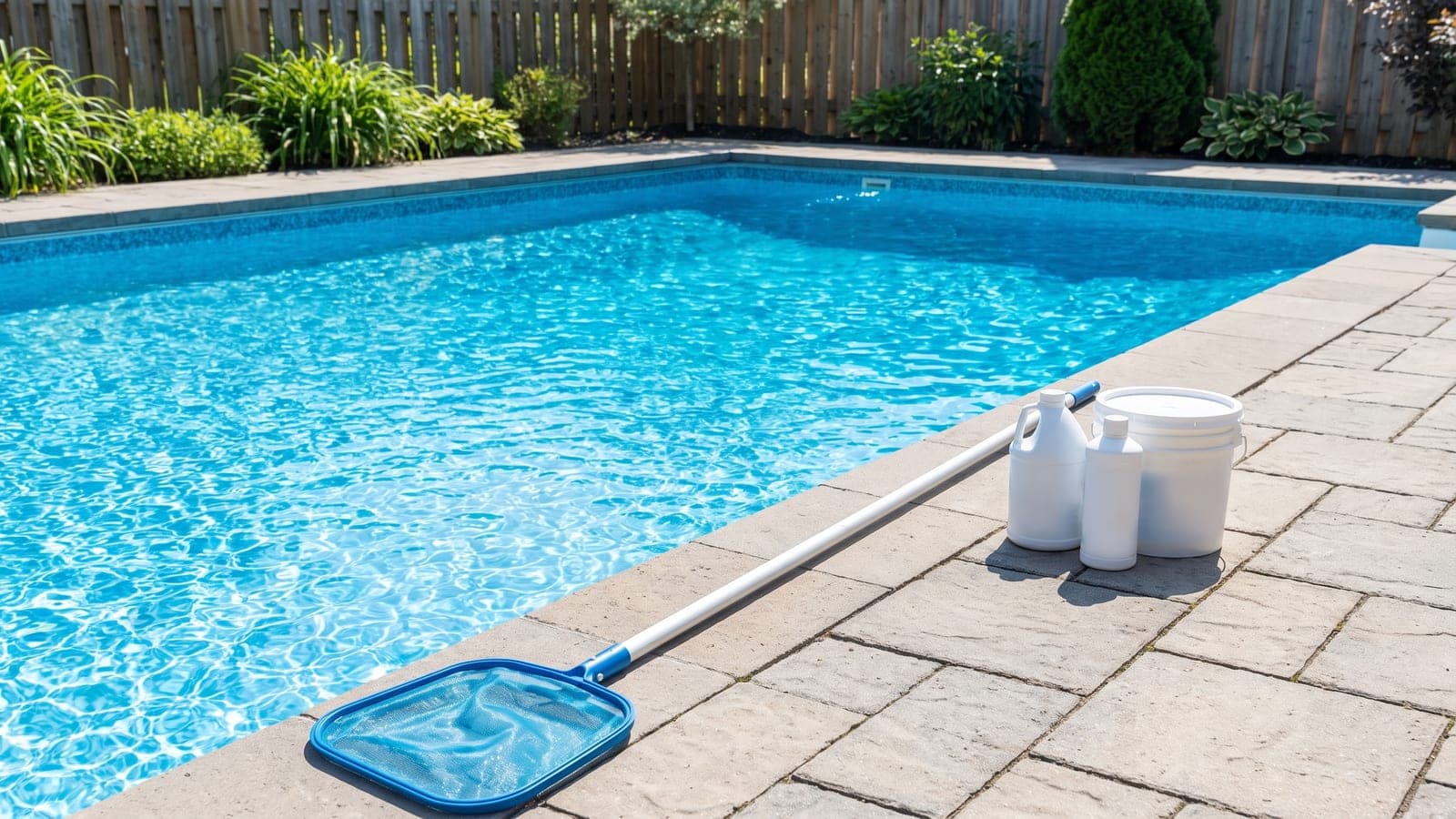
Check that you have a steady chlorine source. Many owners use a stabilized tablet like In The Swim 3-Inch Stabilized Chlorine Tablets in a floater or feeder to keep a baseline level all week. If your chlorine vanishes within hours of adding it on a sunny day, your cyanuric acid (CYA, the stabilizer that shields chlorine from sunlight) may be too low. That is a separate test and a separate fix, and our pool chemistry basics guide walks through how those numbers work together.
What is the quick fix order to stop the sting?
Work through it in this order, changing one thing at a time:
- Test pH first. Move it into the 7.4 to 7.6 range with a pH increaser or reducer.
- Read free and total chlorine. Confirm free chlorine is present (roughly 1 to 4 ppm).
- Do the math for combined chlorine. If the gap is high, shock the pool that evening.
- Retest the next day before anyone swims.
That sequence solves the large majority of burning-eye complaints. You can find pH balancers, shock, and tablets on our maintenance supplies page if you need to restock.
A couple of honest caveats. Salt pools are not immune, since a salt system just generates chlorine on site and the same pH and chloramine rules apply. If yours is stinging, our saltwater pool maintenance guide covers the extra checks. And hot tubs magnify all of this because the water is hot, small, and heavily used, so if your spa is the problem, see our hot tub maintenance guide.
If you have balanced pH, confirmed free chlorine, and shocked the water, and eyes still burn every time, call a local pool pro. Persistent irritation despite good numbers can point to something a full water panel will catch faster than trial and error at home.
Frequently asked questions
Does high chlorine make your eyes burn?
Not usually. Free chlorine has to get very high before it stings on its own, and most home pools never reach that. Burning eyes are far more often a pH problem or a chloramine problem, so test those before you blame the chlorine level.
What pH should my pool be so my eyes stop burning?
Aim for a pH of about 7.4 to 7.6, which is close to the pH of your tears. When water drifts below roughly 7.2 it turns acidic and irritating. It depends on your water and bather load, so retest after adding any pH chemical.
What are chloramines and why do they matter?
Chloramines form when chlorine combines with sweat, oils, and urine, and they are the harsh chemical smell people mistake for too much chlorine. They irritate eyes and skin, and the usual fix is shocking the pool to break them apart.
How do I get rid of the burning without dumping chemicals in blindly?
Test first, then adjust one thing at a time. Correct pH into the 7.4 to 7.6 range, confirm free chlorine is present, and if the combined chlorine is high, shock the pool. Guessing tends to make water balance worse, not better.
Could it be my saltwater pool if the eyes still burn?
Yes, a salt pool can still swing on pH and build chloramines, since a salt system just makes chlorine on site. The same test-and-balance steps apply. It depends on your cell and settings, so check your salt system manual too.