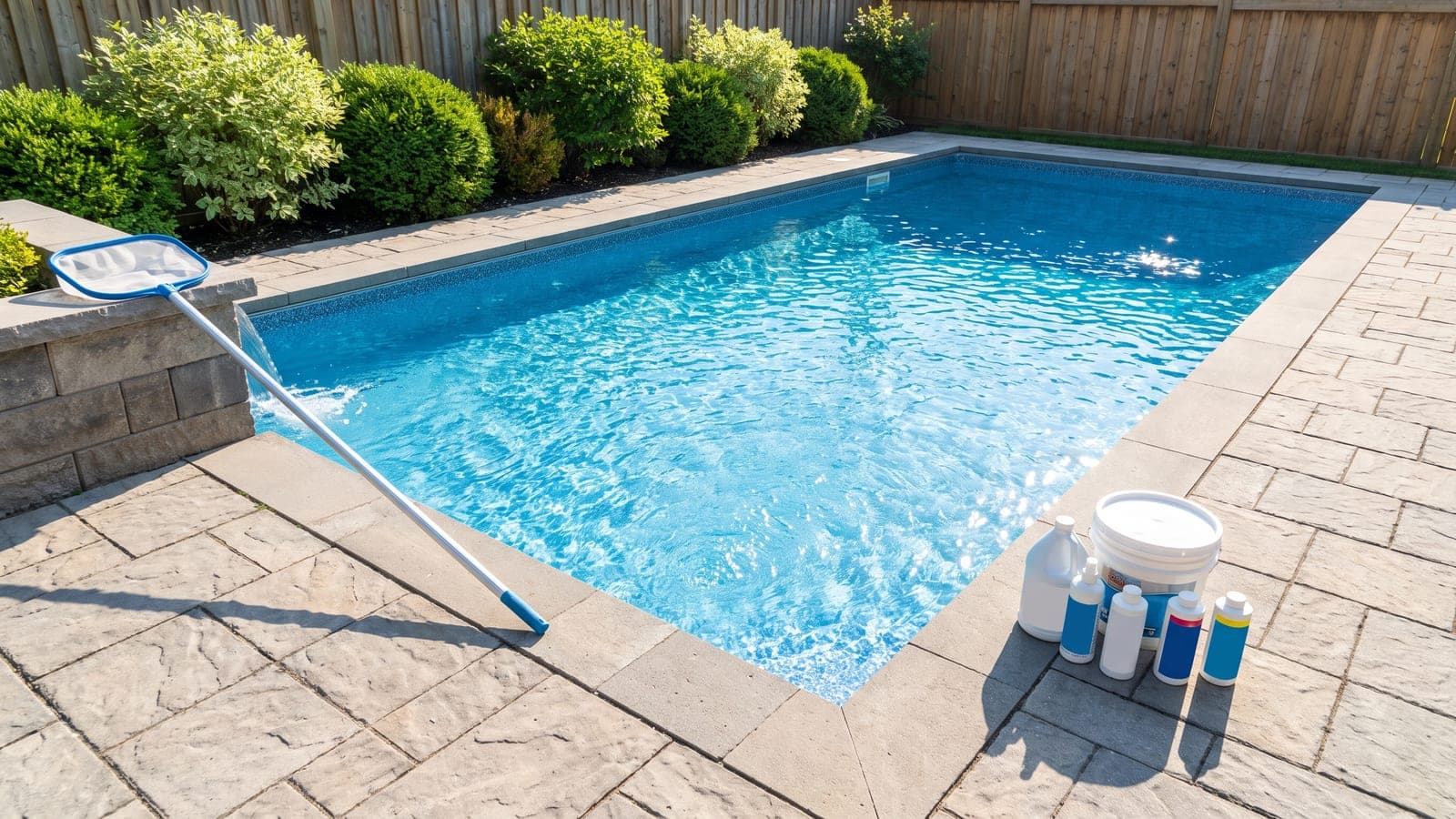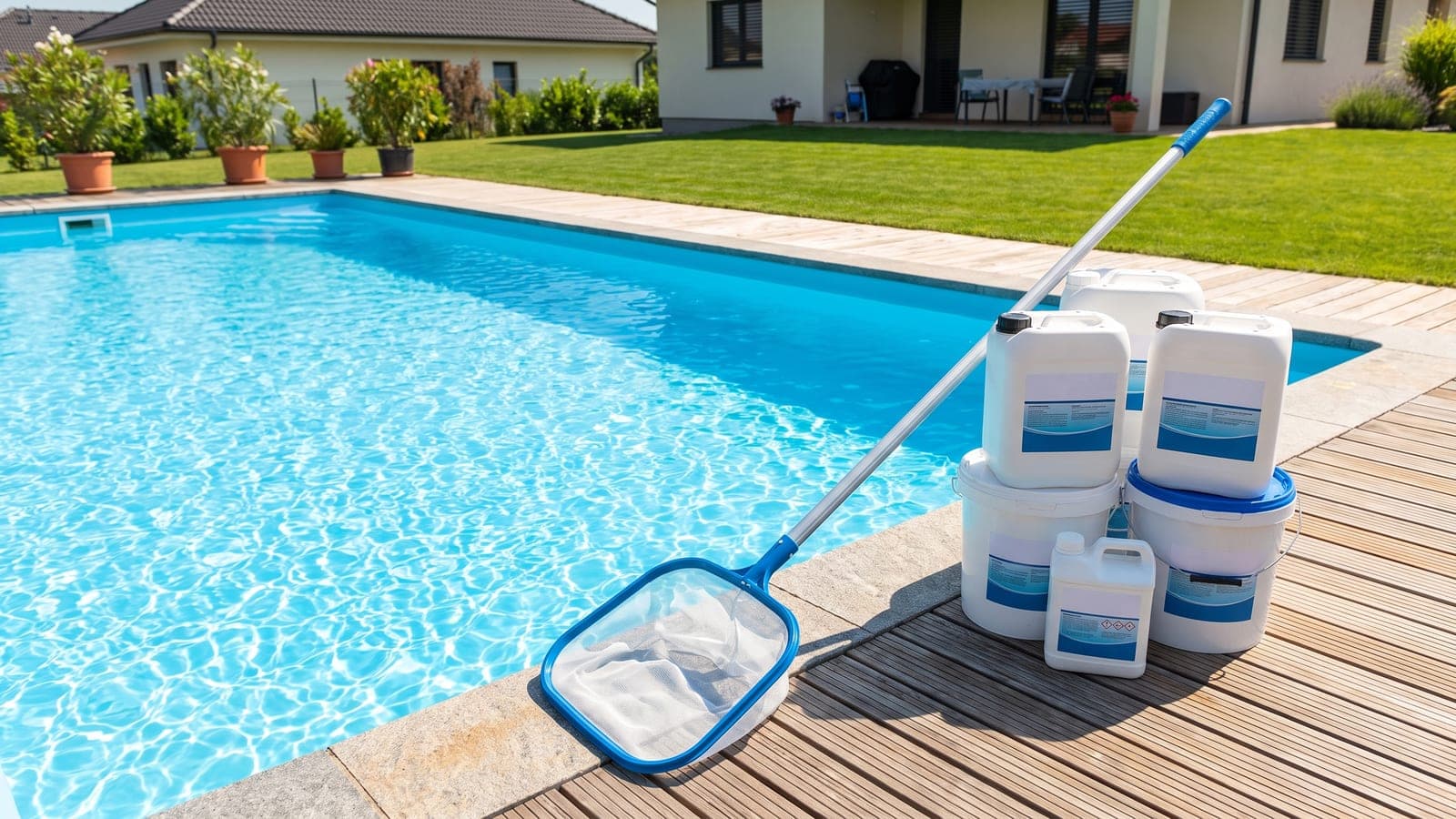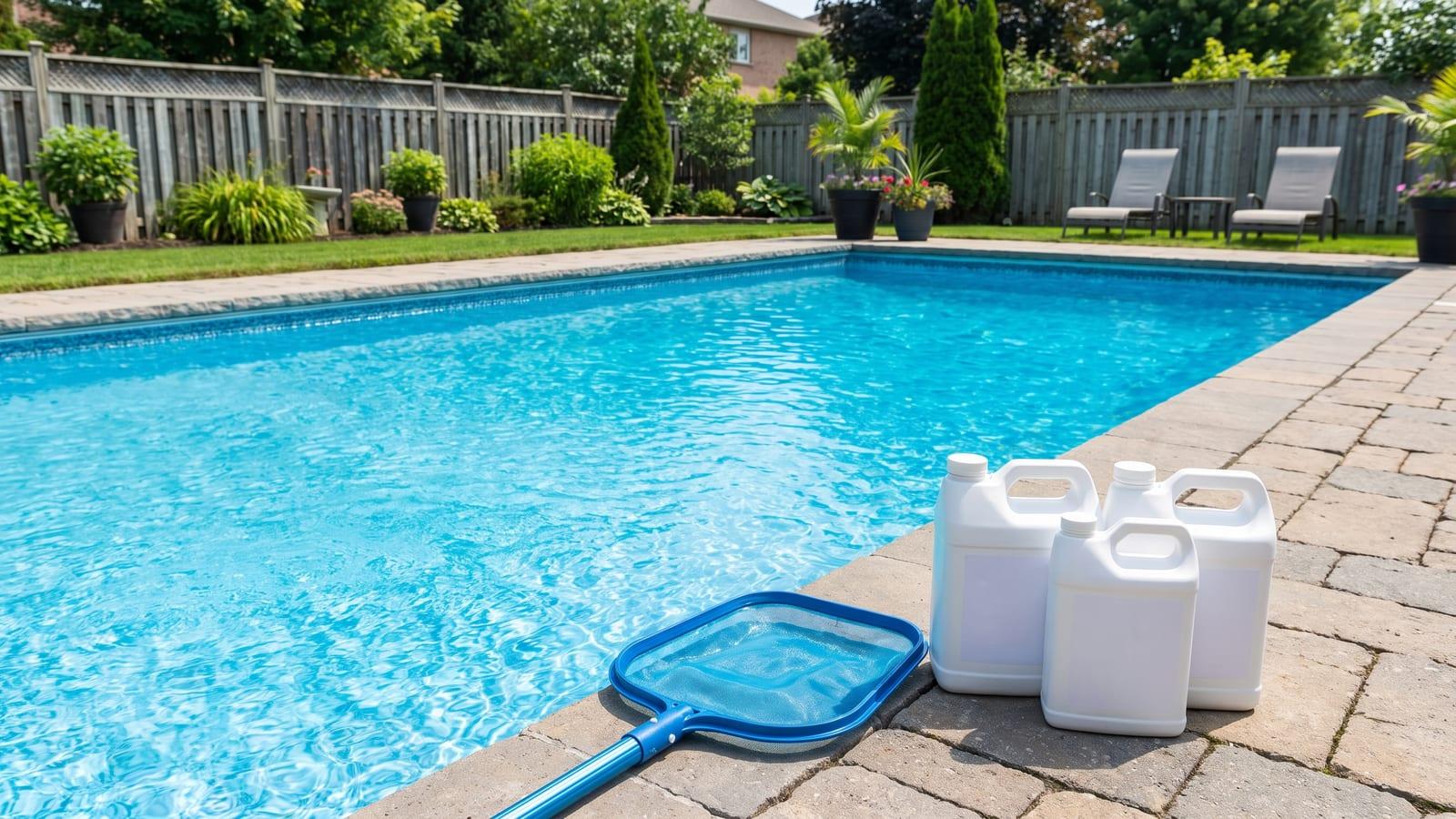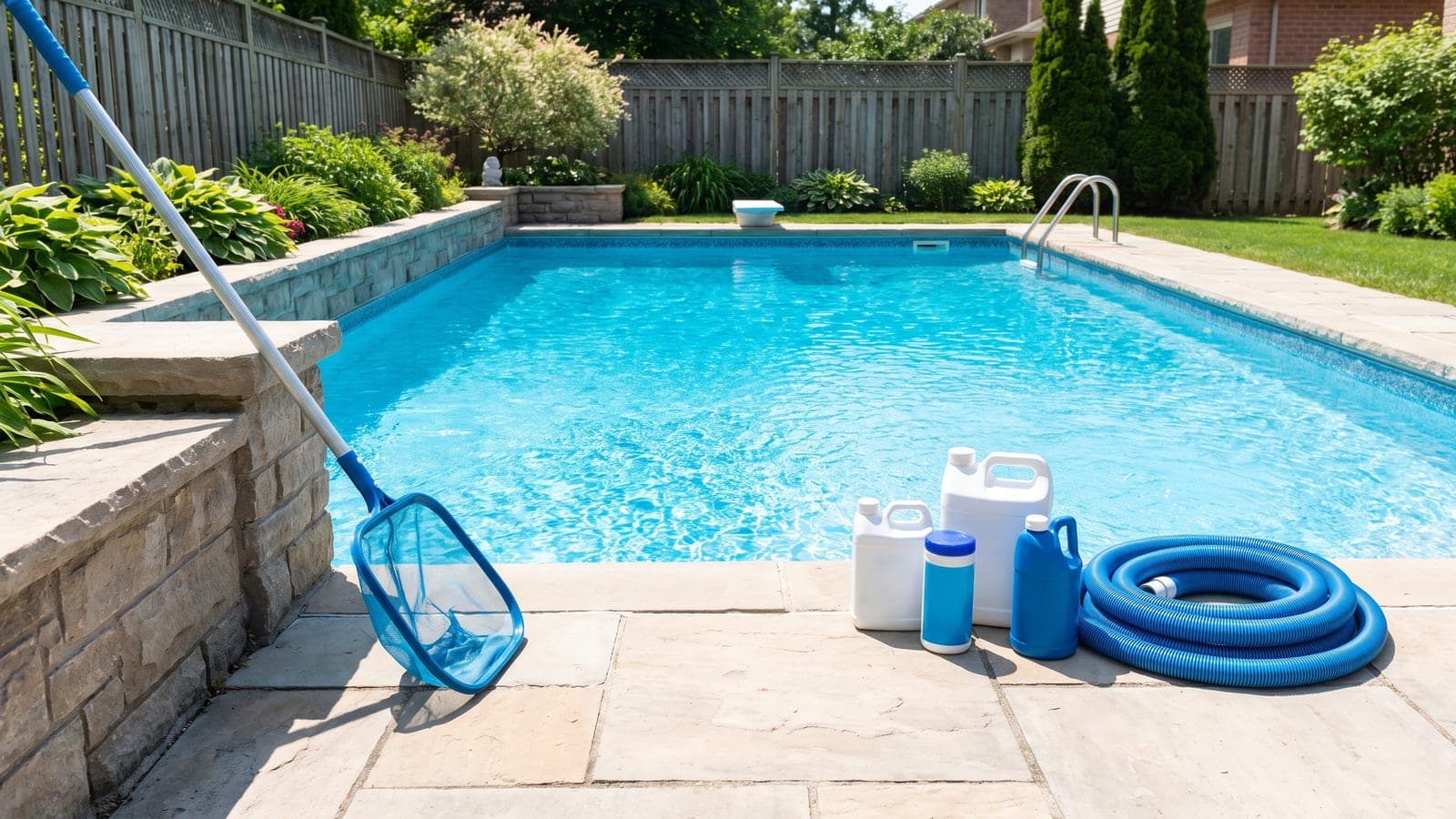
Open an in-ground pool in spring by working in order: clear and remove the cover, top off the water, get the pump and filter running, then balance the chemistry, shock, and clarify before anyone swims. Rushing straight to chemicals before the water is circulating is the most common way people waste product and end up with a cloudy pool.
Here is the whole job, step by step, in the order that actually works.
When should I open my pool in spring?
Open when daytime temperatures are consistently reaching the 60s and 70s, even if it still feels early. Algae wakes up in warm, still water sitting under a cover, so a pool that stays closed into the heat is often the one that turns green.
Opening a little early, while the water is still chilly, usually means less cleanup. If you can see the cover getting warm and the water underneath is starting to darken, that is your signal.
How do I clean and remove the cover?
Start by pumping standing water off the top of the cover with a cover pump, then sweep or blow off leaves and debris. You do not want that dirty water and muck sliding into the pool when you pull the cover.
Remove the cover slowly with a helper so the gunk stays on top and not in the water. Lay it out on the grass or driveway, hose it down, let it dry, and fold it loosely for storage. A wet, folded cover grows mildew, so dry is the goal.
What do I reconnect and turn on first?
Reinstall everything you took out at closing: the ladders, rails, skimmer baskets, return fittings, and any drain plugs on the pump, filter, and heater. Missing a plug means a leak the moment you start the pump, so walk the whole equipment pad first.
Reinstall the filter (or its cartridges), remove any winterizing plugs from the skimmer and returns, and take out the ice compensator or gizmo if you used one. Then top off the water to the middle of the skimmer, because the pump needs that water level to prime and run.
How do I get the water circulating?
Prime and start the pump, then let the system run. Circulation is what makes every chemical you add actually work, so nothing else should happen until water is moving through the filter and back into the pool.
Run the pump continuously for the first 24 to 48 hours during opening. Check the filter pressure gauge, and if it climbs, clean or backwash the filter. This is also when you brush the walls and floor and skim the surface to knock loose whatever settled over winter.
What order do I balance the chemistry in?
Test the water first, ideally after the pump has circulated for a day so the sample is representative. A good test kit or fresh strips let you see alkalinity, pH, calcium hardness, and stabilizer before you add anything. If you want a plain-English refresher on what those numbers mean, our pool chemistry basics guide walks through them.
Balance in this order, because each one affects the next:
- Total alkalinity first, roughly 80 to 120 ppm, using In The Swim Alkalinity Increaser (Sodium Bicarbonate, 25 lb) if you are low. Alkalinity is a buffer that keeps pH from bouncing around.
- pH next, aim for about 7.4 to 7.6, raising it with In The Swim pH Increaser (Soda Ash, 25 lb) or lowering it with In The Swim pH Reducer (Sodium Bisulfate, 30 lb).
- Calcium hardness, usually 200 to 400 ppm, and cyanuric acid (stabilizer, the sunscreen for your chlorine), usually 30 to 50 ppm.
Add chemicals one at a time, with the pump running, and wait a few hours between big adjustments before retesting. Exact target ranges depend on your surface and equipment, so check your manual where it matters.
When do I shock the pool?
Shock after the water is balanced and circulating, never before. Shocking a pool with off pH just wastes chlorine and can cloud the water or bleach it out unevenly.
Use a shock like HTH Super Shock Treatment (Cal-Hypo, 1 lb bags) to drive chlorine high and kill whatever wintered over. The CDC notes that proper chlorine and pH are what keep pool water safe, so this step is doing real work, not just clearing color. Run the pump overnight, and if the water was green, add In The Swim Algaecide 60 Plus (1 Quart) and expect to repeat the shock over a couple of days.
Handle and store shock and other pool chemicals carefully. The EPA and NPIC both warn against mixing chemicals or storing them where they can get wet, so add one product at a time and keep them dry, cool, and separated.
How do I get the water crystal clear?
Once chlorine is holding, switch to a maintenance routine: keep a tablet feeder or floater stocked with In The Swim 3-Inch Stabilized Chlorine Tablets and keep filtering. Clear water is mostly filtration and time.
If the pool is cloudy but balanced, In The Swim Super Clarifier (1 Quart) helps the filter grab the fine particles it would otherwise miss. Rusty or brown staining points to metals, where In The Swim Super Stain Away (Stain & Metal Control, 1 Quart) can help. You can stock openers and balancers together on our maintenance supplies page.
Do not swim until chlorine settles into the 1 to 4 ppm range, pH is around 7.4 to 7.6, and the water is clear enough to see the bottom. If you also run a spa or a salt pool, our hot tub maintenance guide and saltwater pool maintenance guide cover those quirks. When in doubt on a stubborn green or a suspected leak, call a local pro before you spend money guessing.
Frequently asked questions
How long does it take to open an in-ground pool?
Most owners spend one full day on the physical work and then two to five days getting the water clear and balanced. Cloudy or green water takes longer because it depends on how the pool was closed and how warm the weather is. Plan for a week before you swim if it looks rough.
Do I have to drain my in-ground pool to open it?
Usually no. Draining an in-ground pool can risk a liner or a pop-out from ground water pressure, so most people just top off the water they lost over winter. Only fully drain if a pro tells you the water is beyond rebalancing or you need liner or surface work.
My water is green. Can I still open it normally?
Yes, you follow the same steps, but you lean harder on filtering, shocking, and algaecide, and you repeat as needed. Green usually means algae took hold over winter, and it clears once chlorine gets and stays high with good circulation. It can take several days and a filter cleaning or two.
What chemicals do I need to open a pool in spring?
At minimum a test kit, chlorine shock, and whatever your test says you are low on, which is often pH, alkalinity, calcium hardness, or stabilizer. Many openings also use algaecide and a clarifier to speed up clearing. Buy based on your test results, not a guess.
Should I open my pool early or wait until it is warm?
Opening earlier, once daytime temps reach the 60s and 70s, is usually easier because algae grows fast in warm, still water under a cover. If you wait until it is hot and the pool sat green for weeks, you have more work to do. Earlier and slightly chilly beats late and swampy.